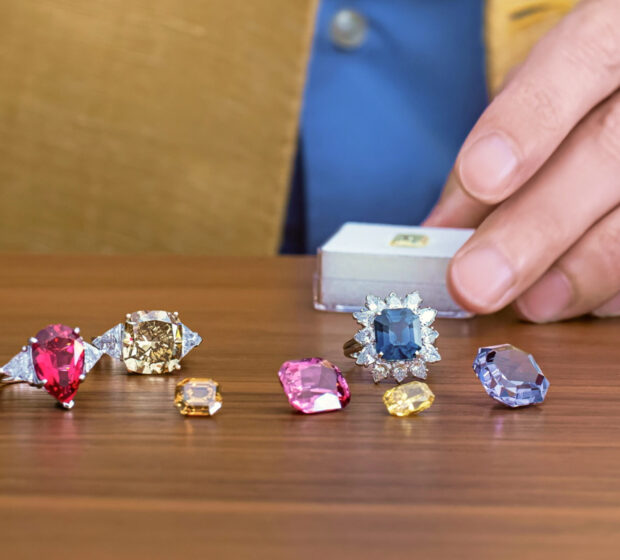
A Warm Register Where Purity of Hue Decides
Orange rewards a particular kind of discernment. Across the species that produce it, value turns less on depth than on cleanliness of tone, on whether the color reaches a pure, vivid orange or drifts toward the brown and red modifiers that dim it, and that single distinction separates ordinary material from collector-grade stones.
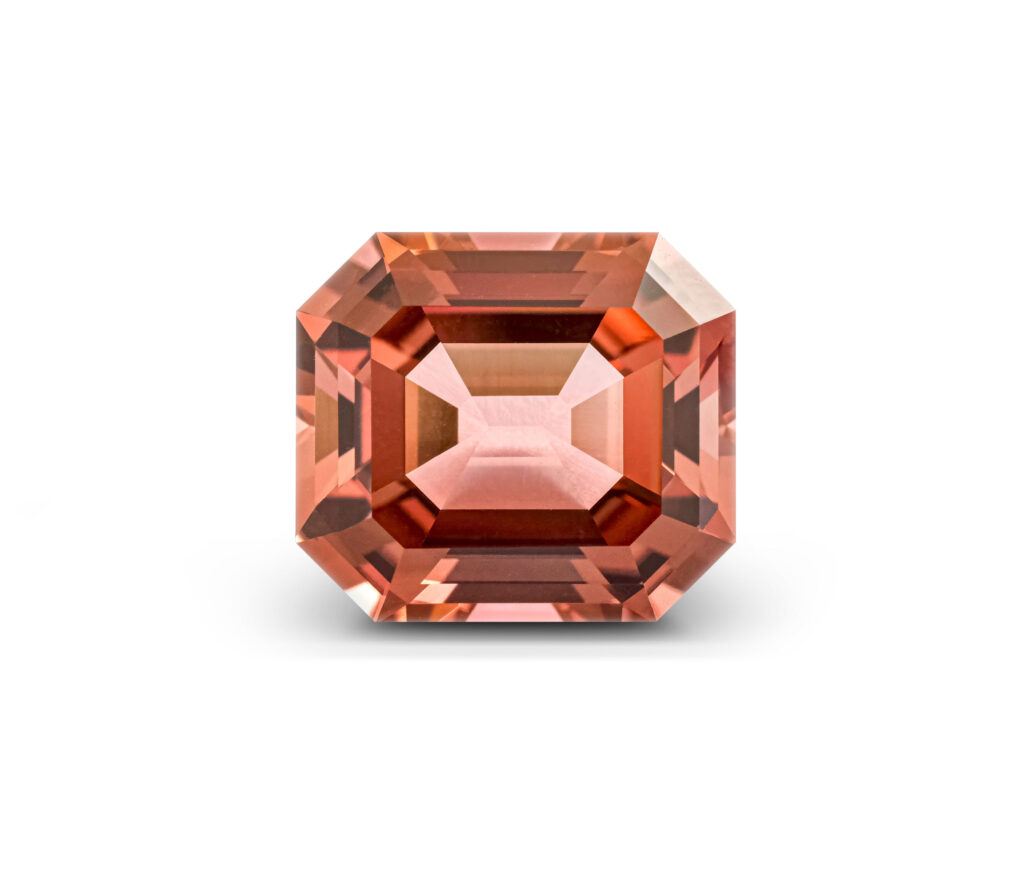
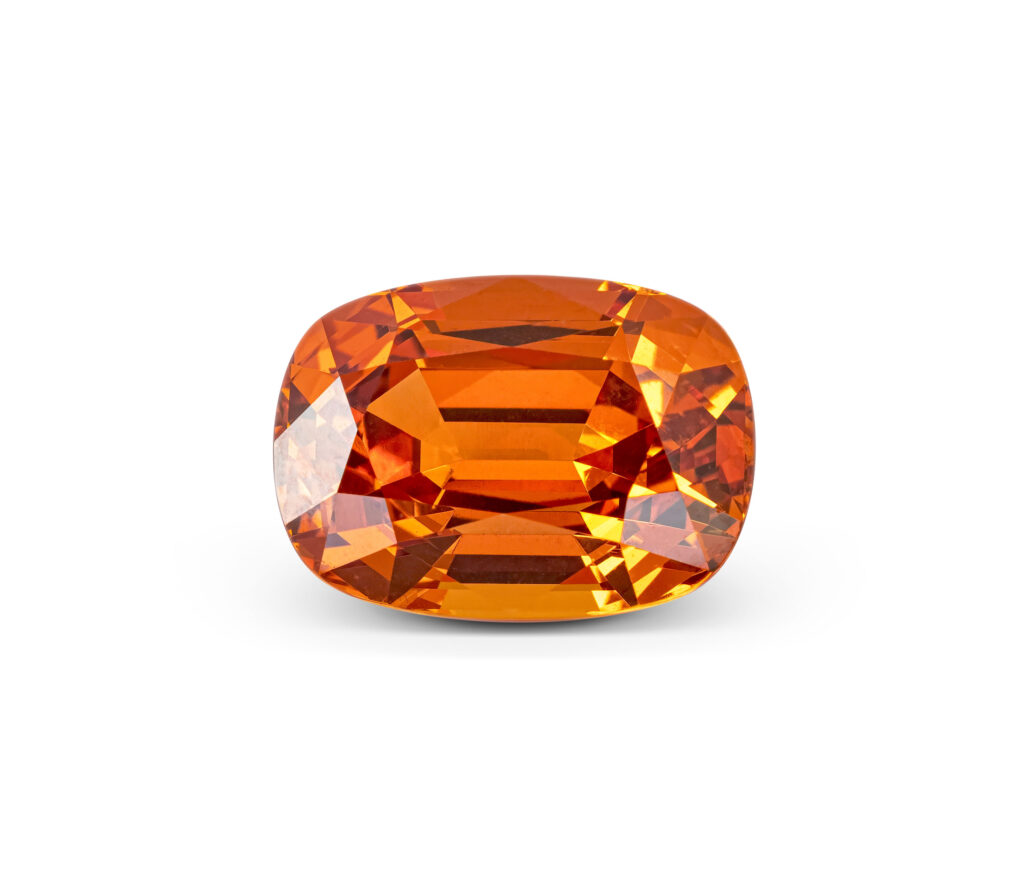
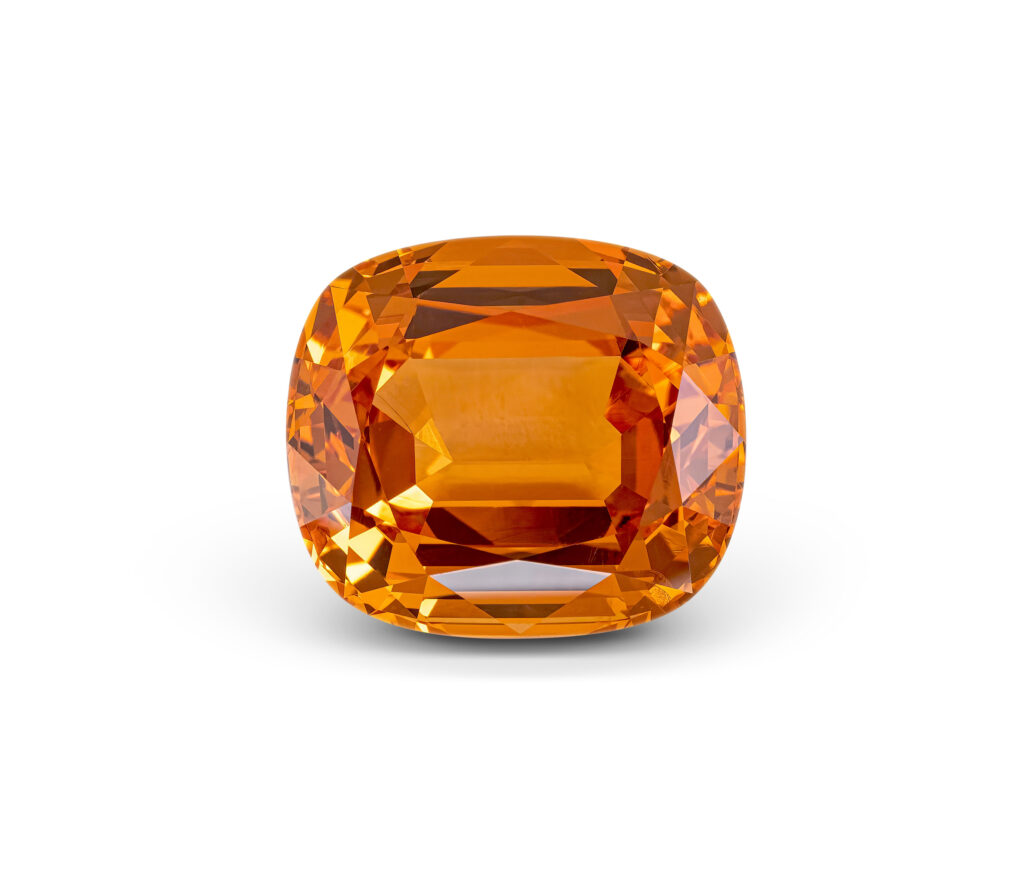
Mandarin spessartite garnet is the purest expression of the color. Spessartite is idiochromatic, meaning its orange is intrinsic to the mineral rather than an incidental trace effect: manganese within the crystal structure produces the hue, and the closer the chemistry approaches pure manganese, the purer and more vivid the orange becomes. The finest material, from Namibian Spessart-type deposits, achieves an intense sunset orange free of the brownish cast common elsewhere. Orange sapphire arrives at warmth by a different route, owing its color largely to iron, while padparadscha, among the most sought-after varieties in all of colored stones, requires an exceptionally rare balance of iron and chromium to hold its delicate pinkish salmon-orange, a balance so fine that a slight shift reclassifies the stone.
Because orange spans this range from fiery garnet to soft padparadscha, tone becomes the collector’s principal guide. A vivid mandarin reads with immediate fire; a padparadscha with quiet luminosity, and each occupies a distinct standing within the same warm band of the spectrum.
The Grygorian Gallery Selection in Orange Tones
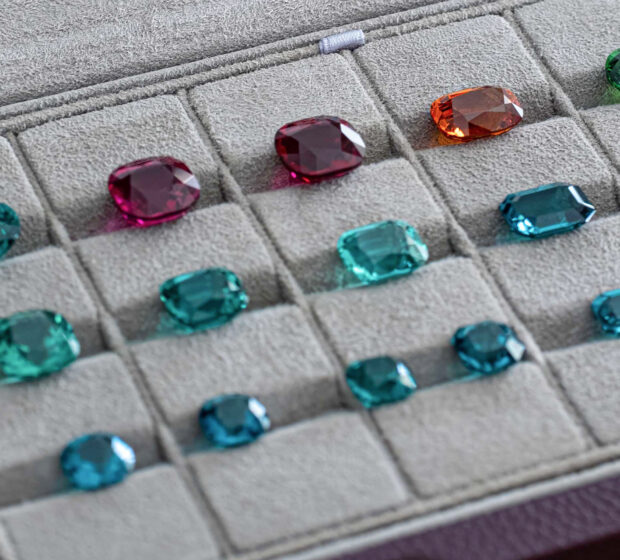
Once purity of hue is established, other qualities complete the assessment. Rare colored stones that periodically enter the selection in this color are chosen for saturation distributed evenly through the crystal, transparency that withstands close examination, and precision cutting that maximizes brilliance while preserving the openness of the orange.
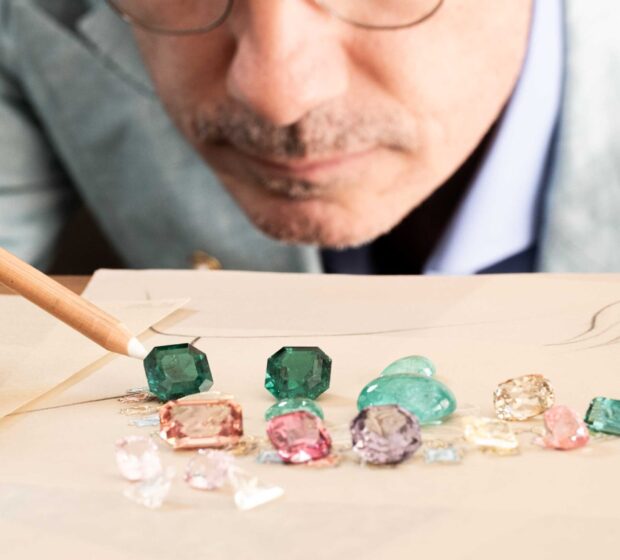
The gemological expertise developed by Eduard Grygorian, IGI Colored Stones Grader, informs the selection standards applied to orange gemstones, from species identification to the treated-versus-untreated distinction and the assessment of brown or red modifiers that bear so heavily on value. Where the certificate accompanies the stone, documentation from GIA or specialist gemological laboratories confirms natural origin, species, and treatment status; stones undergo gemological examination in which spectroscopic analysis and inclusion study establish identity and geographic provenance where relevant.
Acquiring Orange Stones at Collector Level
For the collector, orange offers a warmth and immediacy that few colors match, with mandarin spessartite and padparadscha each representing a genuinely scarce proposition once size and purity of hue are held to a high standard.
Acquired unset, loose orange gemstones remain fully gradable and independently verifiable, support future bespoke commissions, and retain the estate quality condition that underpins long-term resale value within a category where finite supply of pure, unmodified material sustains lasting demand for rare natural gemstones. Discerning collectors are invited to explore the selection of rare loose colored stones in orange tones with Grygorian Gallery, at the Palais de la Scala in Monaco.