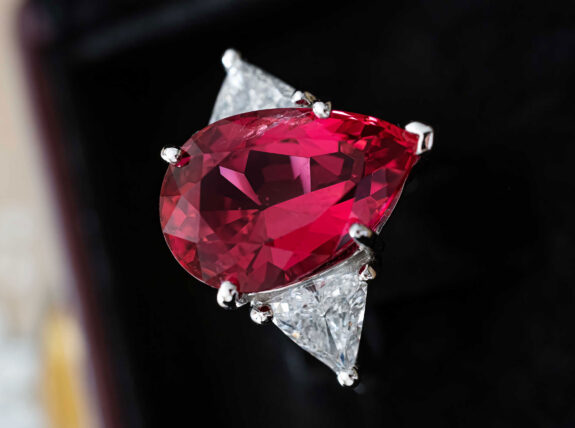
A Modern Register in the Color Spectrum
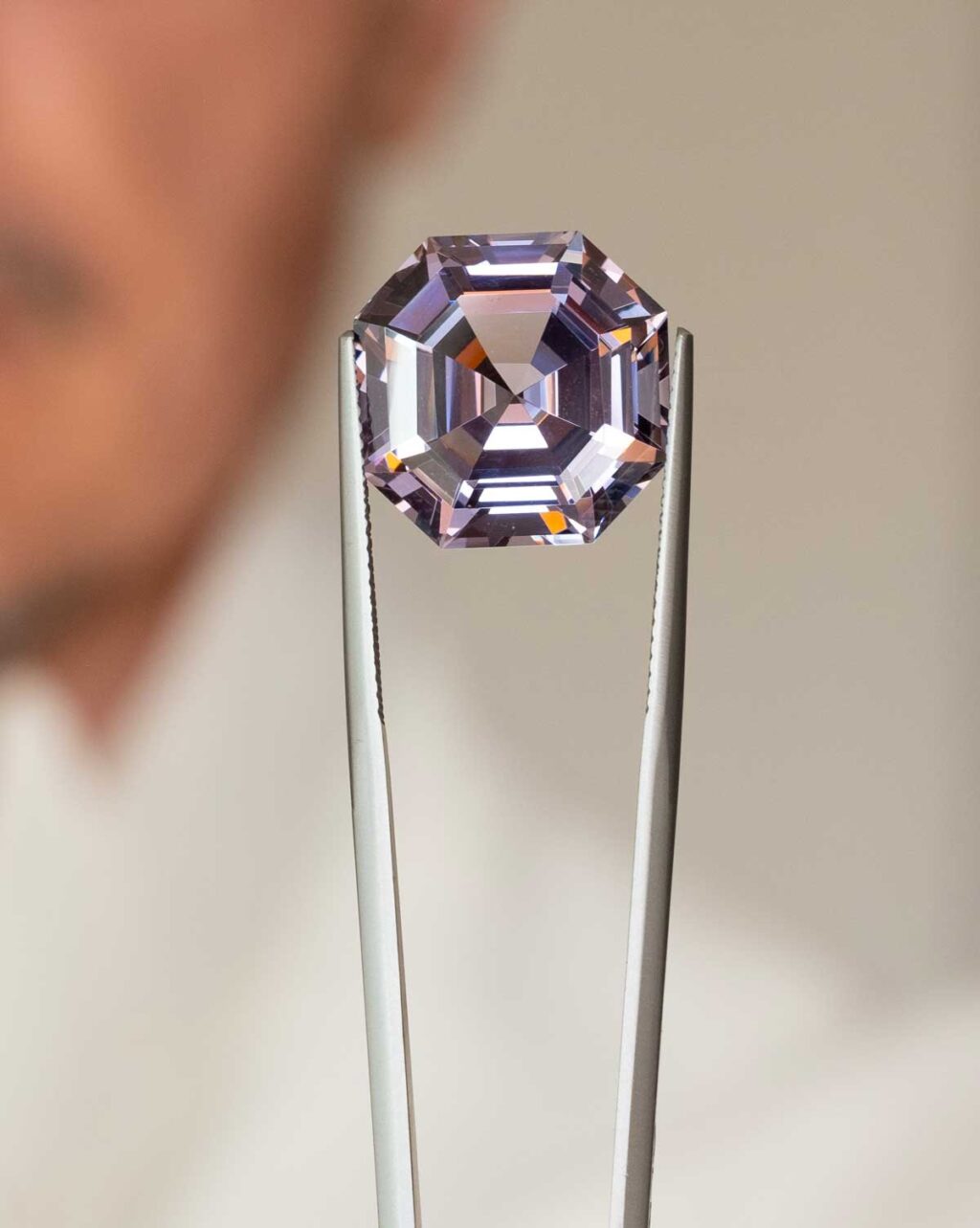
Grey stands apart from every other color a collector might pursue. Where saturation and hue drive value across most of the spectrum, the appeal of grey rests instead on tonal balance, translucency, and the way a neutral body color steps back to let a stone’s optical performance dominate the visual impression.
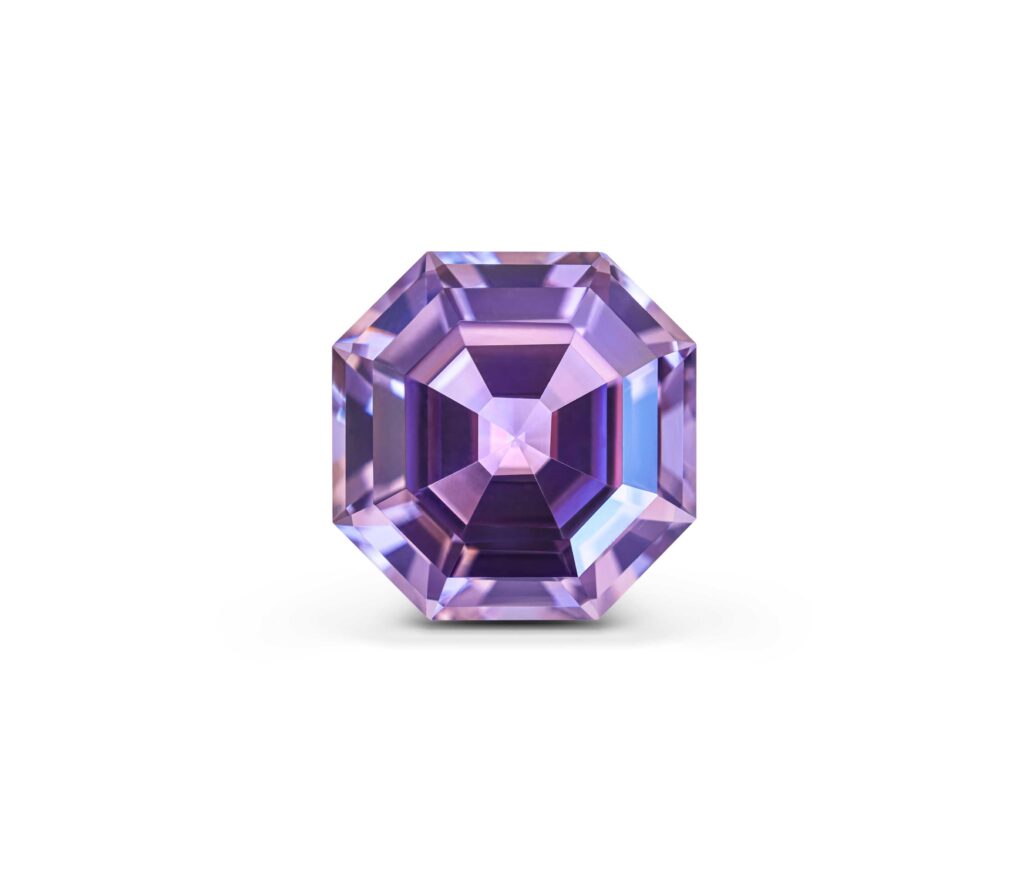
Fine spinel anchors this category almost entirely. Its singly refractive structure (a crystal with the same optical properties in every direction) transmits light with a purity that lends even neutral tones a distinct inner brilliance, and its consistent freedom from treatment makes it the natural home of collector-grade grey material. Steel, silver, and lavender-leaning greys each read differently under daylight and incandescent light, a subtle shift that gives well-chosen specimens their quiet character and a versatility across settings that vivid stones rarely offer.
True neutrality, however, is scarcer than it appears. Reporting on the rise of grey as a color category, GIA notes that most grey spinel carries a minor blue or violet secondary component, and that a perfectly neutral grey is relatively uncommon in nature. This is the crux of rarity for stones of this color: the finest examples resolve to a clean, even grey without drifting toward brown or excessive darkness, and material meeting that standard represents a narrow band of what any deposit yields.
The Grygorian Gallery Selection in Grey Tones
Once hue steps aside, other qualities decide a stone’s standing. Rare colored stones that periodically enter the selection in this color are chosen for even tonal distribution through the crystal, transparency that withstands close examination, and precision cutting that maximizes the brilliance neutral material is uniquely suited to display.
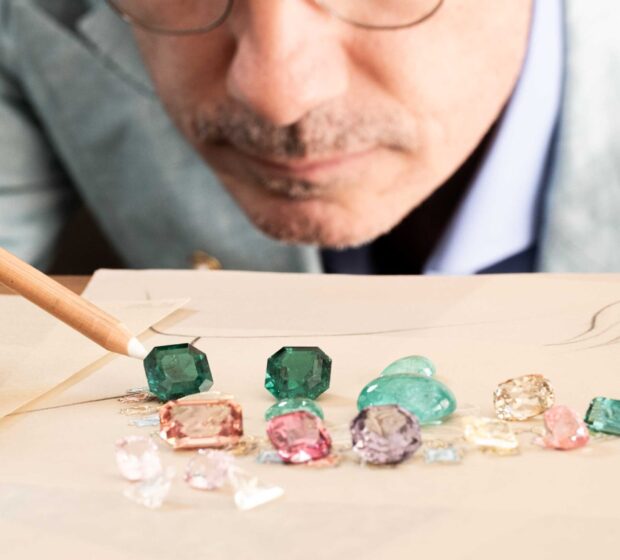
Selection standards for grey gemstones draw on the gemological expertise developed by Eduard Grygorian, IGI Colored Stones Grader, with attention to the secondary color components that separate a true neutral from a tinted one, and to the treated-versus-untreated distinction that governs value. Where the certificate accompanies the stone, laboratory documentation from GIA or specialist gemological laboratories confirms natural origin, species, and treatment status; stones undergo gemological examination in which spectroscopic analysis and inclusion study establish identity and origin where relevant.
Acquiring Grey Stones at Collector Level
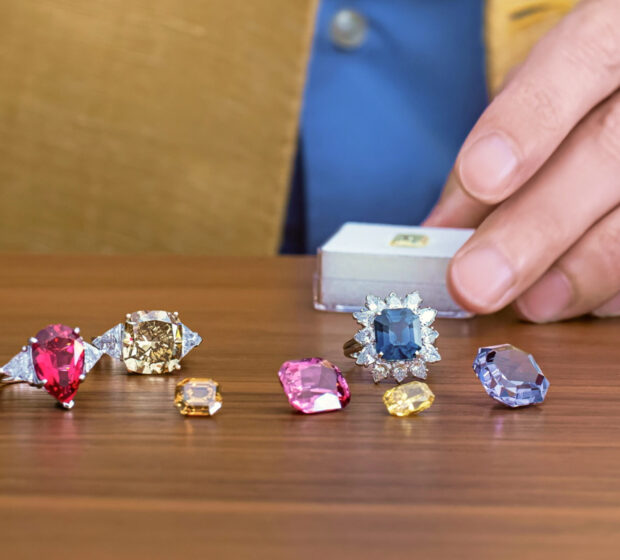
For the collector building a suite with aesthetic coherence, grey offers what the vivid end of the spectrum cannot: a sophisticated neutral that complements colored stones without competing with them, drawing growing attention from connoisseurs drawn to its modern sensibility.
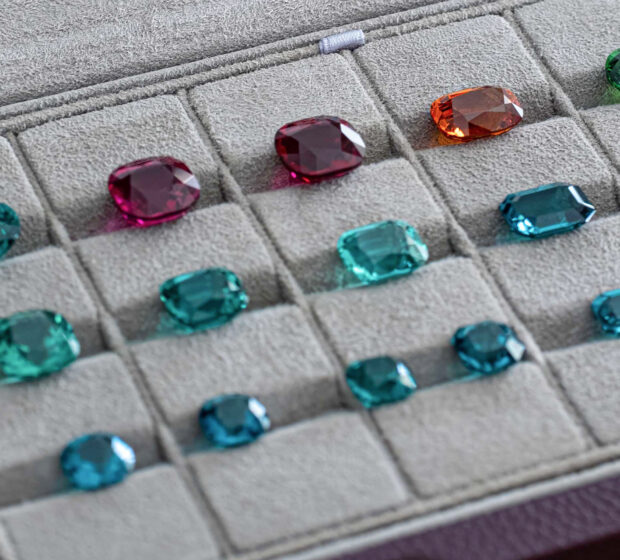
Acquired unset, loose grey gemstones remain fully gradable and independently verifiable, support future bespoke commissions, and retain the estate quality condition that underpins long-term resale value within a category where the finite supply of clean neutral material sustains lasting demand. Discerning collectors are invited to explore the selection of rare loose colored stones in grey tones with Grygorian Gallery, at the Palais de la Scala in Monaco.