The Statement Register
By five carats, a diamond has moved well beyond the proportions of fine jewelry into the territory of singular acquisition. Christie’s, Sotheby’s, and Bonhams regularly present stones of this caliber as centerpiece lots, a reflection of how decisively scarcity governs value at this weight. The price-per-carat curve (the cost of each carat rising faster than weight itself) reaches a pronounced expression here, so a fine five-carat diamond is worth far more than five times a one-carat equivalent of matching quality, because the rarity it embodies compounds with each additional carat rather than accruing in a straight line.
Two Scales at Five Carats
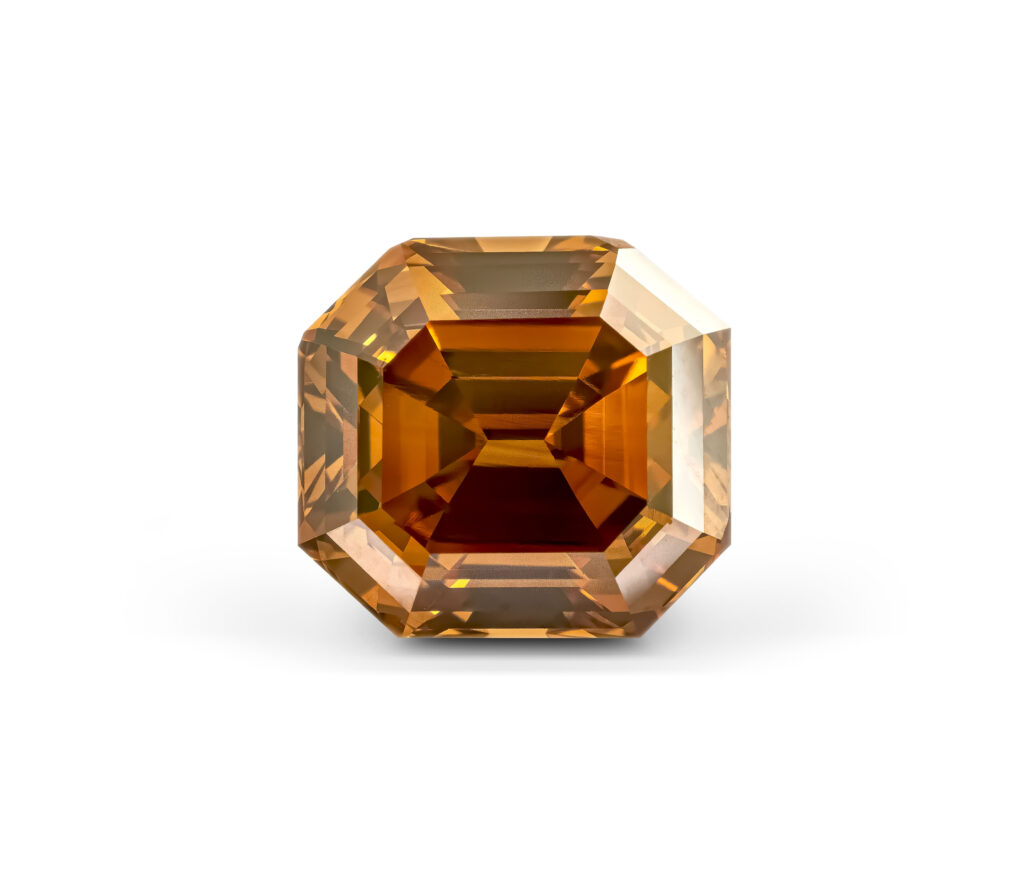
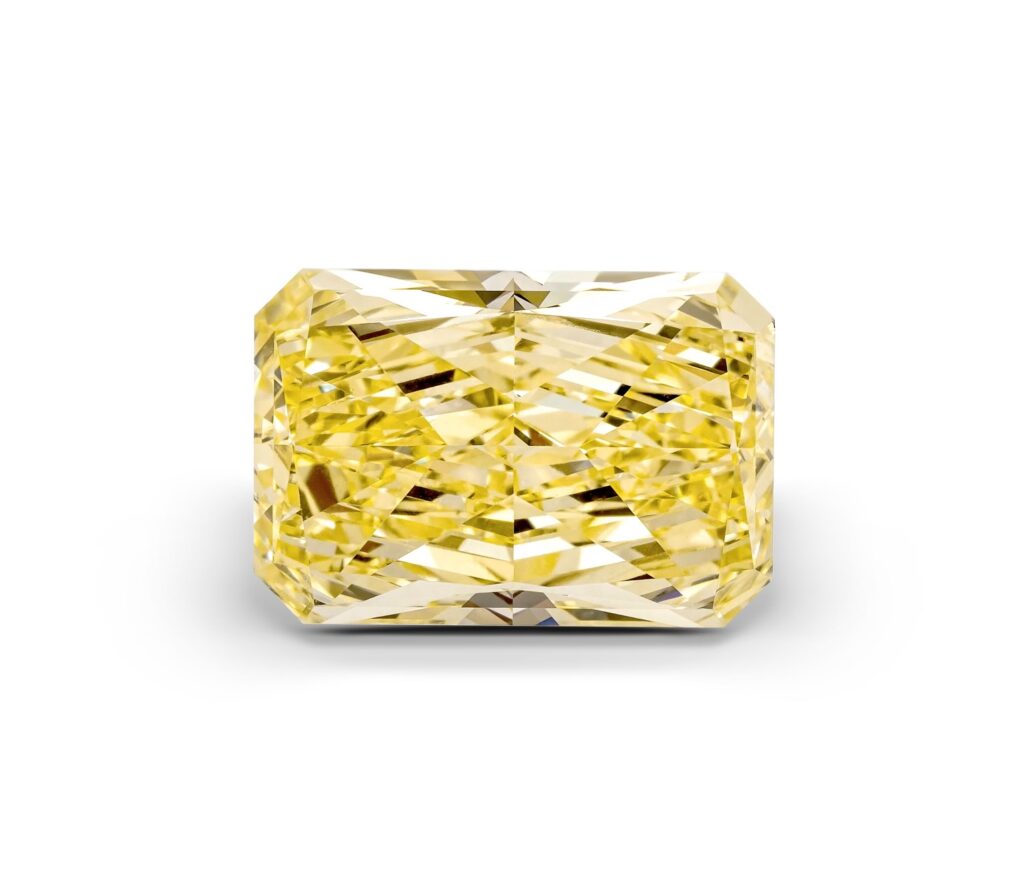
What this weight signifies depends on which scale a stone belongs to, and the divergence is at its clearest. Among fancy color diamonds, where saturation increases value, five carats multiplies an already exceptional trait: with roughly one diamond in ten thousand carrying enough color to qualify as fancy, sustaining strong, even saturation through the volume of a five-carat crystal is rarer still, and intense or vivid grades at this size represent a particularly narrow slice of what nature yields.
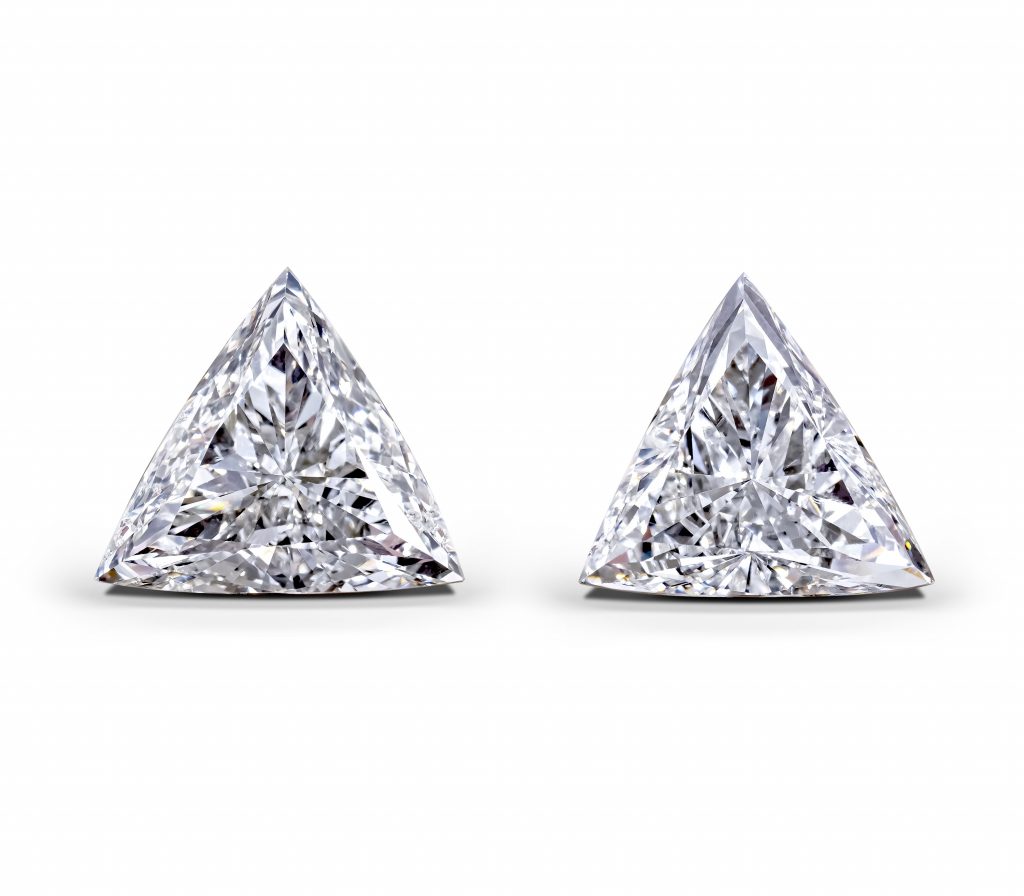
Among colorless diamonds graded on the D-Z scale, where the finest grades show no detectable hue, a flawless or near-flawless five-carat stone in the highest color grades is statistically extraordinary. Crystal growth of this size that proceeds without the inclusions common to large diamonds is uncommon in the truest sense, which is why such stones anchor serious collections.
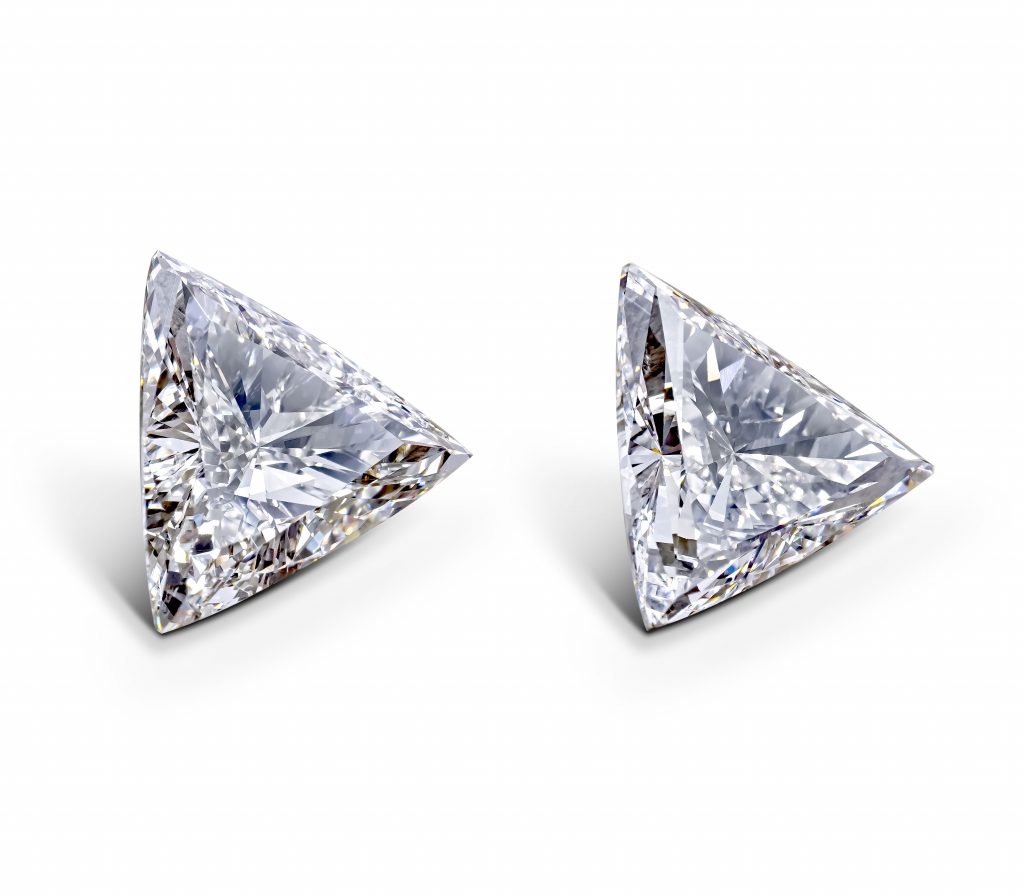
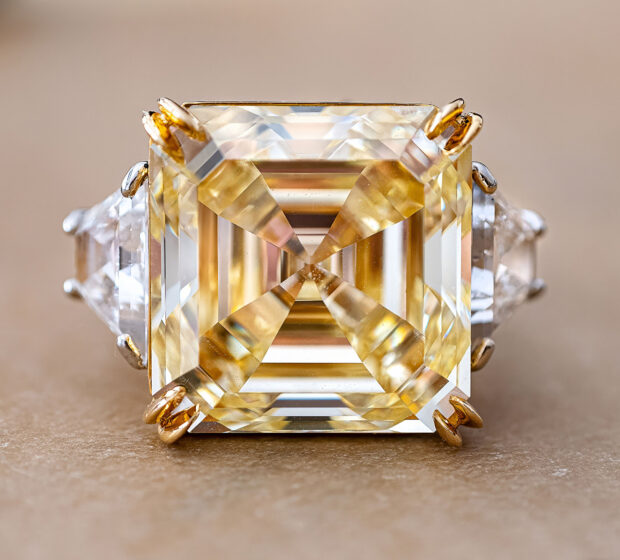
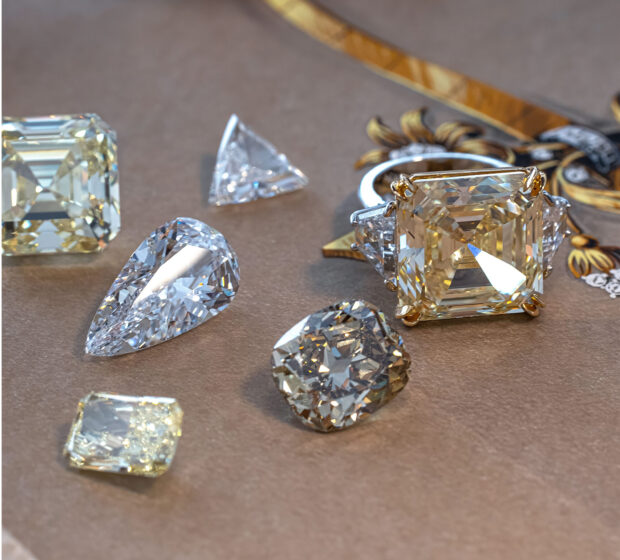
Cut answers to both scales and grows more consequential as size makes every characteristic visible. A radiant or cushion concentrates the brilliance that reinforces fancy color, an emerald cut reveals color and clarity in continuous transparent planes, and matched pairs at this weight become demanding to assemble, since consistency of color and proportion across two large crystals requires selection from a far wider pool.
The Grygorian Gallery Selection at Five Carats
Rare diamonds that periodically enter the selection at five carats are evaluated against the most exacting criteria, since at this size certification and documented provenance become essential rather than supplementary. The gemological expertise developed by Eduard Grygorian, IGI Colored Stones Grader, and refined across years in haute joaillerie, informs the selection standards applied to large loose diamonds at this carat level, with close attention to the distinction between natural and treated color.
Where the certificate accompanies the stone, GIA certified documentation confirms the 4Cs (carat, color, clarity, cut), treatment status, and, for fancy color, the GIA Color Origin determination (the report establishing natural rather than treated color) that no acquisition at this level omits. Material meeting this standard satisfies the investment quality criteria that auction specialists and serious collectors consistently apply.
Acquired in loose form, diamonds of this weight remain independently gradable, preserve complete documentation, and support bespoke commission while retaining the unmodified condition that underpins long-term resale value, within a category where finite supply sustains lasting demand. Browse the selection of loose diamonds at this weight with Grygorian Gallery, at the Palais de la Scala in Monaco.