The Demand for Exceptional Rough
Four carats sits at a revealing point on the diamond rarity spectrum. Where three carats marks the entry into genuine scarcity, four carats tightens every constraint that governs it. A finished stone of this weight requires rough substantially larger than the carat difference alone implies, because cutting consumes volume at every stage: the removal of included material, the shaping of facets, and the recutting that color and clarity sometimes demand. Large crystals that grow clean enough to yield such a stone are geologically uncommon, and the cutting loss they incur compounds that scarcity. The result is a price-per-carat curve (the cost of each carat rising faster than weight itself) that accelerates noticeably through this tier, so a four-carat diamond commands well more per carat than a smaller stone of identical quality.
This weight also approaches the register in which large diamonds appear as significant lots at the world’s leading auction houses, where stones of exceptional size and color draw particular attention. The combination of size with strong color or high clarity grade is what distinguishes material at this level from the broader market.
Where the Two Scales Part
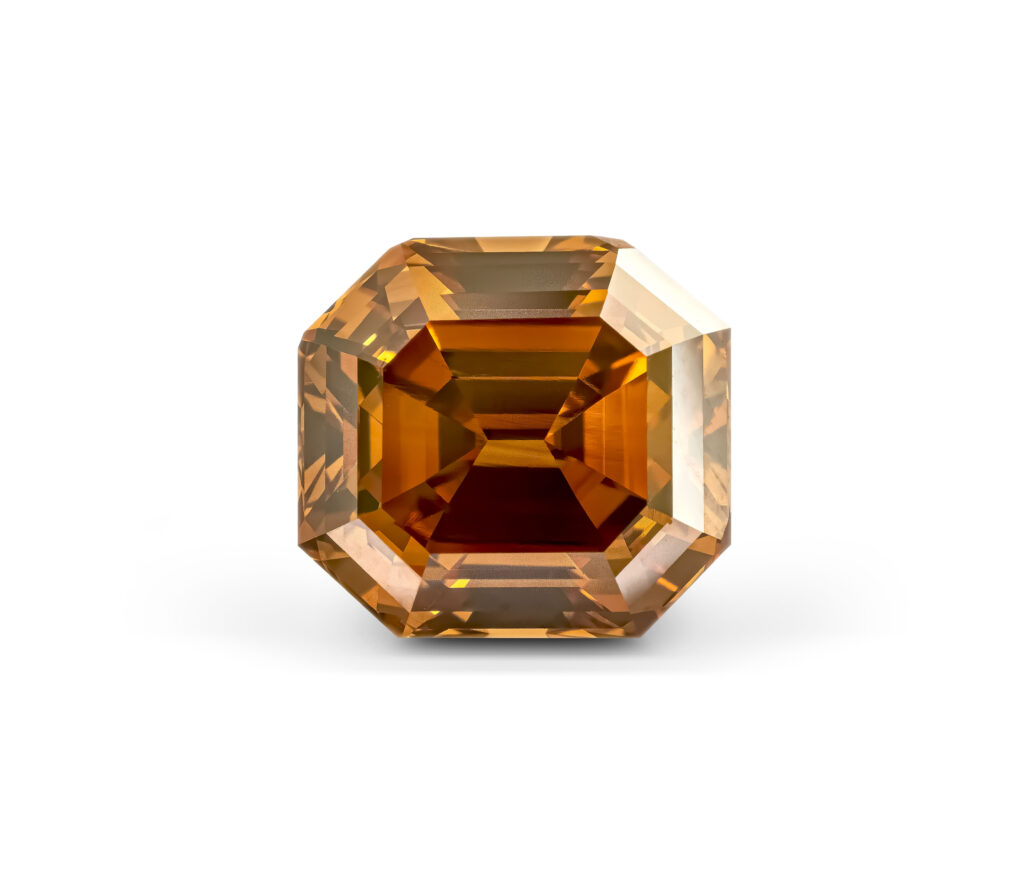
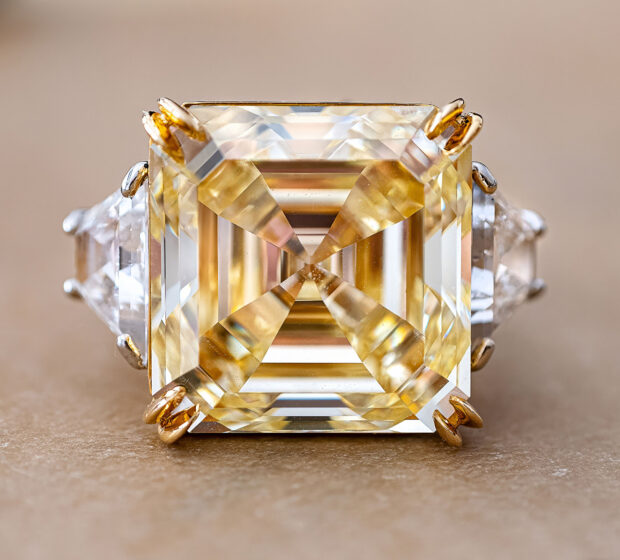
The fancy color and colorless families diverge more sharply here than at lighter weights. Among fancy color diamonds, where saturation increases value, four carats multiplies an already uncommon trait: with roughly one diamond in ten thousand carrying enough color to qualify as fancy, sustaining vivid or intense saturation through the volume of a four-carat crystal is rare in the truest sense, and stones meeting that description occupy a narrow segment of production. Among colorless diamonds graded on the D-Z scale, where the finest grades show no detectable hue, a flawless stone in the highest color grades at four carats is statistically extraordinary, since clarity and large crystal growth so seldom coincide.
The Grygorian Gallery Selection at Four Carats
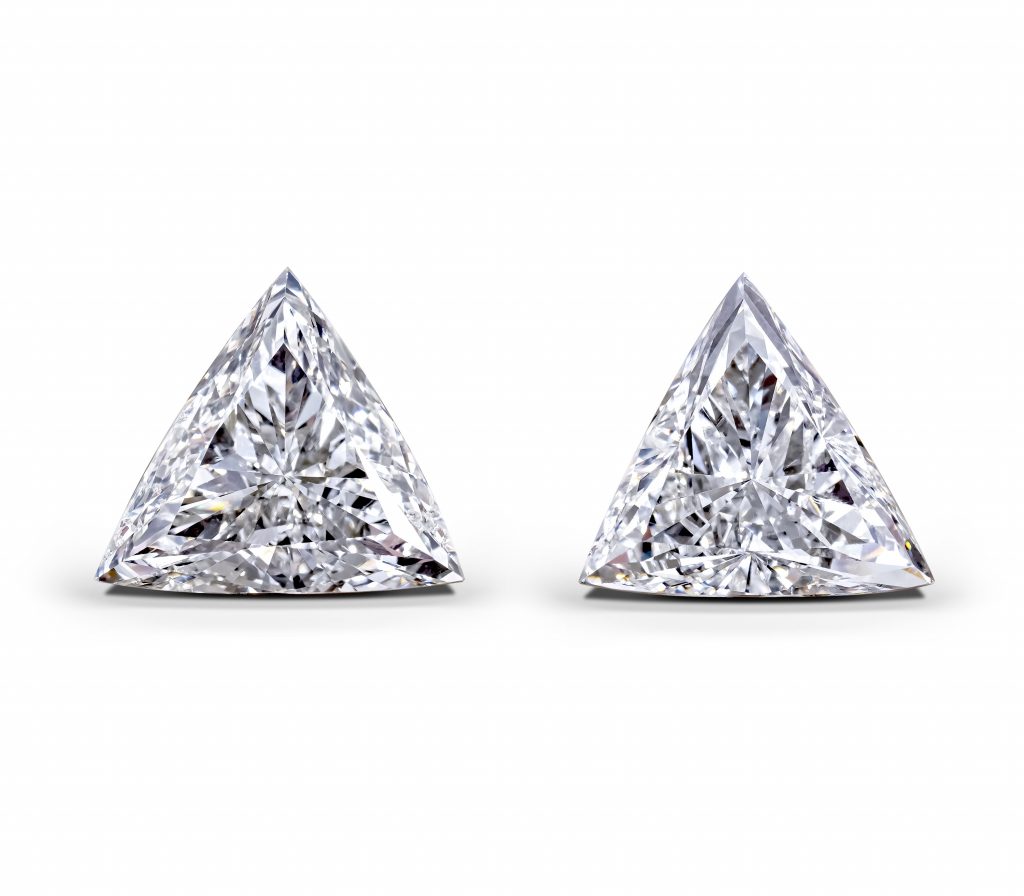
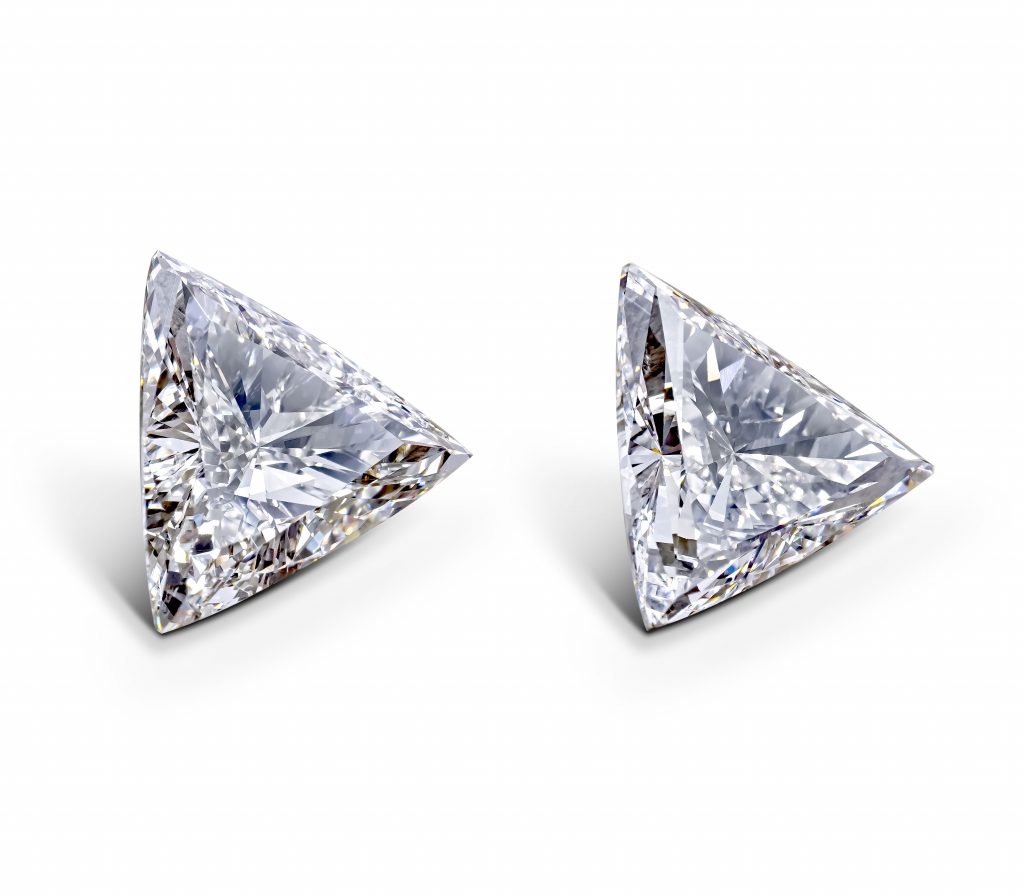
Rare diamonds that periodically enter the selection at four carats are assessed against the criteria that matter most once size dominates: natural color origin, clarity that withstands magnification, and cut precision that carries color and brilliance through a large stone, whether in step cuts that reveal continuous planes or brilliant-style cuts that maximize light return. The gemological expertise developed by Eduard Grygorian, IGI Colored Stones Grader, and refined across years in haute joaillerie, shapes the selection standards applied to diamonds of this size, with particular weight given to the distinction between natural and treated color.
Where the certificate accompanies the stone, GIA certified documentation confirms the 4Cs, treatment status, and the GIA Color Origin determination (the report establishing natural rather than treated color) central to fancy color at this level. Material meeting this standard satisfies the investment quality criteria that auction specialists and serious collectors consistently apply.
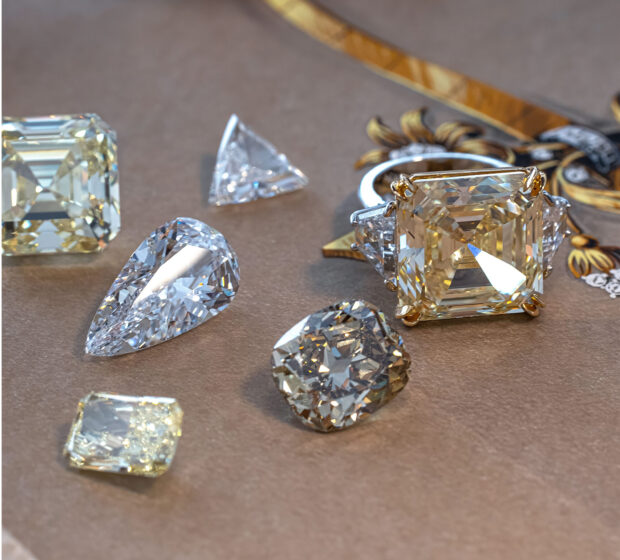
Acquired unset, large loose diamonds at four carats remain fully gradable and independently verifiable, preserve complete documentation, and retain the unmodified condition that underpins long-term resale value where finite supply sustains lasting demand. Discover the collection of loose diamonds at this weight at Grygorian Gallery, in Monte-Carlo.