



Description
In 1969 Aldo Cipullo walked into Cartier from David Webb by way of Tiffany & Co., and over the next five years he rewired what the Maison put its name to. His instinct was to take the plainest industrial object — a screw, a nail, a length of rope pulled into a knot — and insist that it was worth making in gold. The Love bracelet came out of that conviction in 1969, the Juste un Clou in 1971. Cartier put his signature beside its own, which it had given to almost no one.
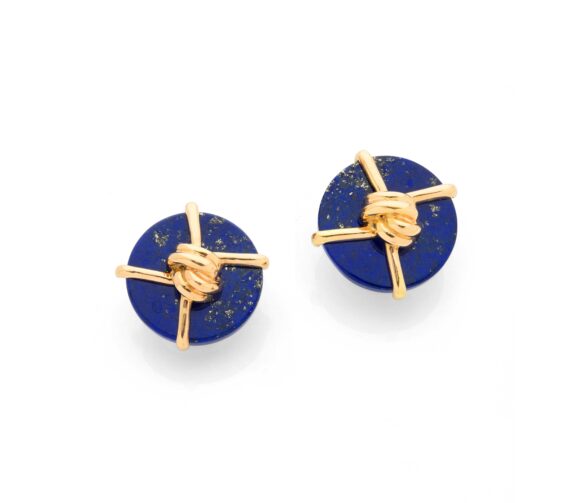
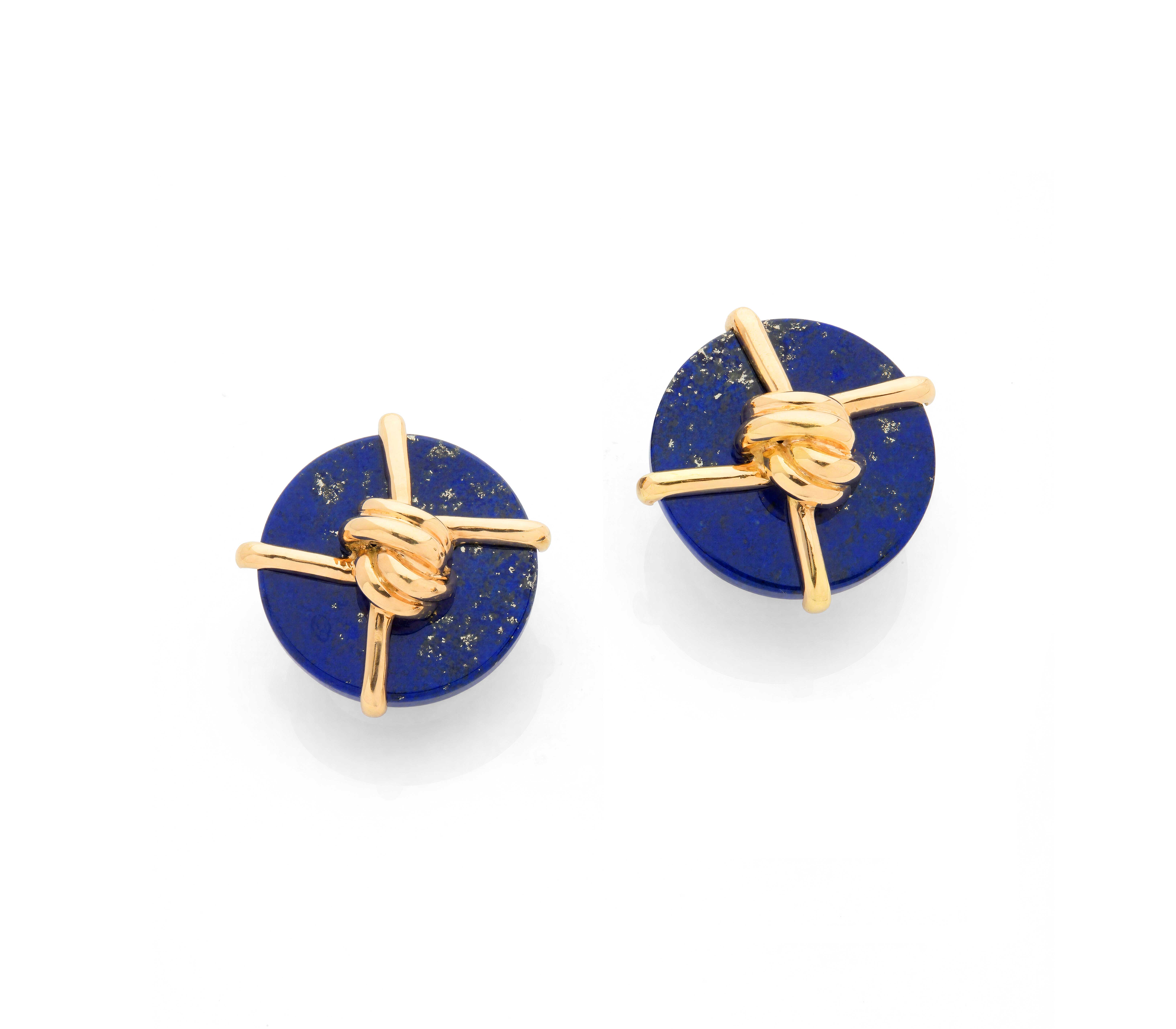
These ear clips are the same idea at rest. Each is a disc of lapis lazuli, 2.7 centimetres across, crossed by two bars of 18K yellow gold that meet at the centre and tie. The knot is notlapis lazuli proud of the stone rather than sunk into it, so a shadow falls across the blue beneath. Nothing is set, nothing is pavé, nothing frames the stone. Gold holds lapis, and the holding is the design.
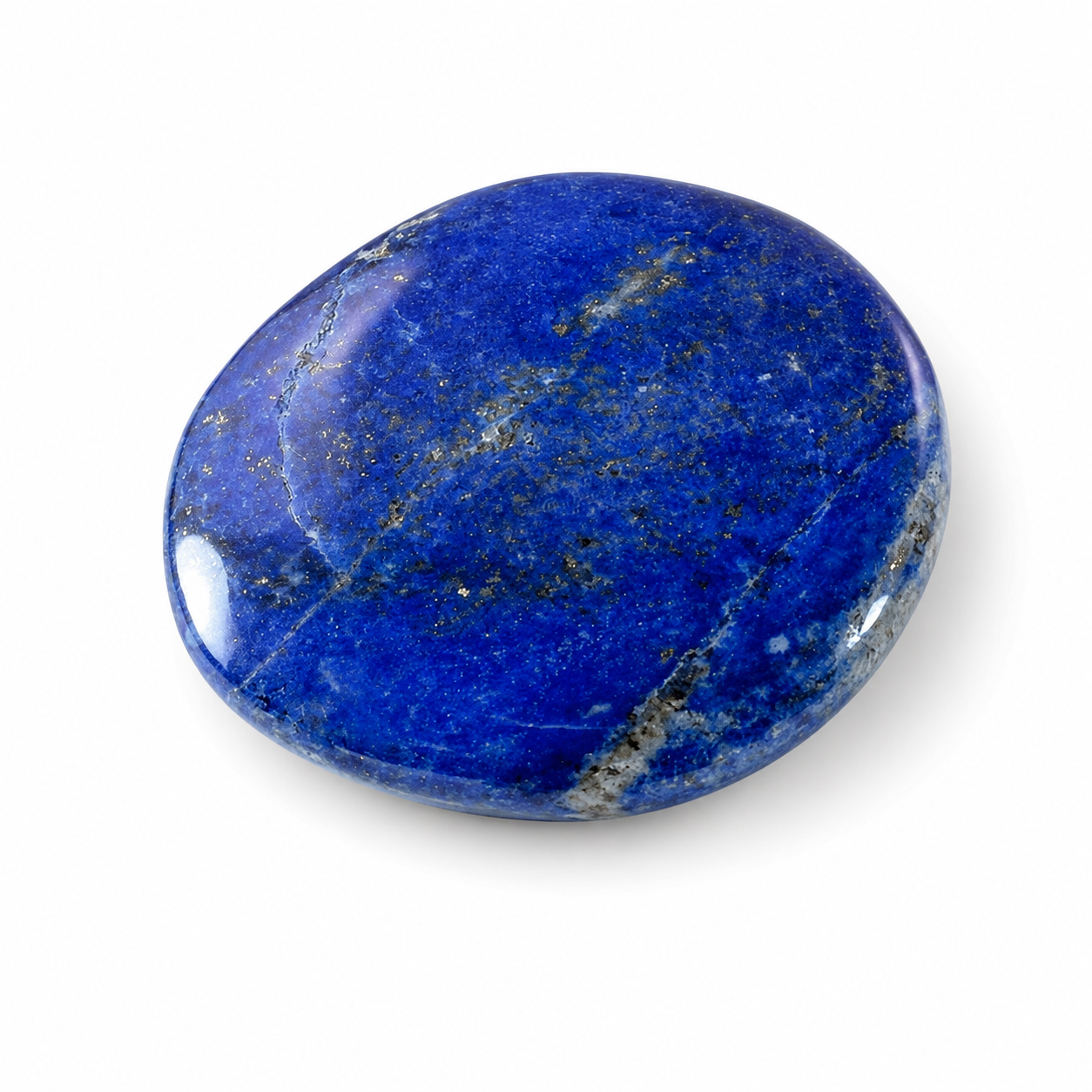
The lapis is the deep, flat ultramarine that made the stone valuable long before it was jewellery — ground to powder, it was the most expensive pigment in Renaissance Europe, reserved by contract for the robe of the Virgin. Across each disc run flecks of pyrite, the small gold-coloured crystals that occur naturally in the rock and that no imitation reproduces. Against the yellow gold of the knot, the effect is two kinds of gold at once: one polished and deliberate, the other scattered through the stone by accident.
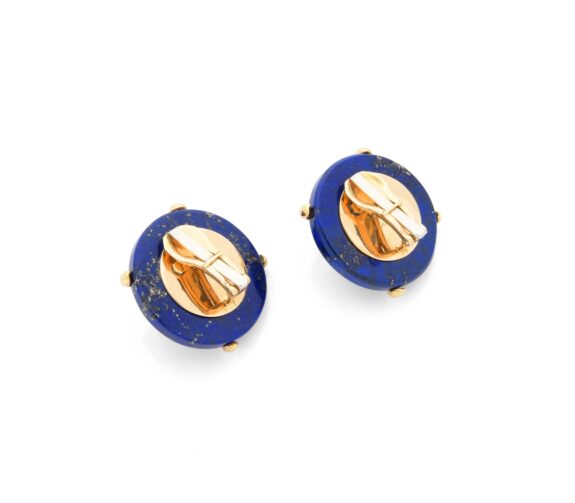
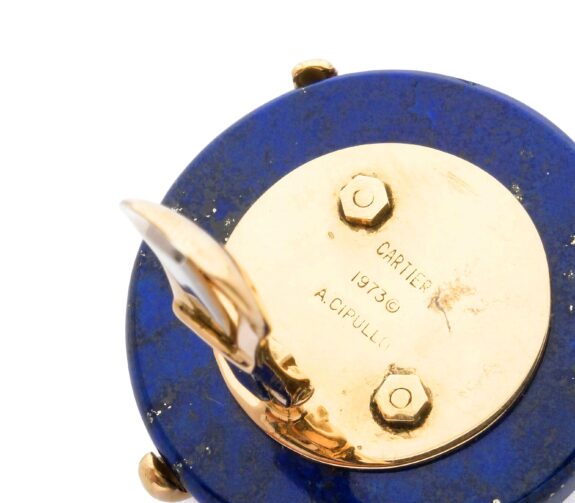
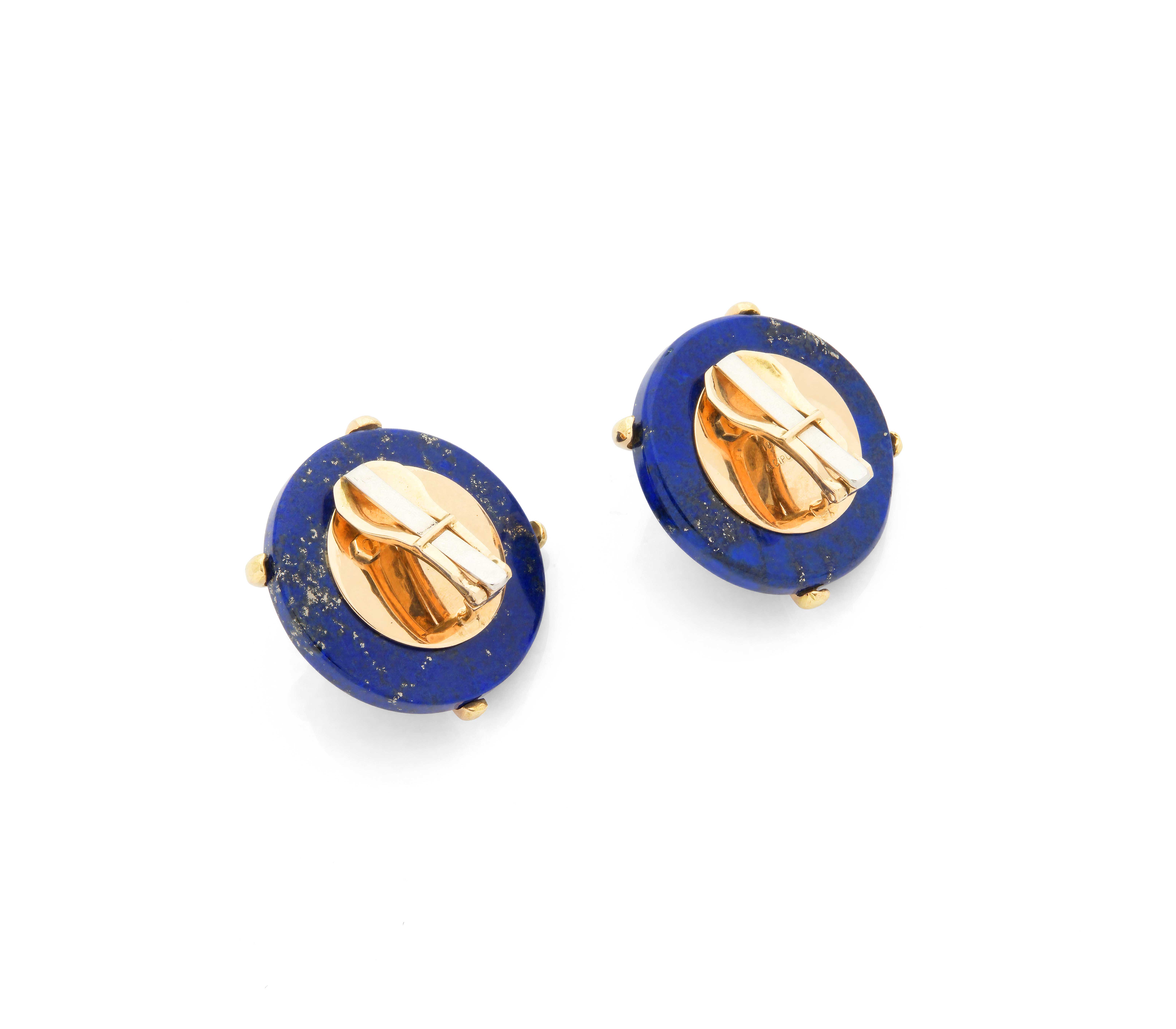
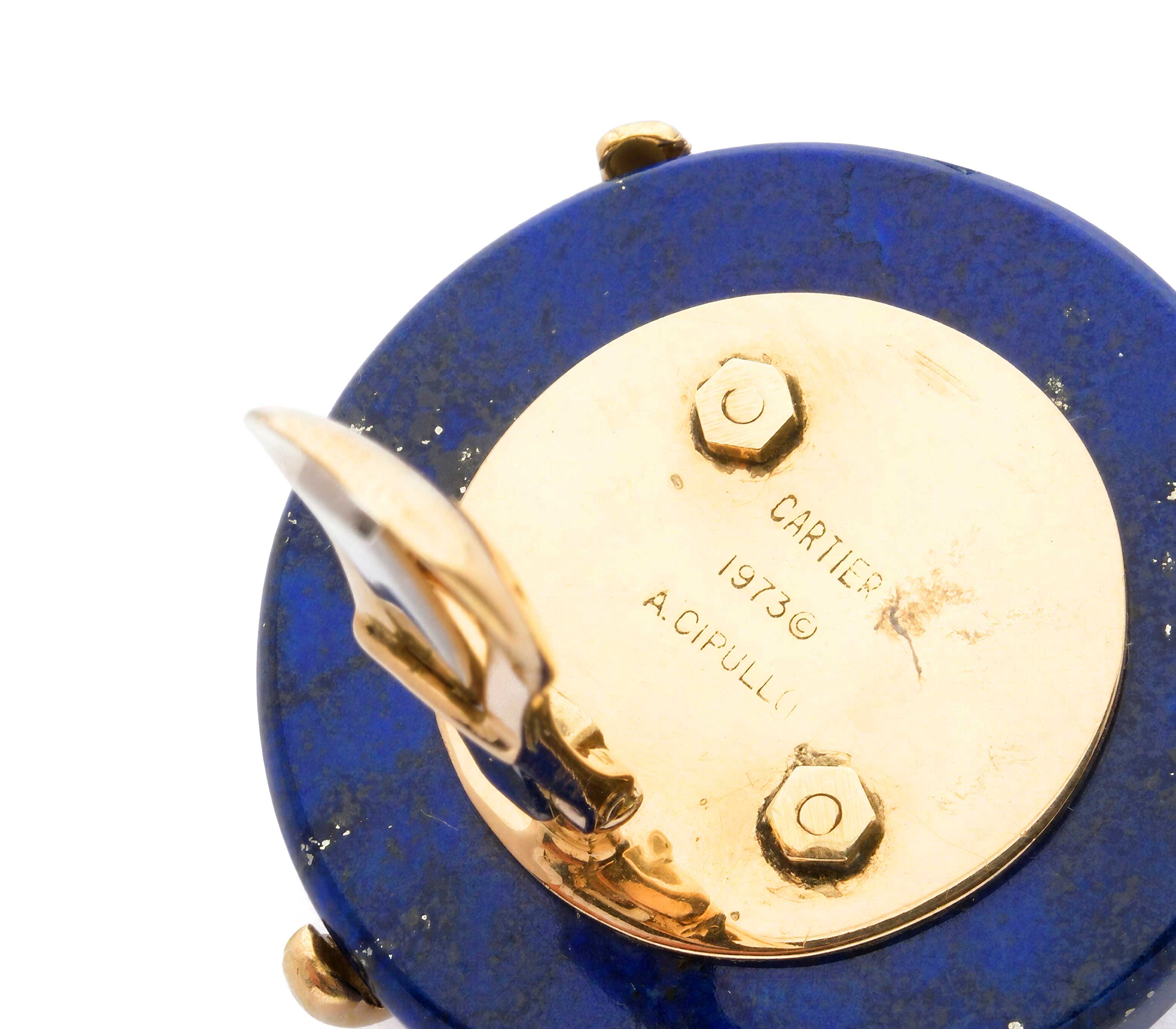
The back plate of each clip is engraved CARTIER, 1973 with the copyright mark, and A. Cipullo. The discs are held by four gold prongs at the rim, the plate secured with hexagonal bolts — Cipullo again, refusing to hide a fastening that could just as easily be made beautiful. The fittings are clips, for unpierced ears. The design is illustrated in Vivienne Becker and Renato Cipullo’s monograph Cipullo: Making Jewelry Modern (Assouline, New York, 2021, p. 135).