






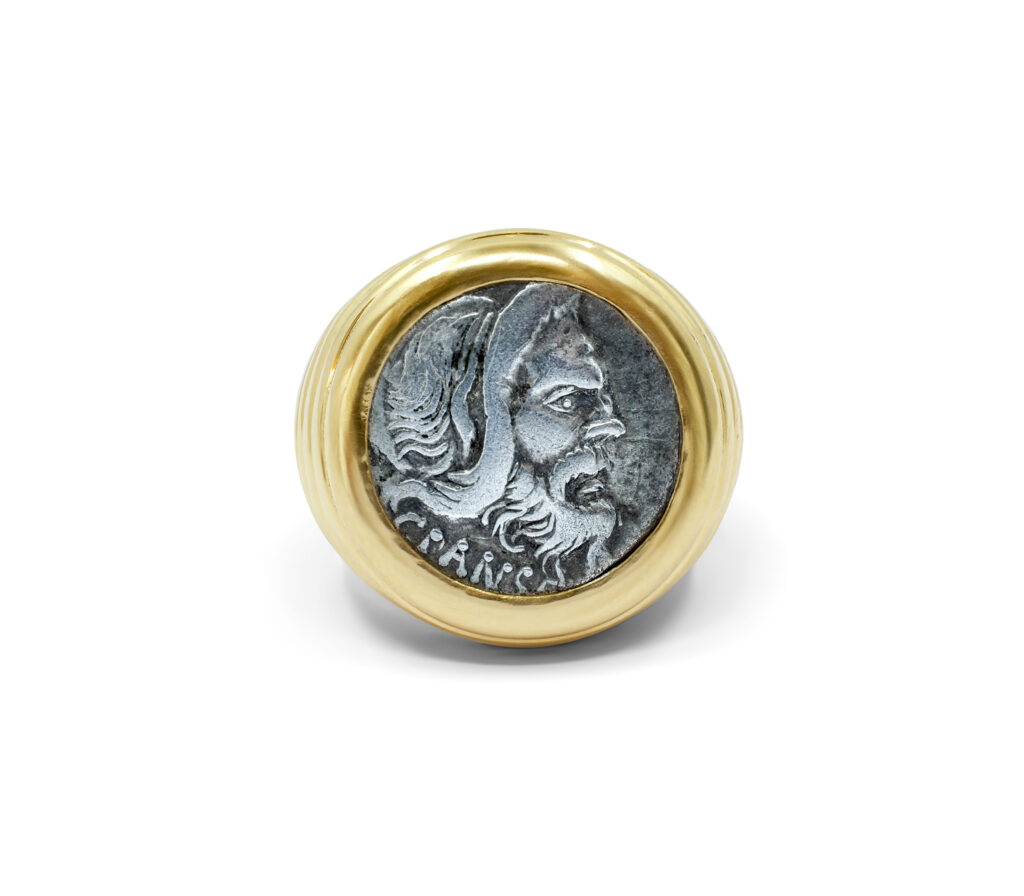
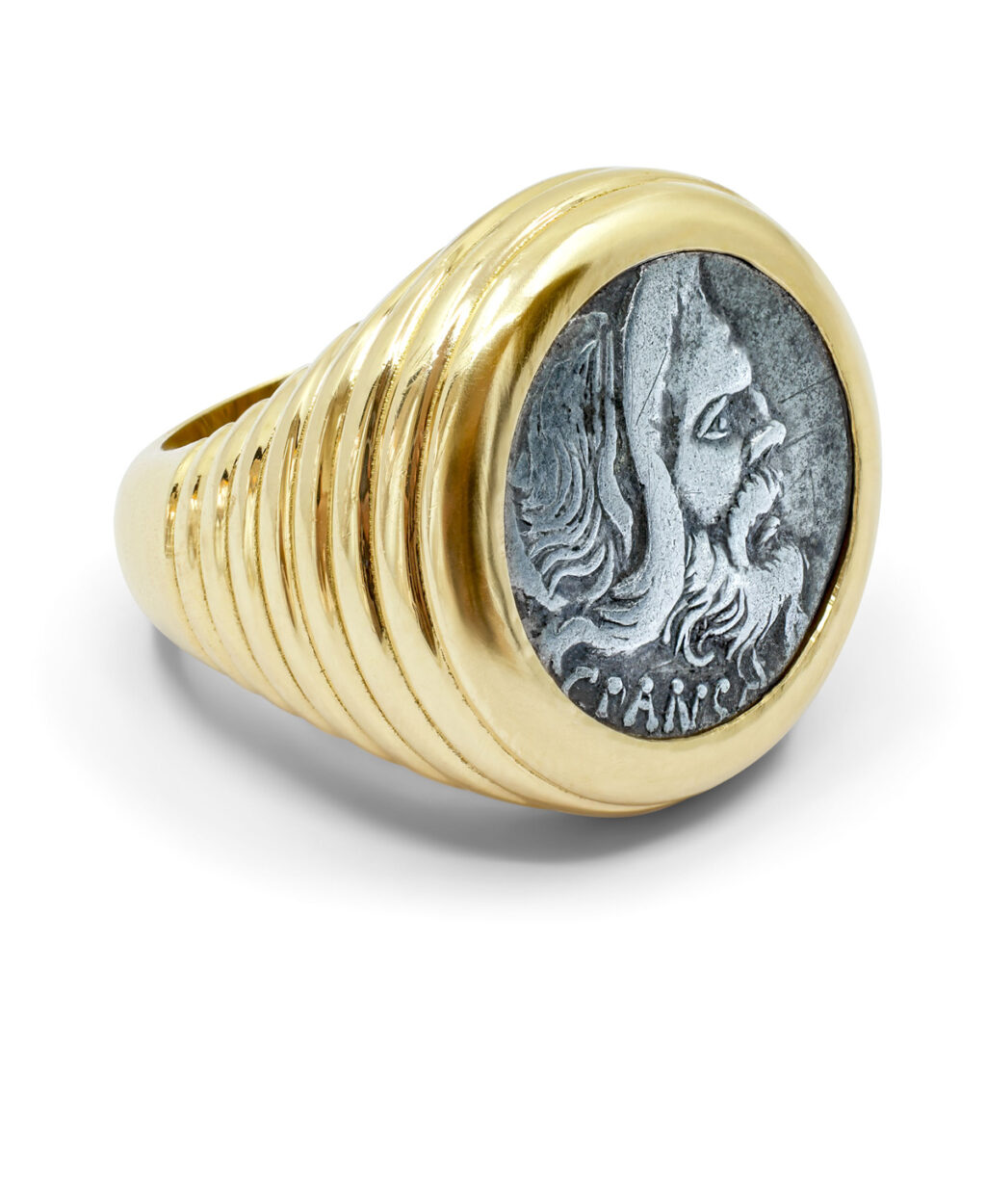
Few houses have made antiquity wearable as convincingly as Bulgari. The Monete line began in the 1960s, when Nicola Bulgari — grandson of the house’s founder and a committed numismatist — started mounting genuine ancient coins in gold, treating them with the reverence usually reserved for rare gemstones. The principle has never changed: the coin itself is left untouched. Each bezel is shaped to the contour of the individual piece, and the marks of hand-striking, the wear, and the patina are preserved as evidence of authenticity rather than corrected as flaws. It is this refusal to “improve” the coin that separates a genuine document of its era from decorative pastiche.
We are pleased to present two Monete necklaces at once — a rare opportunity to see how differently the same idea can be expressed.
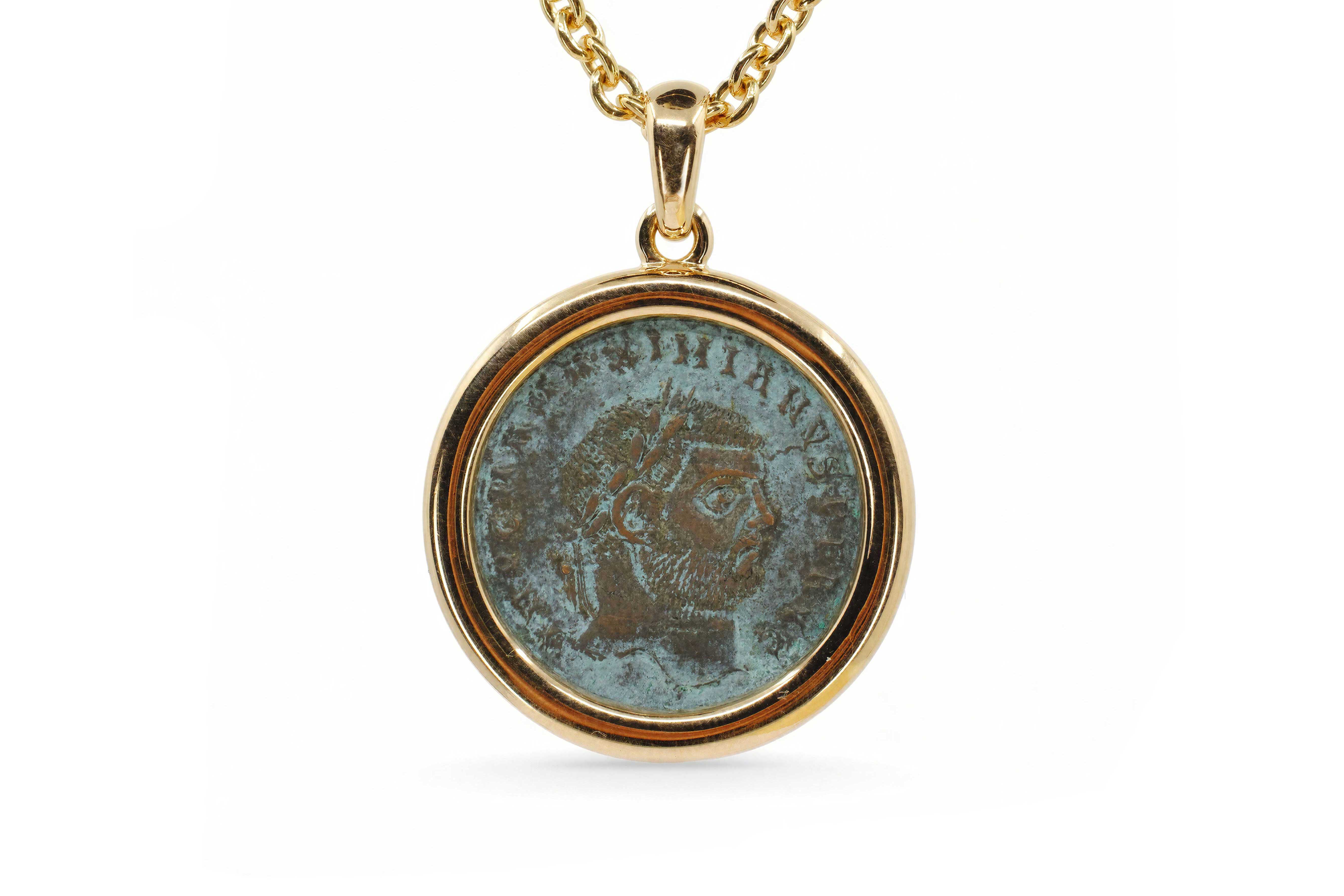
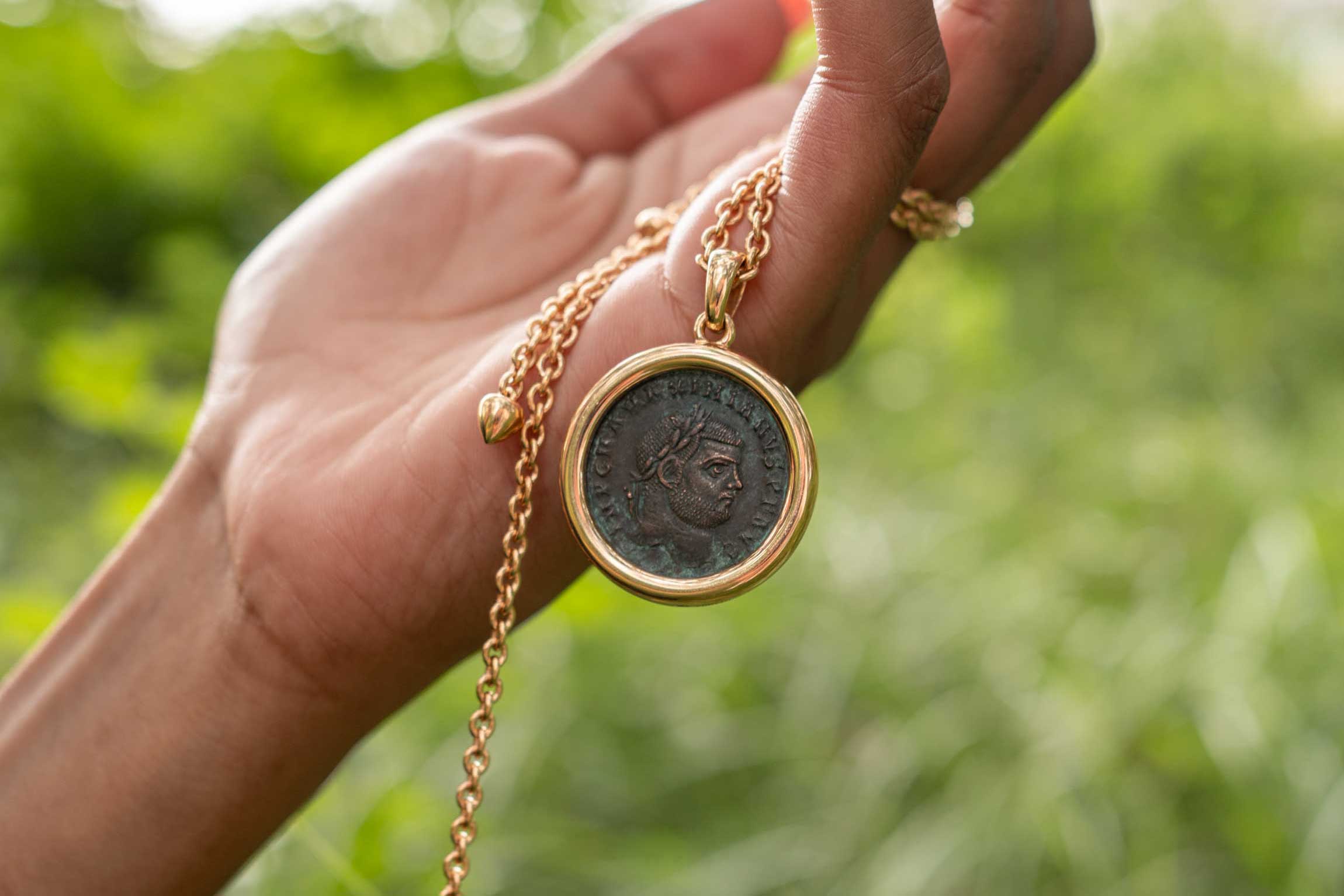
The Yellow Gold Piece: A Roman Bronze Coin
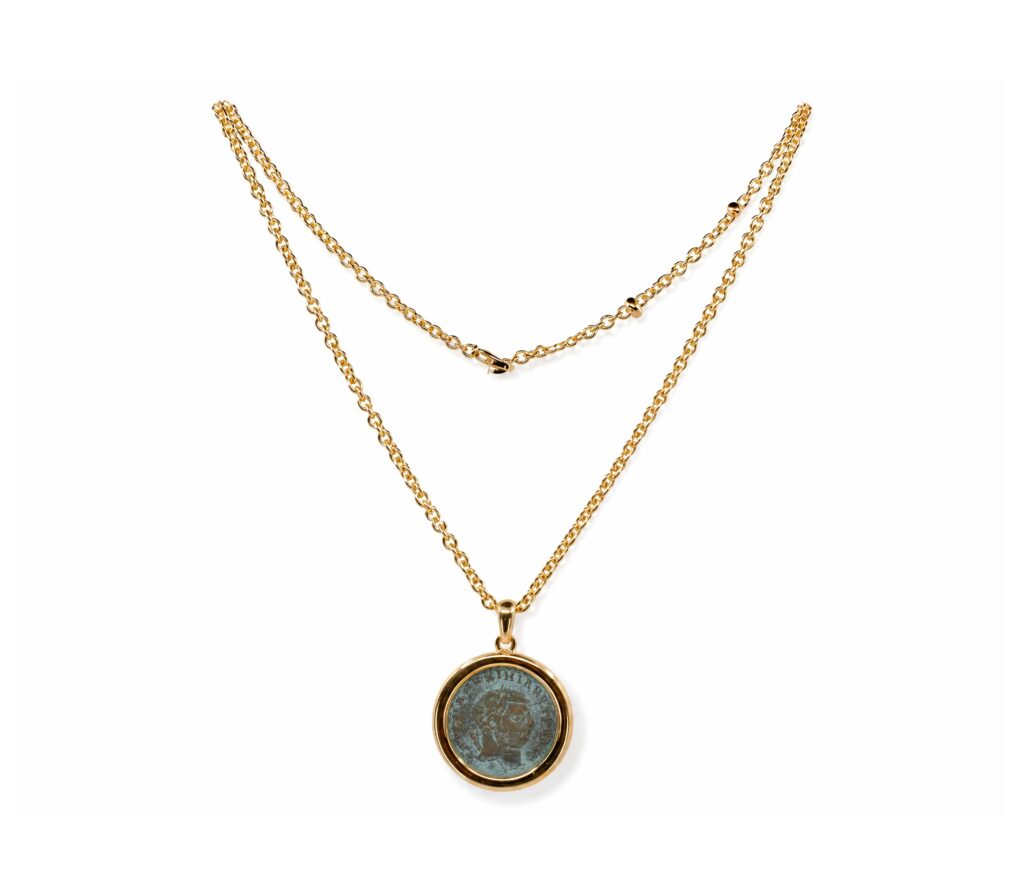
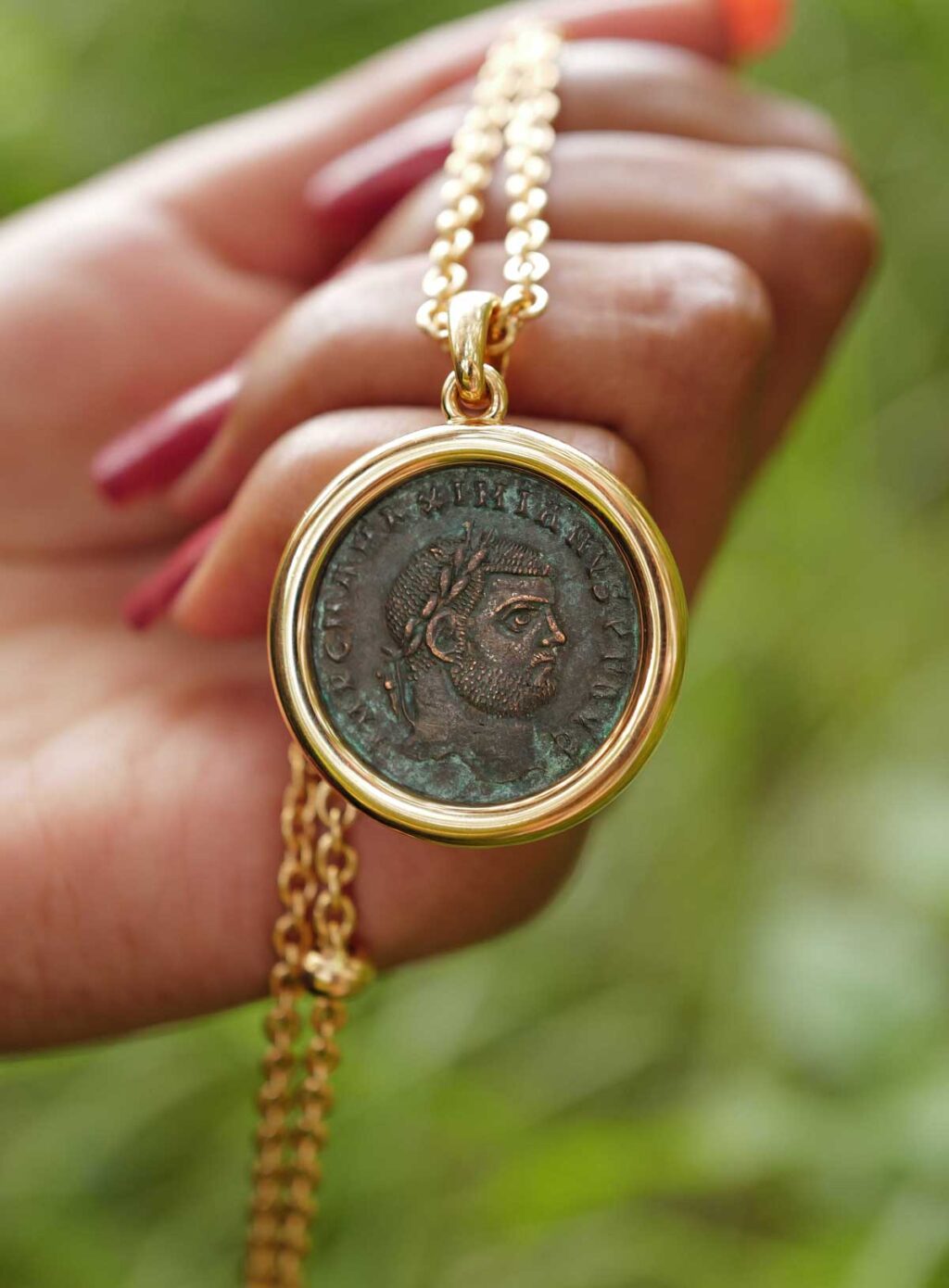
The first necklace is built in 18K yellow gold around a Roman bronze coin, 25 mm in diameter, that has survived roughly two millennia. Bronze ages differently from gold: the centuries settle on it as a deep, dark patina, and it is precisely this contrast — ancient, quiet metal against the warm glow of polished gold — that gives the piece its character. The coin hangs from a rolo-link chain; the necklace measures 48 cm in full, with a 24 cm drop that settles at the neckline. At 47.32 grams of gold, it has the substance by which connoisseurs recognise the house’s work. It is signed Bulgari, and — since no two ancient coins are alike — it is genuinely one of a kind.
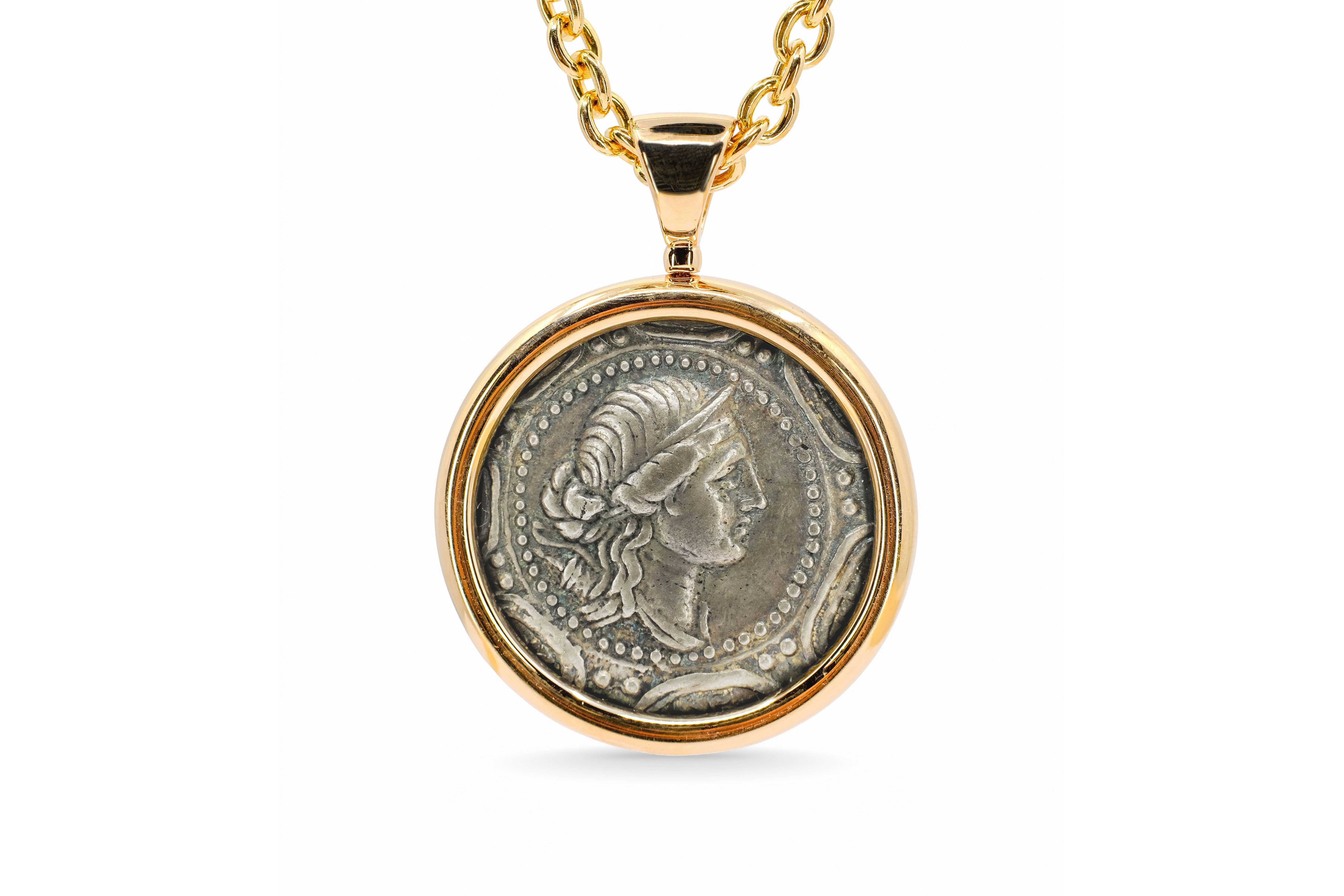
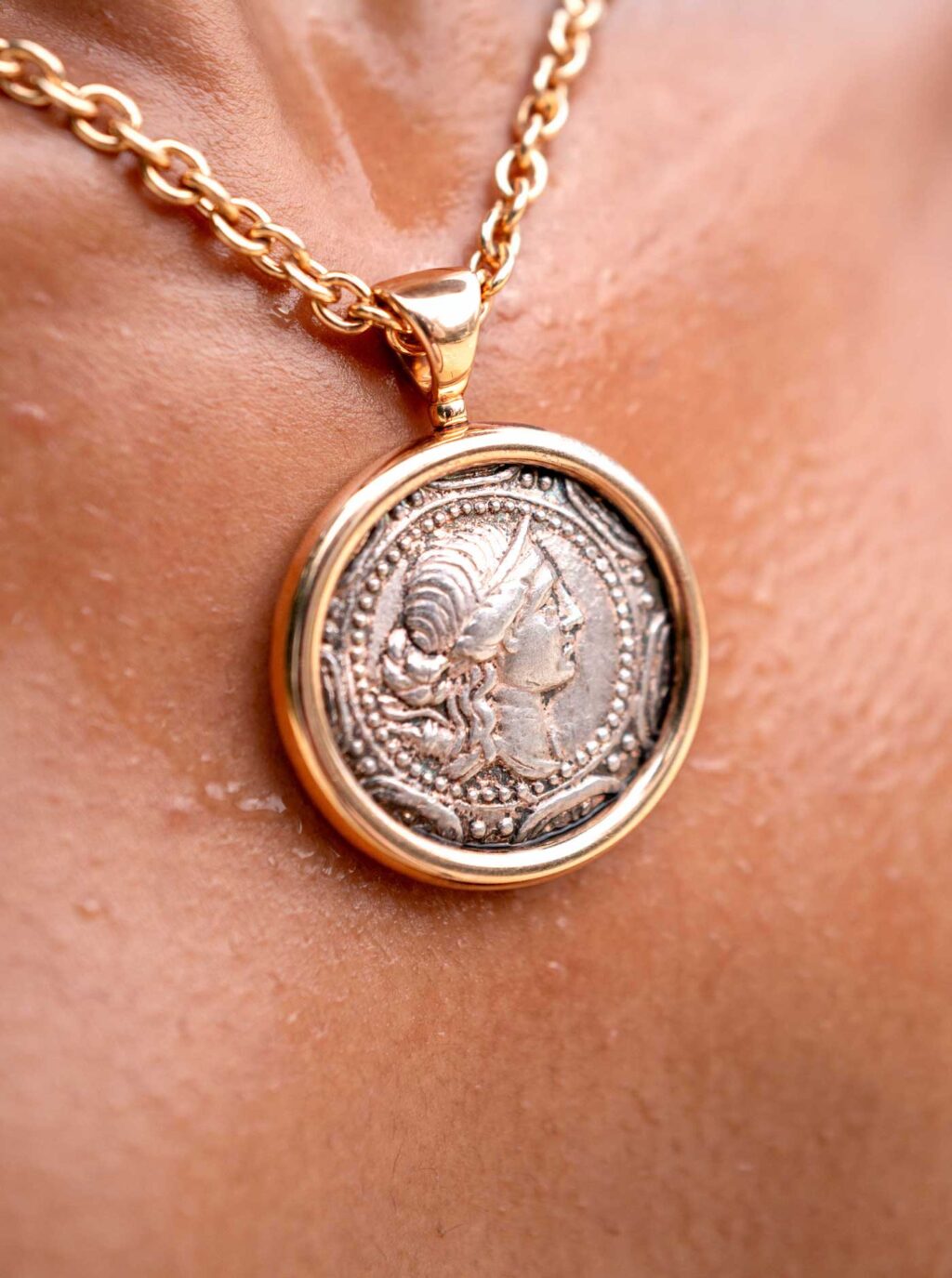
The Rose Gold Piece: A Silver Coin of Roman-Era Macedonia
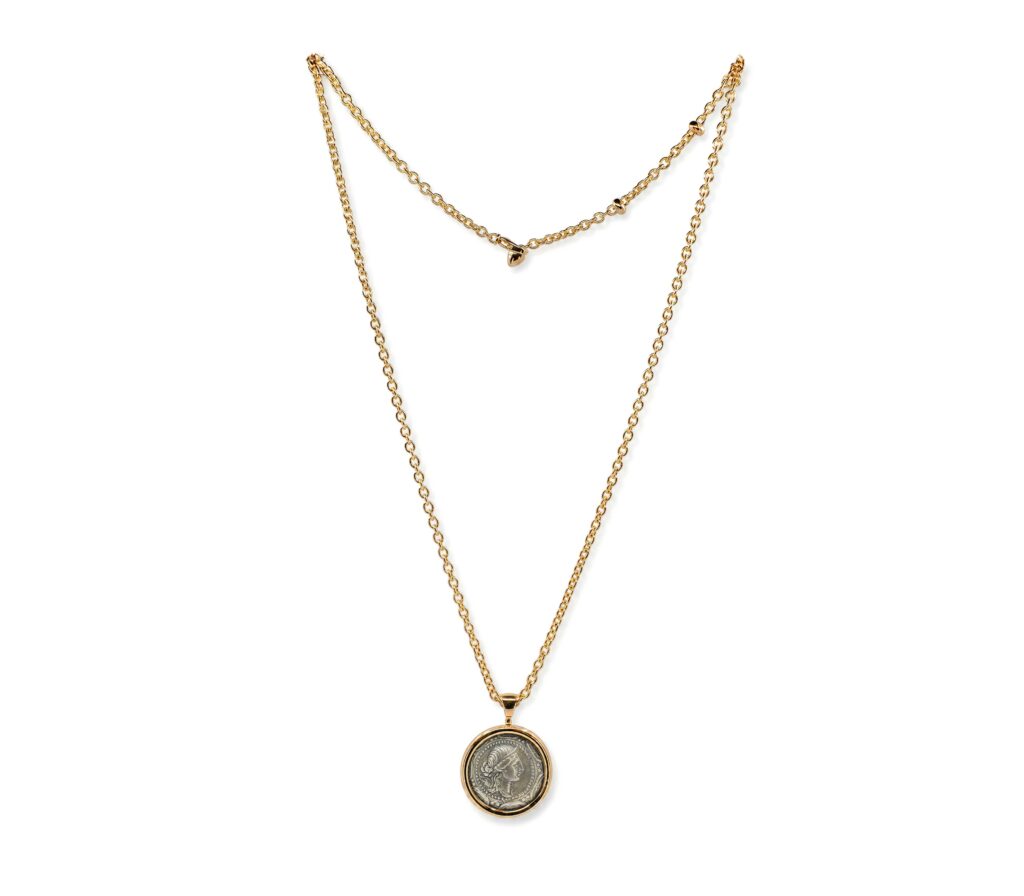
The second necklace is crafted in 18K rose gold and centres on a genuine silver coin from Macedonia under Roman rule, struck in approximately 158–150 BC — a moment when the old Macedonian kingdom had already entered Rome’s orbit. The coin, 27 mm in diameter, sits within a restrained polished bezel, suspended from a 68 cm chain with a 34 cm drop. Its authenticity and antiquity are confirmed by a Bulgari certificate issued without time limit. As with every Monete creation, its uniqueness is a matter of fact rather than phrasing: no two ancient coins are alike, and so no two necklaces can ever be.
A Monaco Thread
The Monete collection has a particular connection to the Principality: in 1972, in Monte Carlo, Princess Grace of Monaco was seen wearing a necklace from this line. For a gallery based in Monaco, these two pieces are more than jewels — they are a tangible thread drawn from the ancient Mediterranean to the modern tradition of high jewellery, and to the place where that tradition has long felt at home.
Both necklaces are available to view by private appointment. To enquire, please contact us through our website or reach out directly.