The Stone That Earned Its Place in Every Royal Collection
Sapphire’s association with royalty is not metaphor — it is documented history. The sapphires of the British Crown Jewels, the engagement ring that passed from Princess Diana to Catherine, Princess of Wales, the great Burmese stones in European royal collections: all reflect a consistent judgment across centuries that blue sapphire represents something close to the apex of colored gemstone desirability. That judgment has proven durable precisely because it is grounded in the stone’s genuine qualities rather than fashion.
Corundum achieves its blue through trace amounts of iron and titanium within the crystal lattice. The finest color — described in the trade as “royal blue” or “cornflower blue” — balances saturation with brightness in a way that lesser stones, either too dark or too pale, fail to achieve. Kashmir sapphires, mined at altitudes above 5,000 metres in a deposit essentially exhausted by the early 20th century, set the historical standard with a velvety, slightly milky quality unlike any other origin. Burmese material from Mogok offers intense, vivid blue; Sri Lankan stones tend toward a brighter, lighter tone and represent the most consistent source of certified fine sapphires available today.
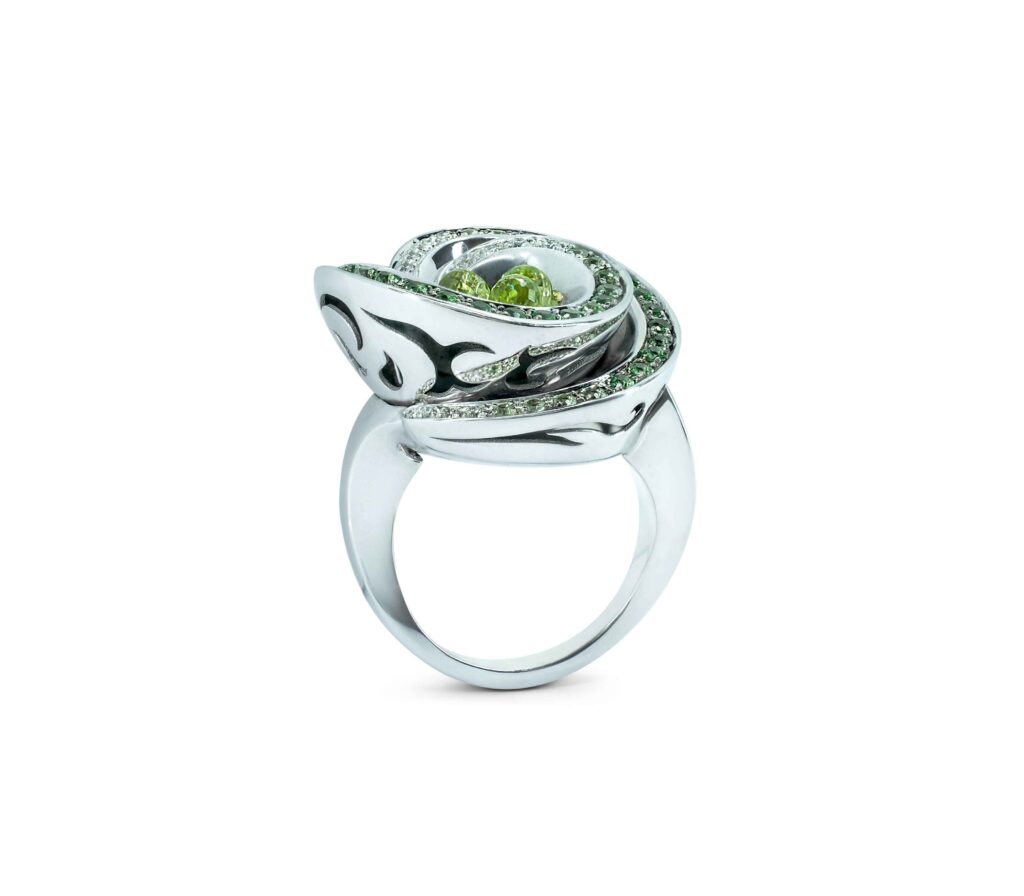
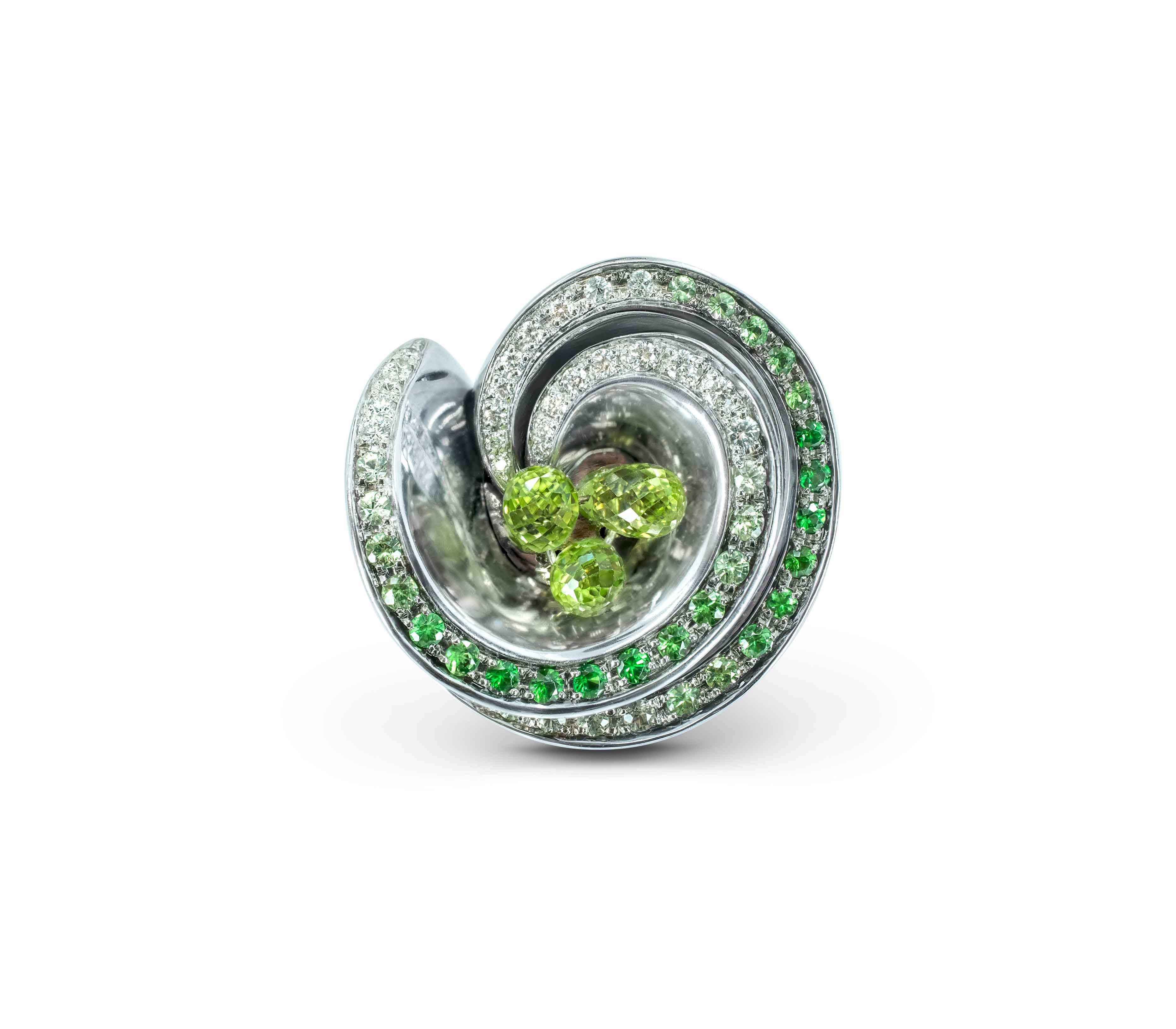
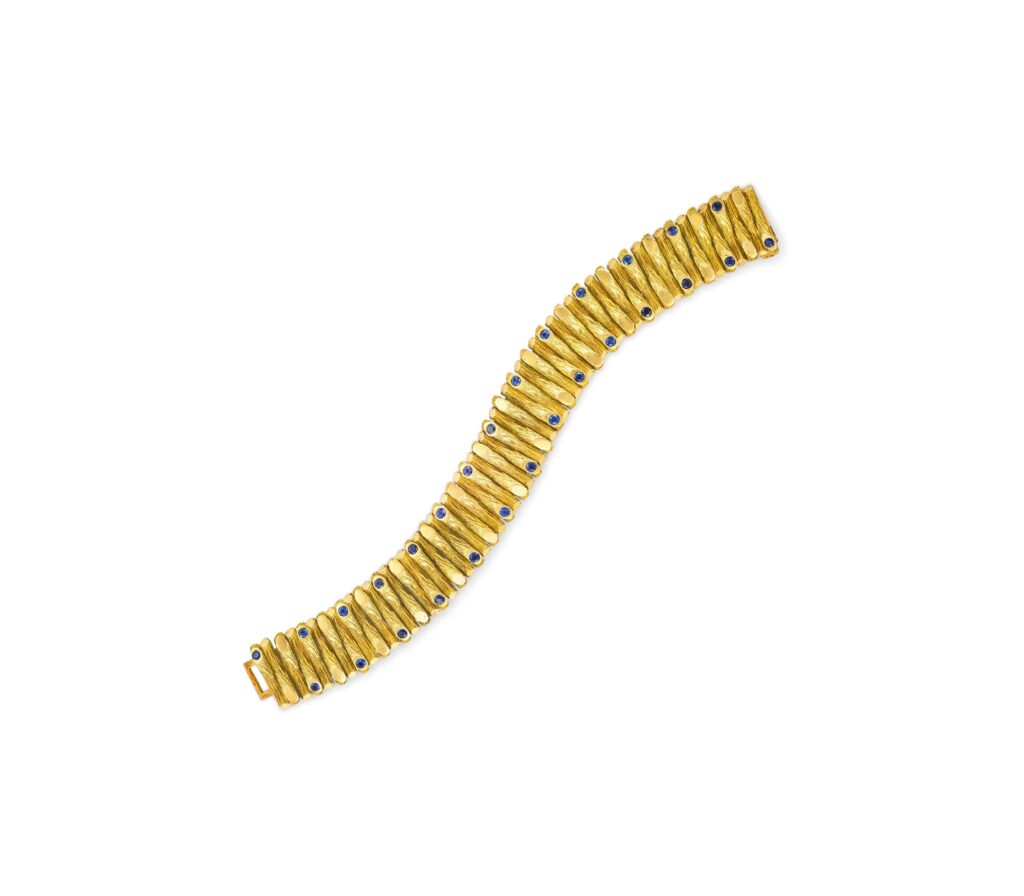
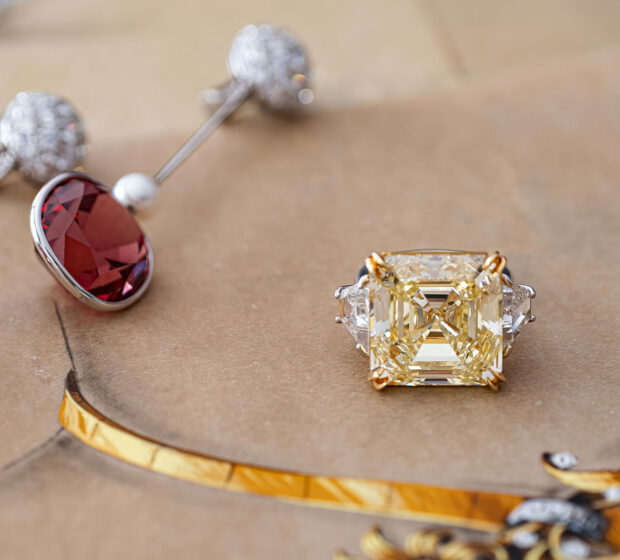
Beyond blue, corundum produces the full chromatic spectrum — yellow, pink, green, violet, and the exceptional padparadscha, a salmon-pink-orange variety so rare it merits its own category in gemological grading. For collectors who approach the species seriously, that breadth makes sapphire one of the most rewarding subjects for unique fine jewelry and custom design jewelry: a single mineral family capable of anchoring compositions of entirely different chromatic character.
Heat Treatment and the Variables That Actually Matter
Heat treatment is the defining variable in sapphire valuation. The overwhelming majority of sapphires on the market have been heated to improve color and clarity — a practice so widespread it is considered standard. An unheated sapphire of fine color with a GRS or Gübelin certificate confirming “no heat” commands a premium of two to five times over a comparable heated stone, sometimes more for exceptional Kashmir or Burmese material. Origin and treatment status, verified by laboratory documentation, are the first criteria Eduard Grygorian applies — before any design consideration begins.
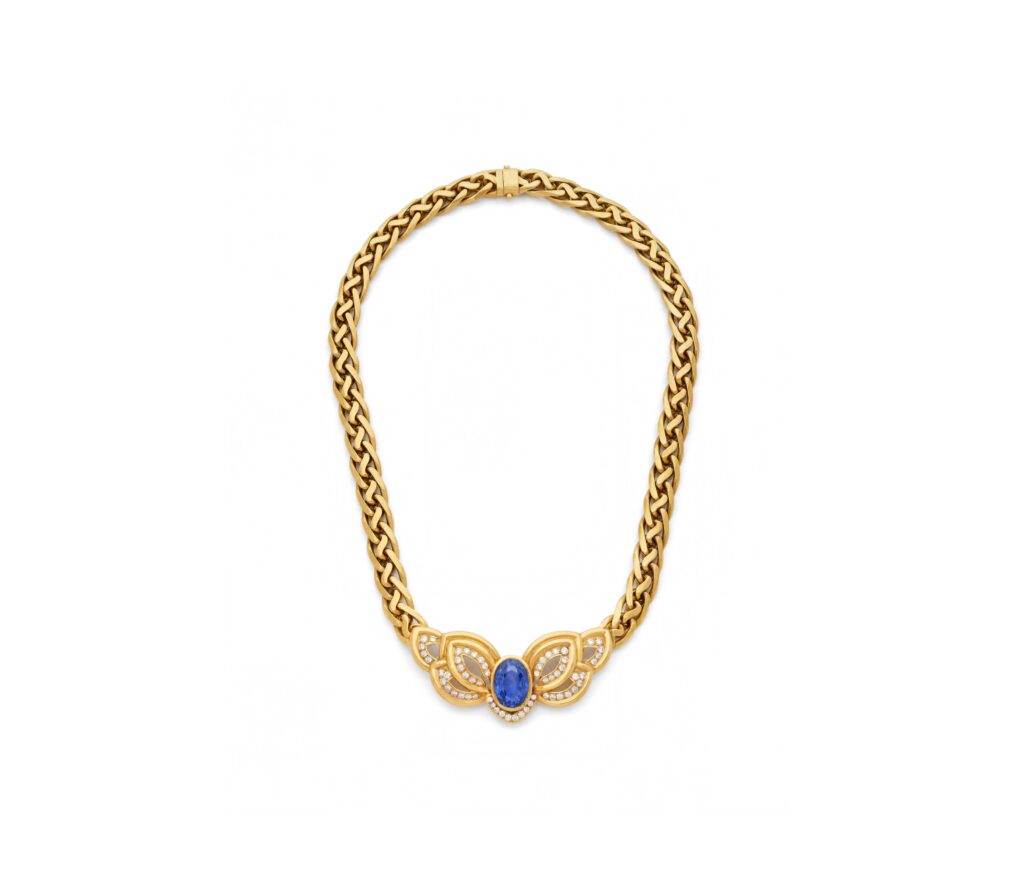
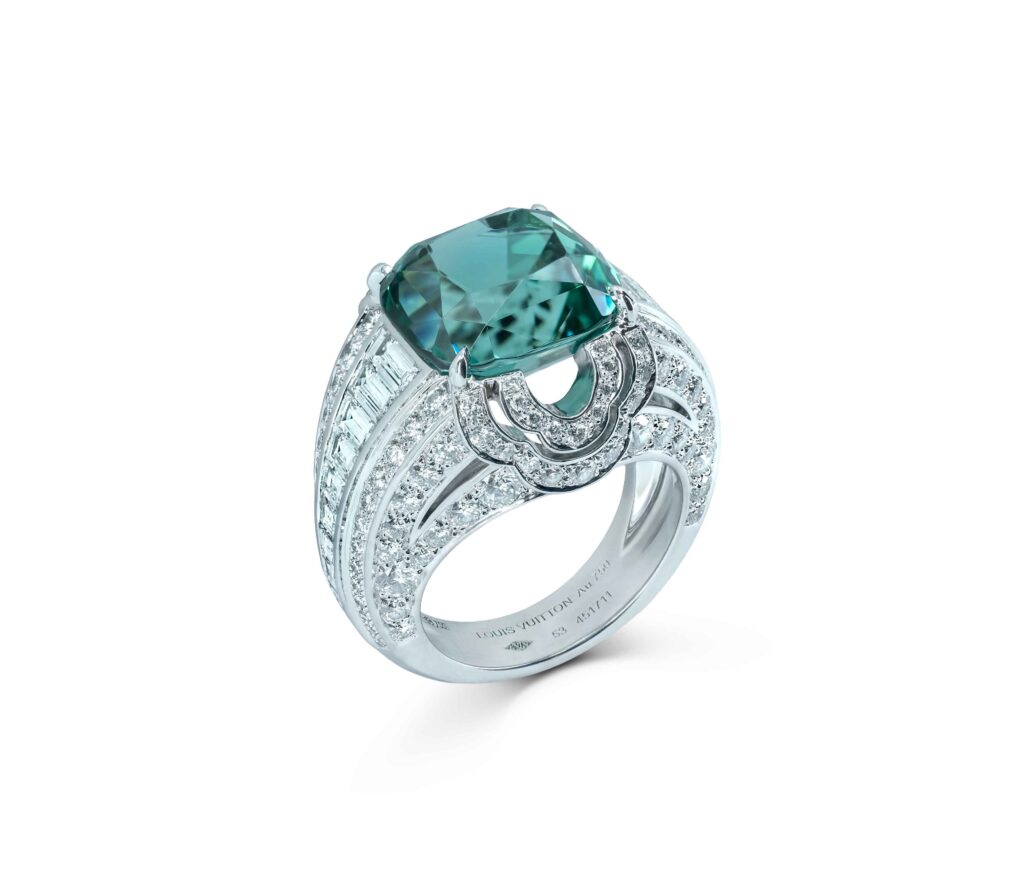
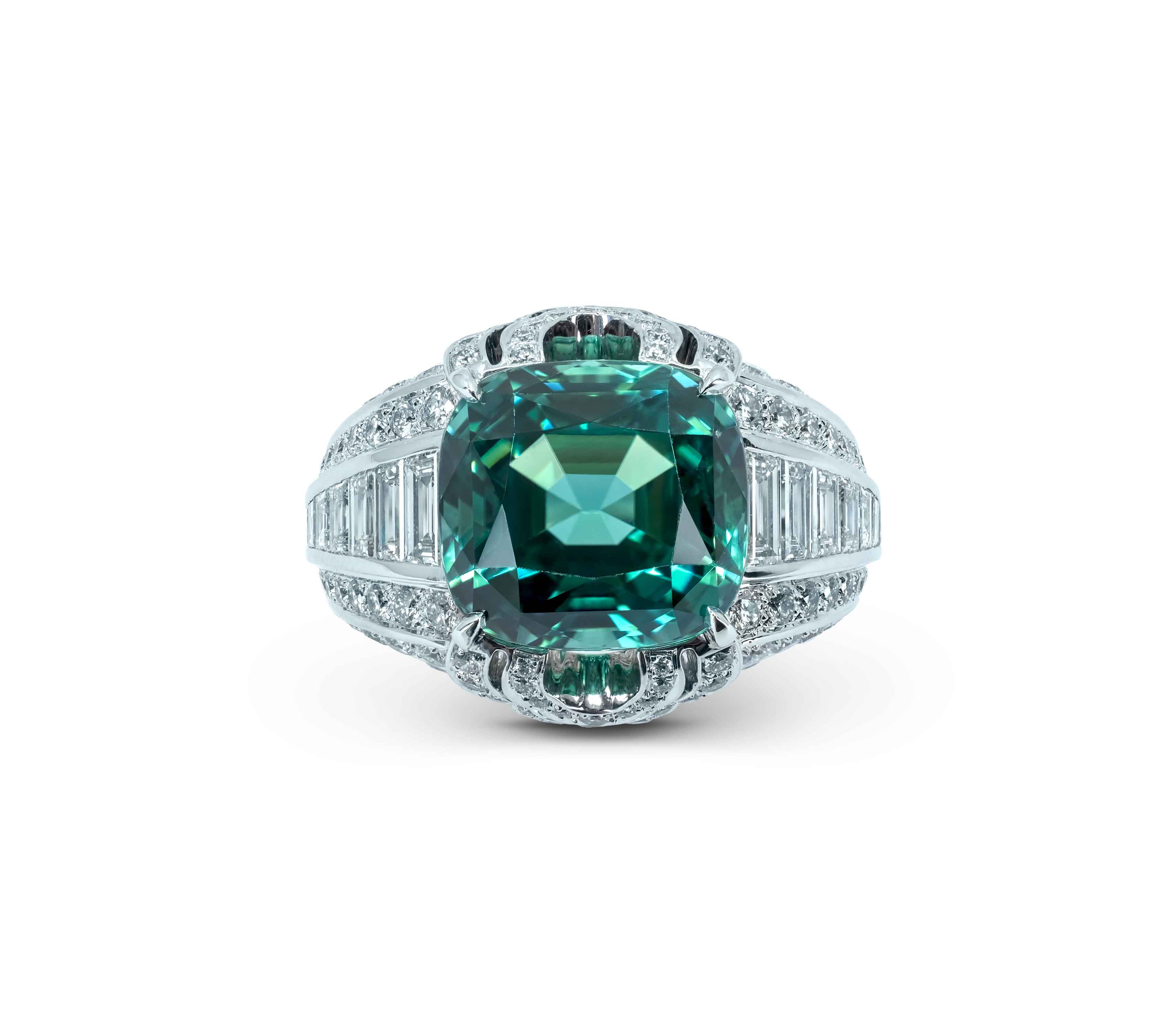
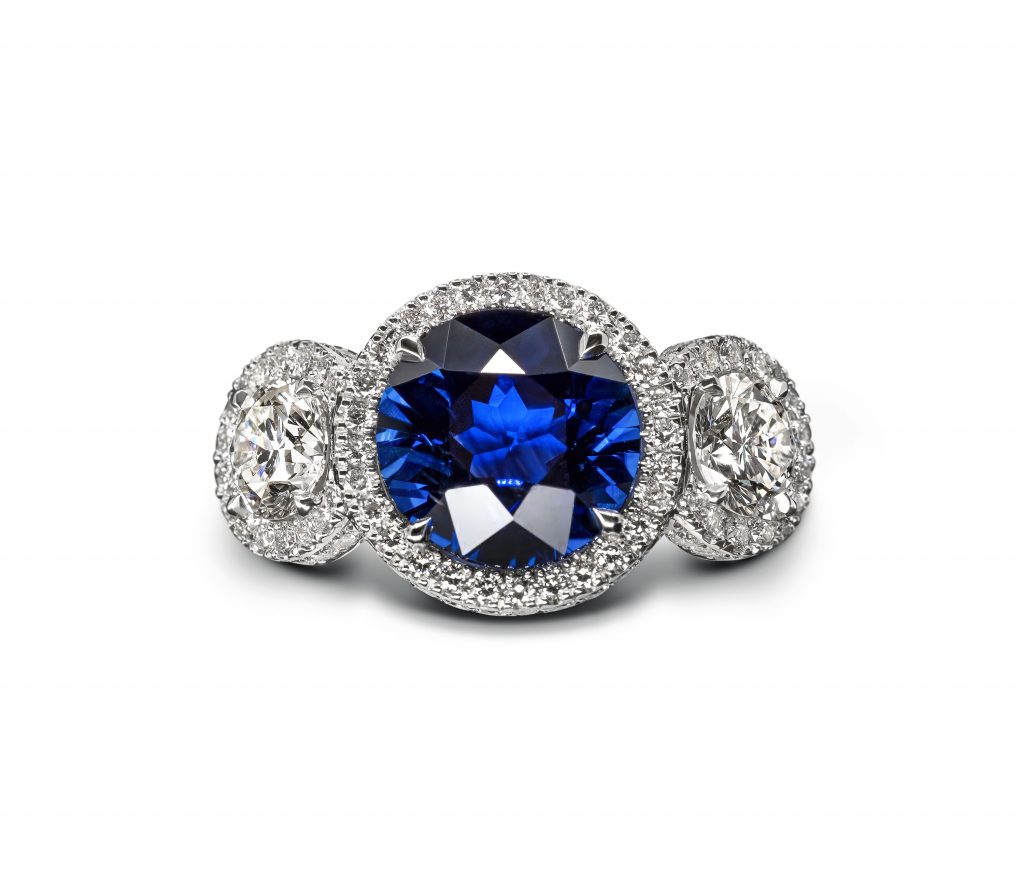
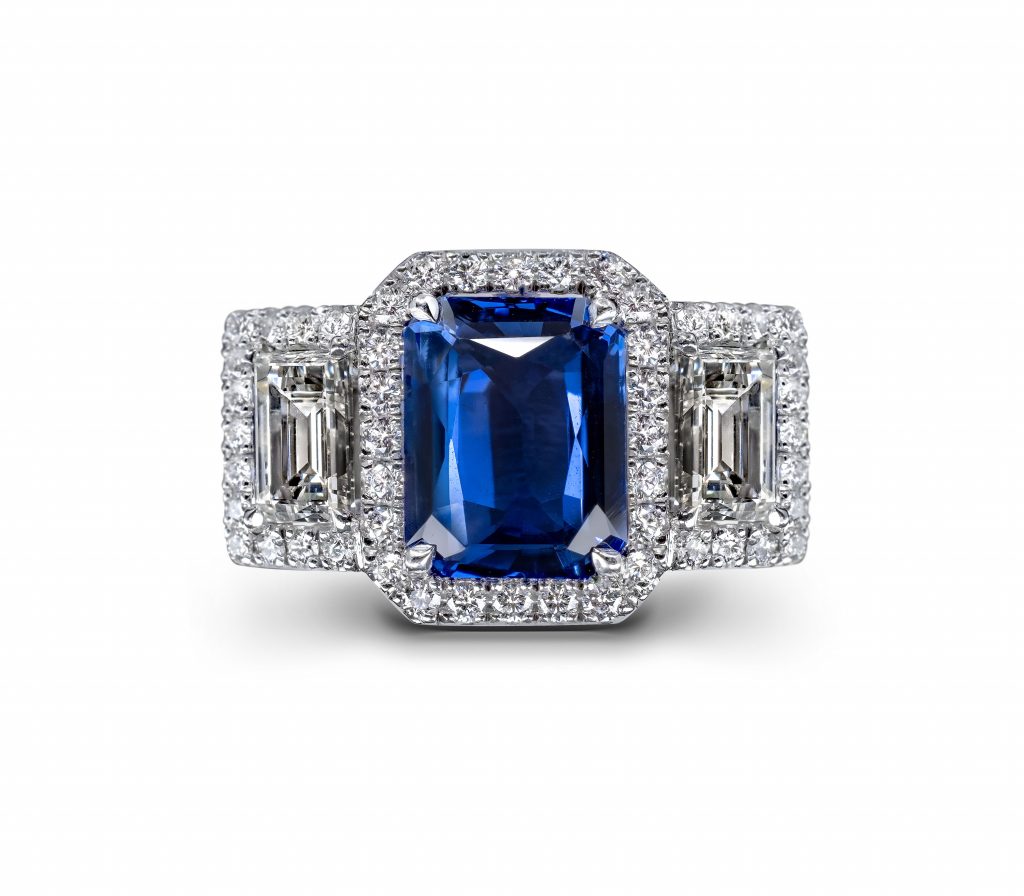
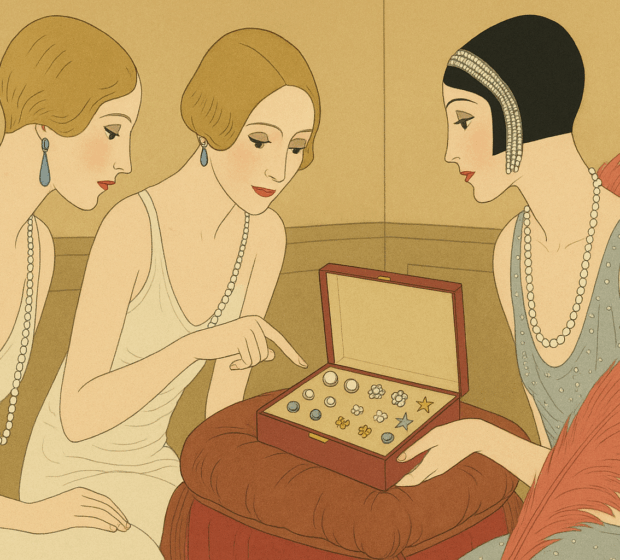
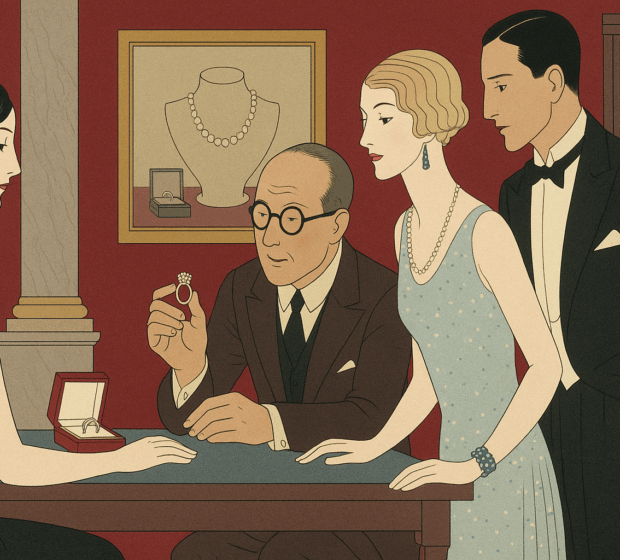
Each piece reflects the stone’s specific character. Platinum and white gold serve blue sapphire’s cool chromatic register without introducing competing warmth; micro-pavé diamond surrounds amplify the center stone’s apparent saturation through brilliance contrast. Three-stone configurations place sapphire in dialogue with oval or baguette-cut diamonds — a compositional approach with roots in Art Deco high-end custom jewelry that remains among the most architecturally resolved settings in fine jewelry.
Grygorian Gallery’s custom-made sapphire pieces leave our Monaco atelier with a maker’s mark and exist in a single copy — bespoke luxury pieces where provenance and design have been resolved with equal care.
A Stone With Proven Market Depth
Few colored gemstones have the auction track record of fine sapphire. Kashmir stones regularly set per-carat records at Christie’s and Sotheby’s; fine unheated Burmese and Sri Lankan material above 5 carats with strong certificates represents a genuinely limited pool of assets whose scarcity only compounds with time.
Each piece is available as shown: a fully realized creation where stone selection, certification, and setting have already been resolved. Acquiring luxury custom pieces built around certified natural sapphire represents both an aesthetic decision and a sound investment in a market with demonstrated long-term depth.
For collectors with a specific origin, color, or design brief in mind, bespoke sapphire jewelry by Grygorian Gallery is available by private consultation — a made-to-order path to a creation built around your stone. Worldwide insured shipping is available to collectors globally.