Coral in Fine Jewelry
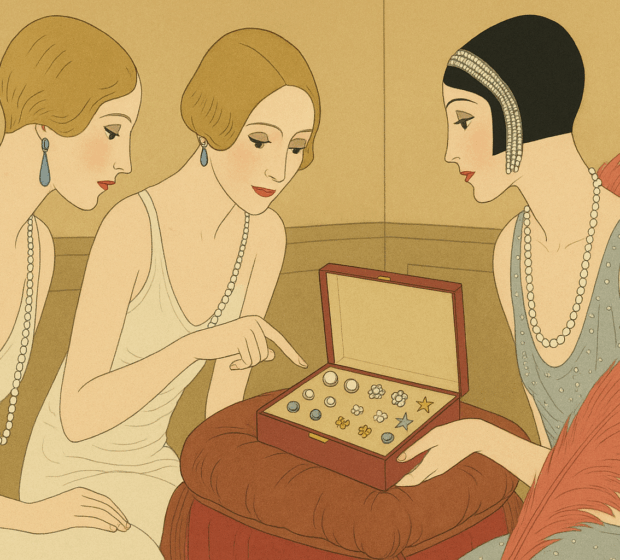
Coral has adorned royalty, aristocracy, and collectors since antiquity. Roman children wore coral amulets for protection; Renaissance portraits show it draped across noble shoulders; Victorian parures elevated it to high fashion alongside diamonds and gold. That continuity across cultures and centuries is not coincidence — it reflects something genuine about the material itself: a warmth and depth of color that no synthetic substitute has convincingly replicated.
The most prized variety in fine jewelry is Corallium rubrum, the deep red and salmon-pink Mediterranean coral harvested for millennia off the coasts of Sardinia, Sicily, and the Maghreb. International conservation regulations introduced under CITES have sharply restricted its trade since the 1980s, which means natural coral of genuine quality — particularly older, pre-restriction material with documented provenance — has become increasingly scarce. That scarcity is now a meaningful part of its value.
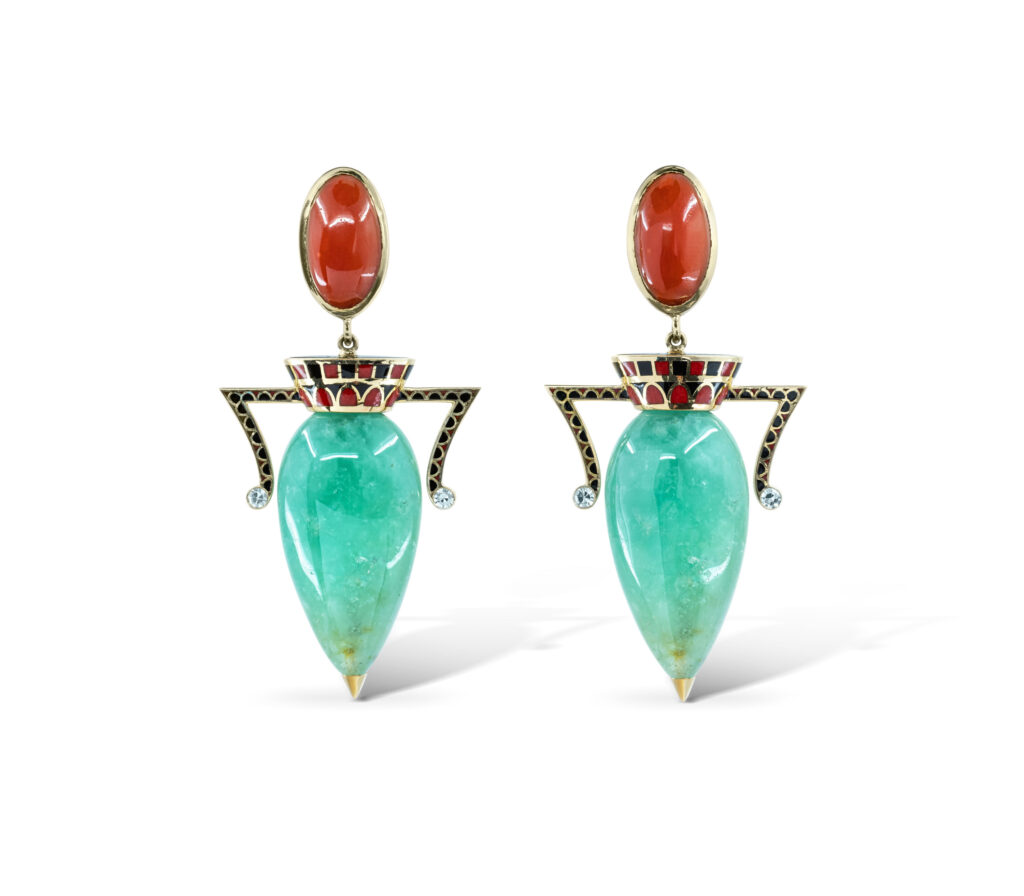
Coral used in high-end custom jewelry typically appears as polished cabochons, where the smooth domed surface concentrates color and reveals the material’s natural luminosity. The absence of faceting is deliberate: coral’s beauty lies in its organic warmth rather than optical brilliance, and cabochon cutting honors that character.
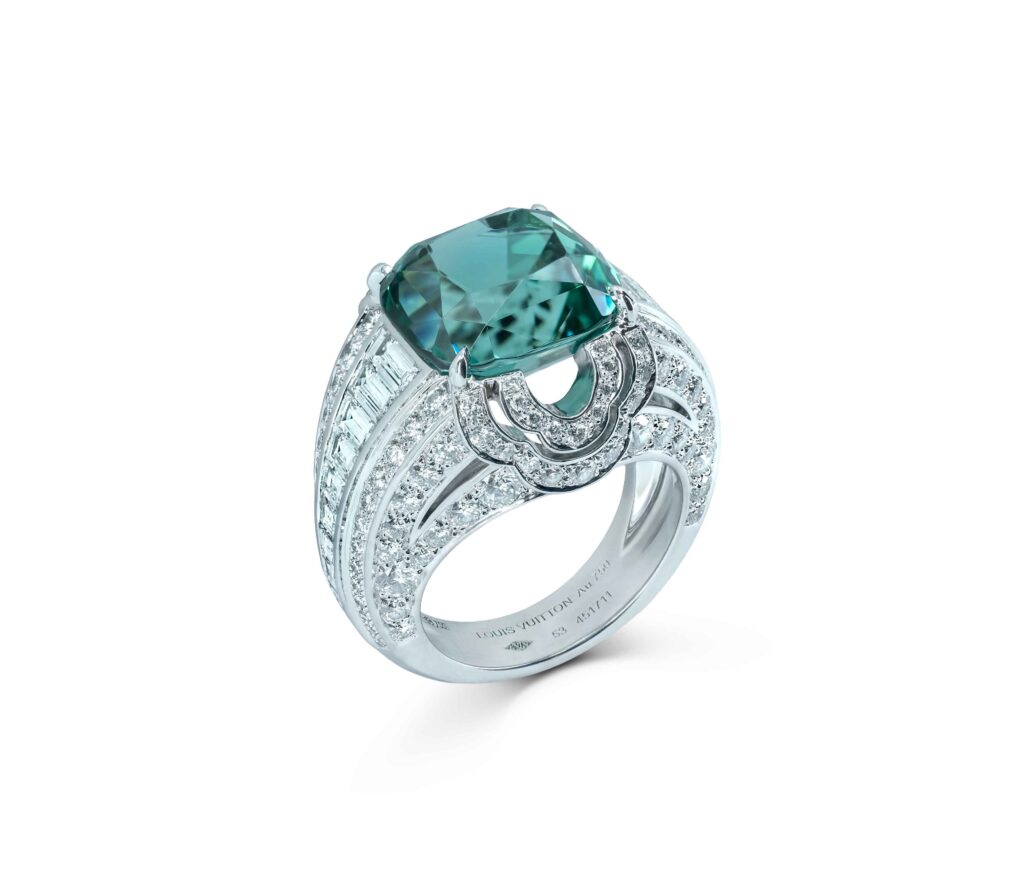
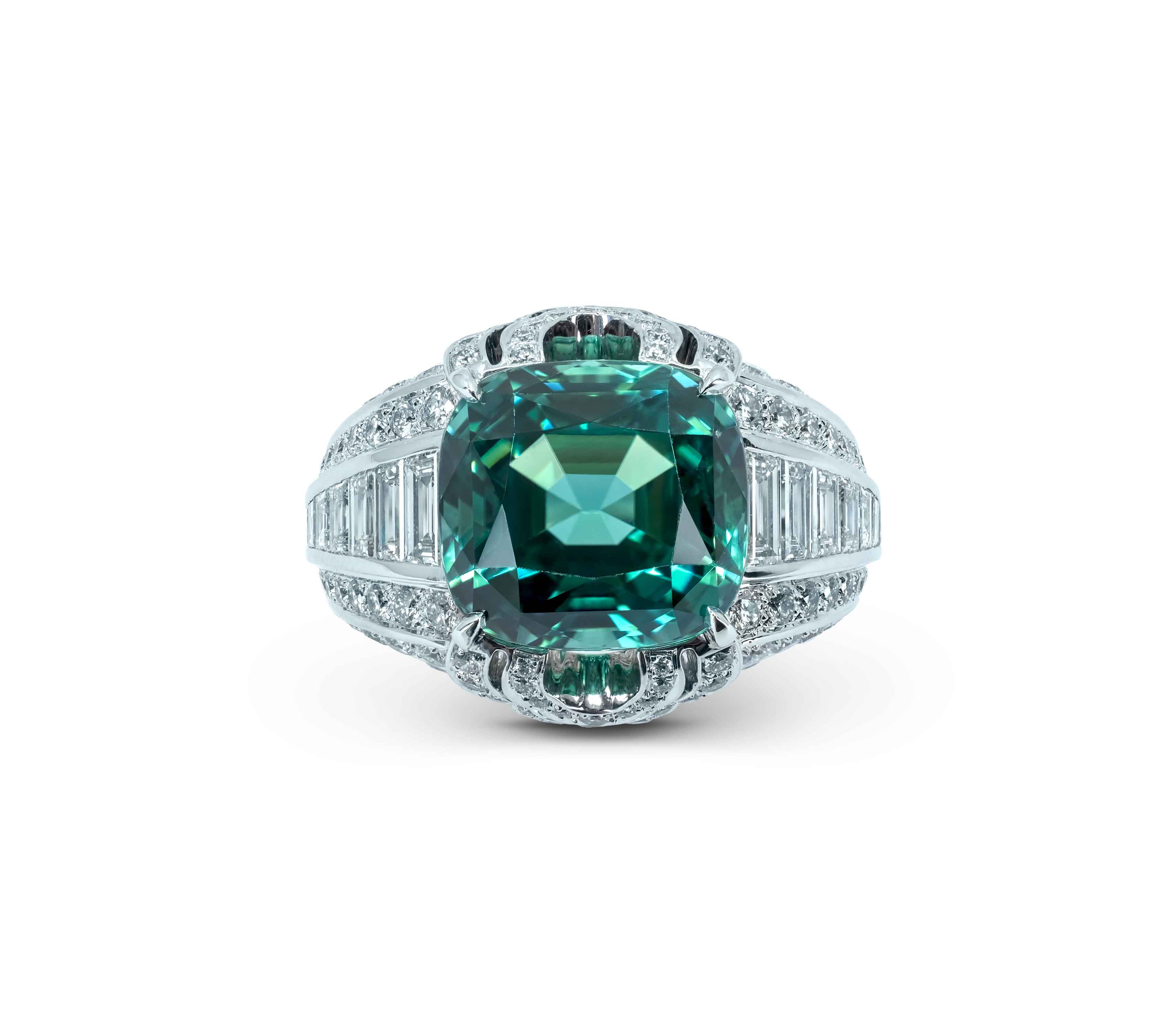
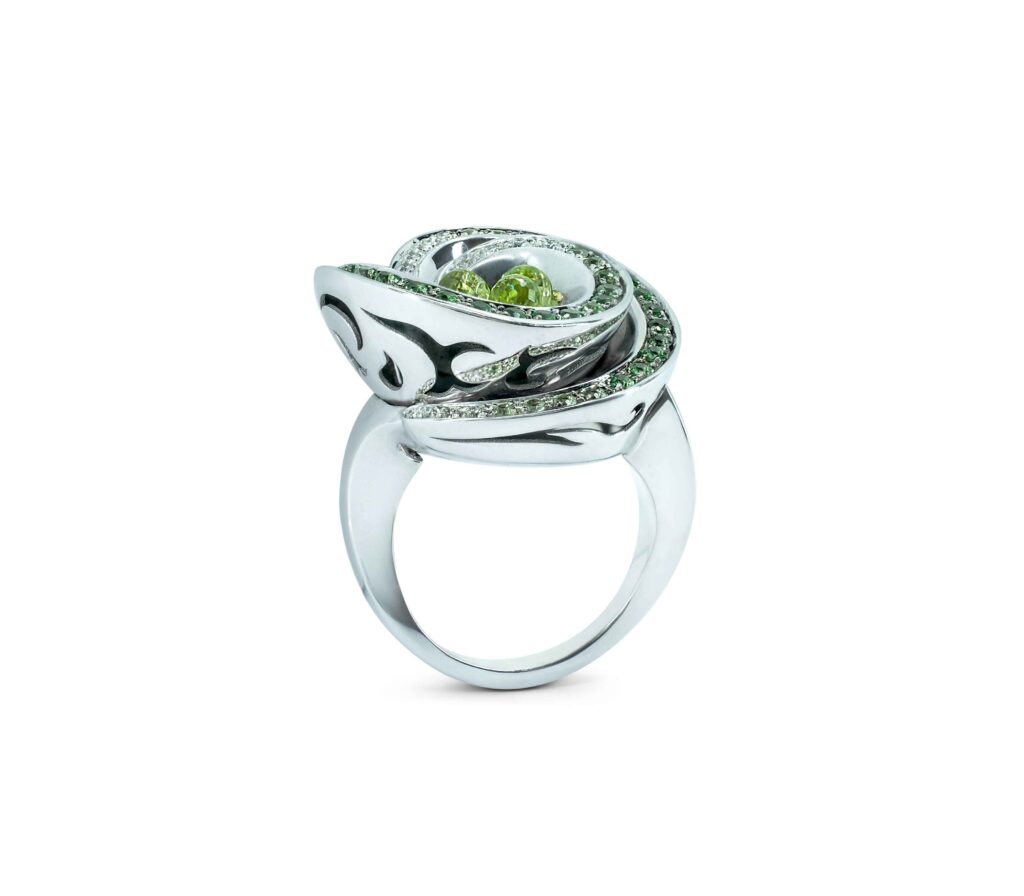
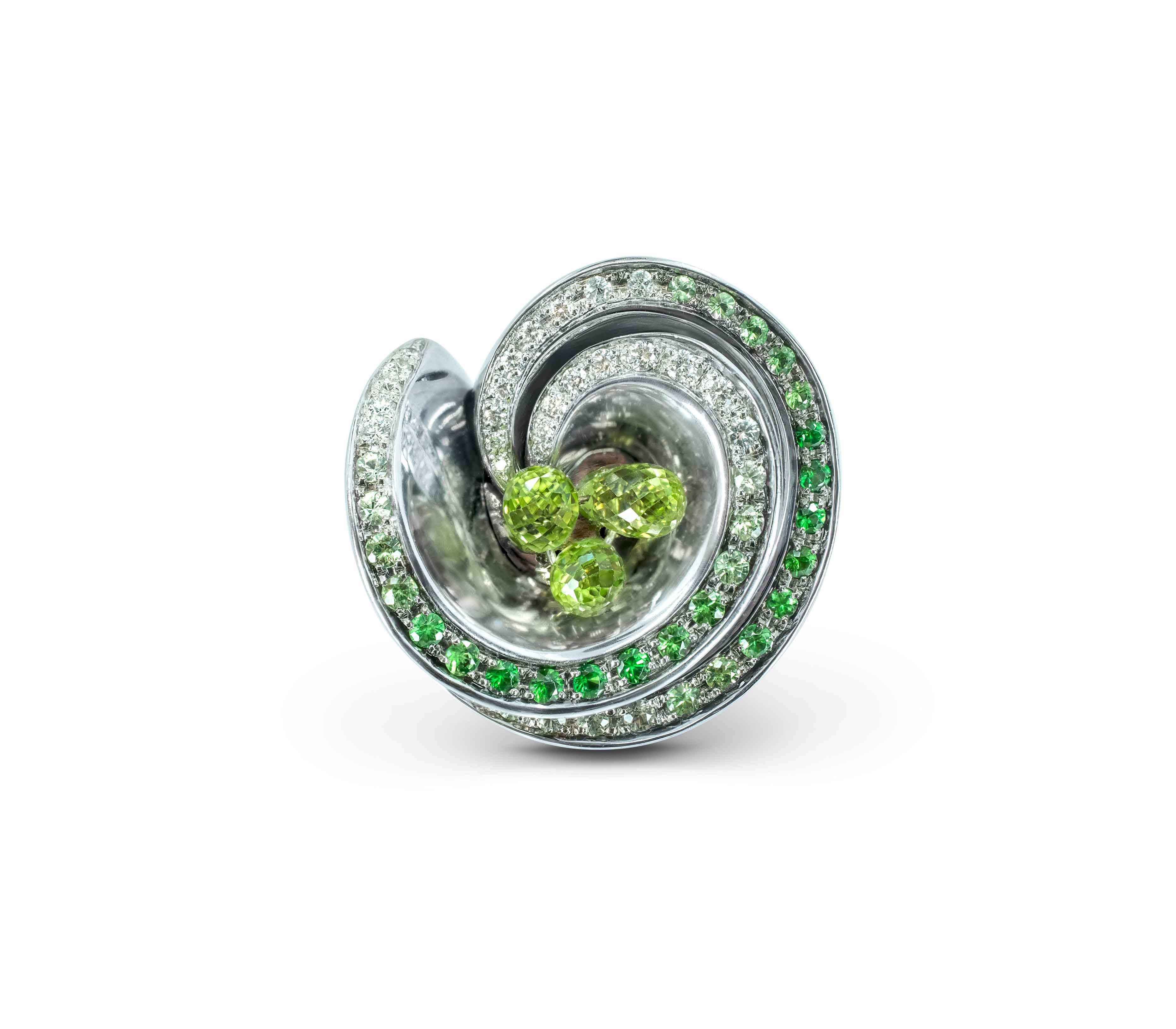
In haute joaillerie, coral has historically served as a chromatic anchor — its saturated orange-red providing contrast against diamonds, black enamel, and green stones in compositions that range from Art Deco geometry to bold contemporary design. As a subject for unique fine jewelry, it rewards exactly the kind of compositional thinking that custom design jewelry demands: material-first, with every other element organized around what the coral itself requires.
Working in an Organic Medium
Working with coral at this level requires a different sensibility than working with faceted gemstones. The material is organic, variable, and irreplaceable: no two pieces of natural coral are identical in color saturation, surface texture, or the subtle tonal shifts that distinguish exceptional specimens from merely adequate ones. Eduard Grygorian’s background evaluating rare and unusual materials at Boucheron and Chaumet — two houses with deep roots in polychrome high jewelry — informs a standard of selection that goes beyond conventional gemological grading.
Each piece in the collection reflects deliberate compositional thinking. Coral’s warm chromatic intensity calls for specific metal choices: 18k yellow gold amplifies its natural warmth, while the contrast between coral and black or coloured enamel in geometric settings creates the kind of visual tension that defines genuinely sophisticated artisan jewelry. Where other stones are introduced alongside coral, they are chosen to serve the composition rather than compete with it. This is bespoke luxury jewelry in the original sense — every element present because it earns its place.
Grygorian Gallery’s custom-made coral pieces leave our Monaco atelier with a maker’s mark and exist in a single copy. Fine craftsmanship executed without concession to scale or repetition.
A Material Worth Acquiring
The investment case for natural coral is straightforward: supply is legally constrained and declining, while collector interest in exceptional organic materials continues to grow. Auction results at Christie’s and Sotheby’s confirm that fine coral jewelry with documented provenance commands serious premiums, particularly pieces that combine quality material with a strong design identity.
Each piece is available as shown — a fully realized creation where material, design, and execution have already been resolved. Acquiring luxury custom pieces in natural coral today means securing something that cannot simply be reordered; the material that made these works possible is no longer freely available.
For clients interested in a made-to-order creation built around a specific coral specimen or design brief, bespoke coral jewelry by Grygorian Gallery is available by private consultation at the atelier. Worldwide insured shipping is available to collectors globally.