






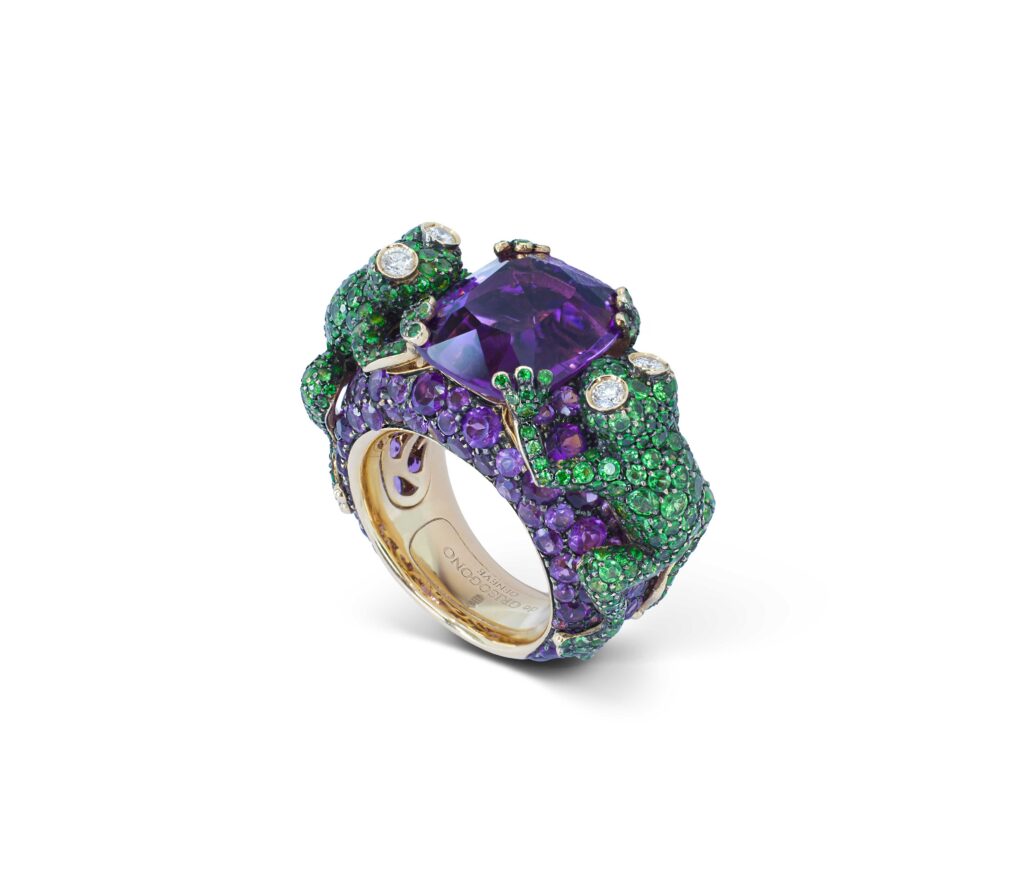
Geneva, 1993: A Different Kind of Beginning
Not every jewellery house is born from a dynasty. Some begin with a single conviction — that what already exists is not enough, that the forms currently on offer answer questions nobody interesting is asking anymore.
When Fawaz Gruosi opened the first boutique of de Grisogono on the Rue du Rhône in Geneva in 1993, he was not building on centuries of inherited prestige. He was a craftsman who had spent his entire professional life inside other people’s houses — learning, observing, accumulating — and who had finally decided that the most interesting things still remained unsaid.
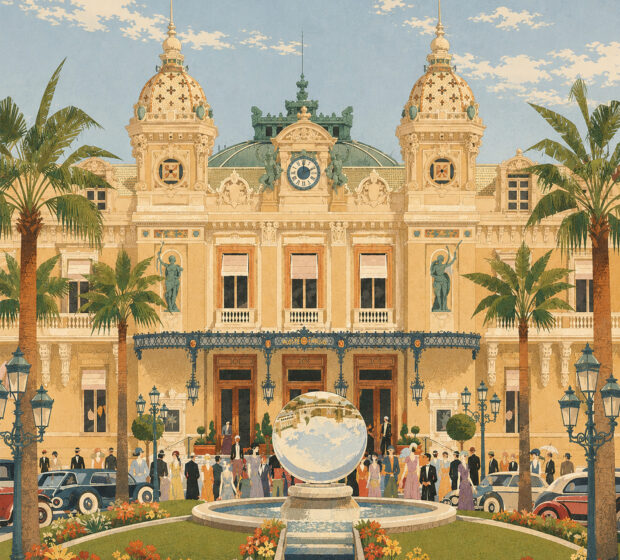
The interiors of that first Geneva boutique were deliberately theatrical: marble floors, columns, deep crimson velvet sofas — an aesthetic drawn from the Art Deco movement of the 1920s and 1930s that Gruosi openly admired as a student of Florentine tradition. This was not merely decoration. It was a statement about the kind of experience the house intended to create: one in which jewellery did not sit quietly behind glass, but inhabited a room with presence and intention. The choice of Geneva was itself significant — a city synonymous with Swiss watchmaking and private banking, where discretion and tradition were the prevailing currencies. To open a house that declared its intentions so theatrically, in that particular setting, was already a kind of argument.
The name de Grisogono came to Gruosi by chance: one of his original business partners mentioned in passing that his mother had been the Marquise de Grisogono. The Italian name Grisogono is derived from the Latin *Chrysogonus*, which in turn comes from the Greek *Chrysogonos* — meaning “begotten of gold.” The name stayed through everything that followed. So did the vision.
Gruosi founded the house with two associates, but their partnership did not survive his aesthetic ambitions intact. When his partners concluded he was taking the brand in an impossible direction and presented him with an ultimatum — buy them out or be bought out himself — he chose the former. In 1996, with the financial backing of Caroline Scheufele, who became his third wife that same year, he took sole control of the company. Her family owned Chopard, and the two houses subsequently formalised their relationship: Chopard acquired a 49% stake in de Grisogono in 2002. That arrangement persisted for several years, until Gruosi bought back the Chopard stake and once again became the controlling shareholder. By that point, however, the financial architecture of the house had already shifted in a different direction entirely.
The Maker Behind the House
Fawaz Gruosi was born in 1952 in Lebanon — the son of a Lebanese father and an Italian mother. When his father died, Gruosi was around eight years old. His mother brought him to Italy, and he grew up in Florence. It is impossible to understand de Grisogono without understanding this biography: a childhood spent in a city that treats beauty as a civic obligation, surrounded by workshops where goldsmiths and stone-cutters worked in direct continuity with the Renaissance.
In his late teens, Gruosi began working in the atelier of Torrini — one of Florence’s oldest jewellery workshops — learning the language of the craft from its foundations. He was not a designer who arrived at jewellery from fashion or fine art. He was trained from adolescence in the physical reality of the craft: how metal behaves under heat, how a stone’s character changes depending on what surrounds it, how the weight of an object in the hand is itself a form of communication.
He then moved into retail management before receiving an offer that changed his trajectory entirely. In 1979, Harry Winston invited him first to their London operation, then to lead the house’s store in Saudi Arabia as general manager — an education of a different kind, in the aesthetics and expectations of one of the world’s most demanding luxury markets, and in the art of building relationships with clients for whom jewellery is not an accessory but a declaration.
In 1982, Gruosi was spotted by Gianni Bulgari and brought back to Europe, where he was responsible for the house’s most important private clients. To work within Bulgari at that moment — when the house was deepening its exploration of colour, volume, and the dialogue between ancient Roman forms and contemporary design — was to absorb yet another vocabulary entirely. By the time he left to found his own house, he carried within him something rare: the technical foundation of a Florentine craftsman, the commercial intelligence of an international sales director, and the aesthetic sensibility of a man who had spent decades in rooms where extraordinary objects were made and exchanged.
Each stage of that career left a visible deposit in the work he would eventually make under his own name. The Middle Eastern years gave him an understanding of jewellery as social currency, as an object whose meaning is inseparable from the context in which it is presented. The Bulgari years gave him permission — if he needed it — to think of colour not as decoration but as structure. When he finally opened his own house, he was not experimenting. He was applying, with full deliberation, everything he had spent three decades learning.
The Black Diamond: A Paradigm Reconsidered
Every significant jewellery house carries within it a moment of genuine creative risk — a decision so counterintuitive that, in retrospect, it seems almost inevitable. For de Grisogono, that moment arrived in 1996, with a collection built around black diamonds.
Black diamonds — known in geological terms as carbonado — had long occupied an uneasy position in fine jewellery. Difficult to cut and resistant to conventional polishing, they were rarely used in high jewellery and were considered by much of the trade to be peripheral material compared to colourless or traditionally coloured stones. Their opacity placed them outside the central tradition of diamond valuation, which had always privileged transparency, brilliance, and the capacity to refract light into colour. A stone that absorbed light rather than reflected it seemed, to conventional thinking, to have disqualified itself from serious consideration.
Gruosi approached them differently. He saw contrast — the possibility of placing a stone of such absolute darkness against white diamonds or pale gold that the result would be not understated but dramatic: jewellery that announced itself without apology. He described black diamonds as possessing an unusual quality of light: not the conventional fire of a colourless stone, but something more interior and self-contained. What interested him was precisely what the trade had held against them: their refusal to perform in the expected way. In a house built on the rejection of easy hierarchies, a stone that defied conventional ranking was not a liability. It was a subject.
The 1996 collection drew significant international attention, arriving at precisely the moment when 1990s minimalism had created an appetite for things that were monochromatic but bold. In the years that followed, black diamonds became considerably more visible across fine jewellery — used by multiple houses that had previously paid them little attention. De Grisogono played a central role in that shift, demonstrating at the highest level of the market what these stones could achieve when placed with conviction and technical skill.
A House Built on Visibility
From the very beginning, Gruosi understood that fine jewellery exists in a social world as much as a material one. A piece of jewellery realises itself fully only when worn — and the context in which it is worn shapes its meaning, its desirability, its reach.
The opening of the Geneva boutique in 1993 was attended by Sophia Loren — an early signal of the social register the house intended to occupy. Over the years that followed, de Grisogono became associated with figures at the centre of global fashion and entertainment: Kate Moss, Naomi Campbell, Sharon Stone, Bella Hadid, Kim Kardashian, Salma Hayek, Natalie Portman, Milla Jovovich, Pamela Anderson, and Liz Hurley were among those seen wearing the house’s pieces at major public events.
The annual de Grisogono dinner at the Cannes Film Festival became one of the fixed points of the festival’s social calendar — an event at which the house’s jewellery appeared alongside the most photographed faces in the world. The Cannes dinner was not merely a marketing exercise. It was a demonstration of the house’s understanding that jewellery, at its most powerful, is inseparable from the body that wears it and the occasion that frames it. Gruosi had built an event that made that argument visible every year, in one of the most intensely observed settings in the cultural calendar.
There is a logic to this that goes beyond marketing. A jewellery house without a long history must build its authority through other means — through the quality of the objects it makes, and through the quality of the company those objects keep. De Grisogono pursued both strategies simultaneously, and with considerable consistency.
The Vocabulary of Form: Allegra, Instrumento, and the Art of the Series
The mark of a serious jewellery house is not a single remarkable object but a language — a set of recurring forms, motifs, and technical solutions that together define a visual identity as distinctive as a voice. De Grisogono developed several such languages simultaneously, and each reflected a particular aspect of Gruosi’s sensibility.
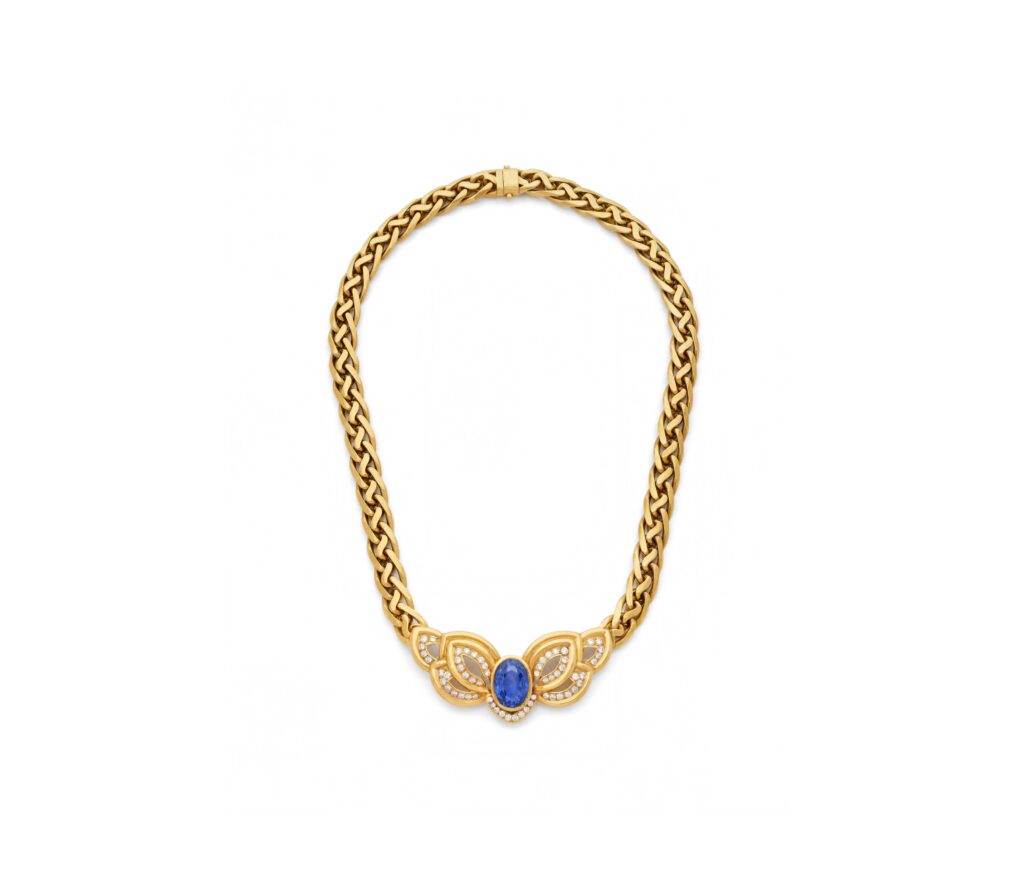
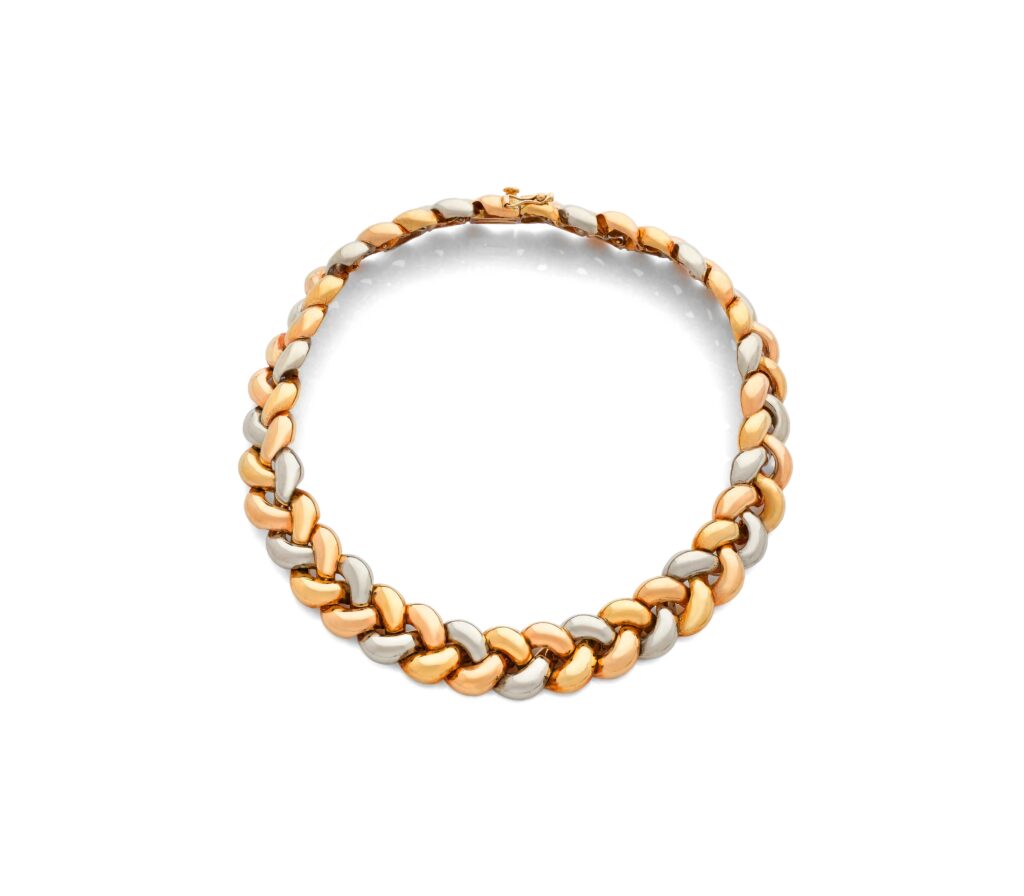
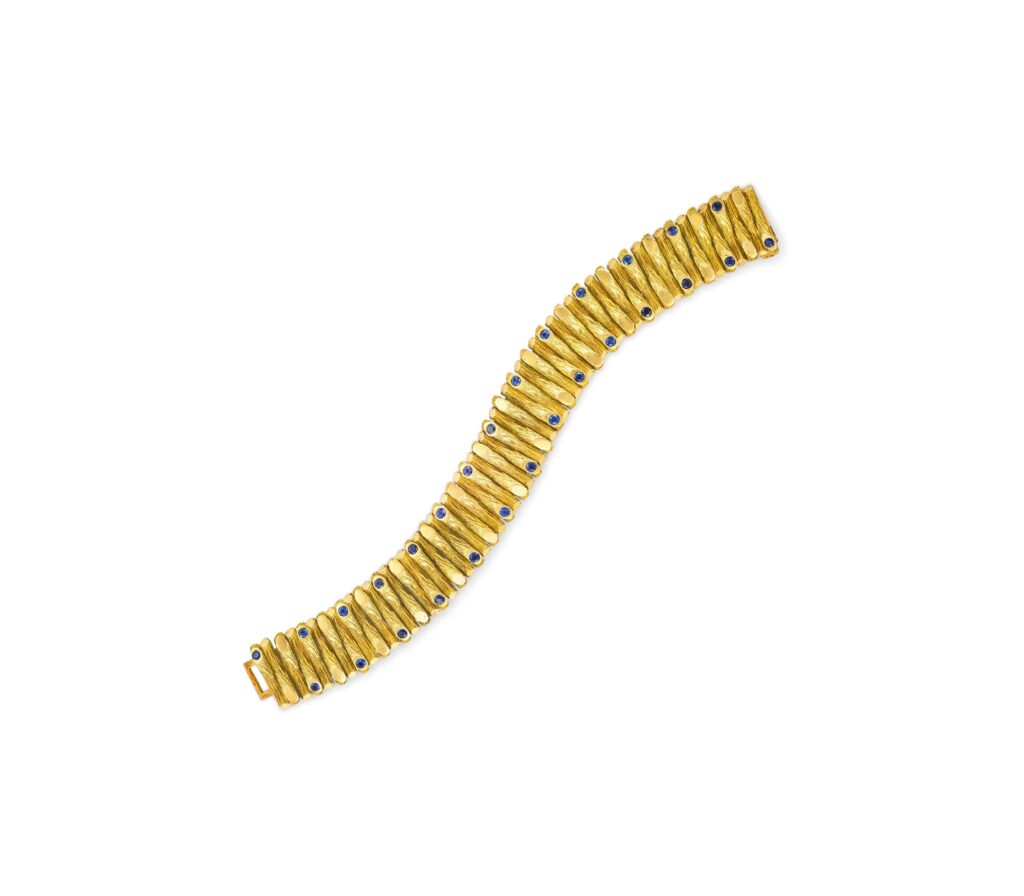
Allegra, launched in 2003 and named after Gruosi’s daughter, became one of the house’s most recognised series. Its defining formal idea was the interlaced band: multiple strips of gold woven tightly together and set with stones of different colours. The result was jewellery in which the structure itself was the ornament — no single element dominated, but the entire piece moved and caught the light as a unified surface. The interlacing motif carried within it a kind of visual argument: that complexity, properly handled, reads not as excess but as richness.
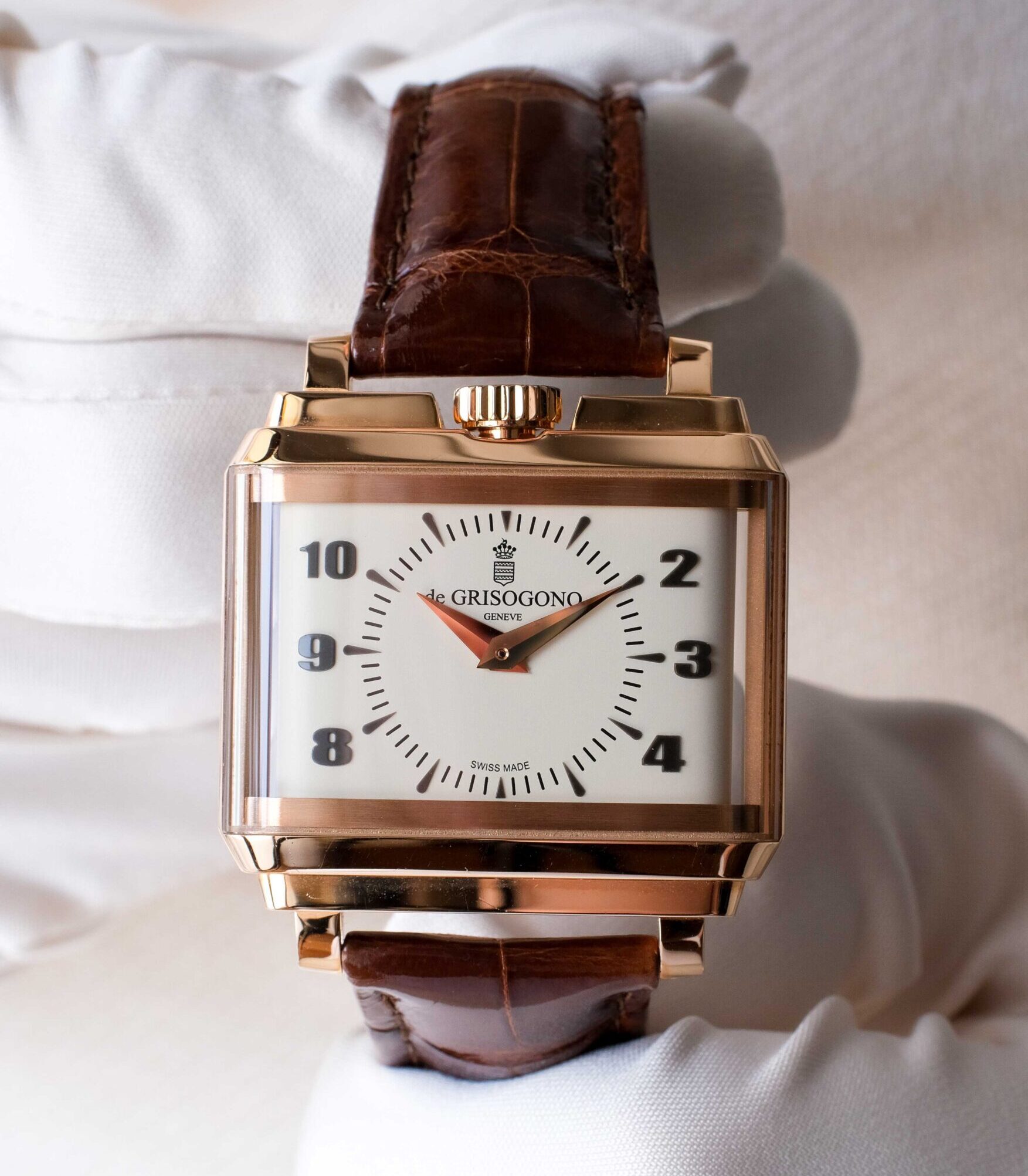
Instrumento No Uno, introduced in 2000, announced de Grisogono’s ambitions in watchmaking with considerable provocation. The case was square — a deliberate departure from the round forms that dominated luxury watchmaking at the time — and the details compounded the statement at every level. The date was placed at 7:30 rather than the conventional 3 or 6 o’clock position. The bridges of the movement were finished in black PVD coating, making the mechanics themselves a visual element rather than something to be concealed. The crown was set with a black diamond. Taken together, these decisions amounted to a systematic refusal of the default assumptions of Swiss watchmaking — not a single gesture of asymmetry, but a comprehensive reimagining of what a luxury watch could look like when its maker felt no obligation to the established grammar of the form. Later variants extended this logic further, including models with double dials for different time zones, combining analogue indication with digital display.
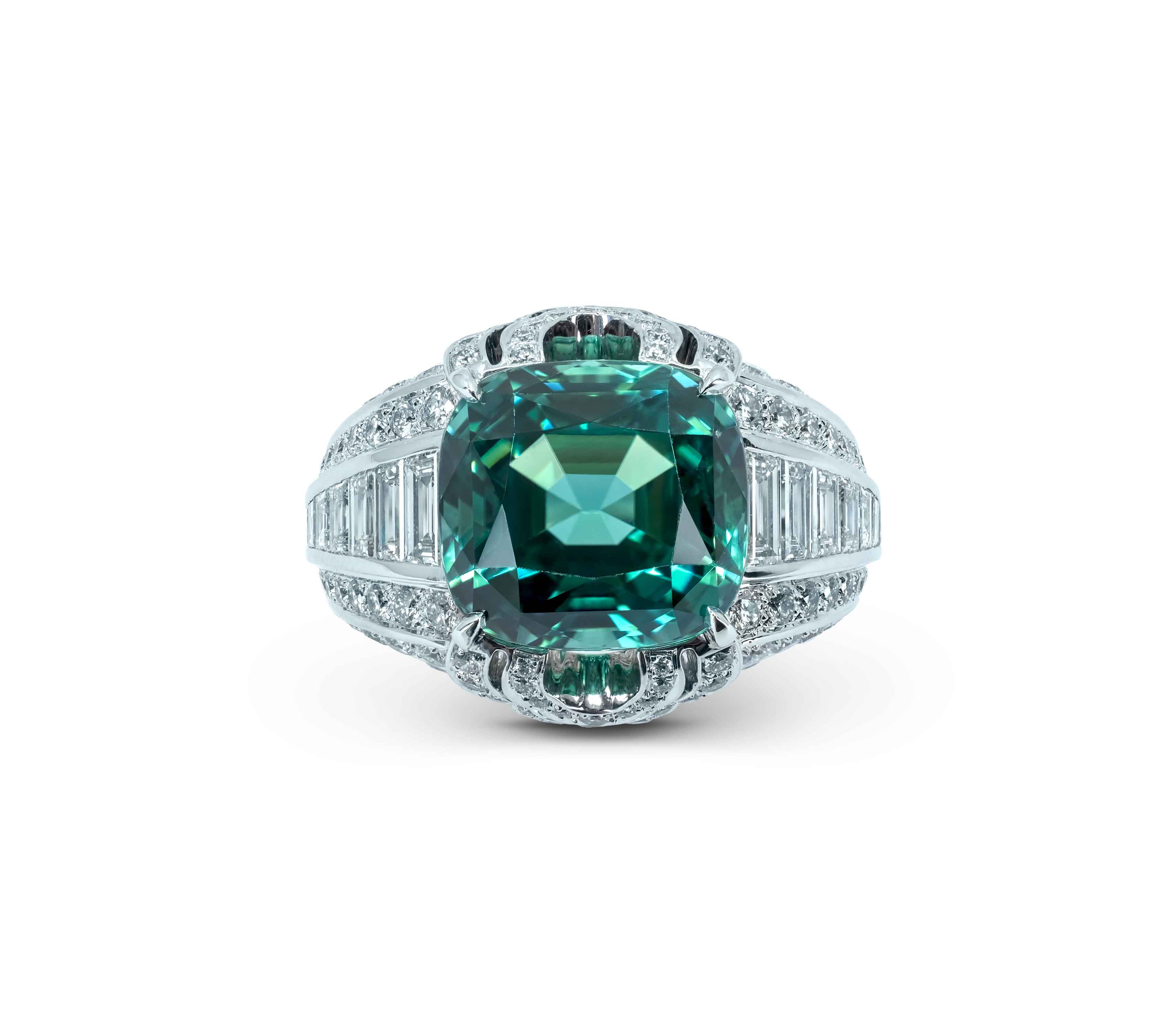
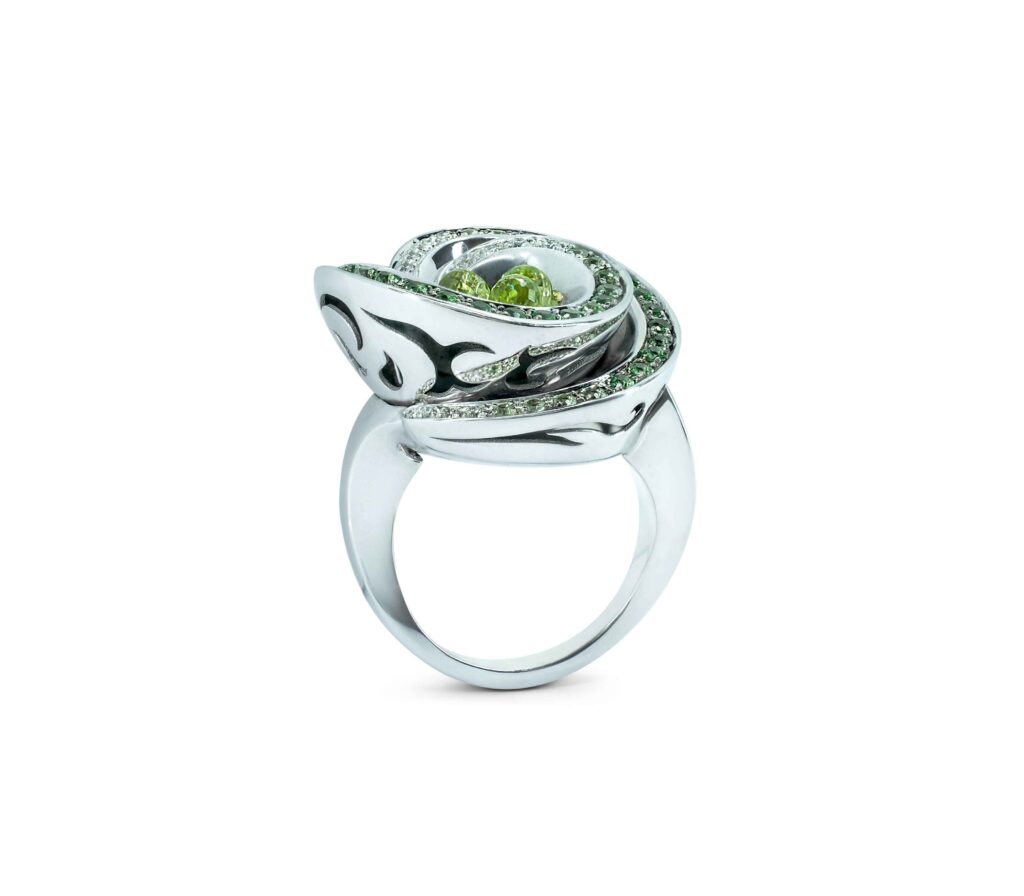
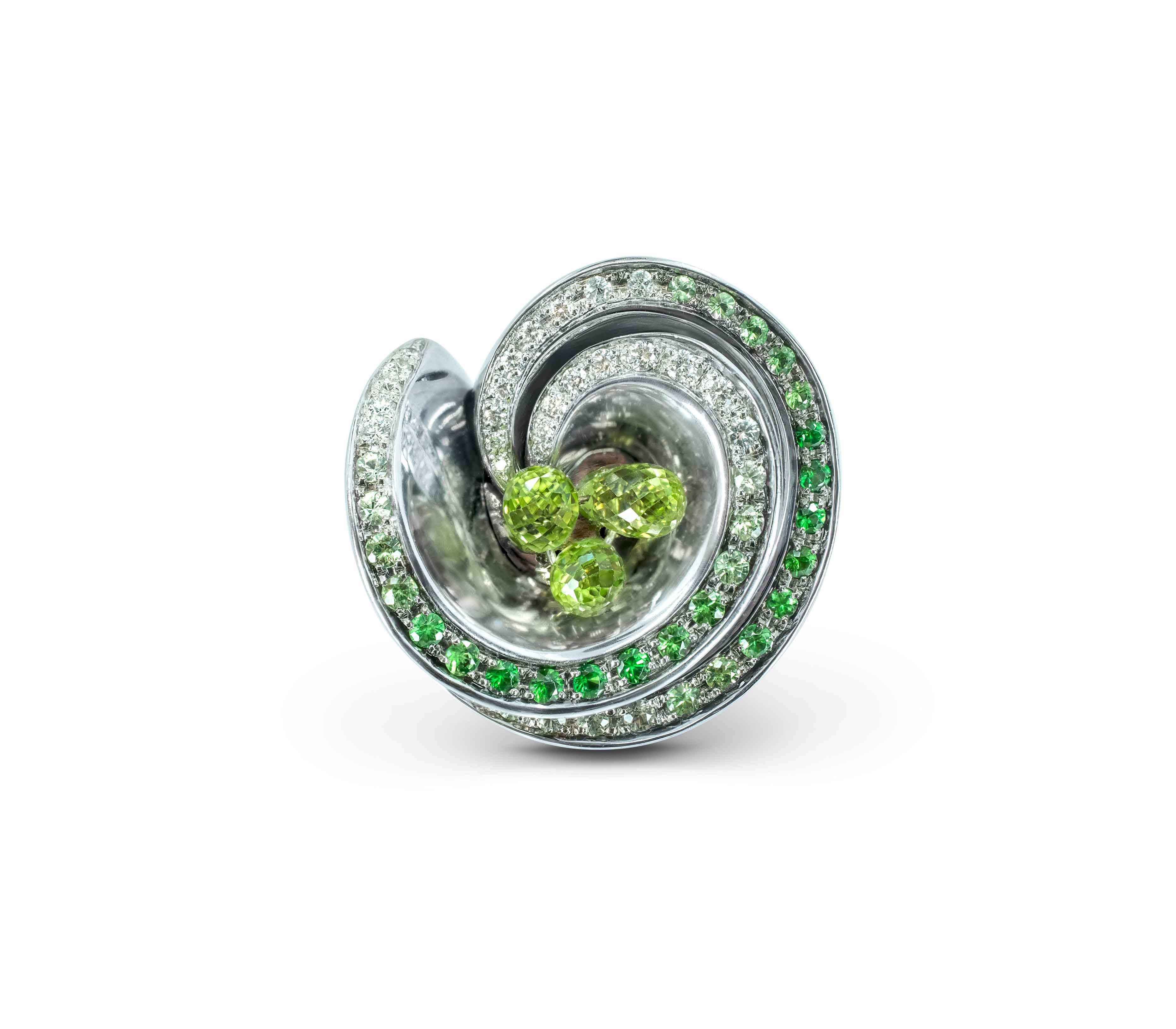
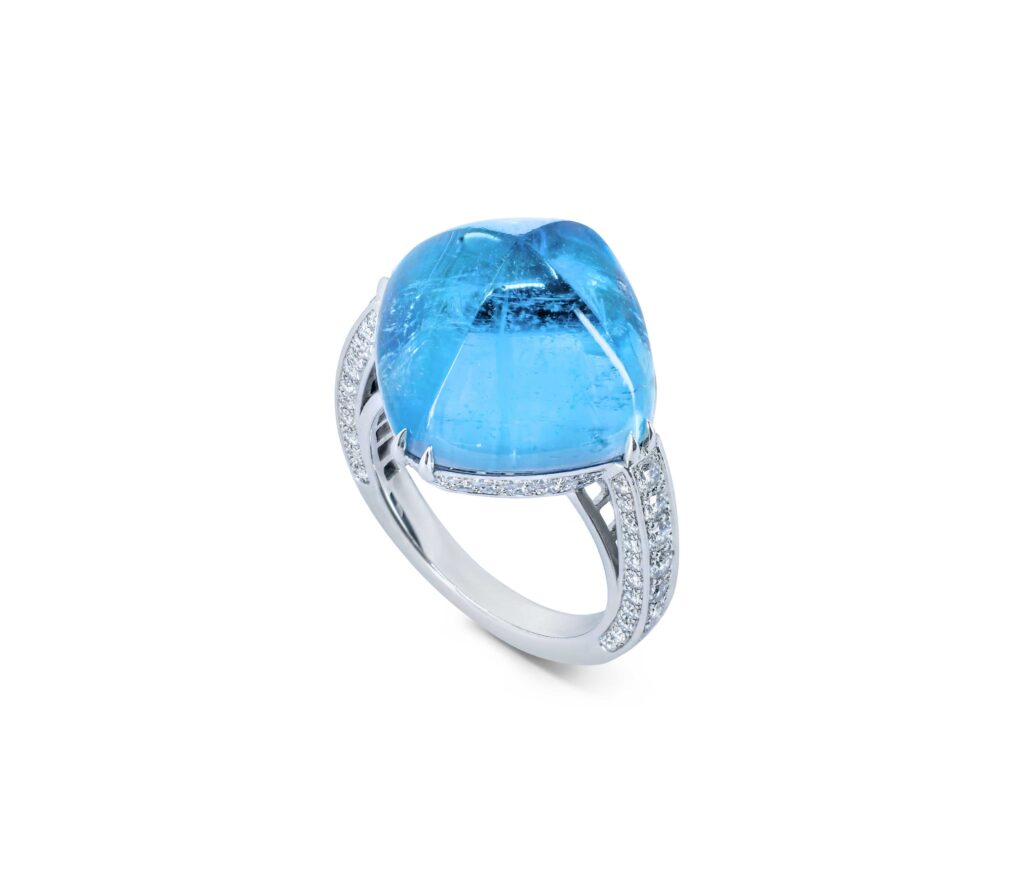
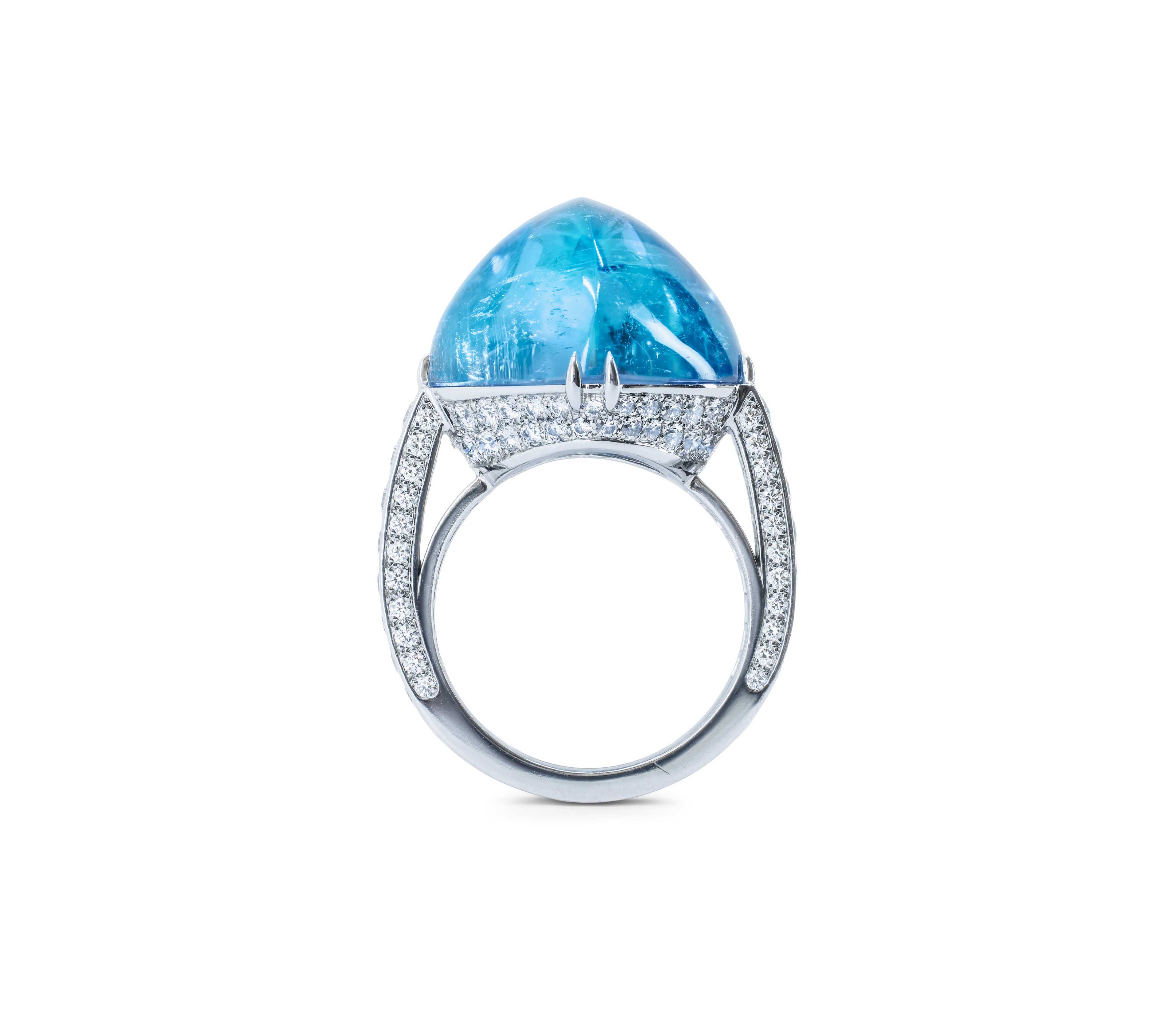
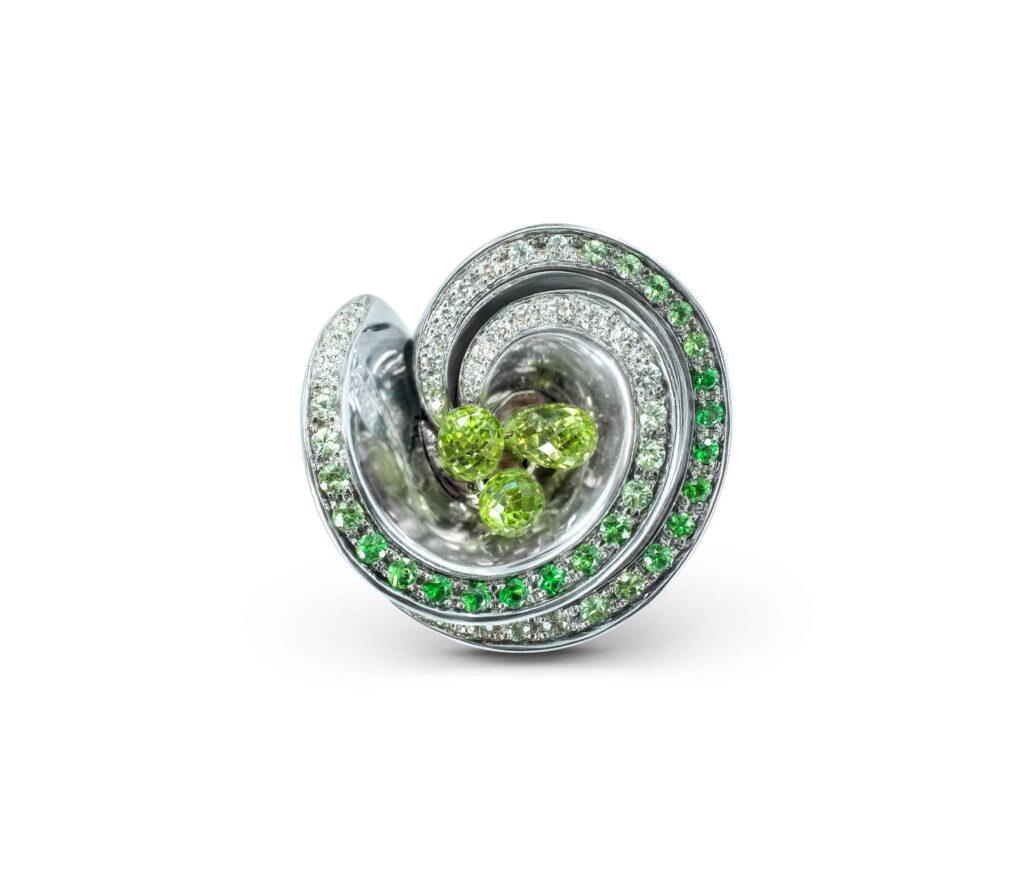
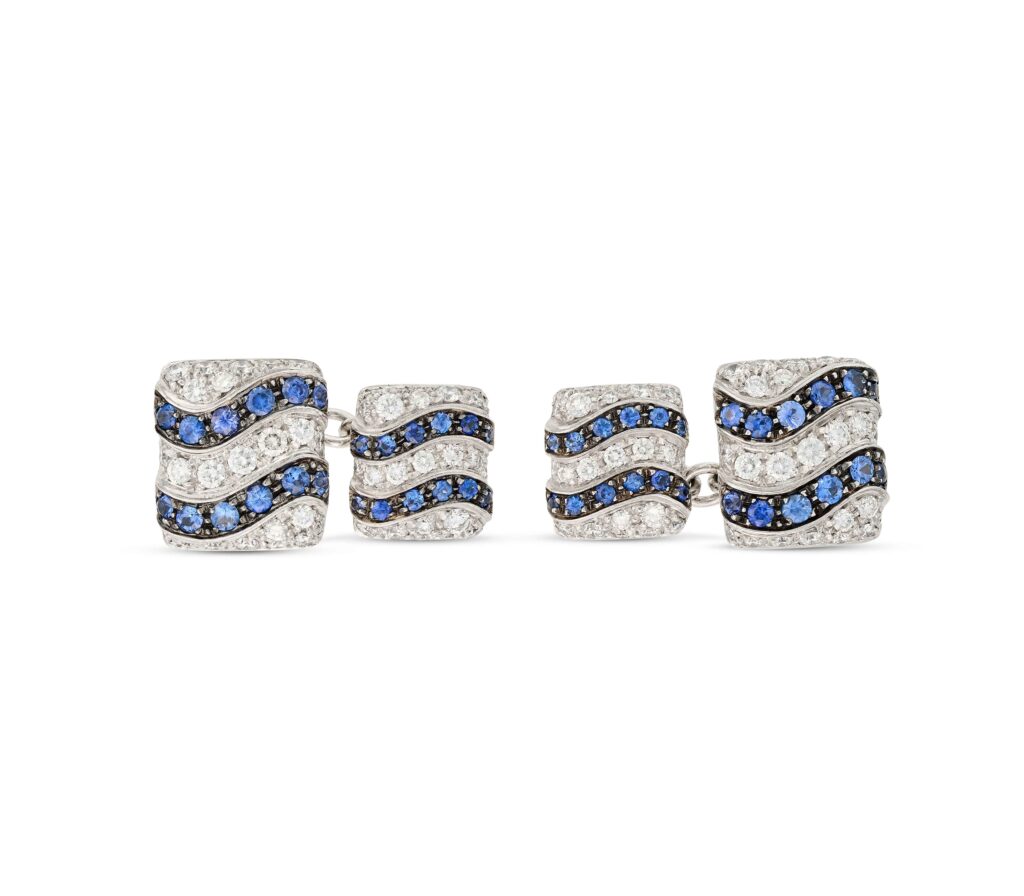
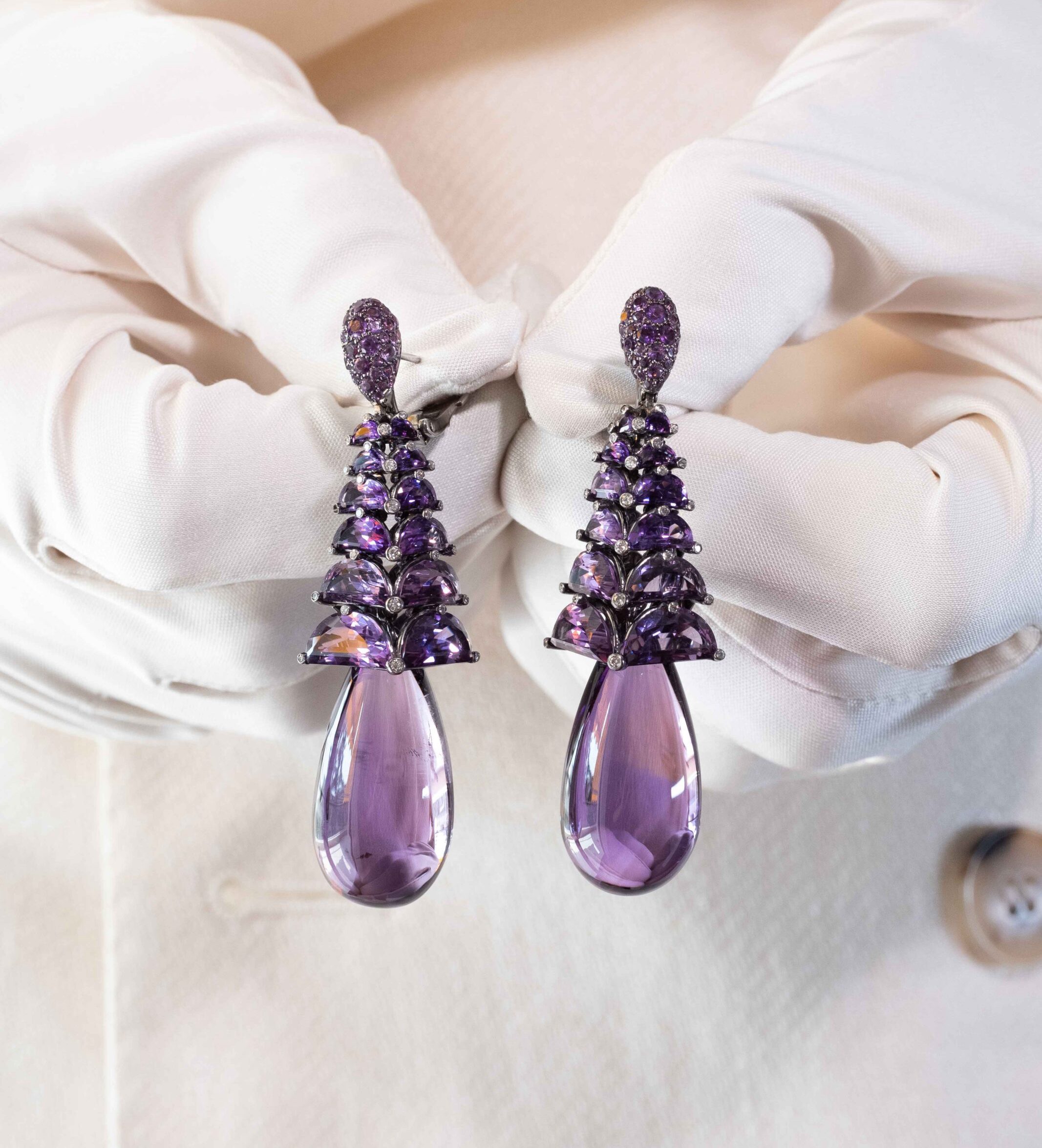
Other series completed the vocabulary: Doppia (from the Italian for “double”), with twisted interlocking structures; Millefoglie (“a thousand leaves”), in which gold was worked into delicate layered forms suggestive of foliage in movement; Boule, earrings designed as luminous spheres; and Gypsy, whose cascading diamond chains moved with the wearer. Throughout all of these, certain constants persisted: the conviction that colour could achieve things that colourlessness could not; the willingness to combine precious and semi-precious materials in the same piece; and the understanding that form was never a neutral container for stones, but an expressive statement in its own right.
The Spirit and Creation I: Two Monuments in Black and White
If there are two objects that, between them, concentrate the full ambitions of the house, they are the Spirit of de Grisogono and the necklace known as Creation I — and the contrast between them is itself a kind of argument.
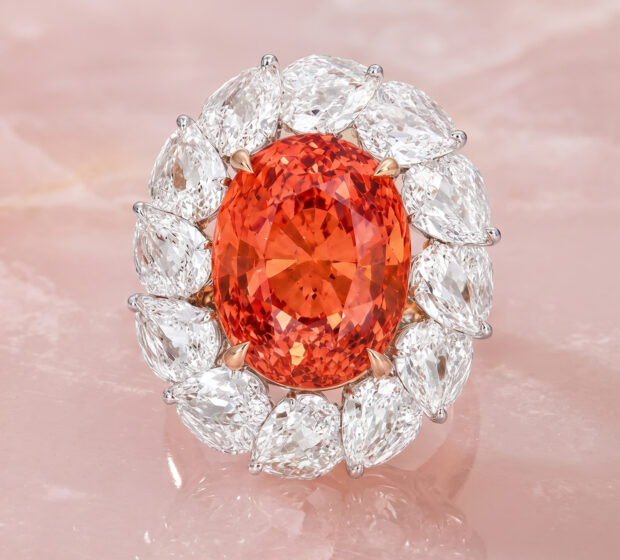
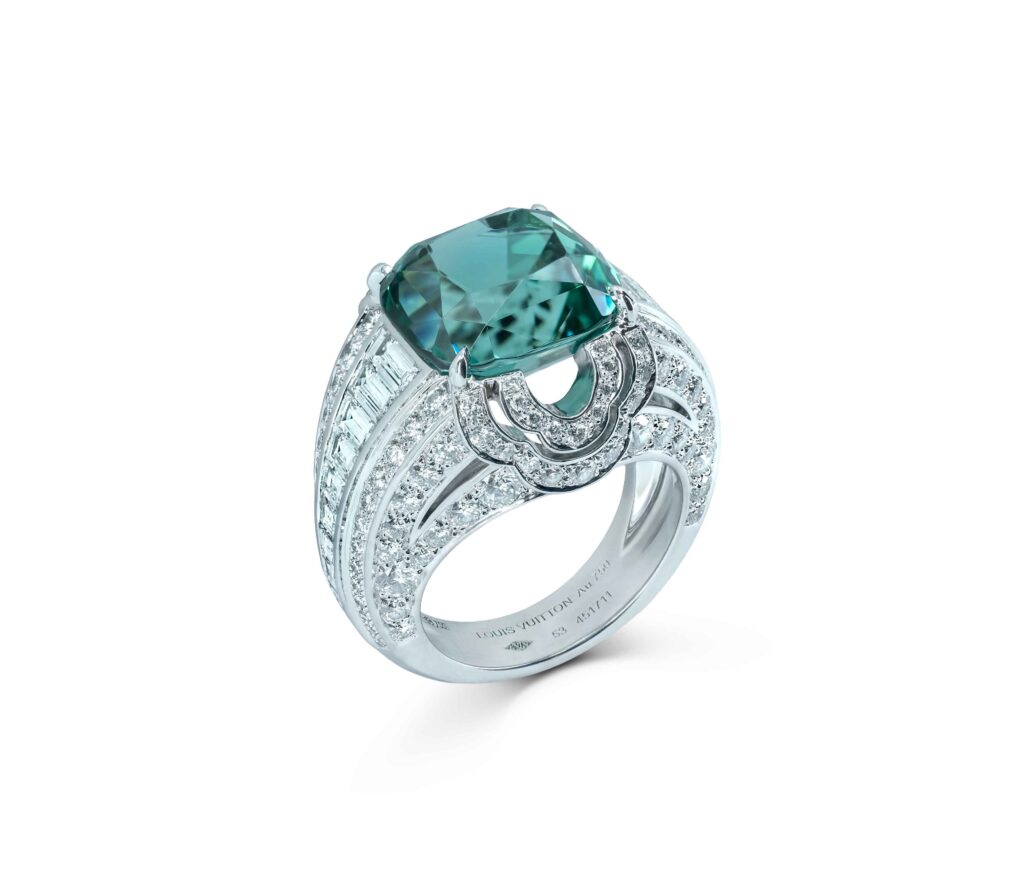
The Spirit of de Grisogono was the earlier and more emblematic achievement. Built around a black carbonado diamond of 312.24 carats — cut from a rough stone of 587 carats originating in the Central African Republic, one of only two countries where black alluvial diamonds are commonly found — it is set in a white gold ring surrounded by 702 white diamonds. The juxtaposition was the founding conviction of the house made physical: absolute darkness placed in direct, deliberate dialogue with conventional brilliance. The Spirit remains one of the most celebrated faceted black diamonds ever cut — a landmark achievement in the handling of a stone that the trade had long considered intractable.
Creation I represented a different kind of statement. On 4 February 2016, in the Lulo mine in eastern Angola, a 404.20-carat rough white diamond was recovered — the largest ever found in Angola, and the 27th largest rough white diamond ever discovered. Named the “4 de Fevereiro” in tribute to Angola’s independence day, the stone was secured by de Grisogono through its partnership with the diamond trading company Nemesis International. After nearly a year of analysis and cutting by a specialist team working in New York, the rough was transformed into a 163.41-carat emerald-cut diamond graded D Flawless — the largest of its kind ever offered at auction. Gruosi set it at the centre of a necklace flanked by eighteen emerald-cut diamonds on one side and pear-cut emeralds arranged in two rows on the other, with thousands of additional brilliant-cut stones lending depth and continuous movement to the whole.
The most significant measure of market recognition came in November 2017, when Creation I sold at Christie’s Magnificent Jewels sale in Geneva for $33.7 million — a record for any D Flawless diamond sold at auction, and the highest price ever paid for a piece by de Grisogono. An auction result of this scale, for a house without the multi-century history of the great established names, represents a form of validation that no amount of editorial coverage or celebrity association can substitute.
Colour as Argument: The Aesthetic Logic of de Grisogono
It would be easy — and insufficient — to describe de Grisogono’s aesthetic as simply colourful, dramatic, or unconventional. These words fail to capture what was actually at stake: a rigorous internal logic that amounted to an argument about what fine jewellery is for.
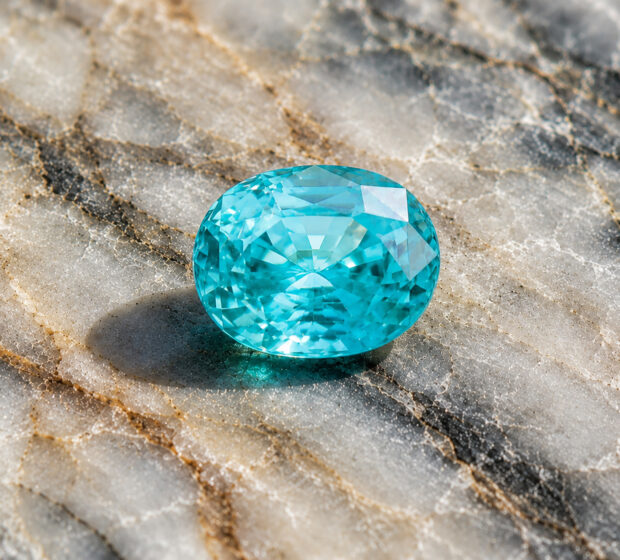
Gruosi’s starting point was his impatience with hierarchies he considered arbitrary. The distinction between precious and semi-precious stones — which had long determined what could and could not appear in high jewellery — struck him as convention rather than truth. What mattered was the visual and emotional result, not the inherited classification of the material. A tourmaline placed in exactly the right relationship to a white diamond could do things that a second white diamond could not. A garnet alongside a black diamond could create a tension, a conversation between surfaces, that no combination of conventionally ranked stones would produce.
Gruosi was explicit on the subject of competition: de Grisogono did not compete with houses like Cartier, whose strength lay in the deep grammar of classical forms — the authority of proportion and restraint accumulated over generations. These were different languages, serving different needs. Where Cartier offered the permanence of a code, de Grisogono offered the energy of a departure from one.
His engagement with Art Deco was not nostalgic but structural: he was drawn to the movement’s capacity to hold rigour and extravagance together, to combine geometric clarity with sensuous material, engineering with ornament. In his own work, this translated into jewellery that was simultaneously constructed and abundant — pieces in which the discipline of making was apparent, but the overall effect remained one of visual generosity. De Grisogono, at its best, inhabited that same refusal to choose between structure and sensation.
Bankruptcy, Legacy, and What Endures
The financial history of de Grisogono in its final decade is inseparable from the story of its Angolan investors. From 2012 onward, the house had received significant investment from backers connected to Sindika Dokolo and Isabel dos Santos — with Angolan money reportedly amounting to some 100 million Swiss francs, leaving Gruosi with a substantially reduced stake in his own company. Gruosi had stepped back from the role of creative director by 2019, as the pressures on the house became impossible to manage.
In January 2020, the Luanda Leaks investigation, led by the International Consortium of Investigative Journalists, published a large body of documents alleging that the fortune of Isabel dos Santos had been built through systematic corruption and the misappropriation of Angolan state funds. The reputational and financial consequences were immediate. Dos Santos’s assets came under scrutiny across multiple jurisdictions, and the businesses connected to her network — including de Grisogono — found themselves in an acutely exposed position. The house filed for bankruptcy on 29 January 2020. To describe this outcome as the result of a contracting luxury market would be to miss the point entirely. What ended de Grisogono was the collapse of the specific financial architecture that had been sustaining it.
In 2021, Gruosi launched a new brand under his own name, continuing the work that had defined his career. In 2022, control of the de Grisogono name passed to Damac Group.
What the end of the Gruosi era does not diminish is the clarity of what was achieved. De Grisogono was never a large house in the conventional sense — it lacked the industrial infrastructure of the great conglomerates, and the centuries of provenance that sustain brands across difficult decades. What it had was a coherent and genuinely original aesthetic, the ability to attract significant clients at the highest level of the market, and a record of objects that demonstrated its work could hold its own in the most demanding rooms in the world.
Gruosi’s career stands as evidence of a particular kind of seriousness: the seriousness of someone who spent a lifetime studying a craft not in order to preserve it, but to extend it into places it had never been. A house does not need centuries to make a lasting contribution. It needs a sufficiently clear sense of what it believes — about materials, about form, about the relationship between an object and the person who wears it — and the discipline to pursue that belief with consistency across time. The most lasting measure of a jewellery house is not its longevity but the persistence of its ideas. By that measure, de Grisogono’s account remains open.