







The Most Personal Jewel
No jewel sits closer to its wearer than the ring. Earrings frame the face; a necklace falls across the décolleté; a brooch announces itself from across a room. A ring, by contrast, lives on the hand, the hand that gestures and signs, that is offered in greeting, that raises a glass to the lips. It is seen at close range and studied at leisure. It follows every movement, and for that reason it gives away more about its owner than anything else one might wear: taste, memory, and sometimes where one comes from.
For most of their history, rings were never merely decorative. They marked authority and belonging, pledged love and fidelity, passed between generations as heirlooms, sealed treaties as diplomatic gifts, and were carried close as private talismans. Some forms came down to us from antiquity; others were born in the workshops of the great houses; others still owe their fame to royalty, to actresses, to the women who set the fashion of their day. Each has its own history and its own temperament, yet only a handful have become true classics, recognised on sight the world over. The best place to begin is with the ring that rewrote the idea of the engagement jewel altogether: the solitaire.
The Solitaire: The Art of a Single Stone
A single stone, and nothing else: the solitaire looks like the most elementary form there is. It is, in fact, the most exacting. With only one stone on the hand, there is nowhere to hide, and everything comes down to the cleanness of the setting and the perfection of the stone.
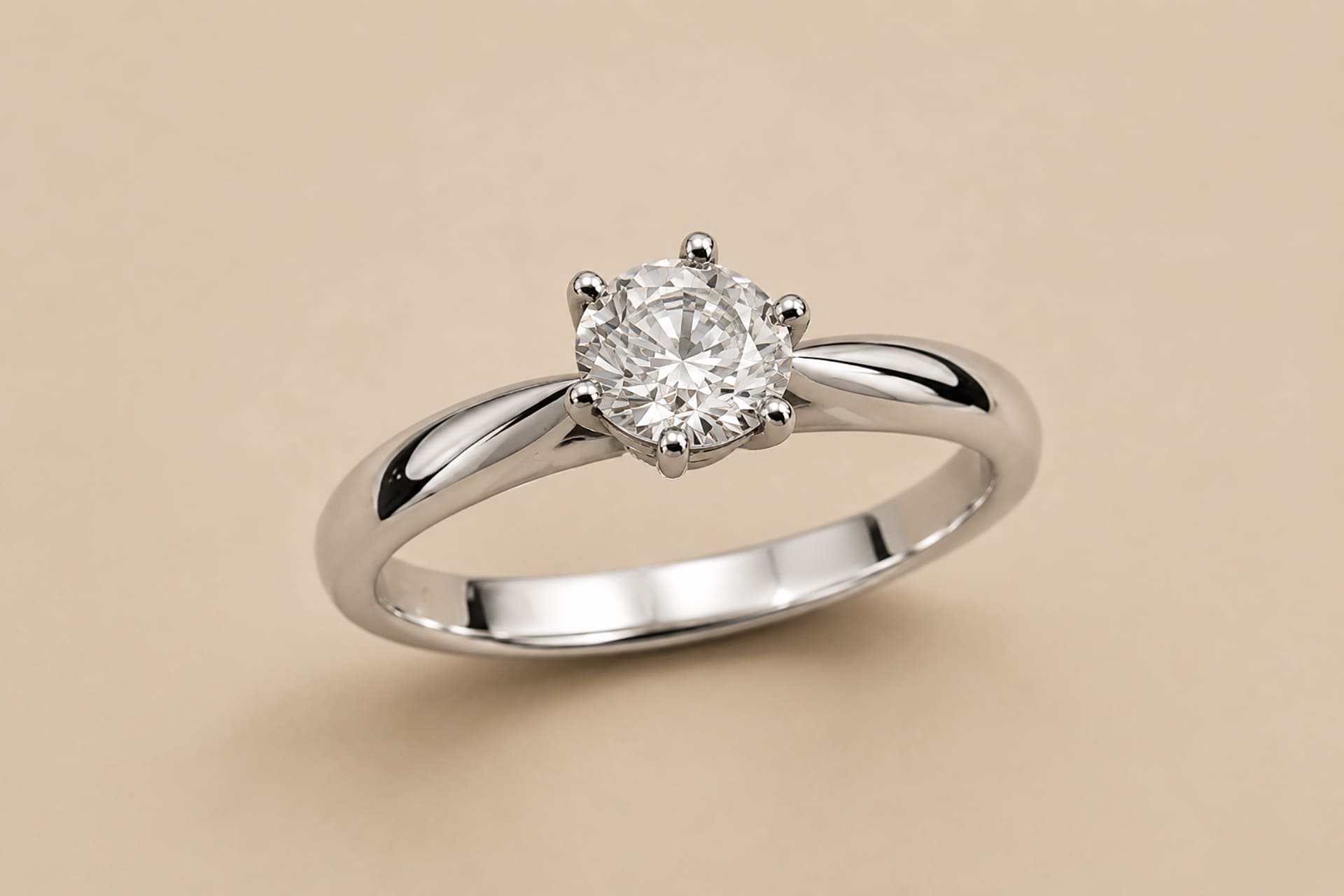
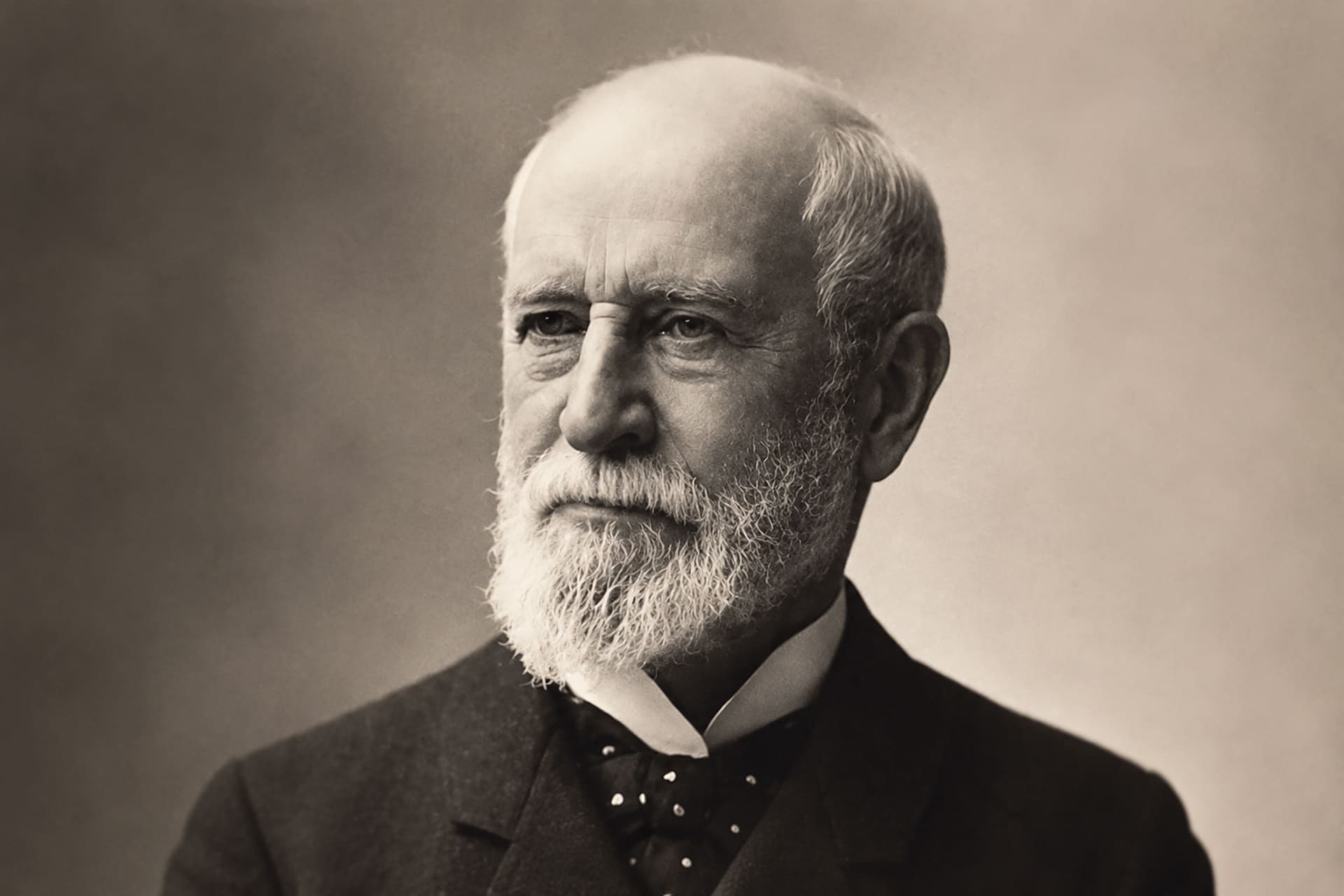
The solitaire as we know it dates from a single year. In 1886, Charles Lewis Tiffany unveiled what would pass into history as the Tiffany Setting: six slender prongs that lift the diamond clear of the band so that light can reach the stone from every side. Until then, stones had been set low, half-sunk into their metal, and they smouldered where they should have blazed. Tiffany raised the diamond into the light, and in doing so more or less invented the engagement ring as we understand it. The setting grew so coveted that the house was obliged to warn its clients, publicly, against the imitations it had inspired. It was a Tiffany ring with which Franklin Roosevelt sealed his engagement to Eleanor in 1904.
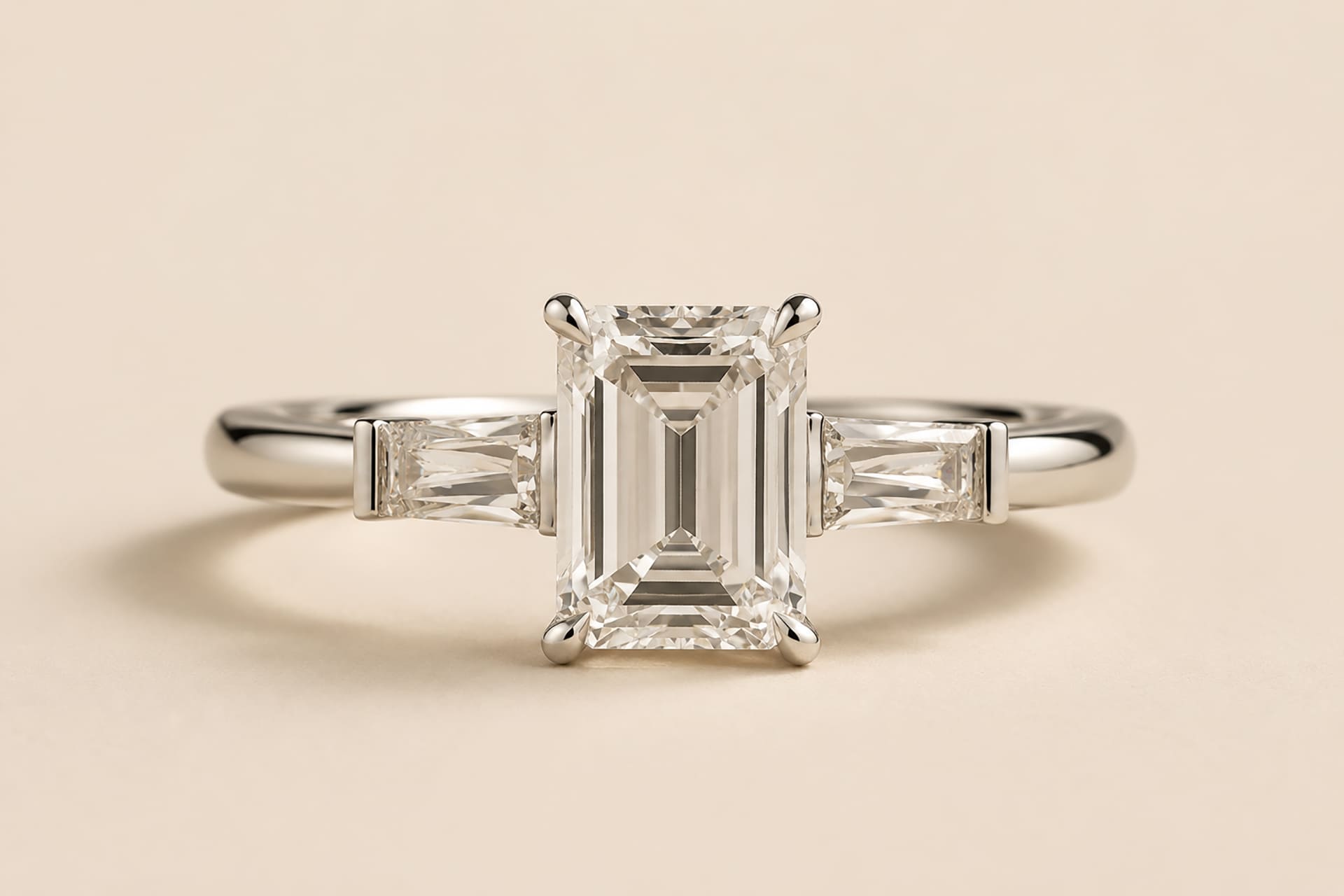
The most famous solitaire of the twentieth century, however, belongs to the Côte d’Azur. Late in 1955, Prince Rainier III of Monaco proposed to the Hollywood star Grace Kelly. His first gift was a modest Cartier ring, rubies and diamonds laid out in the colours of the Monégasque flag, and it was this ring the actress held up to the press when the engagement was announced in January 1956. A few weeks later, Rainier replaced it with the stone that would become legend: a 10.47-carat emerald-cut diamond, flanked by two baguettes, in a platinum Cartier mount. Grace Kelly wore it on screen in her final film, High Society, and from that moment the emerald cut became shorthand for a certain regal restraint. The ring remains in the collection of the princely family to this day.
The stone of a solitaire is almost always a diamond, the metal almost always platinum or white gold; nothing should compete with the stone. This is a ring of daytime elegance and lifelong constancy, worn without ever being removed, as right over breakfast as at a reception. The solitaire never raises its voice. It doesn’t need to.
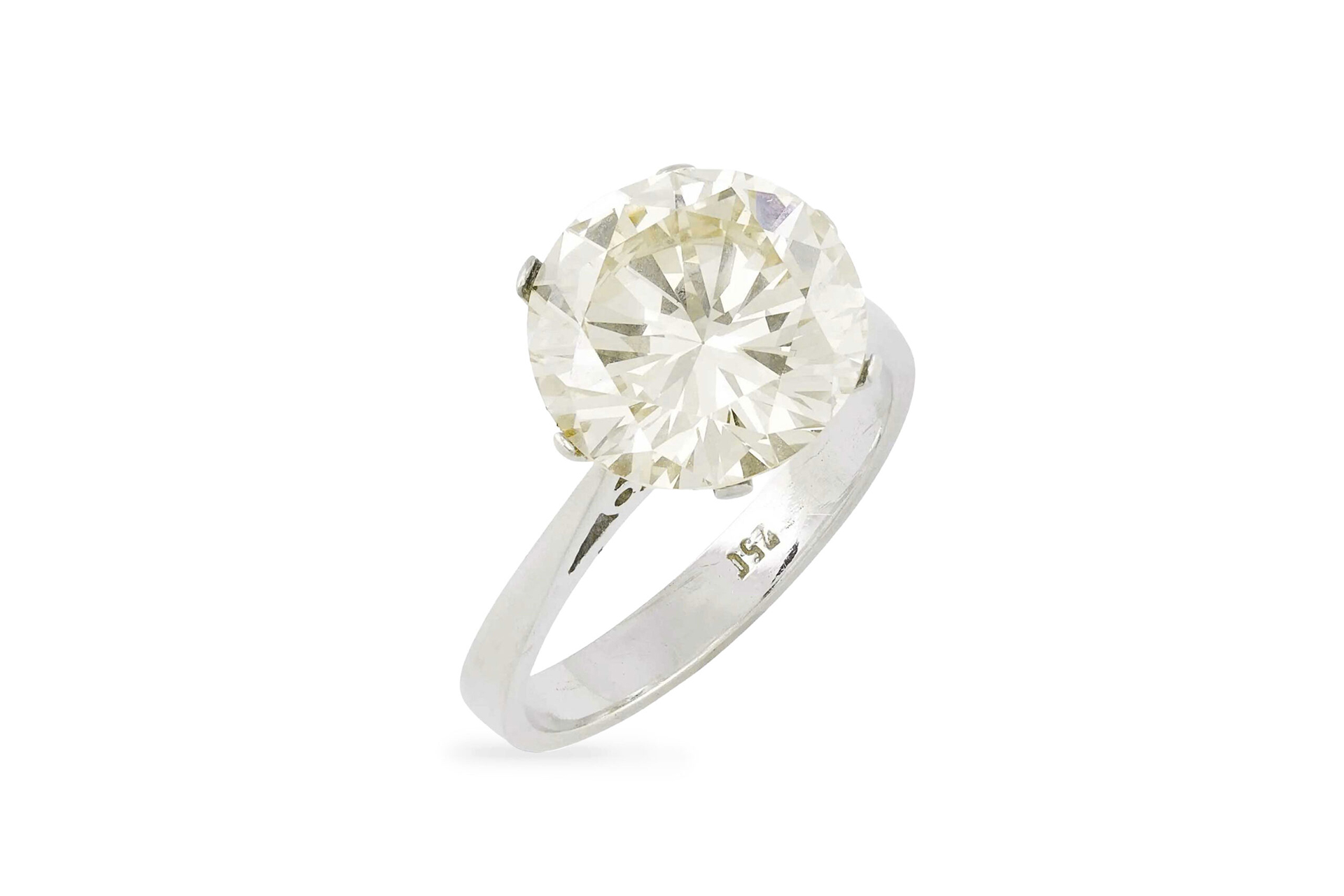
The cut of the central stone tells you more about its owner’s taste than the carat weight ever will. The round brilliant is the most luminous choice, and the most unarguable. The stepped emerald cut, Grace Kelly’s cut, reads as breeding held in check. The cushion carries a softness that feels distinctly vintage; the oval lengthens the finger; the marquise and the pear introduce a note of theatre. It is why two solitaires of identical weight can belong to entirely different worlds, and why the trained eye reads the difference in a heartbeat.
The Trilogy: Past, Present and Future
If the solitaire has a single voice, the trilogy has three. Three stones in a row, the central one usually larger than its companions, compose a design that mid-century marketing taught us to read as the past, present and future of love. The formula is a lovely one, and it stuck, though the idea of three stones long predates any slogan: Georgian and Victorian jewellers favoured it well before the romance was attached.
The trilogy is for the moment when a solitaire feels too modest and a cocktail ring too much. Its flanking stones can echo the centre, three diamonds stepping down in size, or argue with it in colour: a sapphire between two diamonds, a ruby in a white surround. This is the ring of anniversaries and celebrations, the format in which Cartier, Graff and Harry Winston show their finest matching, for the three stones have to sing in unison across colour, clarity and cut. That is harder than finding one perfect stone.
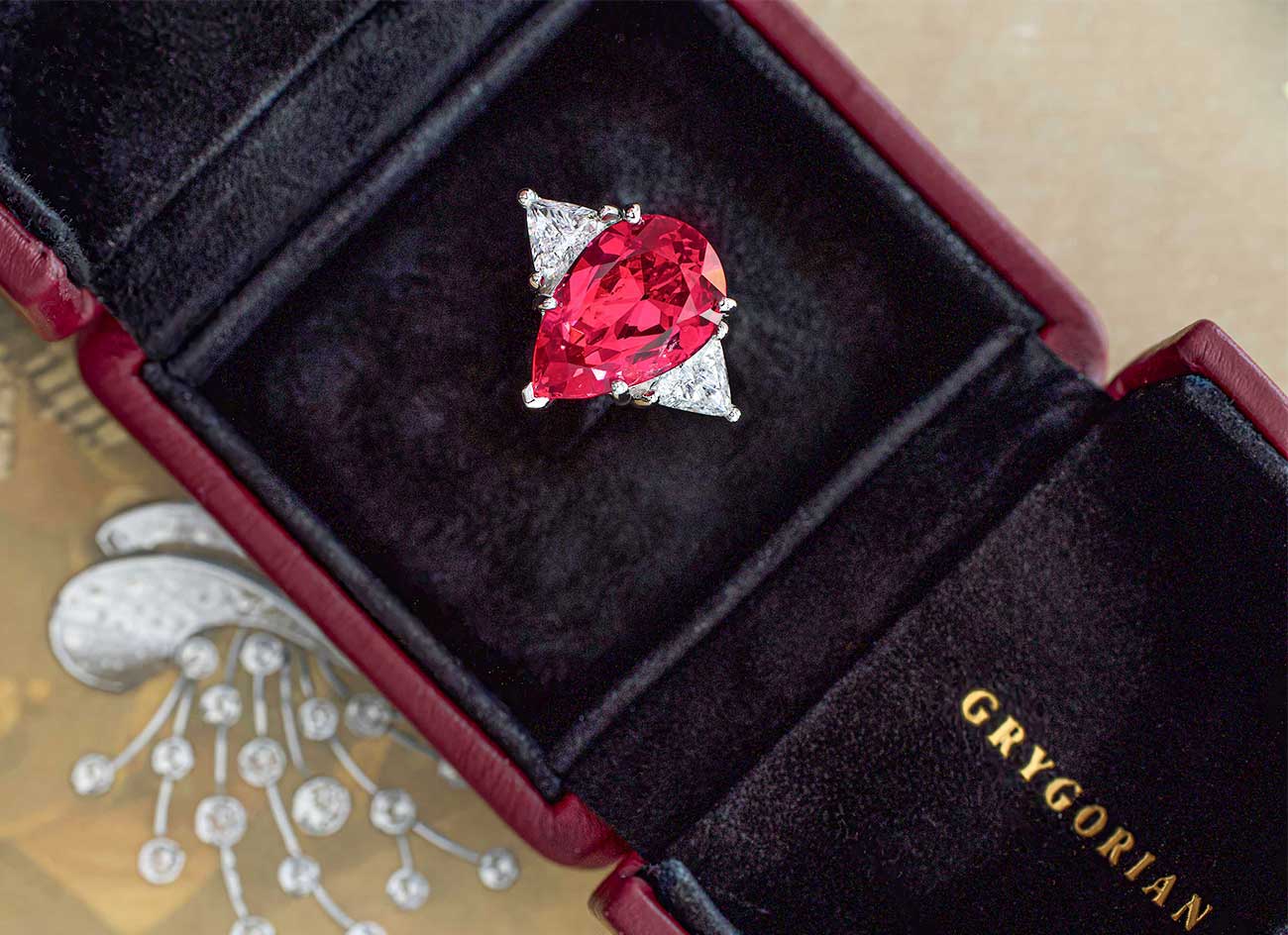
Where the solitaire marks a moment, the trilogy marks time. Its three stones stand for past, present and future, which is why these rings so often accompany the milestones a family wishes to keep: a wedding anniversary, the birth of a child, the occasions that become part of a shared story.
The Halo: When the Setting Matters
Few inventions in jewellery are as seductive as the halo, in which a ring of small diamonds closes tightly around a central stone. The halo does two things at once. It makes the centre stone look larger, and it makes it brighter, throwing light back inward. A one-carat stone in a well-judged halo reads as something considerably bigger.
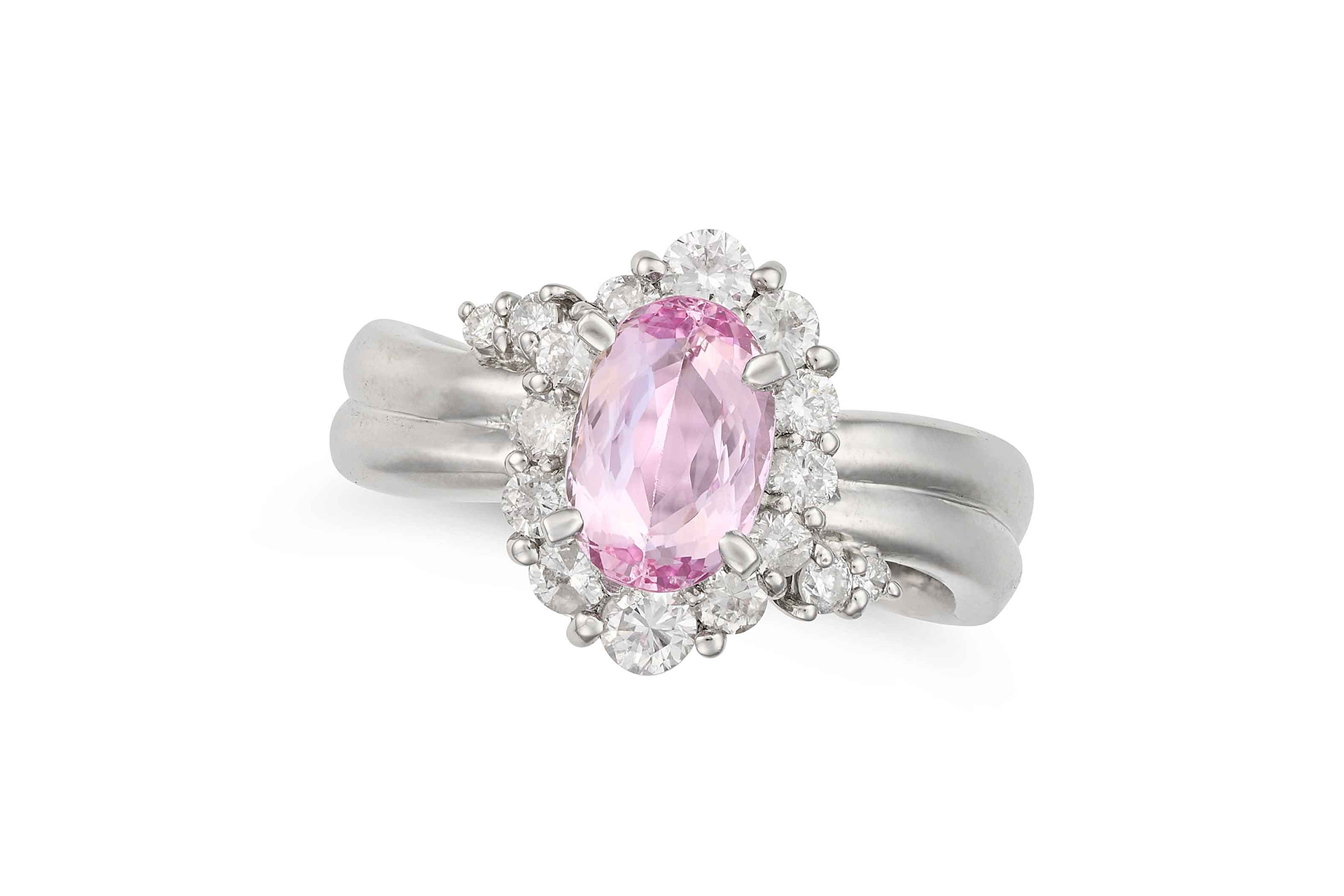
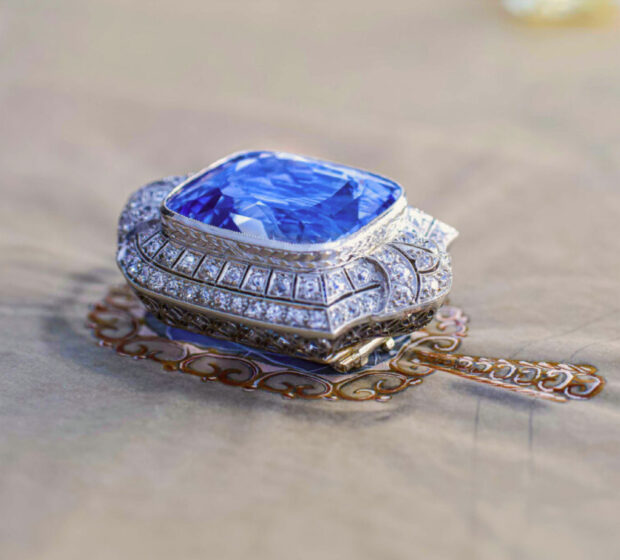
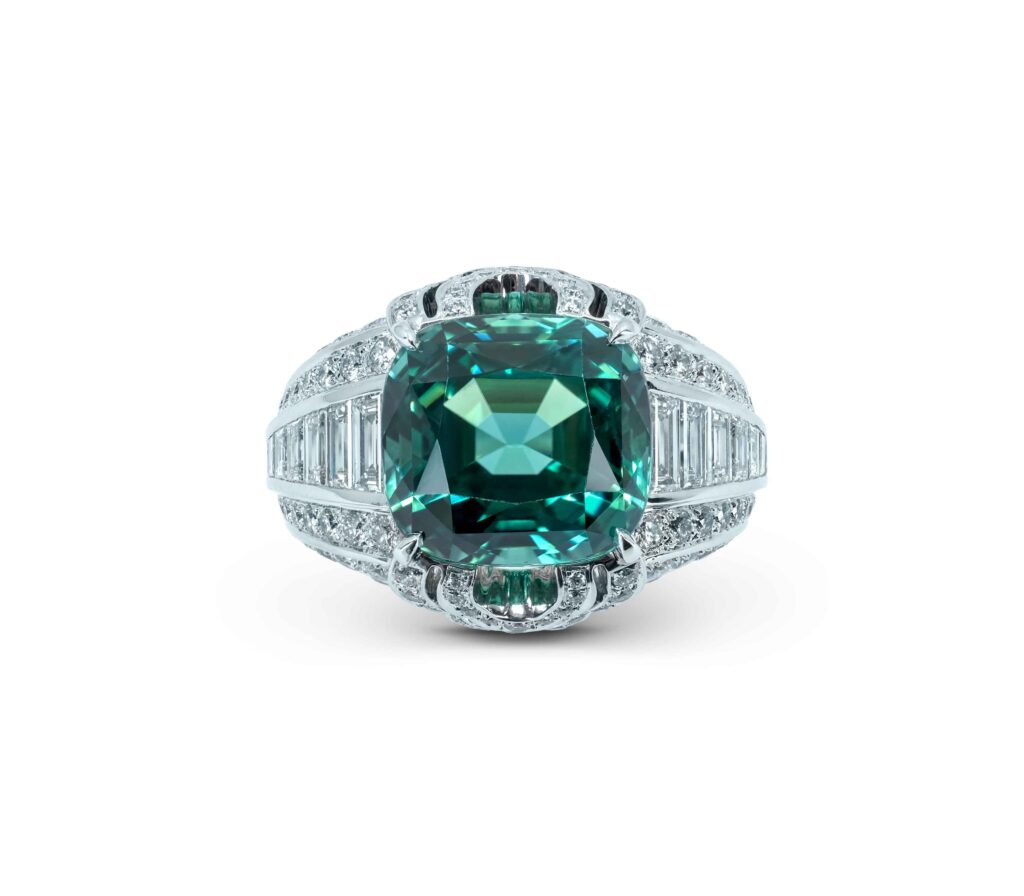
The form has roots in the Georgian and Victorian periods, but it came into its own with the Art Deco of the 1920s, when geometric cutting and the contrast between a diamond surround and a coloured heart were at the height of fashion. The halo flatters coloured stones especially well: a sapphire, emerald or ruby ringed with diamonds takes on the drama of a stained-glass window. Its most famous example belongs to the British royal family. The sapphire ring given to Diana, Princess of Wales, and later worn by Catherine, sets a Ceylon sapphire within a frame of diamonds. It is, strictly speaking, a cluster ring built around a sapphire, but it is the piece that turned the sapphire-in-a-halo into one of the most copied formulas in the world.
The appeal is easily explained: no form draws out a central stone more generously. The surrounding diamonds lend the illusion of size and amplify the play of light, so the ring holds its own even in low light. That marriage of impact and practicality, rare enough in a single jewel, has kept the halo in demand for more than a century.
The Eternity Ring: The Beauty of an Unbroken Line
The eternity ring is a band set with a single row of identical stones, usually diamonds, running either the full circumference or partway around. There is no centre stone and no top to speak of; the whole composition rests on one unbroken line of light. That continuity gave the ring its name, and with it the meaning of constancy and the infinite.
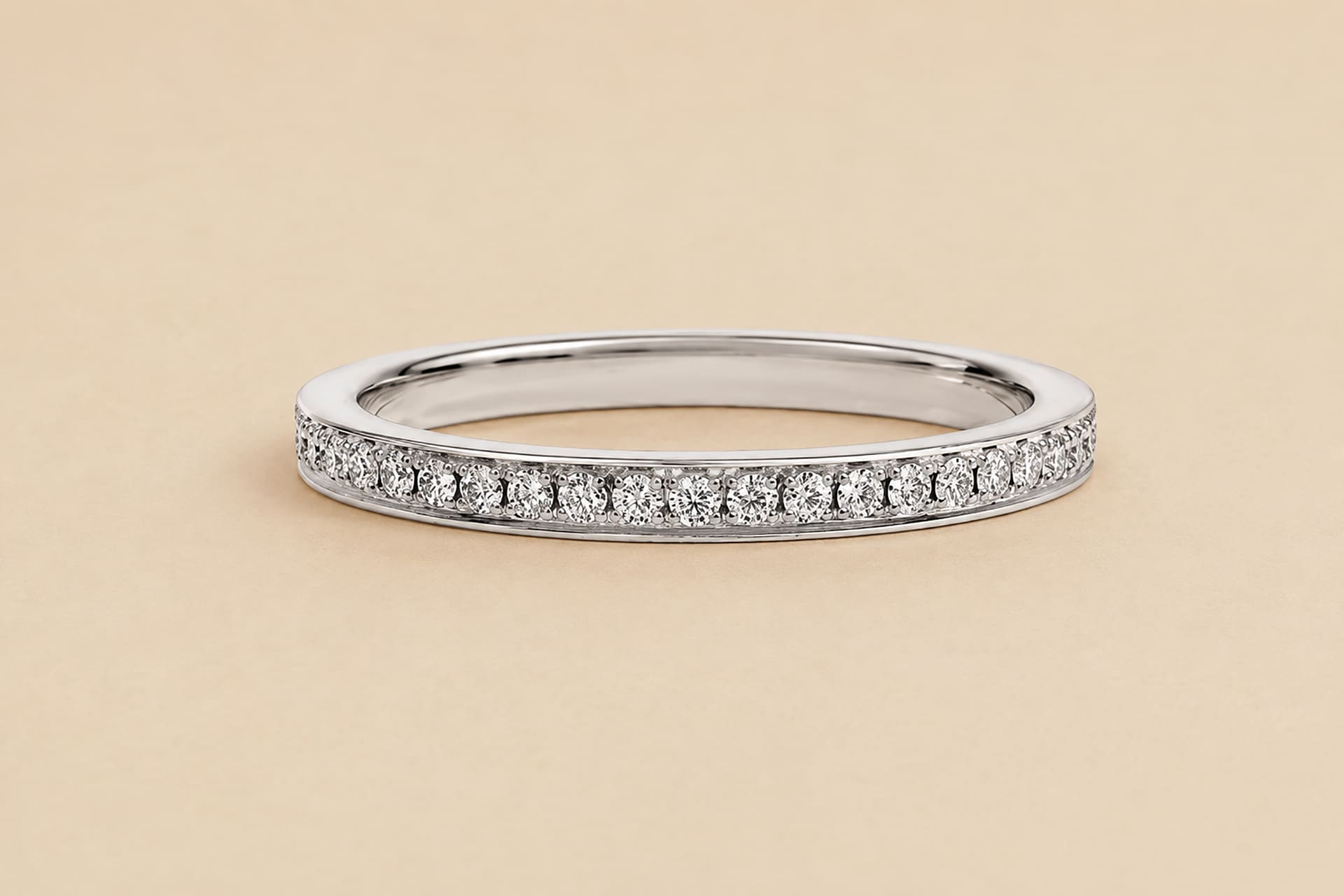
Bands set with a line of stones existed centuries ago, but the eternity took on its modern meaning only in the later twentieth century, when jewellers and their advertising made it the customary gift for a family’s important dates: a wedding anniversary, the arrival of a child, any occasion worth marking with something lasting. Today it is worn alongside the engagement and wedding bands, or alone.
A full eternity, set all the way round, makes the stronger impression, though for everyday wear most prefer the half-eternity, with stones across only the visible part of the band. The metal is traditionally platinum or white or yellow gold, the stones set as close together as possible to keep the line of light unbroken.
Unlike an engagement ring, the eternity rarely belongs to a single moment. More often it stands for a history already lived, an attachment that time has proved. Perhaps that is what makes it one of the most restrained jewels in the repertoire, and at the same time one of the most personal.
The Cocktail Ring: A Triumph of Colour and Scale
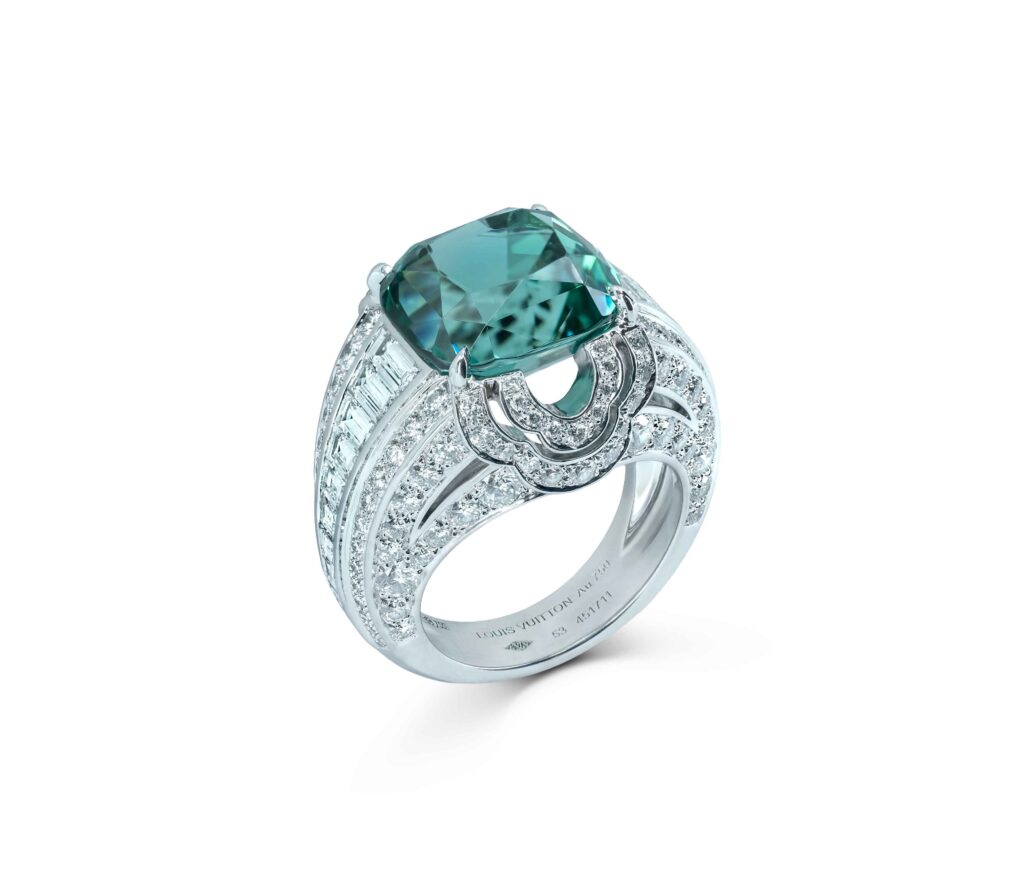
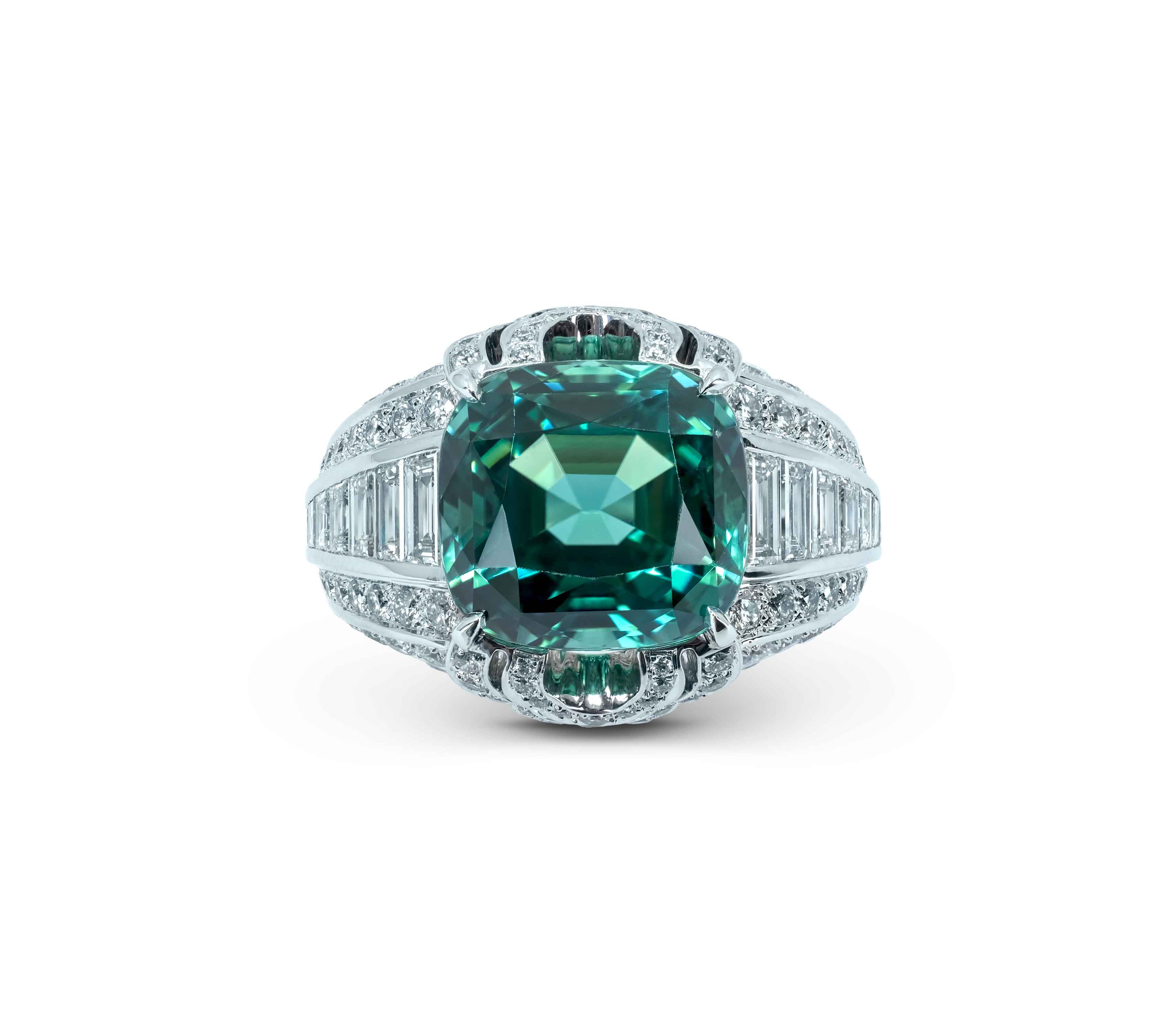
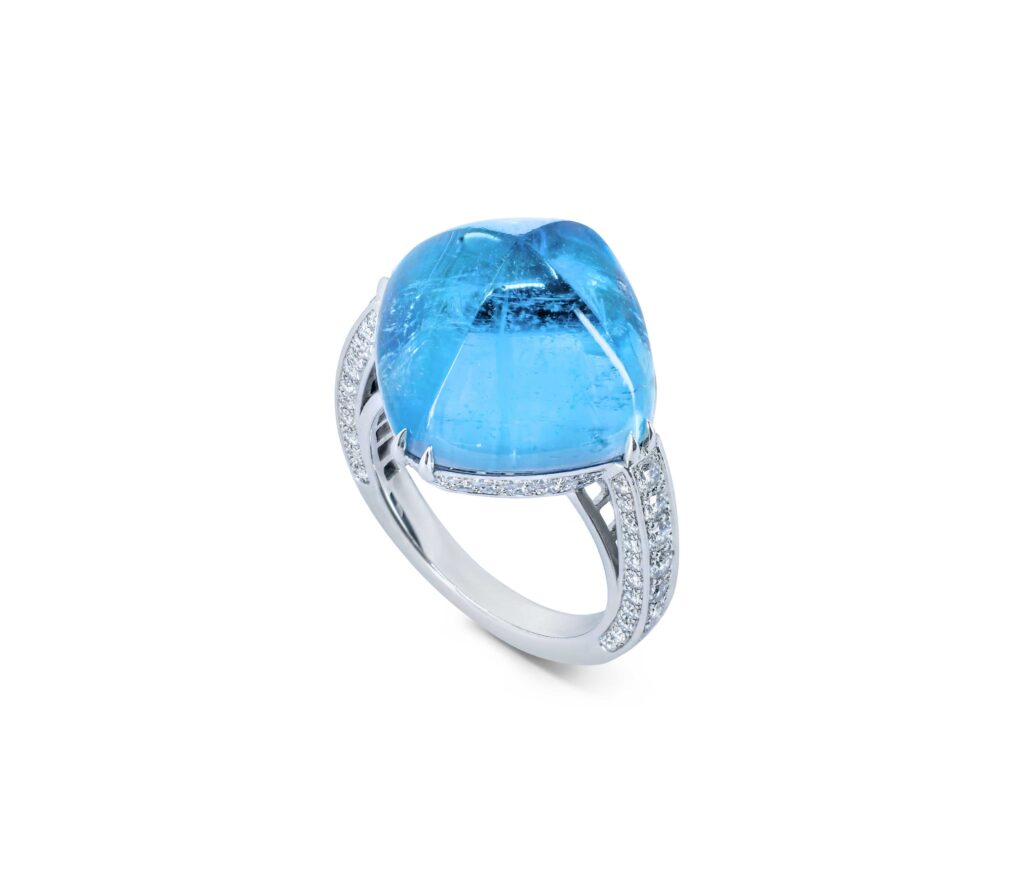
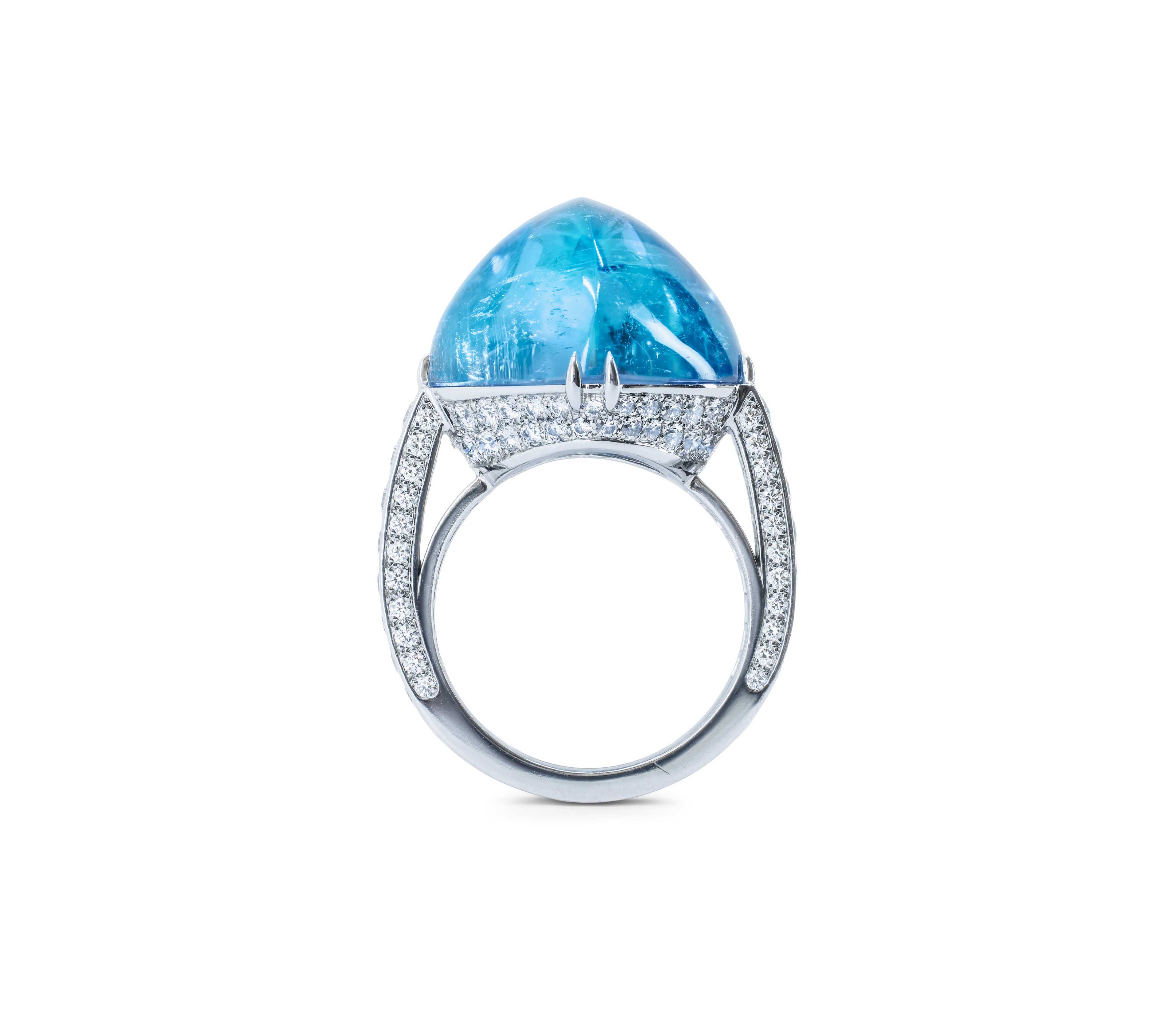
Where the solitaire is an exercise in restraint, the cocktail ring exists to be noticed. It is a large jewel built around an expressive coloured stone, an amethyst, citrine, tourmaline, aquamarine, emerald or ruby, often surrounded by an elaborate mount and a scatter of diamonds. The point is not symbolism but effect.
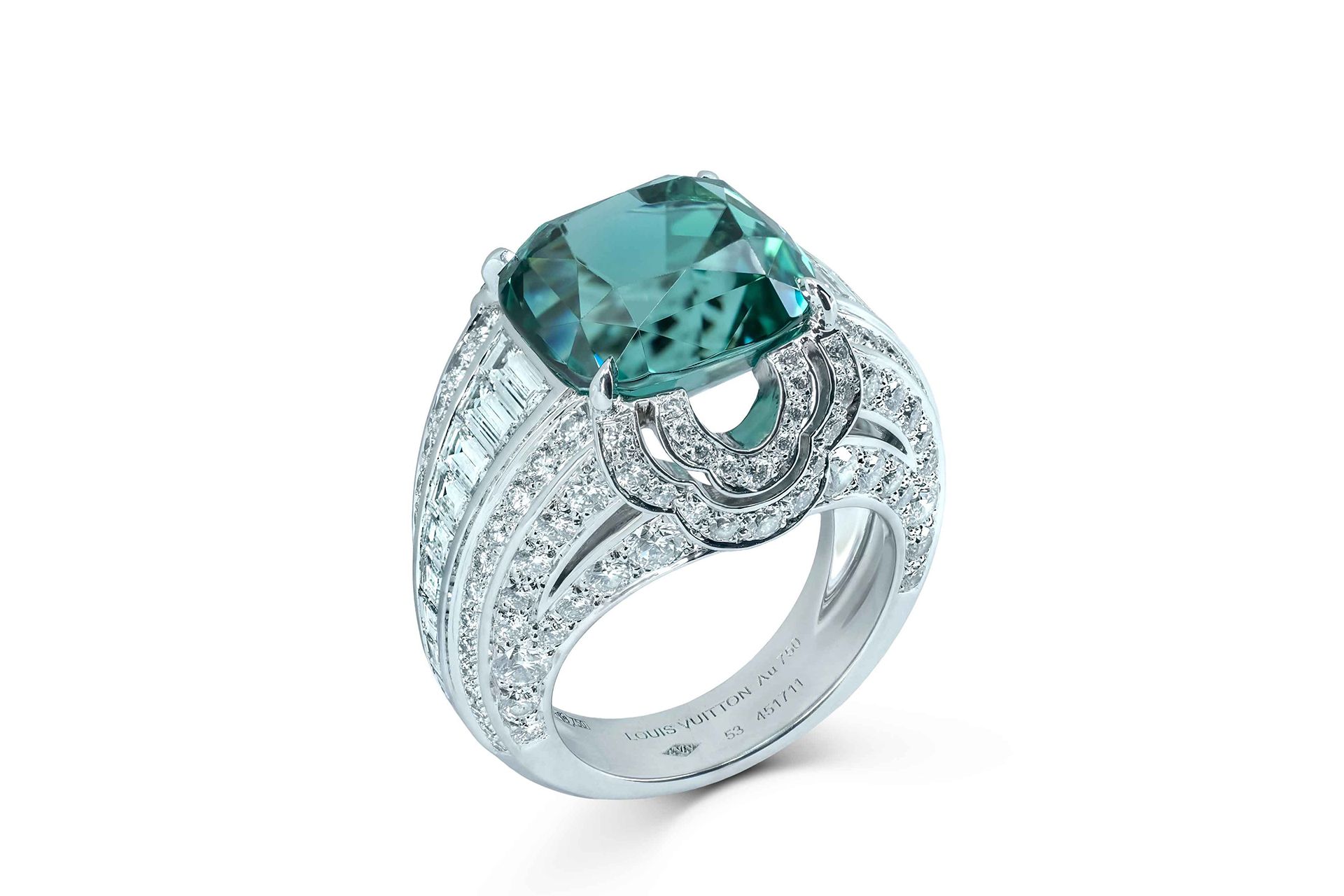
The cocktail ring belongs to 1920s America. Through the Prohibition years women moved more freely in society, and jewellery became a way to announce independence and personal style. Large rings with vivid stones came quickly into fashion, and Art Deco, with its taste for geometry and saturated colour, made them an emblem of the decade. Hollywood and high society carried them through the years that followed.
One of their most devoted champions was Elizabeth Taylor. She wore the 33.19-carat Krupp diamond, a gift from Richard Burton, so constantly that it became part of how the world pictured her. That is the spirit of the cocktail ring: it makes no pretence of modesty and conceals none of its drama.
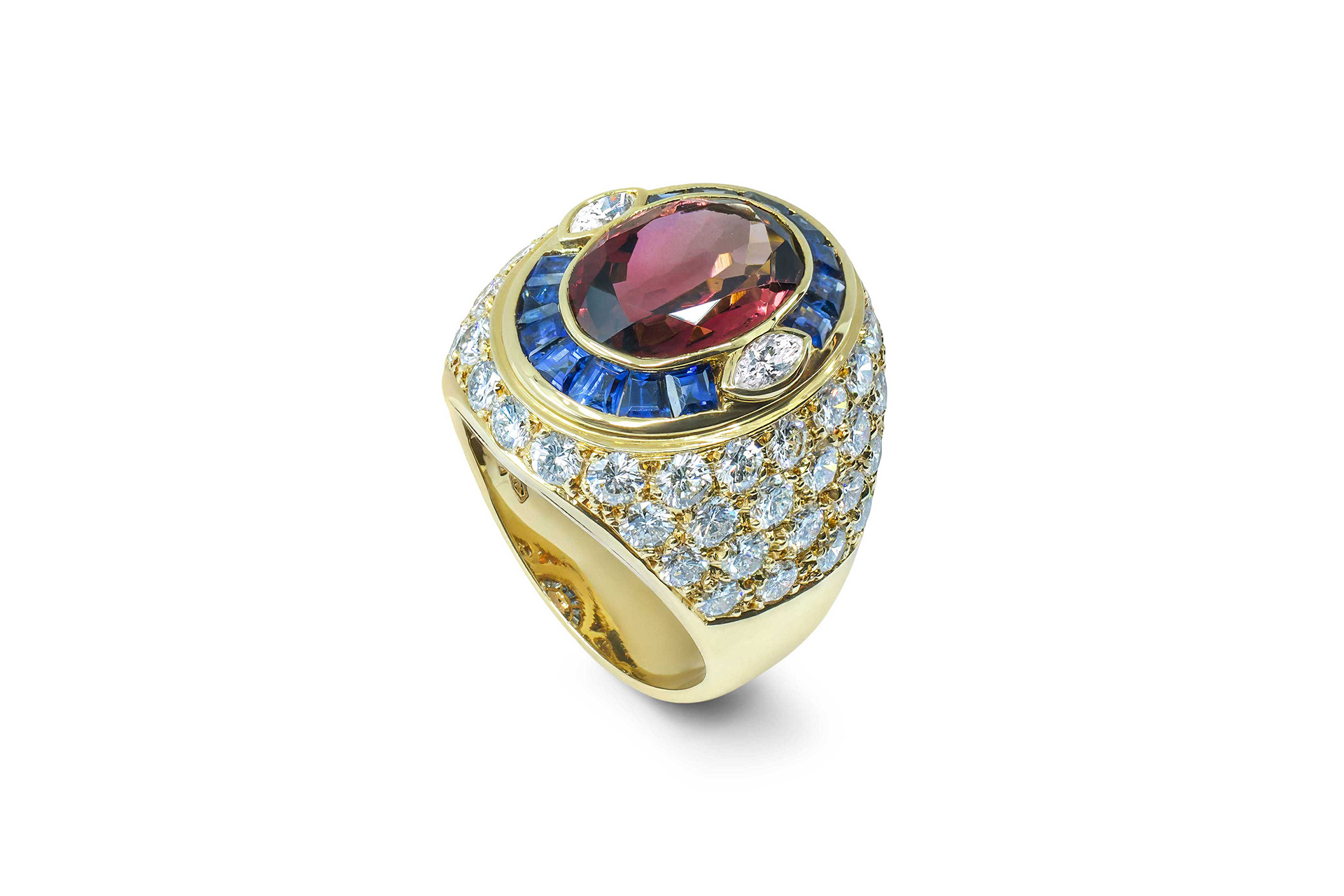
Each house has read the form in its own way. Bvlgari built its reputation on daring combinations of coloured stones, Van Cleef & Arpels on intricate floral and animal designs, Harry Winston on the sheer quality of its large gems. The premise never changed: a cocktail ring exists, above all, for beauty and for pleasure.
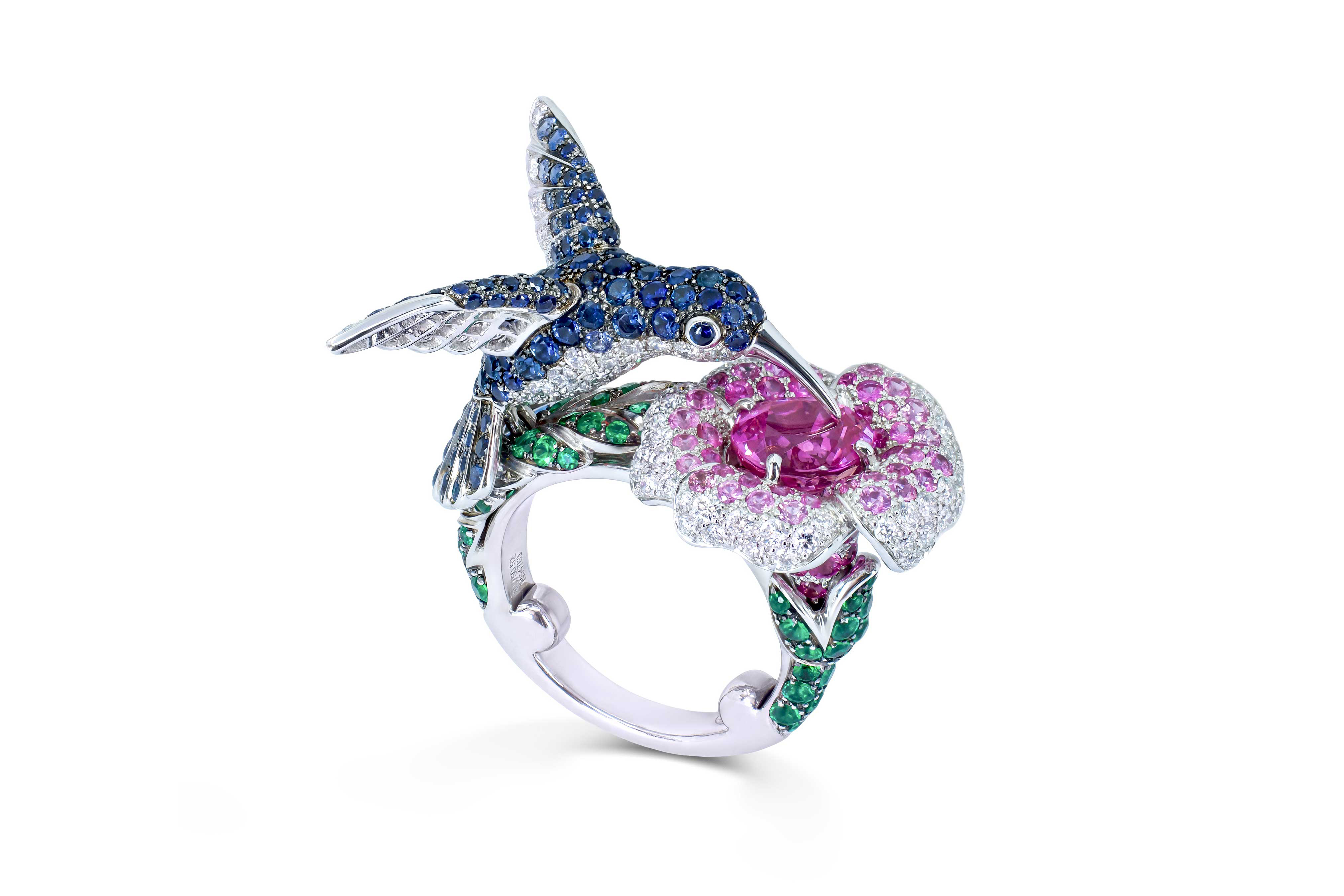
Today these rings are worn on any finger except the one reserved for the wedding band. They keep their association with evenings out, formal receptions and society occasions, even if modern dress treats those rules far more loosely than it once did.
The Cluster: The Illusion of a Great Stone
A cluster ring gathers many stones into a single dense pattern, so that together they read as one large jewel or an elaborate flower. The form is centuries old. It appears in eighteenth-century jewellery, where rose-cut diamonds were grouped into graceful arrangements, and again in the Victorian era, enriched with coloured stones and more elaborate detail.
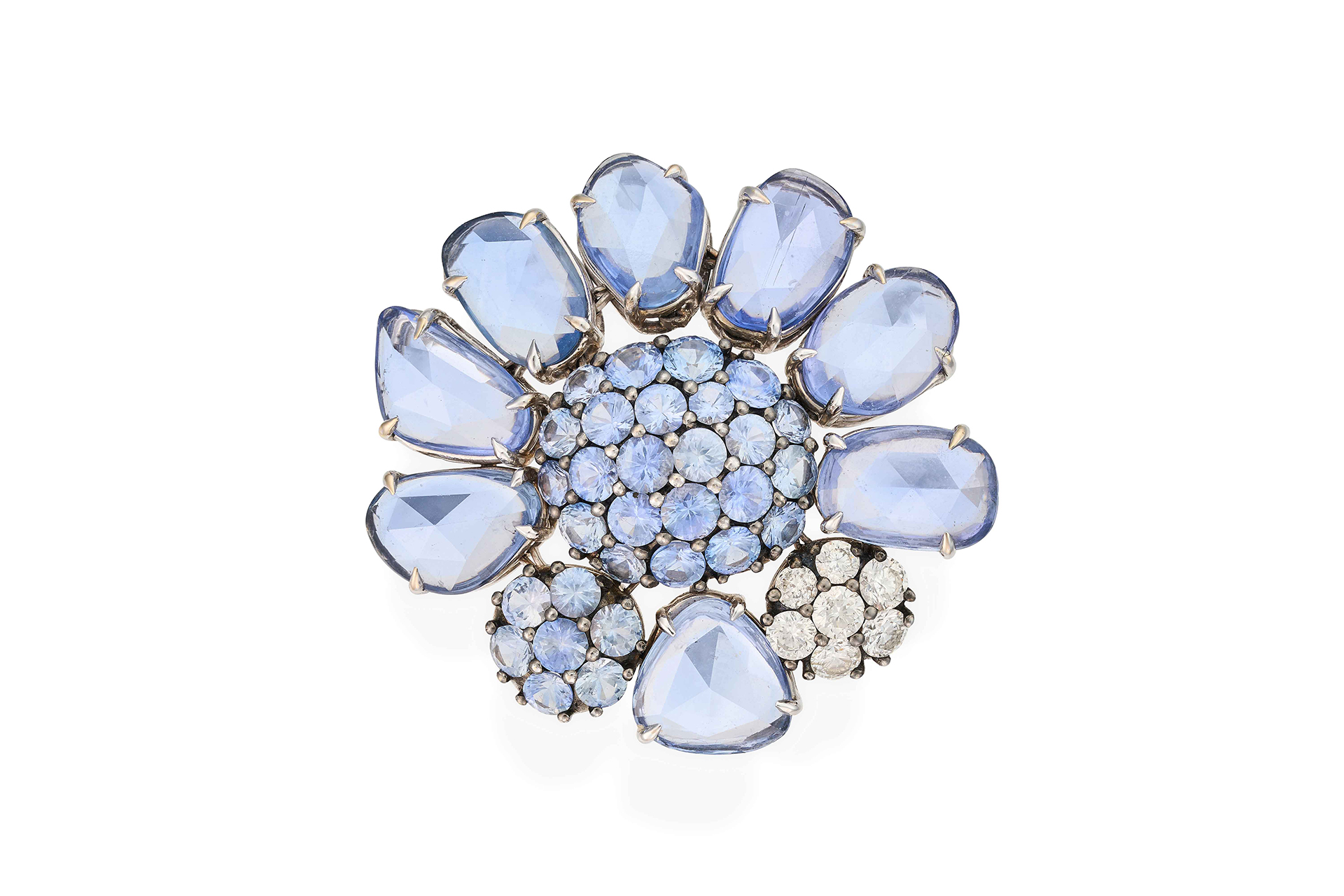
The strength of a cluster lies not in the size of any one stone but in the skill of the arrangement. By bringing many gems together, the jeweller builds volume, depth and a rich play of light, and produces a jewel that looks far grander than the sum of its parts. That is what keeps the cluster among the most expressive forms in jewellery.
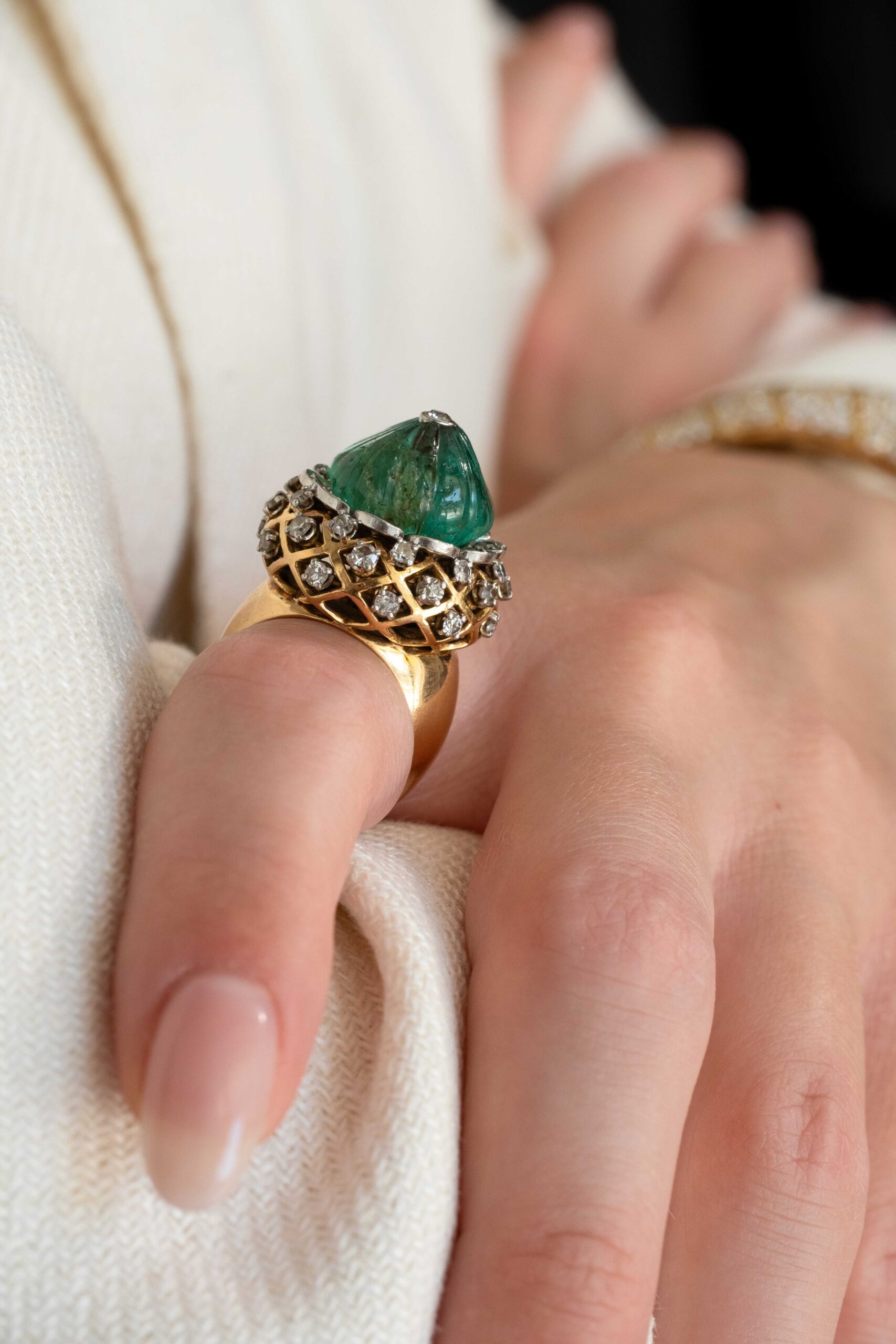
Its most celebrated expression was the Tutti Frutti style Cartier made famous in the first half of the twentieth century. Carved emeralds, rubies and sapphires were composed into leaves, berries and flowers drawn from the jewels of India. Those precious bouquets remain among the most recognisable creations in all of high jewellery.
Toi et Moi: A Dialogue of Two Stones
The Toi et Moi ring, “you and I”, is built on the union of two. At its centre sit two stones turned toward one another, or two arms of the band that meet without quite merging. The stones may differ in colour, size or cut, but the meaning holds: two people, two histories, two lives joined in a single jewel. A close relation is the bypass ring, whose band divides and rejoins to suggest the same idea of meeting and movement.
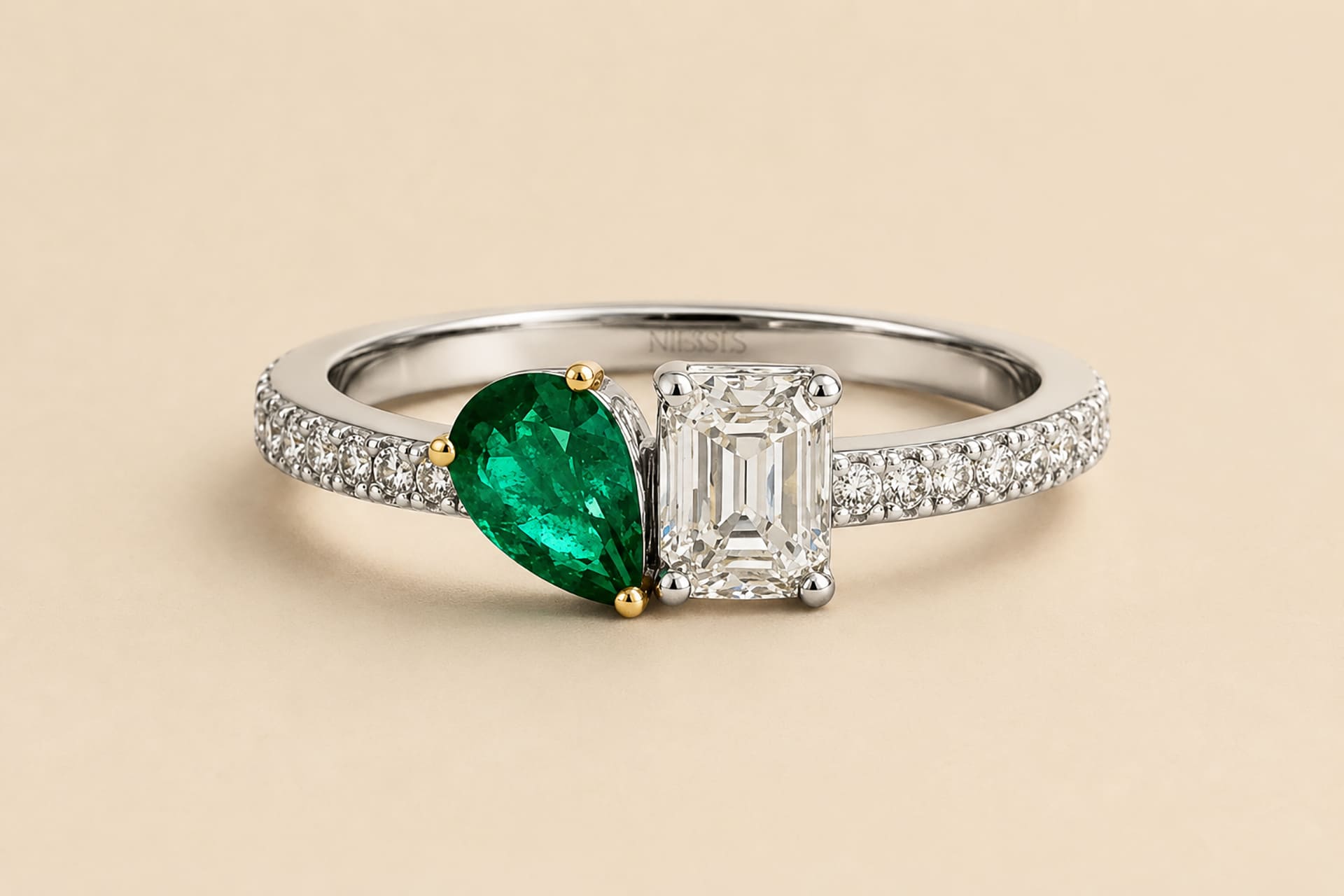
Its history is among the most romantic in jewellery. By tradition, this was the ring Napoleon gave Joséphine in 1796: a pear-shaped sapphire and a pear-shaped diamond set side by side, two equal stones for bride and groom. From there the design became one of the most recognisable emblems of love in the jeweller’s vocabulary.
The twentieth century gave it another famous example. In 1953, John F. Kennedy proposed to Jacqueline Bouvier with a Van Cleef & Arpels ring pairing a 2.88-carat emerald-cut diamond with a 2.84-carat emerald. Nearly a decade later, by then First Lady, she returned the ring to the house to be reworked. Marquise and round diamonds were added around the central pair, forming something like a laurel wreath; the ring kept its romance but gained a new gravity and presence.
This is the particular charm of the Toi et Moi. Where the solitaire concentrates everything on one stone, here the whole point is the dialogue. Neither stone dominates, and that balance is exactly why the form has endured, for more than two centuries, as one of the most graceful symbols of a union between two people.
The Signet: A Crest on the Finger
The signet ring, the French chevalière, is among the oldest forms of all, known since Mesopotamia and ancient Egypt. Its flat or gently domed face carried a crest, a monogram or an engraved device, and served less as ornament than as instrument. Pressed into wax or sealing-clay, it authenticated letters, contracts and affairs of state. Long before the signature in its modern sense, the signet vouched for the identity of the person who wore it.
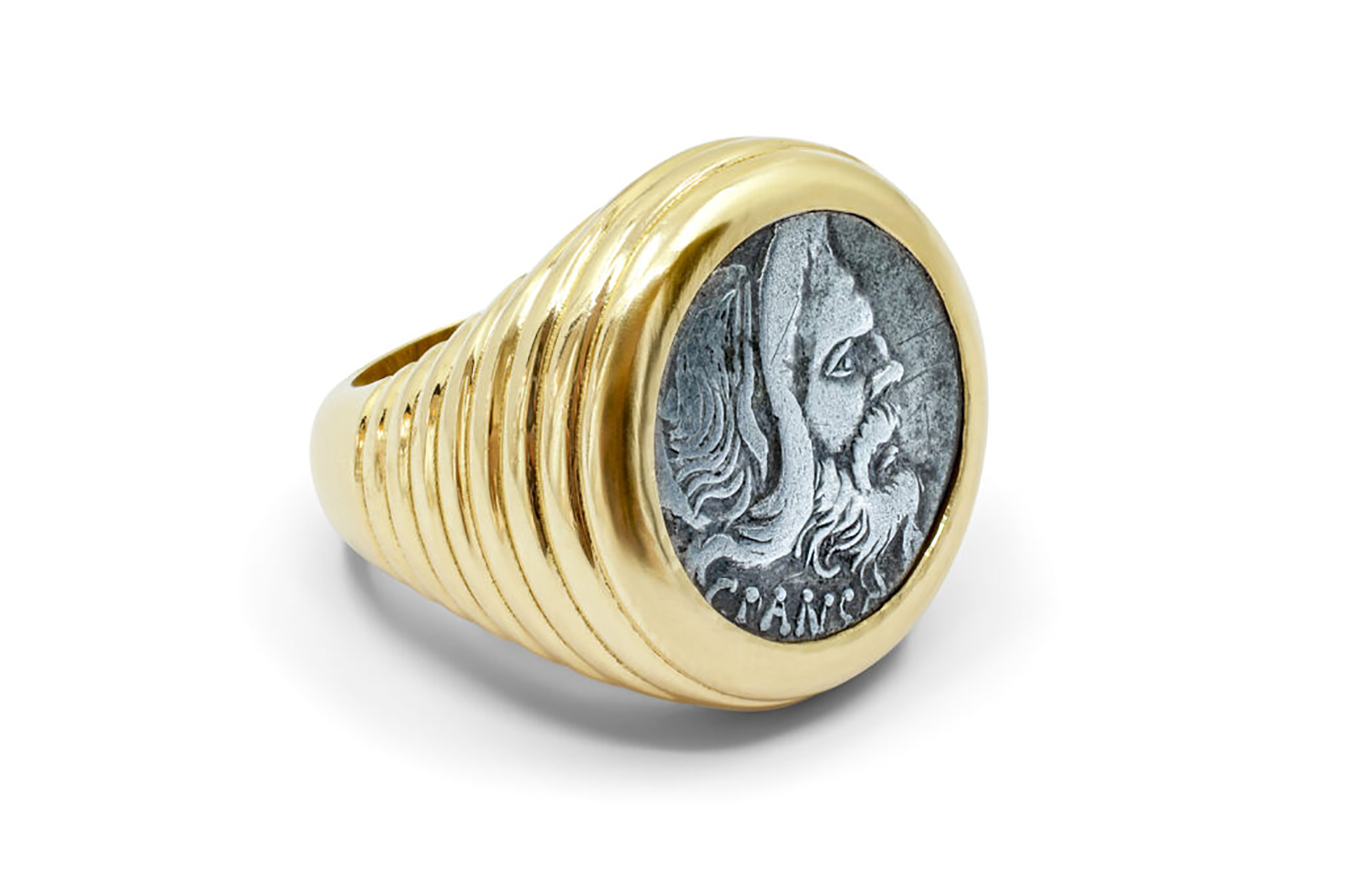
Its practical role faded, but the symbolism stayed. A signet still speaks of origin, of family history, of a feeling for tradition. In many of the old aristocratic houses of Europe such rings pass down the generations together with the crest and the memory of those who wore them before. It is no accident that King Charles III has worn the family signet bearing the Prince of Wales’s feathers for decades, a jewel that has outlasted more than one era.
In the twentieth century the signet moved beyond aristocratic circles and into the classic wardrobe. Today it is worn by men and women alike, set with a crest, a monogram, a plain onyx or carnelian, or nothing at all. The essence is unchanged: unlike most jewellery, a signet rarely speaks of wealth. Far more often it speaks of history. That is why a gold signet on the little finger remains one of the most understated, and most eloquent, gestures in jewellery.
Tank Style: The Beauty of Geometry
Not every great ring is built around a stone. A whole family of forms takes its cue from architecture and geometry instead, from the clean line and the considered weight of metal. Their home is the Art Deco of the 1920s and ’30s, a period in love with the right angle, with symmetry and a certain industrial rigour.
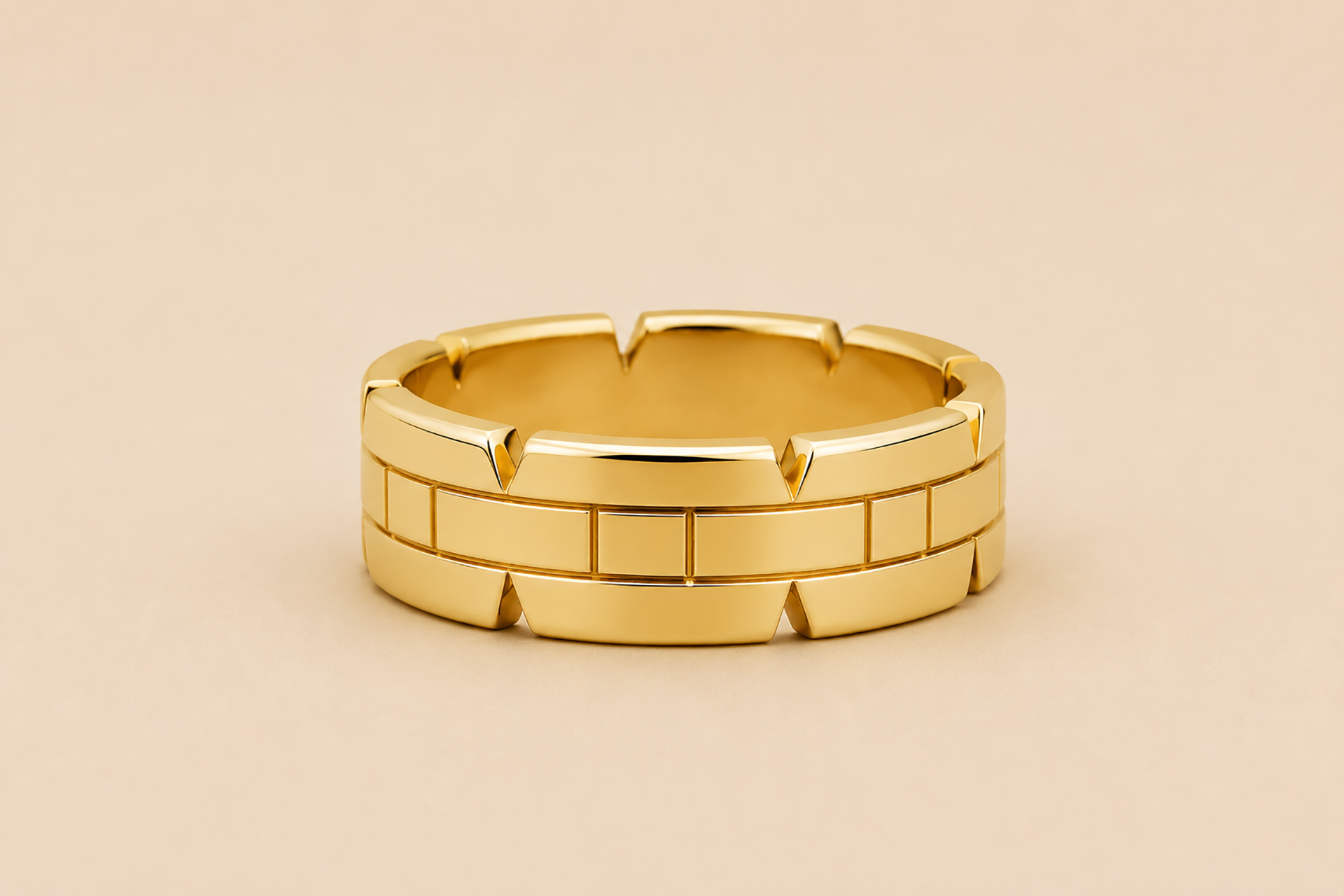
At Cartier, the line that came to embody this taste was the Tank, and here a common misconception is worth correcting. The Tank is first of all a watch, created by Louis Cartier in 1917 under the impression of the Renault FT-17 tanks he had seen on the battlefields of the First World War, and brought to market in 1919. Its geometry, a rectangular case framed by two parallel brancards echoing a tank’s tracks, became part of the house’s visual signature and inspired a range of jewellery: signet rings of severe rectangular cut, rings carrying the motif of the caterpillar track, heavy geometric bands prized for their architecture rather than any stone. Such rings suit those who prefer line to sparkle. They sit equally well on a man or a woman, and look as right with a sharp suit as with considered casual dress.
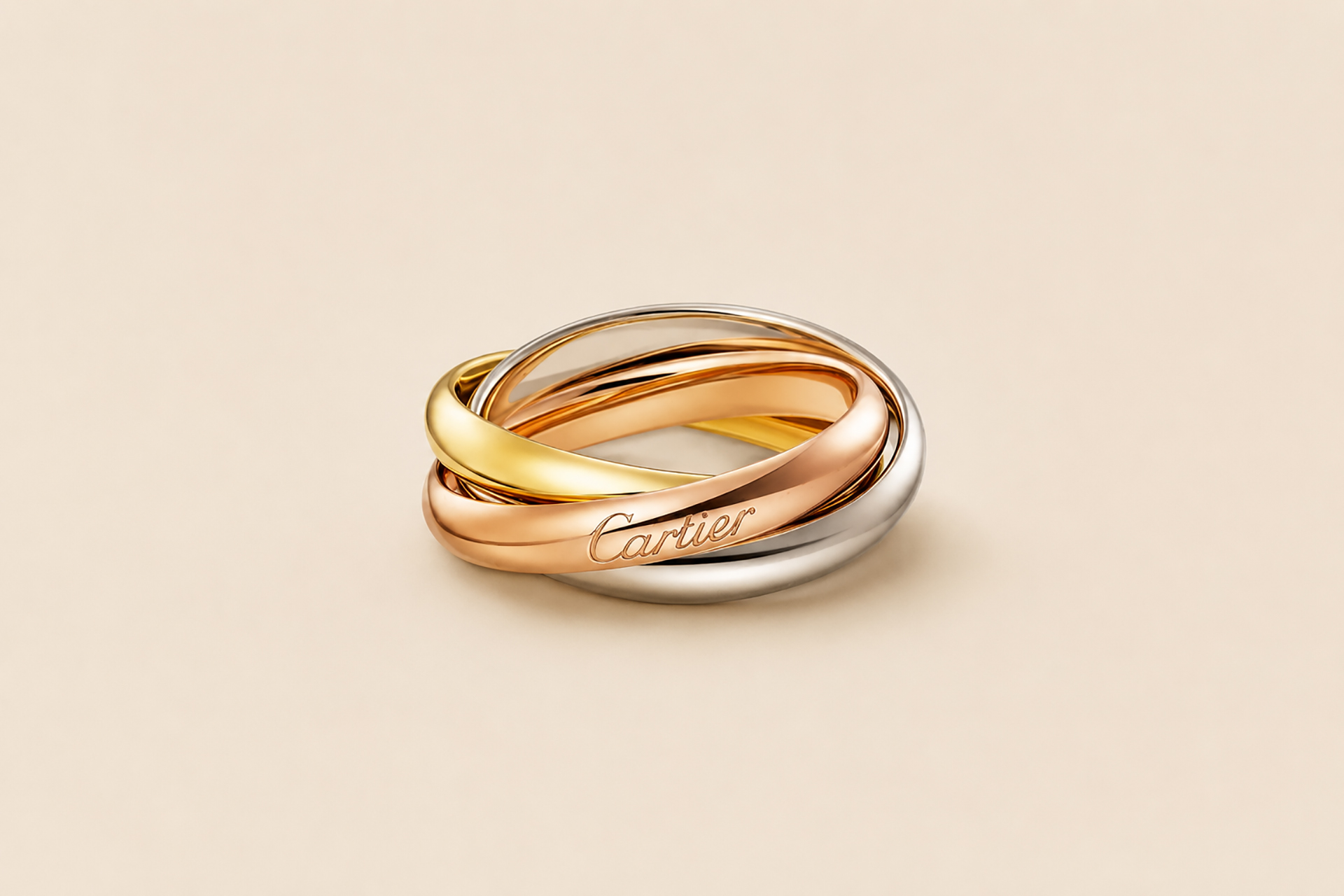
The same architectural lineage produced the Cartier Trinity, its three interlocking bands of yellow, white and rose gold turning freely within one another. Created in 1924, it struck a boldly minimal note against the lavishness of Art Deco. The story that the poet Jean Cocteau commissioned it is often repeated, and it is a myth; the Cartier archives do not bear it out. Trinity was made as a production model, and Cocteau took to wearing two of them on his little finger only in the early 1930s. The connection to the poet was real; the commission was not. It is precisely from corrections of this kind that the language of the connoisseur is made.
The Art of Wearing Several Rings
No ring exists in isolation. On the hand, jewels enter into conversation: some support one another, some set up a contrast, some are meant to draw the eye away from the rest. This is where a subtler art begins than the choice of any single piece, the art of the ensemble.
Every considered collection has its own internal logic. An engagement solitaire and a slim wedding band form a natural pair, joined years later, perhaps, by an eternity ring; three rings on one finger then become less an ornament than an account of the years gone by. A signet on the other hand adds family and character, while a cocktail ring appears only in the evening, the bright guest allowed, for a while, to take the centre. Even the most casual arrangement is rarely accidental. A good ensemble is composed with the same care a fine florist gives a bouquet.
There is a rhythm to the day as well. Some rings stay with their owner constantly, quiet and familiar, almost part of the hand. Others wait for the right occasion: evening light, a formal dinner, an entrance to be made. A jewellery ensemble shifts from morning to evening as a wardrobe does, and there is an elegance peculiar to that rhythm.
The Etiquette of Rings: The Unwritten Rules
The rules for wearing rings are written down nowhere, and yet, among those who know, they are known by heart. Observing them, or breaking them on purpose, is what gives away a confident hand.
Finger and hand. Engagement and wedding rings are traditionally worn on the fourth finger of the left hand, and that is where solitaires, trilogies and halos most often sit. The cocktail ring prefers the right hand, usually the index or middle finger, where nothing stops it from drawing attention. The signet has long belonged to the little finger, though modern fashion takes that convention far more lightly.
Day and evening. Daytime jewels tend toward restraint: a fine line of diamonds, a plain signet, a classic solitaire, a smooth gold band. The evening allows more theatre, with large coloured stones, intricate compositions and unapologetic sparkle. The cocktail ring earned its name honestly; its hour arrives with the first glass of champagne.
In keeping with the outfit. A ring holds a conversation with the neckline, the fabric and the rest of the jewellery. A dinner jacket or a black dress calls for a single striking cocktail ring and nothing more, so that it can remain the soloist. A daytime suit asks for restrained geometry or a classic solitaire. It is wise to keep a ring’s metal in sympathy with the other jewellery and with the case of a watch; gold and platinum can be mixed, but that should read as a deliberate choice rather than an oversight.
Compositions and ensembles. Current fashion has a particular fondness for layering, several slim rings on one finger or a whole arrangement spread across the hand. A successful ensemble always looks composed rather than accidental. If there is a bright accent, everything around it should support it instead of competing.
The highest skill of all is to break a rule on purpose: a man’s signet on a woman’s hand, a cocktail ring with daytime tweed, an eternity stacked with a signet. But to break the rules with taste, one has first to know the classics by heart.
Stones and Metals: Tuning the Character
Choosing a ring begins not only with its form but with its material. Stone and metal set the mood of a jewel as surely as its design.
The solitaire and the trilogy ask for discipline: a clean diamond, platinum or white gold, and nothing to pull attention from the stone. This is the territory of quiet luxury.
The halo and the eternity live on contrast and continuity: a coloured heart within a diamond surround, a line of stones set edge to edge. Platinum sharpens the whiteness of diamonds, while yellow gold lends warmth to a coloured stone.
The cocktail and cluster rings are the realm of colour and invention: large coloured stones such as amethyst, citrine, aquamarine or tourmaline, or deep emeralds, rubies and sapphires, set in yellow or rose gold, which carries warm tones more flatteringly than platinum. Here a bold cut and a sculptural mount are entirely in place.
The signet and the architectural rings are, above all, about metal: yellow gold for the signet, for the sake of tradition and the warmth it gives a crest; white gold, platinum or steel for severe geometry. A stone, where there is one, plays an accent rather than the lead.
A knowing choice always relates stone and metal to skin tone, wardrobe and occasion. Warm skin agrees with yellow gold and warm stones, cool skin with platinum and the whiteness of diamonds. But the final word belongs to the eye, not the rule.
The Ring as Self-Portrait
Rings often outlive the people who wore them. Grace Kelly’s solitaire, Jacqueline Kennedy’s Toi et Moi, Elizabeth Taylor’s great diamond, the family signet of the British crown: all have become more than jewels. They have become emblems of the people who wore them.
Therein lies the particular nature of the ring. Of all jewellery, it stays the most personal. It holds memory, survives its era, and goes on telling a story long after the voice of its owner has fallen silent.
To choose a ring is to choose the story your hand will tell. And anyone who understands the language of its forms wears more than a jewel. They wear a piece of their own biography.