






Blue diamonds are among the rarest forms of natural coloured diamond. Nearly every great stone of this colour is known by name, with a history traced back centuries. The reason for that rarity lies, quite literally, deep within the Earth — and that is where the story begins.
Why Blue Diamonds Are So Rare
To understand what makes a blue diamond exceptional, start not in the auction room but in the crystal lattice. The vast majority of diamonds are pure carbon, and their colourlessness is really a mark of chemical perfection. Colour in a diamond almost always signals an impurity: nitrogen produces yellows and browns, distortions in the lattice produce pinks. In most natural blue diamonds, the colour comes down to trace amounts of boron.
Boron atoms, sitting in the lattice in place of individual carbon atoms, absorb light at the red and infrared end of the spectrum and let the cool blue wavelengths through to the eye. Most natural blue diamonds fall into the rare Type IIb category. GIA estimates that Type IIb diamonds make up roughly 0.1% of natural diamonds, and that natural blue stones account for only a small fraction of that group — a sliver of a fraction of a percent of all diamonds mined worldwide, according to GIA researchers.
Here is the paradox: boron itself is not an exotic element. It is abundant near the Earth’s surface, in seawater and sedimentary rock. The trouble is that where diamonds actually form, boron is all but absent. For a long time, that contradiction remained a geological puzzle — how does a “surface” element end up locked inside a crystal growing at such depth?
The answer came from a study published in Nature in 2018, led by Evan Smith. Analysing several dozen blue diamonds and the mineral inclusions trapped within them, the research team concluded that a significant share of the stones studied likely formed far deeper than most of their counterparts — at the very least around the boundary between the upper and lower mantle (410–660 km), with some reaching even deeper, into the lower mantle itself (beyond 660 km). That is substantially deeper than most natural diamonds, which grow at depths of 150–200 kilometres. The leading hypothesis ties the boron’s journey to the subduction of oceanic crust: seawater saturates the ocean floor, that crust is dragged down with the sinking tectonic plates, and deep within the mantle, under colossal pressure, the released boron is thought to become part of the growing crystal.
The findings are consistent with the idea that some of this material may trace back to ancient oceanic crust.
The Stone That Conducts Electricity and Glows in the Dark
Type IIb diamonds have properties that turn gemmology into something close to physics. Unlike most other diamonds, boron-bearing stones conduct electricity — the boron turns the diamond into a semiconductor. They are among the very few gem diamonds capable of this, and gemmologists use the trait as one tool among several in their analysis. Conductivity alone, though, doesn’t prove natural origin; it only helps narrow down the possibilities. A firm conclusion about a stone’s natural colour requires full laboratory analysis, including spectroscopy and a study of its inclusions.
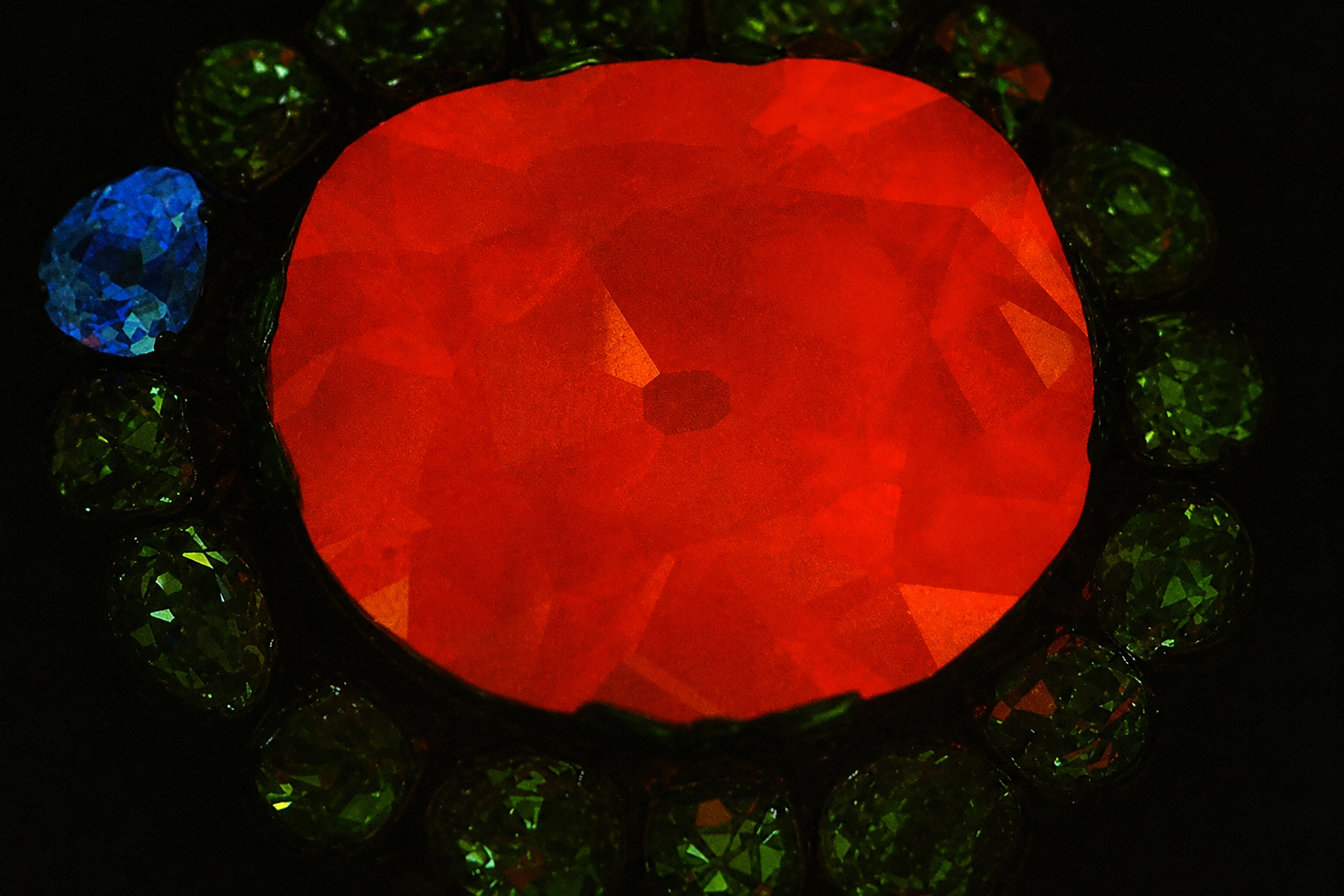
There’s a second, almost uncanny property. Expose a natural blue diamond to ultraviolet light, then plunge it into darkness, and it answers with a red glow — a phosphorescence that can last several minutes. Research at the Smithsonian showed that this red phosphorescent component appears in many natural blue diamonds and stems from a subtle interaction between boron and trace nitrogen in the lattice. The glow’s intensity and duration vary slightly from stone to stone, making it something of a fingerprint. The famous Hope Diamond glows red-orange for more than a minute after exposure.
Golconda, Cullinan, Argyle: A Geography of Rarity
Trace the lineage of the world’s great blue diamonds and every road leads back to three places on the map.
The first, and oldest, is the legendary Golconda fields of India. Strictly speaking, Golconda was a fortress and trading hub near what is now Hyderabad, while the diamonds themselves were recovered from alluvial deposits along the Krishna River. For nearly two thousand years, India stood as the world’s principal — and, for practical purposes, only known — diamond source, until deposits were discovered in Brazil in the 1720s. Golconda is the source of the greatest historical blue stones: the Hope Diamond and the Wittelsbach Diamond both trace back to it. The fields were largely worked out by the early nineteenth century, which means any genuine Golconda stone carries at least two centuries of history behind it — for collectors, that provenance is itself a mark of quality.

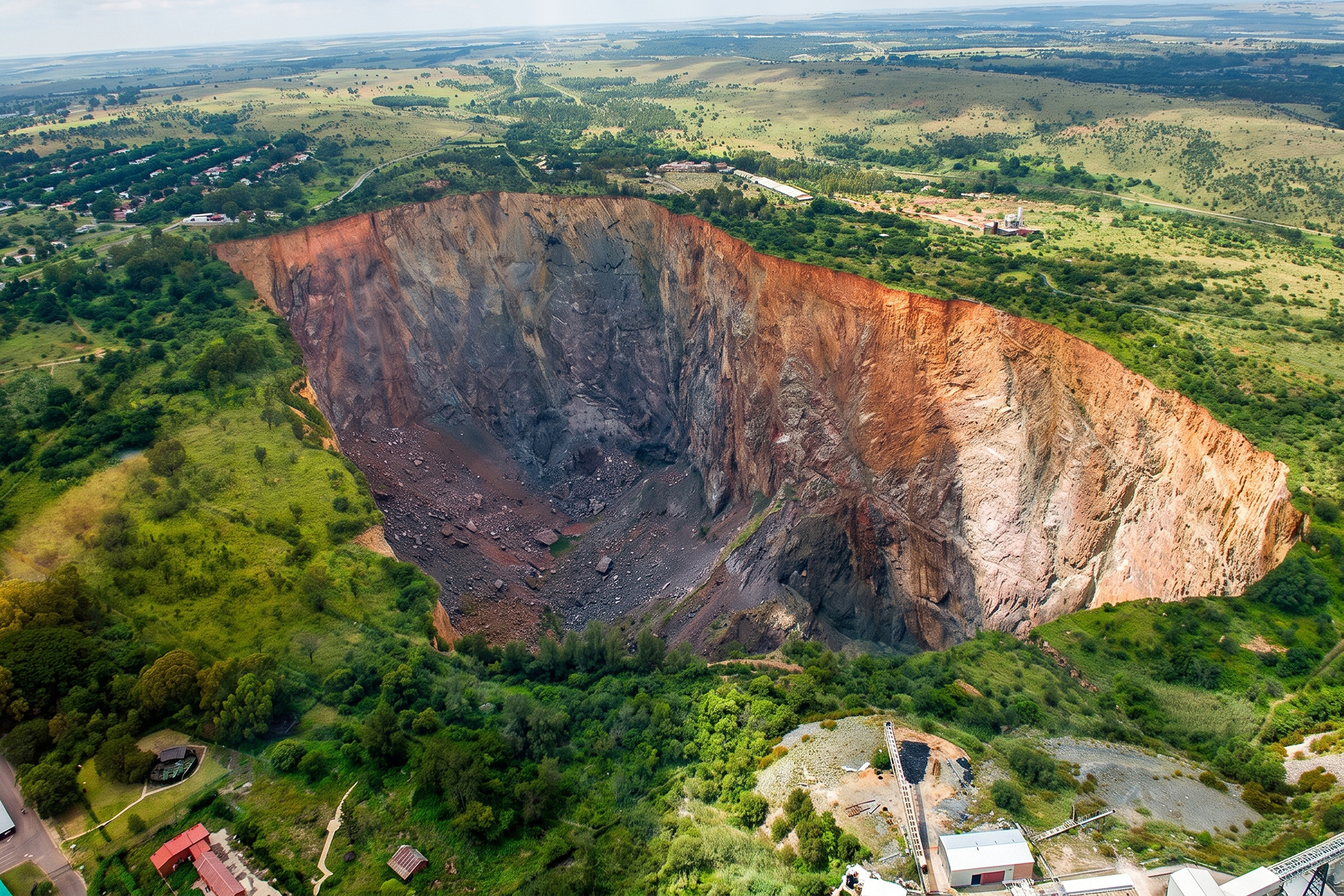
The second is the Cullinan mine in South Africa, opened in 1902 under the name Premier. It was here, in 1905, that the largest gem-quality diamond ever found — the 3,106-carat Cullinan — turned up, later cut into the nine principal stones of the British Crown Jewels. But for our purposes, something else matters more: Cullinan is regarded as one of the most important sources of exceptional blue diamonds mined today. Many of the most valuable blue stones to have set auction records over the past decade trace back to this single mine, which Petra Diamonds has operated since 2008. In 2021, a blue rough weighing more than thirty-nine carats was recovered there — the stone that would become the De Beers Cullinan Blue.
The third is Australia’s Argyle mine, best known for pink diamonds but also the source of vanishingly rare violet-blue stones. Here a fine gemmological distinction matters: in some of these stones, the colour is thought to arise not from boron but from hydrogen-related defects and other quirks in the lattice structure. Argyle operated for thirty-seven years before closing in November 2020. With its closure, the source of these particular stones dried up entirely, which has only sharpened their scarcity on the secondary market.
A Hierarchy of Blue: Reading the Colour
A blue diamond’s value comes down, above all, to its colour — and here the language turns precise and technical. GIA grades coloured diamonds along three axes: hue (the dominant colour), tone (lightness or darkness) and saturation (intensity). The resulting intensity scale rises from Faint through Very Light, Light, Fancy Light, Fancy and Fancy Intense, up to Fancy Vivid. Two categories stand apart — Fancy Deep and Fancy Dark — and it’s worth clearing up a common misconception right away: these are not steps “above” Vivid. They describe stones that are darker in tone, not more saturated. In other words, the scale isn’t a single line running from weak to strong; it maps a combination of saturation and tone. That is precisely why the deep, muted Hope Diamond falls into the Fancy Dark category while the auction record-holders sit in Fancy Vivid — different characters of colour, not different rungs on the same ladder.
At the top for saturation sits Fancy Vivid Blue: a combination of high saturation and a perfectly balanced, medium tone, in which the stone seems to glow from within with pure, unadulterated blue. Blue diamonds are scarce enough already, and only a small fraction of them ever earn this designation; Fancy Vivid is considered one of the most coveted grades on the market, and it is these stones that most often go on to set auction records.
Secondary tones matter almost as much. A pure blue commands the highest premium; a grey cast typically depresses value, while a hint of green or violet can lend a stone real character. The Hope Diamond, under GIA’s current classification, is described as Fancy Dark greyish blue — its dignified, muted depth is part of its character, not a flaw. Understanding this scale is essential for any serious collector: between two visually similar stones, the difference between Fancy Intense and Fancy Vivid can mean a price gap of several multiples.
Named Legends: Stones That Outlasted Empires
Blue diamonds of real significance rarely go unnamed. The most important carry names bound up with royal courts, revolutions, and fates.
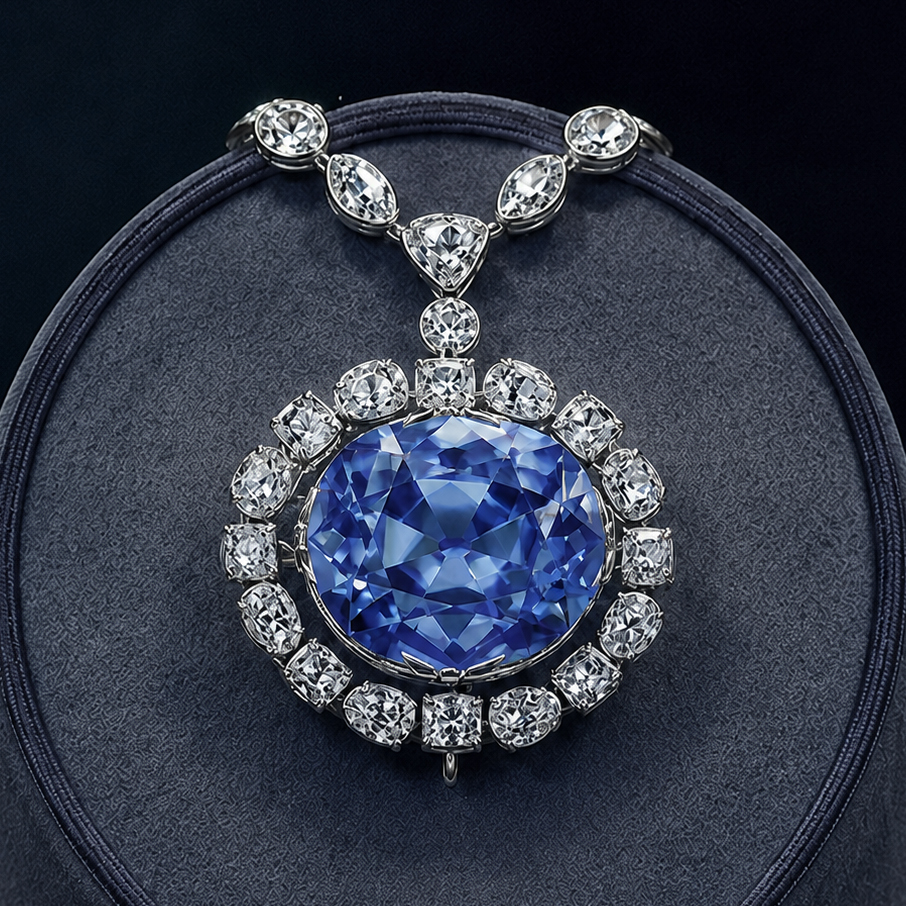
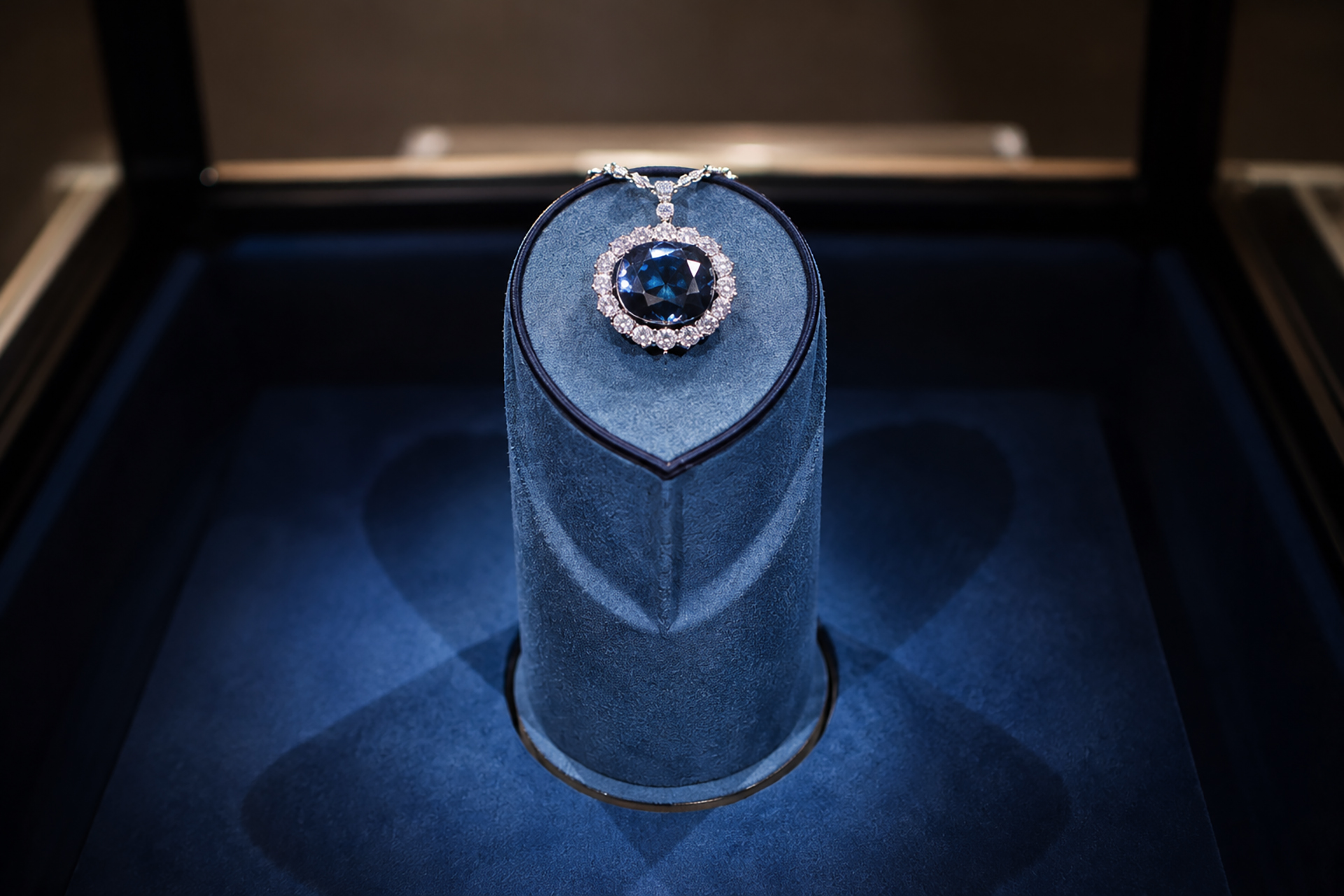
The Hope Diamond (45.52 carats) is, without question, the most celebrated stone of this colour in the world, now housed at the Smithsonian Institution in Washington. Its story begins in the seventeenth century, when the French merchant and traveller Jean-Baptiste Tavernier acquired a large, roughly cut blue diamond in India. In 1668, Tavernier sold the stone to Louis XIV; the court jeweller recut it into what became known as the “Blue Diamond of the Crown,” or the French Blue. Amid the chaos of the French Revolution, in 1792, the stone was stolen from the royal treasury and vanished. Decades later, a smaller blue diamond surfaced on the market — the Hope itself. It was first documented in September 1812, in an inventory drawn up by the London jeweller John Francillon; the stone took its present name only later, from the banking family Hope, in whose gem catalogue it first appears in 1839. In 1958, the legendary jeweller Harry Winston donated the stone to the Smithsonian — famously, according to the well-worn story, mailing it there in a plain package by ordinary post.
The Wittelsbach Diamond, later re-cut and renamed the Wittelsbach-Graff (originally 35.56 carats), is another Golconda stone with a royal past, having belonged to the Austrian and Bavarian crown jewels. In December 2008, the jeweller Laurence Graff bought it at Christie’s for £16.4 million — a record for a diamond at the time. What followed stirred up a storm in the gemological world: Graff had the historic stone recut, shaving off roughly four and a half carats to bring it down from 35.56 to 31.06 carats. Some called it an act of vandalism, likening it to repainting an Old Master; Graff himself countered that creating beauty is no sin. After the recut, GIA reclassified the stone as Fancy Deep Blue, Internally Flawless — one of the largest natural blue diamonds of that quality ever graded. In 2010, the Wittelsbach-Graff was briefly reunited with the Hope in a joint exhibition at the Smithsonian — a rare meeting of two stones that once emerged from the very same Indian fields.
The Farnese Blue (6.16 carats) is a pear-shaped blue diamond presented to Elisabeth Farnese, Queen of Spain, in 1714. For more than three centuries it passed quietly through four European royal houses, unknown to the public, before finally coming up at open auction in 2018, at Sotheby’s Geneva, where it sold for $6.7 million.
The Idol’s Eye (70.21 carats) is one of the largest cut blue diamonds in the world, though its colour is in fact pale — a light blue rather than a deep, saturated one. Legend places its discovery around 1600, and much of its early history, including the well-worn tale of a Persian prince, belongs more to folklore than to the historical record. What is documented is its sale at Christie’s in 1865 and its ownership by the Ottoman Sultan Abdul Hamid II. The roster of its later owners reads like a history of twentieth-century jewellery: Harry Winston and Laurence Graff both held the stone.
Records at Modern Auction
Over the past decade, blue diamonds have topped the list of the most expensive lots at auction anywhere in the world. Supply is finite; demand keeps climbing — and the records keep falling accordingly.
The turning point came in 2015. At Sotheby’s Geneva, the Blue Moon of Josephine (12.03 carats, Fancy Vivid Blue, Internally Flawless) sold for $48.4 million. Cut from Cullinan rough recovered the previous year, it set what was then a record price per carat for any diamond or gemstone — north of $4 million a carat. The buyer, Hong Kong businessman Joseph Lau, named the stone after his daughter.
A year later, in May 2016, an absolute record was set. The Oppenheimer Blue (14.62 carats, Fancy Vivid Blue), named for a family with decades of history in the diamond trade, sold at Christie’s Geneva for $57.5 million. Bidding ran for more than twenty minutes, and the final price made it the most expensive jewel ever sold at auction, of any kind.
That overall record didn’t last long: by April 2017 it had been overtaken by a pink diamond, the CTF Pink Star (59.60 carats, Fancy Vivid Pink), which sold at Sotheby’s Hong Kong for $71.2 million. Among blue diamonds specifically, though, the Oppenheimer Blue still holds first place today. The De Beers Cullinan Blue (15.10 carats, Fancy Vivid Blue, step cut, Internally Flawless) makes the point well: sold at Sotheby’s Hong Kong in April 2022 — the largest diamond of this top colour grade ever offered at auction — it fetched $57,471,960, roughly seventy thousand dollars short of the Oppenheimer’s price. The record for the world’s most expensive blue diamond held.
The list of record-setters doesn’t end there. In 2014, at Christie’s Geneva, the Winston Blue (13.22 carats, Fancy Vivid Blue, Flawless, pear-shaped) was bought by the house of Harry Winston for roughly $23.8 million; at the time, it was the largest flawless Fancy Vivid stone GIA had ever graded. That same year, at auction in New York, a pear-shaped blue diamond from the collection of the American philanthropist Bunny Mellon — a stone that came to be called “Zoe” (9.75 carats, Fancy Vivid Blue) — sold for $32.6 million, setting the record at the time for price per carat for any coloured diamond. The stone’s story didn’t end there: its next owner had it recut down to 9.51 carats (Internally Flawless), and under the name Mellon Blue, it returned to Christie’s in November 2025, selling for $25.5 million — noticeably below its earlier price.
Not every great gem makes it to the hammer. The formidable Golconda Blue (23.24 carats, Fancy Vivid Blue), with Indian royal provenance, was expected to be the highlight of a Christie’s sale in May 2025 — the auction and its estimate of $35–50 million were publicly confirmed by the house — but the stone was withdrawn shortly before the sale; reports suggested it was later sold privately, though the details of any such deal were never officially disclosed. The most recent headline sale was the Mediterranean Blue (10.03 carats, Fancy Vivid Blue): cut from Cullinan rough found in 2023, it sold at Sotheby’s Geneva in May 2025 for $21.5 million.
It’s worth keeping one thing in mind: a record price at auction isn’t a market benchmark so much as the outcome of two determined bidders competing for one particular stone. A top-tier blue diamond is a singular object, and its price is set not by any chart but by a rare convergence of weight, colour and clarity.
Who Wore Them, Loved Them, and Made Them Famous
Much of the story of blue diamonds is really the story of the people who owned them.
The most vivid of these lives is Evalyn Walsh McLean, the American heiress whose name is forever bound up with the Hope Diamond. In January 1911, her family bought the stone from Pierre Cartier for $180,000; it was Cartier who set it into the diamond necklace by which it’s still recognised today, and Cartier who, in selling it, played up the “curse” story for all it was worth. On McLean, the effect was the opposite of what one might expect: superstition never troubled her, and she wore the Hope everywhere — to parties, in the garden, at the card table. In the most famous episode of all, she once clasped the priceless stone onto the collar of her Great Dane, Mike, plainly enjoying the reaction it drew. After her death, Harry Winston bought her jewels, and in 1958 the Hope took its place at the Smithsonian. One caveat is worth stating plainly: the “curse” itself was largely a marketing invention designed to sell the stone; American newspapers were already saying as much back in 1911, noting that most of the sinister tales had simply been made up.
Centuries before McLean, the same stone — then still the “French Blue” — adorned the French crown. Having bought the rough diamond from Tavernier in 1668, Louis XIV had it cut and wore it on ceremonial occasions. His great-grandson Louis XV, around 1749, had the blue diamond set into the ceremonial insignia of the Order of the Golden Fleece — one of the most lavish jewels of its age, its blue set alongside a large red spinel. Amid the turmoil of the Revolution, that piece was stolen and broken apart, and the blue stone vanished, only to resurface later under the name Hope. Popular legend also links Marie Antoinette to the stone, though here it’s worth separating documented fact from lore: the royal ownership and the setting in the Golden Fleece are well attested, while most of the “fatal” tales belong to legend rather than record.
Another blue diamond found its final home through a collector’s passion. Marjorie Merriweather Post, one of the wealthiest women in America in her time, donated the Blue Heart (roughly 30.62 carats) to the Smithsonian in 1964 — a heart-shaped stone from South Africa’s Premier mine that had passed through the hands of Cartier and Harry Winston. By one account, Post enjoyed showing the stone to guests, remarking that hers was prettier than “the other one” — meaning the Hope itself. (The Blue Heart is sometimes called the “Eugénie diamond,” but any connection to the French empress is undocumented: the stone was found long after her lifetime.)
Blue diamonds found admirers in the East as well. The Golconda Blue, mentioned earlier, belonged to the Holkar maharajas of Indore; the house of Mauboussin created a lavish sautoir for the family that paired the blue stone with the famed Indore Pears, worn by Maharani Sanyogita Devi and immortalised in a portrait by Bernard Boutet de Monvel that has since entered the canon of Art Deco. The stone later belonged to Harry Winston, and after him to the Maharaja of Baroda.
Closer to our own time, blue diamonds became something of a family affair for the Hong Kong collector Joseph Lau. He named his stones after his daughters: in 2014 he bought “Zoe,” and in 2015 the Blue Moon, renaming it the Blue Moon of Josephine in honour of his daughter Josephine. The night before that same November 2015 sale, he had already bought a pink diamond, “Sweet Josephine” — meaning that over two evenings, he spent roughly $77 million on two stones for his children.
Houses That Speak the Language of Blue
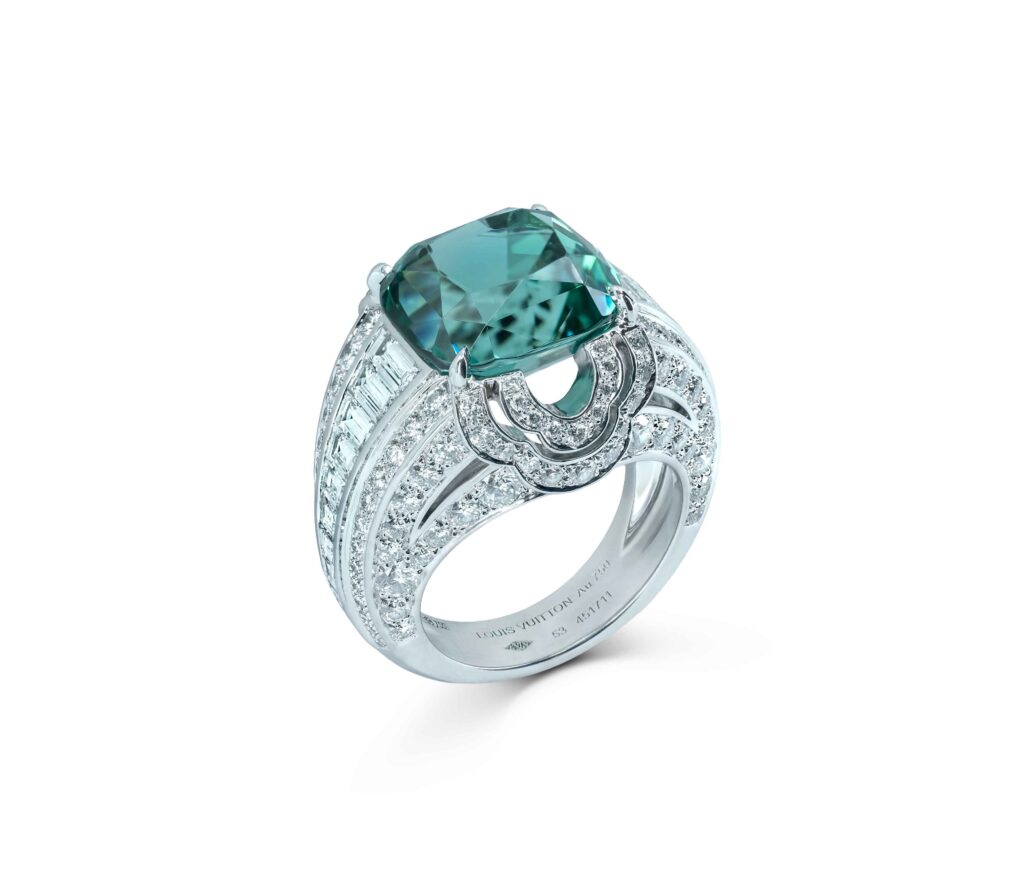
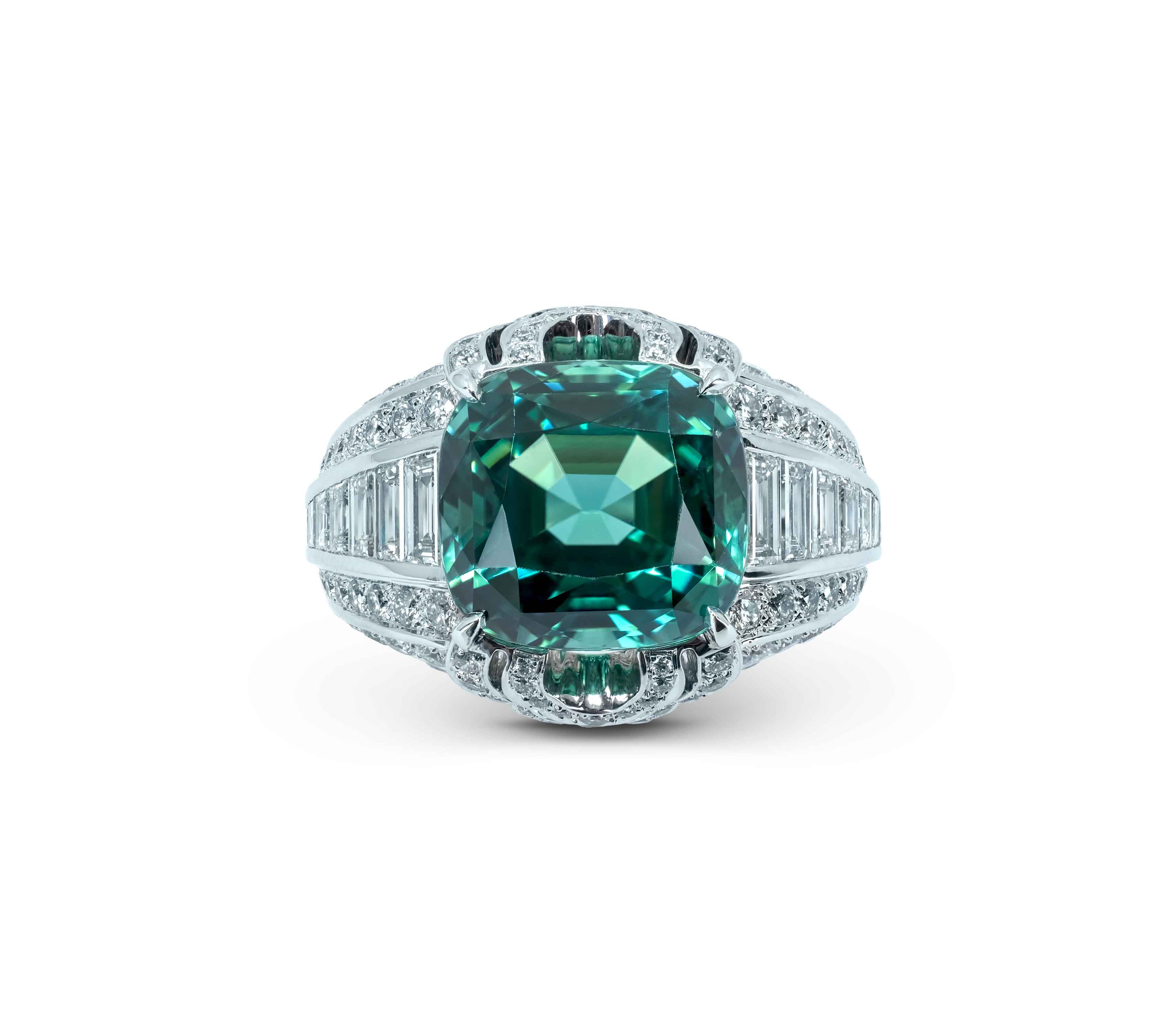
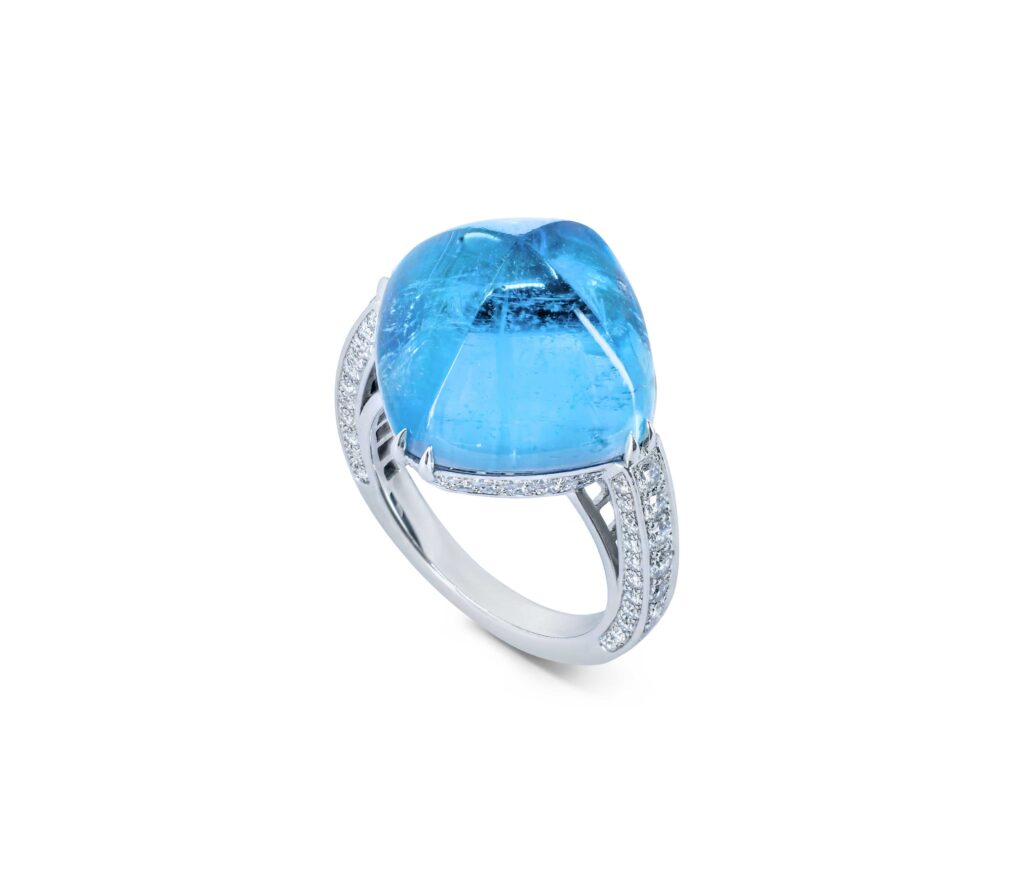
Behind the great stones stand great names. The Cullinan mine long fell within the orbit of the De Beers group, and today belongs to Petra Diamonds; De Beers nonetheless remains a key player in the fate of the most important blue finds, including its namesake Cullinan Blue. Graff, the house founded by Laurence Graff — often called the “King of Diamonds” — is tied not only to the Wittelsbach-Graff but to a whole constellation of exceptional coloured stones. Harry Winston, a legend of American jewellery, is remembered both as the man who gave the Hope Diamond to the nation and as the buyer of the Winston Blue. And the London house of Moussaieff, known for its work with the rarest coloured diamonds, lent its name to another celebrated blue stone of the highest grade. Settings for stones of this calibre are typically kept restrained — colourless side diamonds and platinum, so as not to compete with the colour of the centre stone.
Conclusion
The rarity of the blue diamond is not manufactured by the market — it is, in large part, a consequence of geology: boron-bearing Type IIb stones account for a mere fraction of a percent of all diamonds mined, and current evidence suggests that many of them may have formed far deeper than most others. To that is added a historical depth of its own: most of the great blue stones are known by name, with provenance that can be traced.
For the collector, the practical conclusion is simple. Any serious blue diamond calls for a GIA certificate confirming natural colour origin and Type IIb classification, a precise understanding of its hue and secondary tones, and careful verification of provenance. A large stone in the Fancy Vivid category comes onto the market, at best, once in a generation — and that, above all, is what determines its place in any collection.