






Why Monaco
There are cities where jewelry is bought, and cities where it is understood. Monaco belongs to the second kind. Here, on a narrow ribbon of land between the Maritime Alps and the Mediterranean, decades of collecting have deposited the sort of pieces one normally encounters only in auction catalogues: Van Cleef & Arpels bracelets from the 1950s, Art Deco brooches from the great Parisian workshops, chronographs that collectors from Geneva to Hong Kong dream about.
The explanation is as simple as it is singular: the Principality is one of the few places on earth where a supply of exceptional pieces meets, quite naturally, a clientele capable of appreciating them. Inherited collections of old European families gravitate here; the people who live here regard a signed jewel not as an abstraction from a monograph on jewelry history, but as part of an everyday wardrobe. Nowhere else, arguably, will you find such a density of connoisseurs per square meter as in Monte-Carlo.
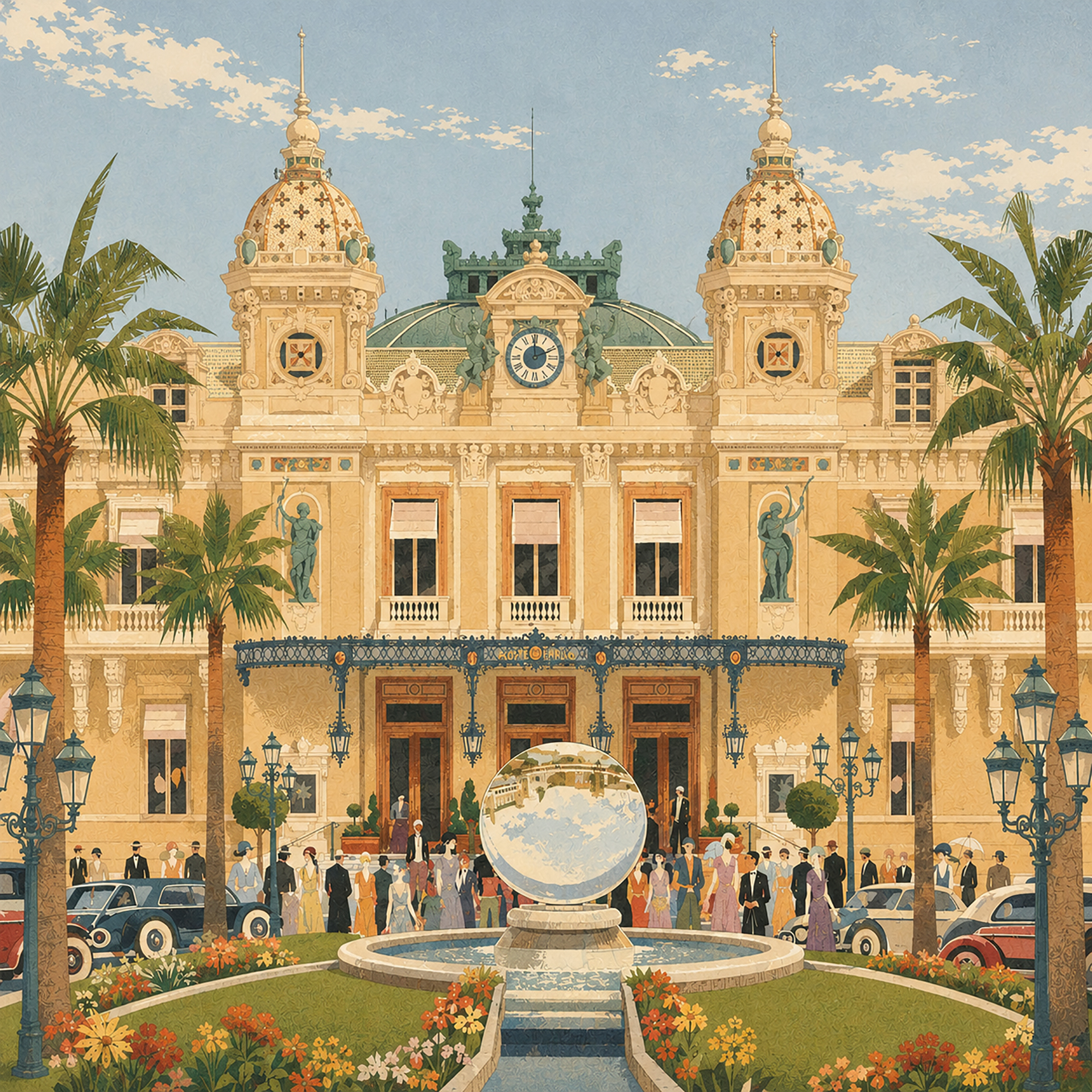
Yet the Principality’s jewelry landscape is more finely layered than it first appears. Alongside the great maisons’ boutiques on the Place du Casino exists another, far more intimate world — that of independent galleries and antique houses, where pieces are not produced in series but found: at auction, in private collections, in estates. It is in this world that the most interesting discoveries are made — and it is to this world that our guide is devoted.
The Monégasque market also keeps a rhythm of its own. The liveliest season is spring and early summer: Monaco hosts the Grand Prix, the yachting season begins, and the galleries bring out their finest acquisitions. Those same months see the great jewelry auctions and salons in Geneva — and many of their finds appear in Riviera showcases almost immediately afterwards. Autumn is quieter, a season of private transactions and inherited collections, while in winter the galleries receive visitors mostly by appointment. Collections, however, are refreshed all year round, and every piece here exists in a single example — so a jewel that has caught your eye is best not left for the next visit: by then, it will very likely have found another owner.
But before we set out on our rounds, let us agree on the terminology.
Vintage, Signed, Antique: A Collector’s Short Glossary
These three words are often used interchangeably — and wrongly so, for each carries its own logic of value.
Antique properly describes a jewel more than a hundred years old. A Victorian brooch in silver-topped gold, a parure from the Napoleon III era, a platinum garland from the Belle Époque — all of this is antique territory, where value rests on rarity, condition, and historical significance.
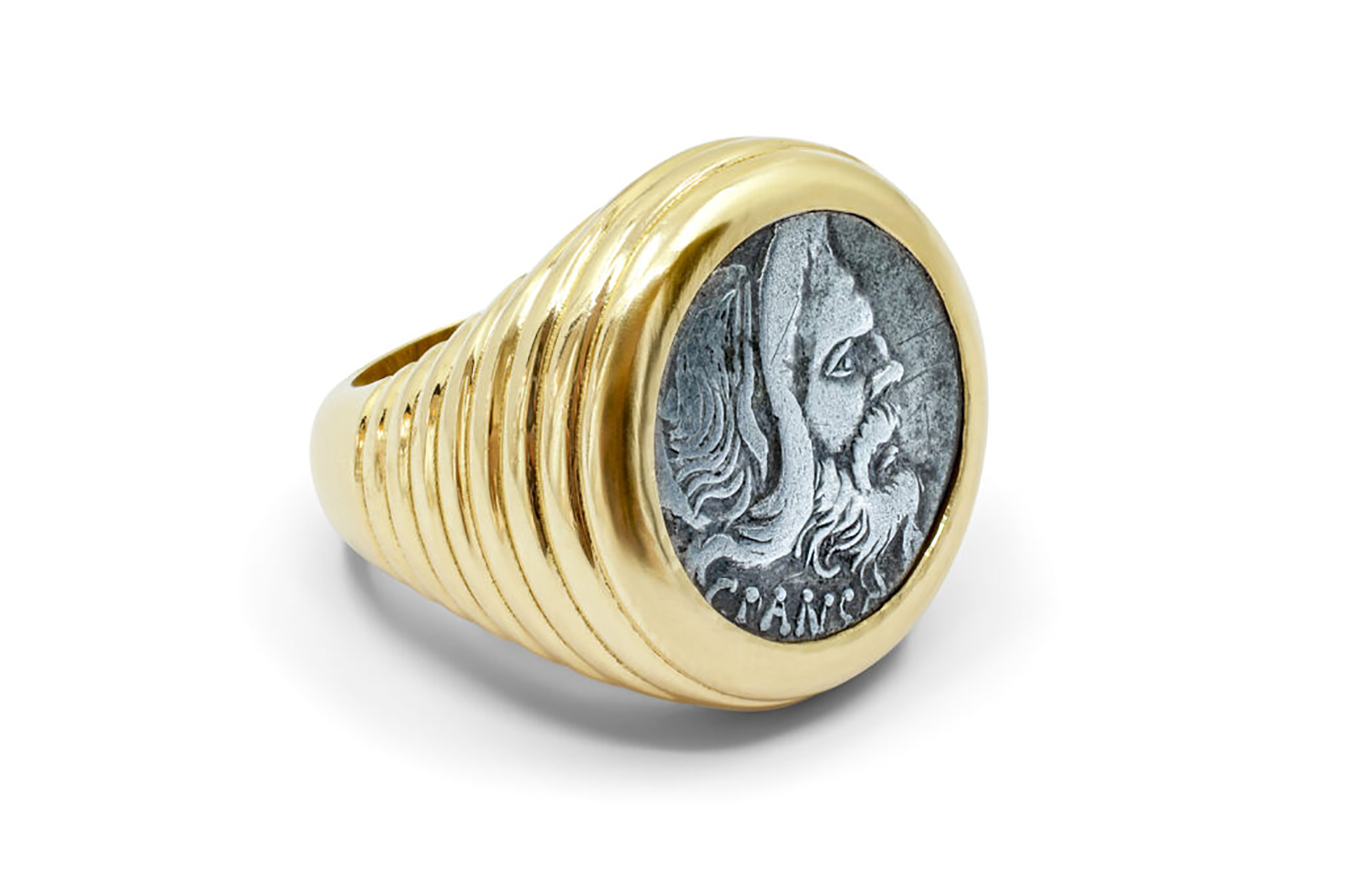
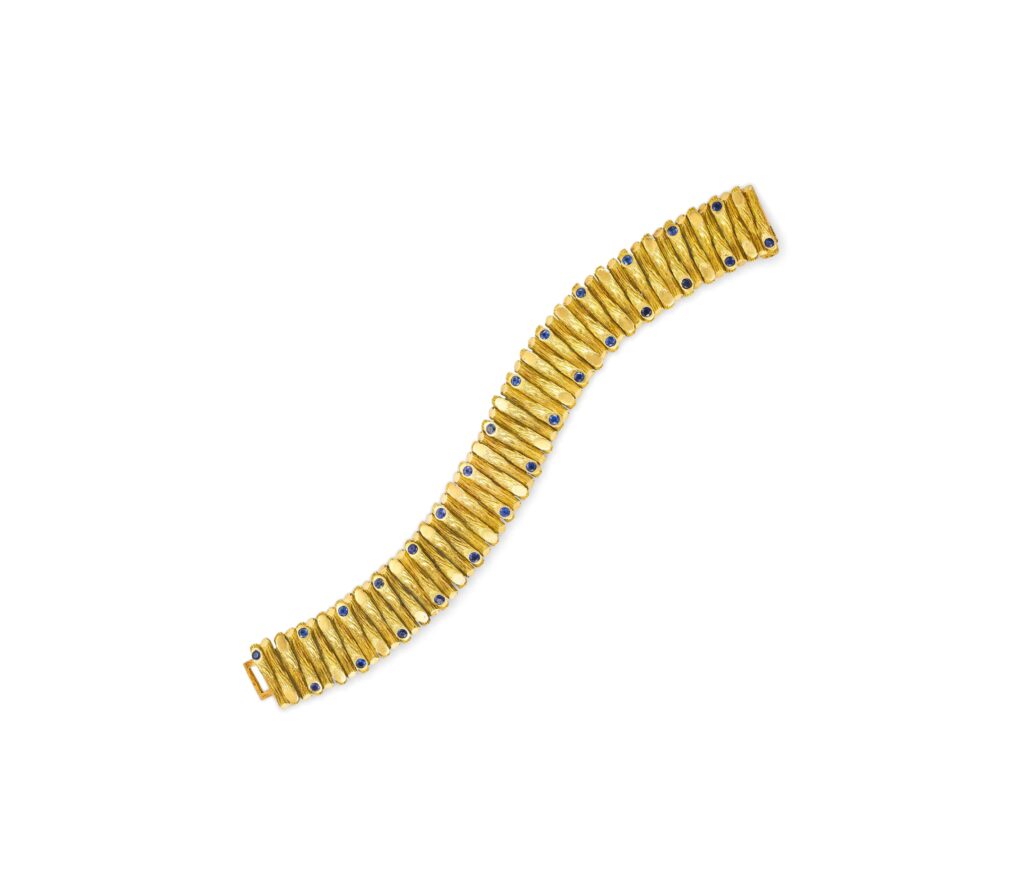
Vintage describes a jewel more than twenty to thirty years old but younger than a century. It is the liveliest and most varied category: the geometry of Art Deco, the sculptural gold of the forties, the floral exuberance of the fifties, the bold textures of the seventies. The charm of vintage is that it can be worn every day — while its owner possesses something that can no longer be repeated: the workshops, the techniques, even the alloys of that era have passed irretrievably into history.
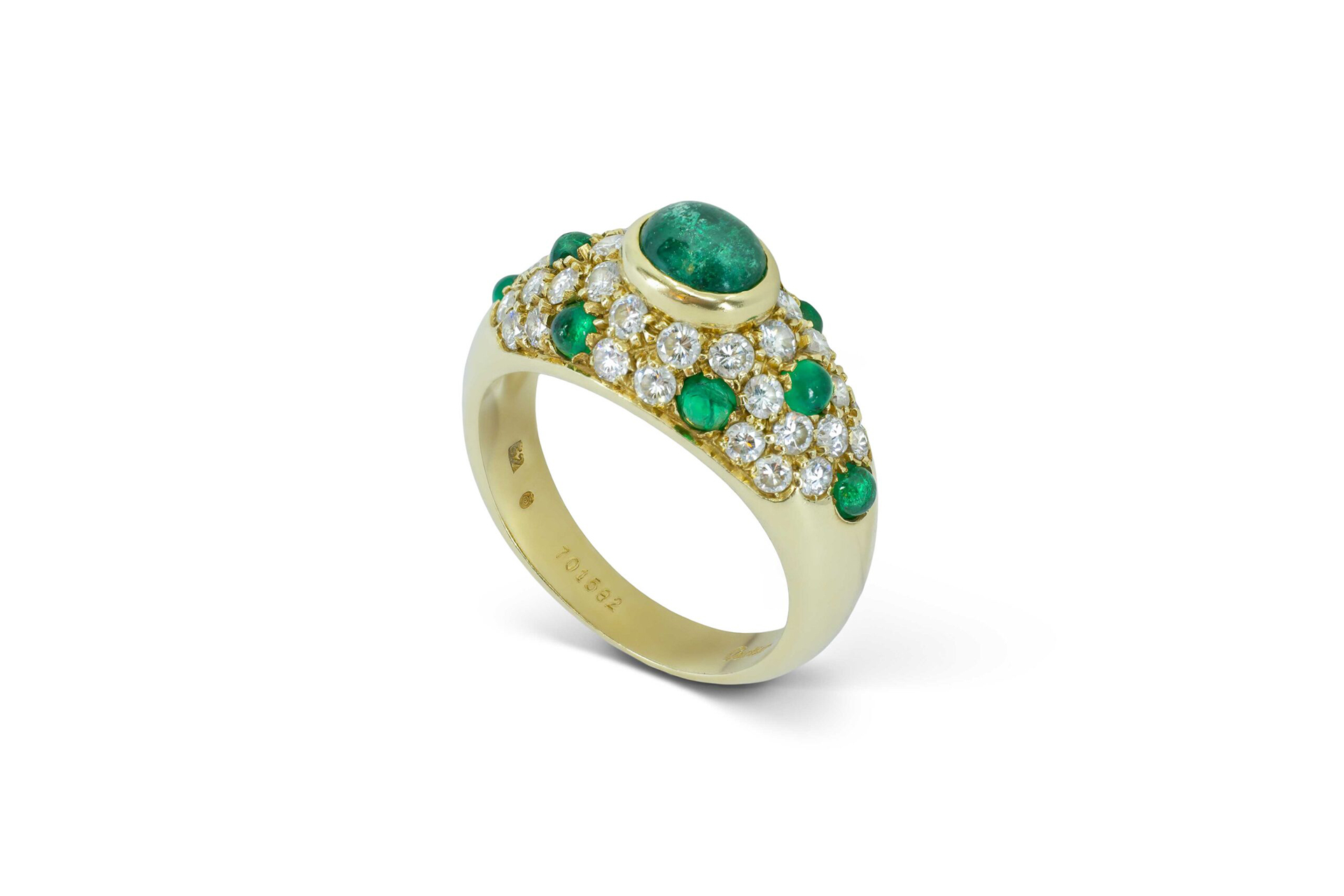
Signed jewelry bears the hallmark or signature of a celebrated house or master: Cartier, Van Cleef & Arpels, Boucheron, Bulgari, René Boivin, Verdura. A signature is more than a name: it is a document attesting to a piece’s origin, the quality of its execution, and its place within a particular chapter of jewelry history. On the secondary market, signed pieces live by their own laws: they are easier to attribute, simpler to verify against the maison’s archives, and their value tends, as a rule, to grow far more steadily over time than that of anonymous work.
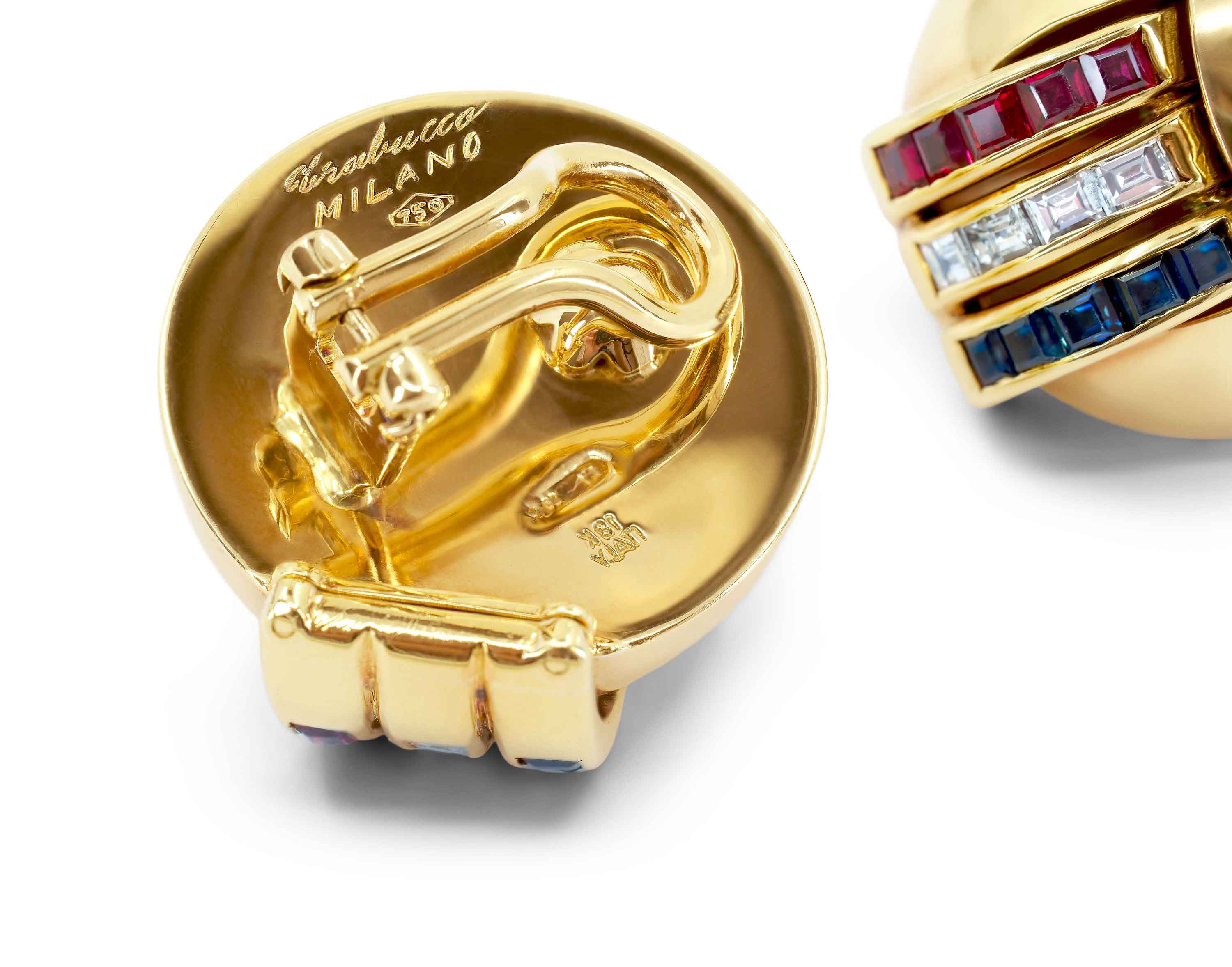
A fourth term, increasingly common in catalogues, is worth remembering: estate jewelry. Strictly speaking, it denotes any jewel that has already had an owner — whether it was made five years ago or a hundred and fifty. The term’s appeal lies in its honesty: it describes not an era but a provenance. In Monaco, where a considerable share of the market is fed precisely by private collections and inheritances, the estate category embraces almost everything of interest — from antique parures to nearly contemporary pieces by the great houses, long out of production and therefore no longer to be had in the boutiques.
The ideal find unites all three qualities — age, signature, and impeccable provenance. Such pieces do not linger in showcases: in Monaco they find an owner quickly. Which is why knowing the right addresses here is not a luxury but a necessity.
Five Addresses in the Principality
We have arranged the houses in chronological order, from the oldest to the youngest. The result is, in effect, a brief history of the Monégasque jewelry market: three quarters of a century of tradition, told in five chapters.
Sapjo: Antiquaire and Jeweler Since 1949
Address: 3, avenue Saint-Michel, Monaco
We begin with the patriarch. The house of Sapjo has been at work in Monaco since 1949 — longer than the reign of Prince Rainier III — and represents something that has all but vanished from today’s luxury landscape: a true antiquaire’s shop in the noblest sense of the word.
Sapjo was born of the meeting of two houses: one devoted to antique jewelry, the other to French furniture and objets d’art of the eighteenth century. That double inheritance defines the house’s character to this day: within its rooms, antique jewels keep company with paintings, porcelain, and silver, and the whole approach consciously carries on the tradition of the Parisian marchands-merciers of the eighteenth century — those dealers in rarities from whom an enlightened client could acquire, in a single visit, a piece of furniture, a Sèvres vase, and a precious snuffbox.
For the jewelry hunter this means a particular kind of find. Sapjo is where pieces from old family collections surface: nineteenth-century jewels, treasures that have not left their cases in decades, objects whose stories are still waiting to be deciphered. The house’s experts — members of France’s Syndicat National des Antiquaires — do far more than sell: they appraise, attribute, and restore antique jewelry, returning pieces to their original splendor.
One does not come here for a specific model from a catalogue — there simply isn’t one. One comes for the atmosphere of discovery: the chance to hold a brooch that has outlived three generations of owners, and to hear a professional explain how to read it. In an age when the antiques trade drifts ever further online, Sapjo remains a rare specimen of the genre — reason enough, in itself, for a visit.
Best suited to: lovers of the antique in the broadest sense, seekers of jewelry from the nineteenth and early twentieth centuries, and owners of old pieces in need of expertise or careful restoration.
Claris-A: A Family Affair, a Devotion to Stones
Address: 37, boulevard des Moulins, Monte-Carlo
Claris-A is a family story more than half a century long. The house traces its origins to 1964, when it was founded by Joseph and Clarisse, whose names combined to give the maison its own; by the late 1970s it had made Monte-Carlo its permanent home. Today Claris-A remains what it has always been: an independent family house where clients are known by face, and decisions are made by the people whose name stands above the door.
The heart of Claris-A is stones. Half a century of work with precious gems and a GIA gemological grounding allow the house to assemble a collection in which Burmese rubies keep company with Ceylon sapphires and Colombian emeralds — stones of the classic, most coveted origins. Every significant stone is accompanied by a report from one of the leading independent laboratories: GIA, Gübelin, SSEF, GRS, HRD Antwerp. For the buyer this is fundamental: a laboratory’s reputation is the only objective anchor in a world where a stone’s price can shift by an order of magnitude depending on origin and traces of treatment.
The house’s second calling is jewelry itself: vintage finds ranging from Victorian brooches to signed pieces by the great maisons, and its own creations built around exceptional stones. Bespoke commissions are undertaken here as well — from first sketch to finished jewel — and this service, perhaps better than any other, reveals the family nature of the house: a bespoke project demands the kind of personal trust between client and jeweler that no conveyor-belt operation can offer.
Finally, Claris-A provides confidential appraisal and purchase of jewelry — a service in particular demand in the Principality, where inherited collections change hands with some regularity.
Best suited to: those for whom a jewel begins with the stone — buyers of significant sapphires, rubies, and emeralds with impeccable certification — and admirers of a personal, family style of doing business.
Galerie Montaigne: The Realm of Signed Masterpieces
Address: 2, avenue de la Madone, Monte-Carlo
If there is one address in Monaco whose very name has become synonymous with the words “signed jewelry,” it is Galerie Montaigne. Open since 1997, a few steps from the Place du Casino, the gallery is devoted to the very top tier of the collecting market: exceptional signed pieces from the Art Deco period, the nineteenth century, and above all the 1940s through the 1970s.
The roll call of names passing through its showcases reads like the table of contents of an encyclopedia of jewelry: Cartier, Van Cleef & Arpels, Boucheron, Chaumet, Buccellati, Verdura, René Boivin, Marchak. Nothing speaks to the quality of the selection more eloquently than one detail: the great houses today actively buy back pieces of their own past for their heritage collections — and, by the gallery’s own account, individual pieces from Galerie Montaigne have returned in just this way to the maisons whose signatures they bear.
Behind the gallery stands its owner, Stéphane Guilhon — a man with a biography rare in this world. A graduate of HRD Antwerp, he spent nearly a decade in the diamond trade: buying rough directly in Sierra Leone and the Central African Republic, overseeing cutting operations, combing the auctions for old stones to recut — and it was at auction that he discovered the world of historic jewelry, realizing one day that certain jewels are worth more than the sum of their stones. That journey — from the mine to the showcase — gave him what no formal education can: the ability to read a piece whole, from the quality of its cutting to the handwriting of its workshop.
Today Guilhon is a recognized expert whose formal valuations are sought by the notaries, lawyers, and banks of the Principality. For the buyer, this means one thing above all: rigor of attribution. The gallery is uncompromising about the origin, condition, and certification of every piece — and in a segment where a signature multiplies the price, such discipline is worth more than any advertising.
Best suited to: serious collectors of signed jewelry, those hunting specific mid-twentieth-century pieces by the great houses, and owners of significant jewels in need of a formal expert valuation.
The Beautiful Watch: Time as a Collectible
Address: 7, avenue Princesse Grace, Monaco
No conversation about vintage in Monaco would be complete without watches — and here the unquestioned point of reference bears a name that says it all: The Beautiful Watch. The company has devoted itself to the trade in fine vintage timepieces and, over more than fifteen years, has built a reputation as one of Europe’s foremost addresses for collectors: beyond the Monégasque boutique on avenue Princesse Grace, its spaces operate in Paris, Geneva, Saint-Tropez, and Courchevel — a geography that traces, precisely, the itineraries of its clientele.
The level of the offering here is set by pieces the watch world calls grails. Through The Beautiful Watch have passed the Rolex Daytona Paul Newman — the exotic-dial chronograph that became the single most recognizable emblem of the collectible watch market; the Patek Philippe Nautilus in its first reference, 3700 — that “steel luxury” of 1976 which, following the Royal Oak by Audemars Piguet, cemented the phenomenon of the luxury sports watch; and Rolex prototypes of the utmost rarity, known in only a handful of examples. Such pieces do not appear on the open market by accident — behind each stands painstaking work of sourcing, verification, and attribution.
And it is expertise that constitutes the team’s principal capital. Vintage watches are perhaps the most treacherous territory in all of collecting: an example’s value is determined by nuances invisible to the uninitiated — the originality of the dial, the concordance of hallmarks and numbers, the service history, the degree and character of the patina. Two outwardly similar examples can differ in value many times over. Hence the house’s guiding philosophy: not simply to sell a watch, but to help the client build a collection of their own, drawing on a deep knowledge of the brands’ histories and references.
Best suited to: collectors of vintage watches at every level — from a first serious acquisition to the hunt for museum-grade examples.
Grygorian Gallery: The New Generation
Address: Palais de la Scala, Galerie Charles Despeaux, 1, avenue Henry Dunant, Monaco
Our chronology closes with the youngest gallery of the five — and it would be disingenuous not to say that it is our own house. Grygorian Gallery opened in 2024 in the Palais de la Scala, a historic building in the heart of Monte-Carlo, and belongs to the generation of galleries that came of age in a new era of the collecting market — global, digital, and yet still demanding that most old-fashioned of things: personal expertise.
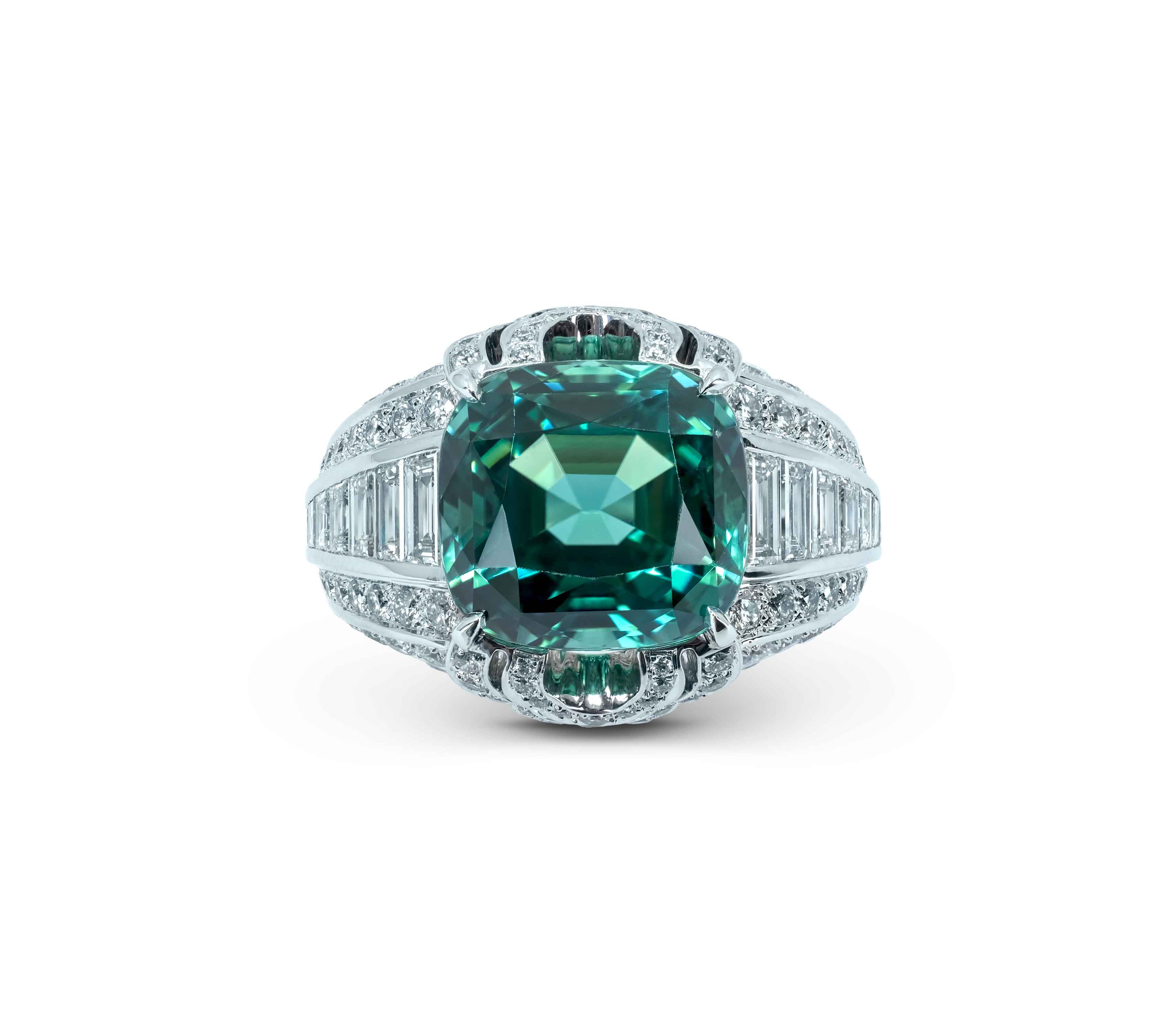
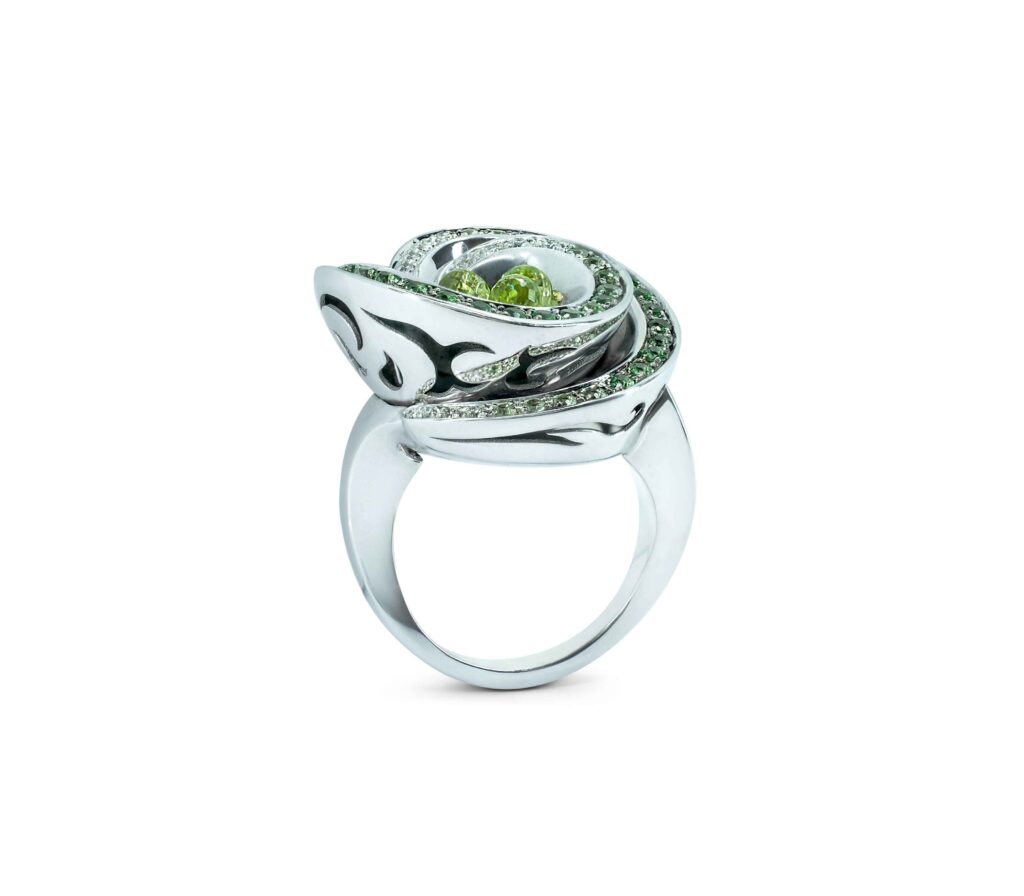
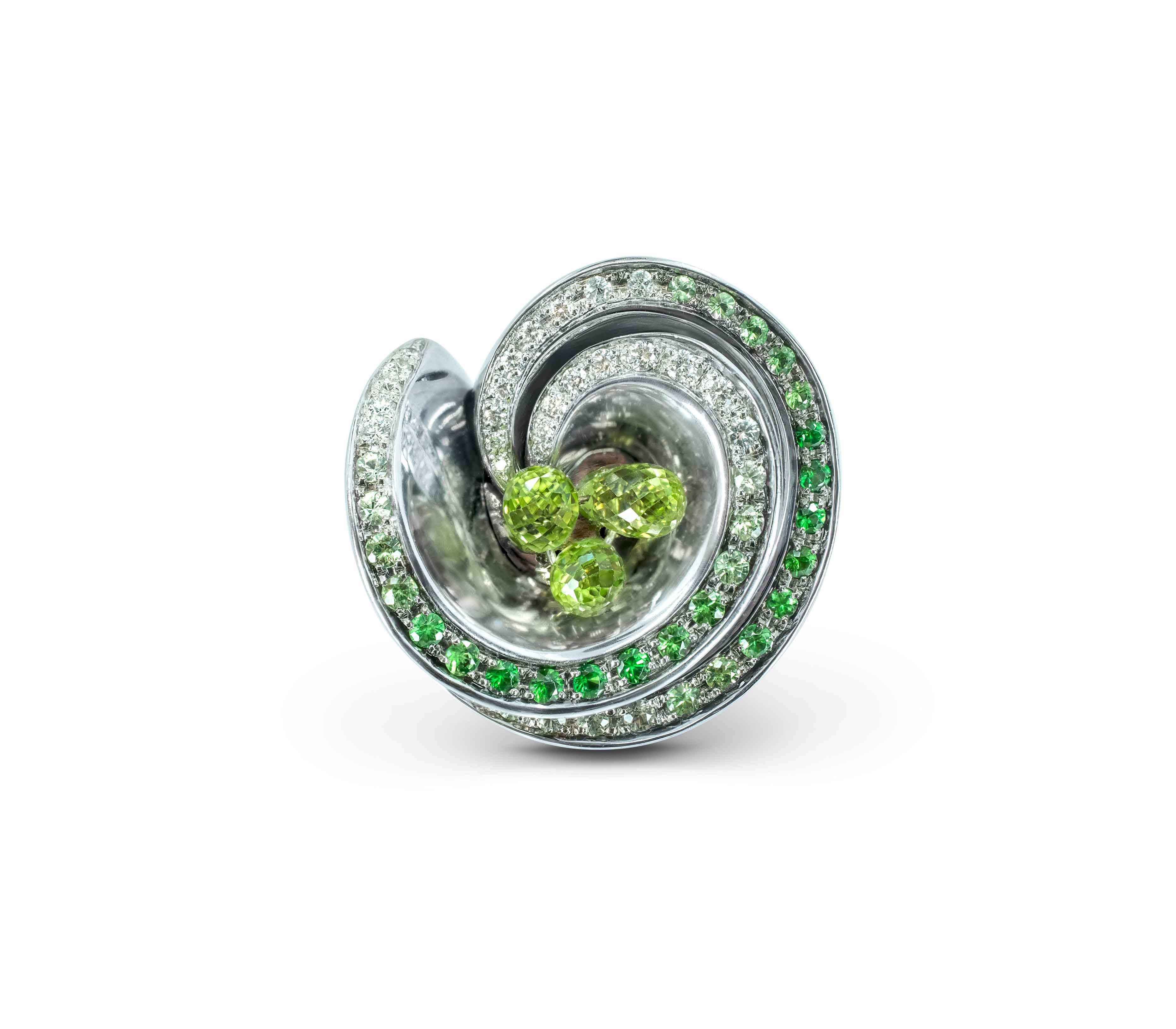
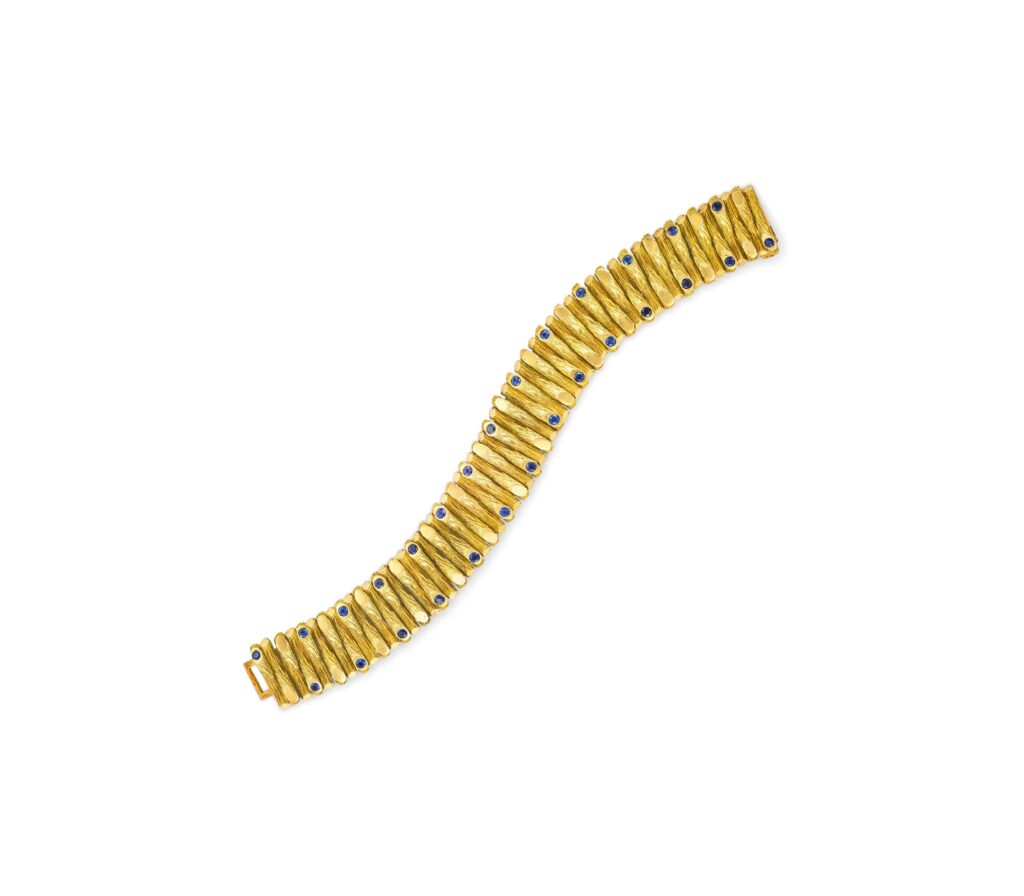
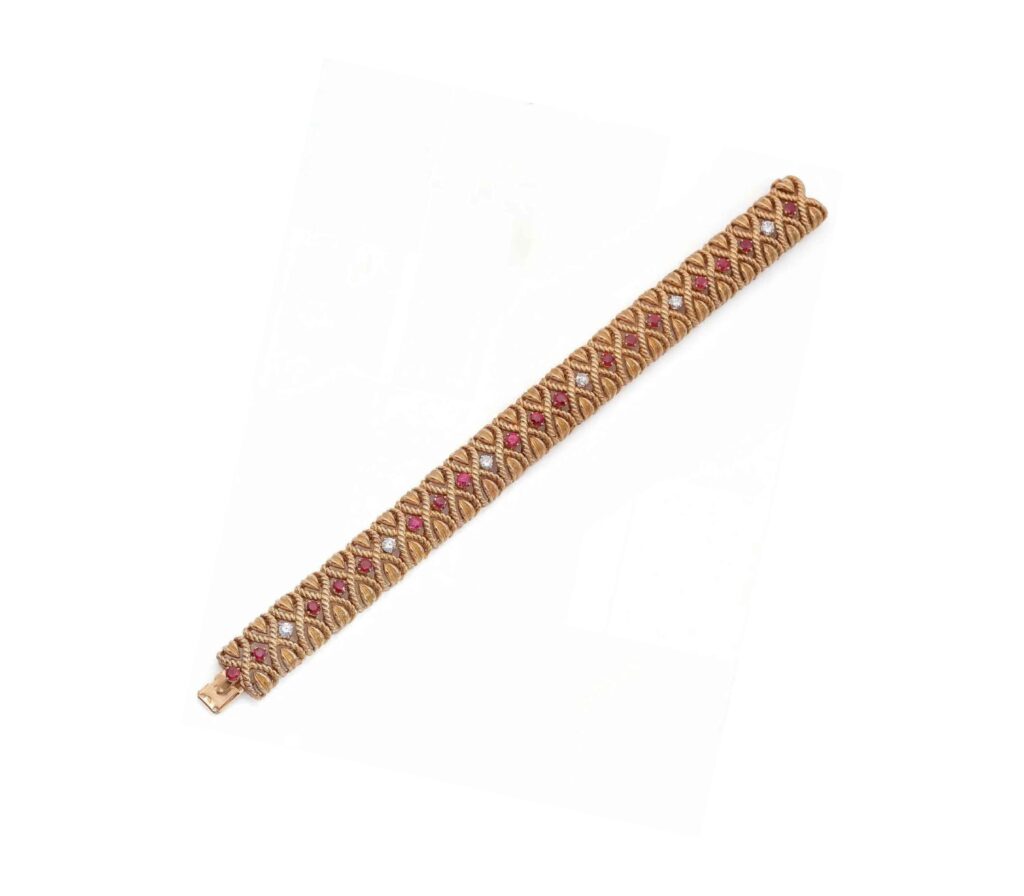
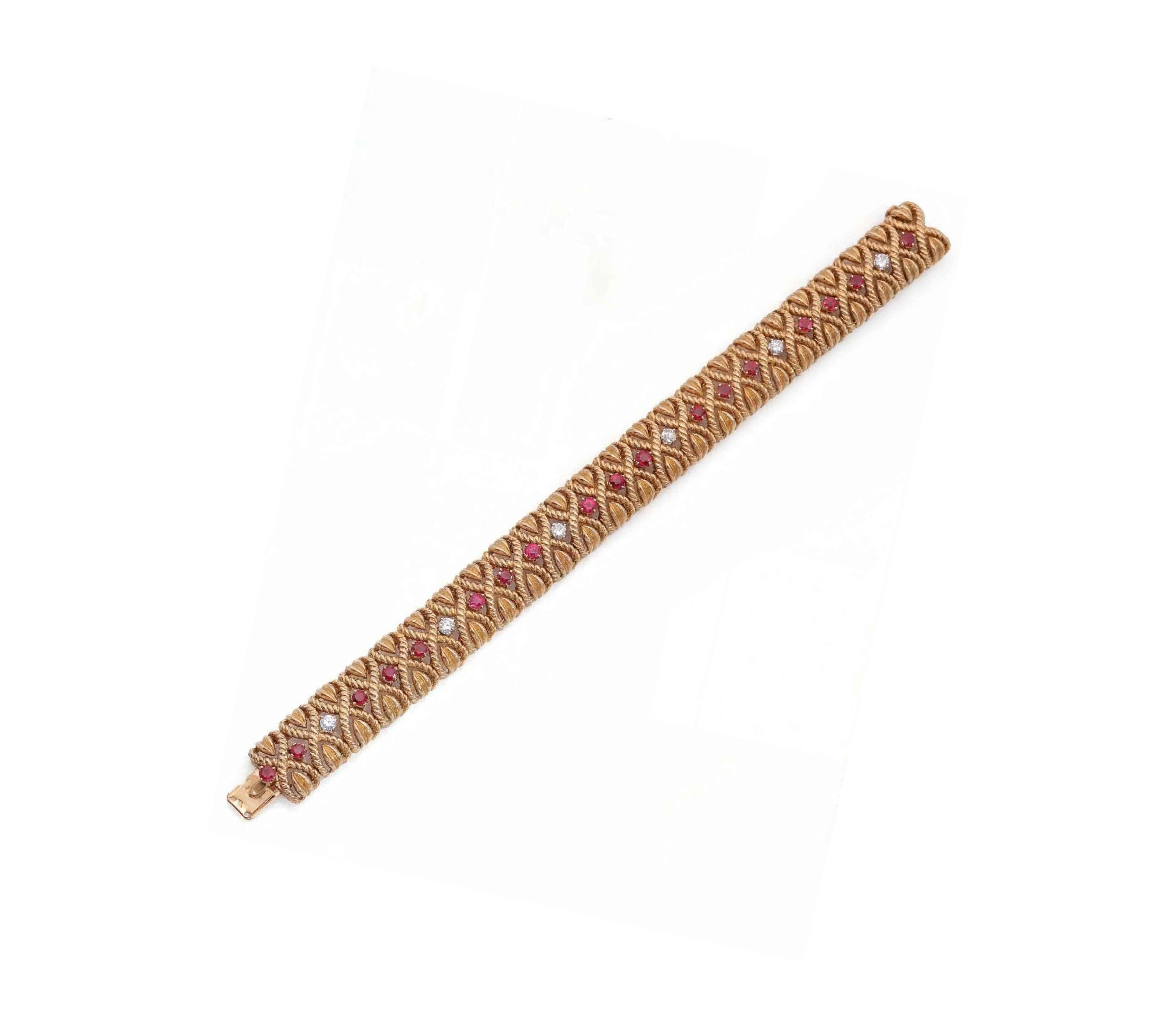
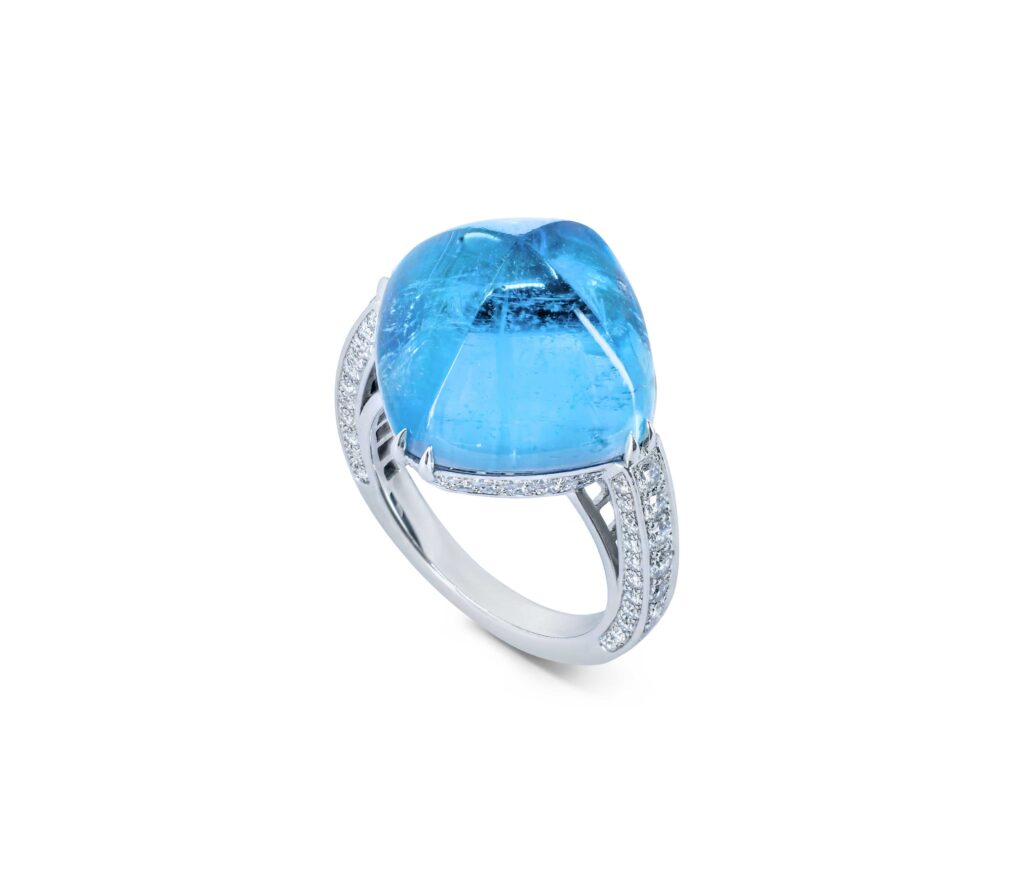
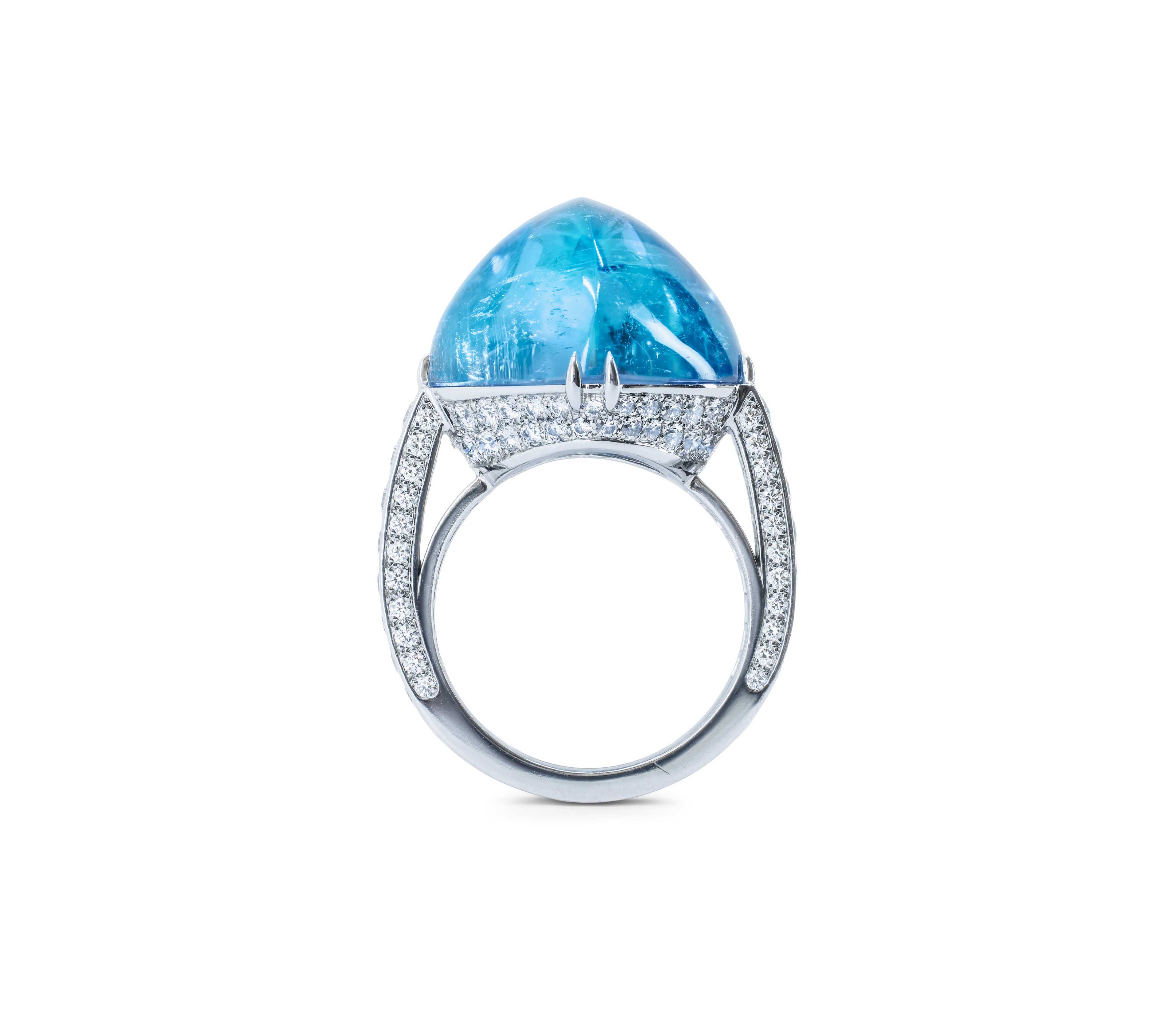
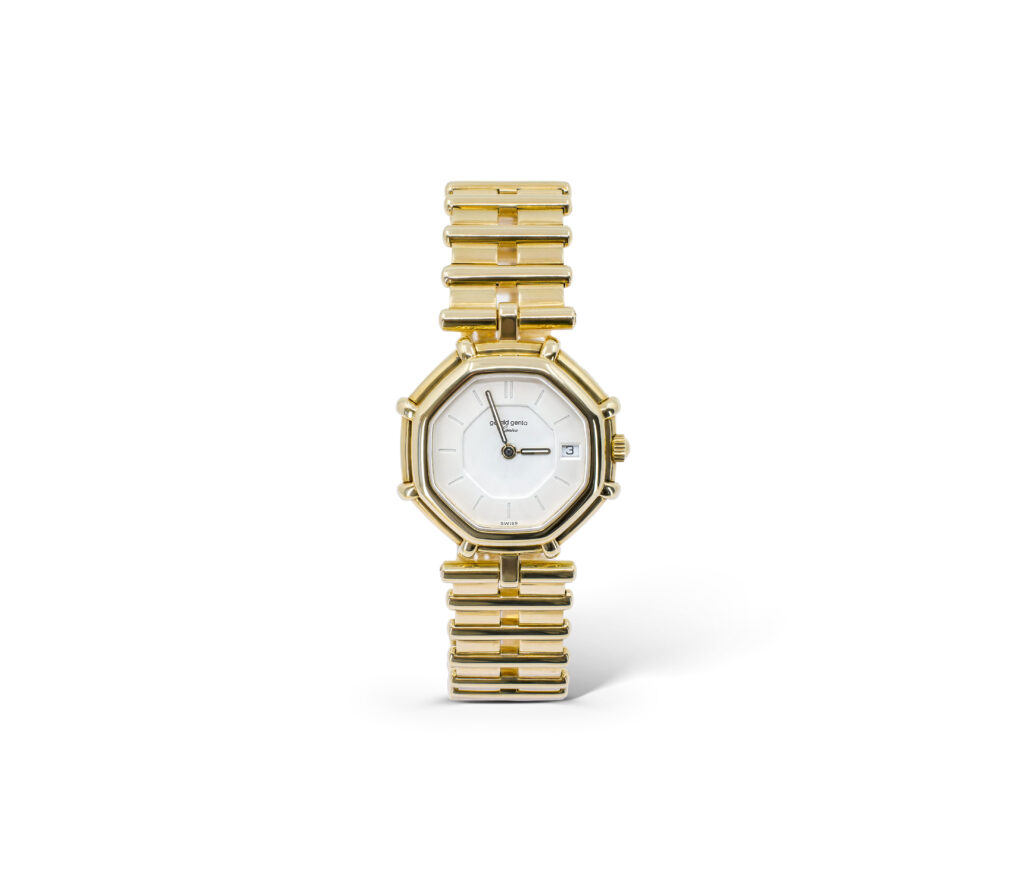
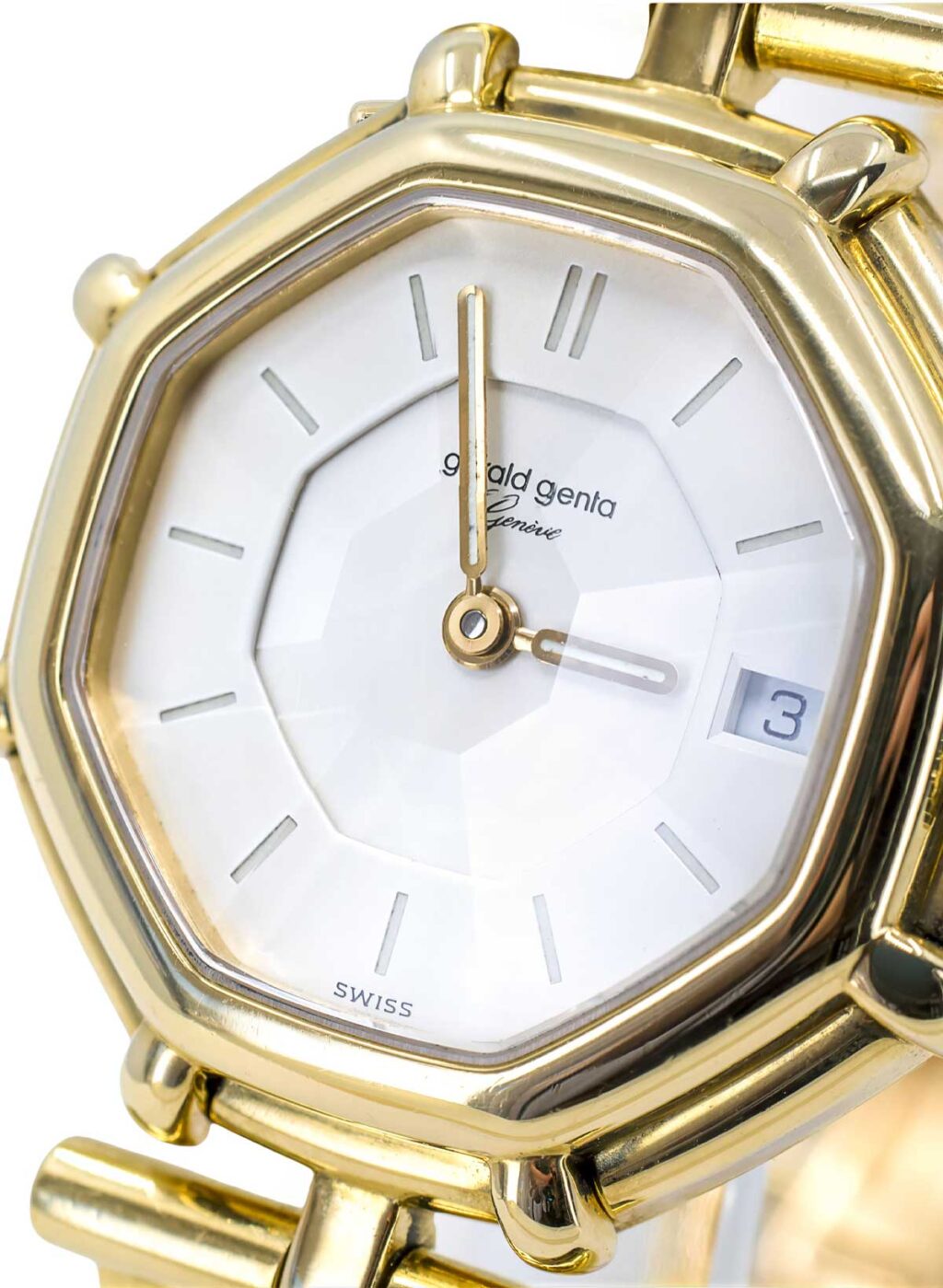
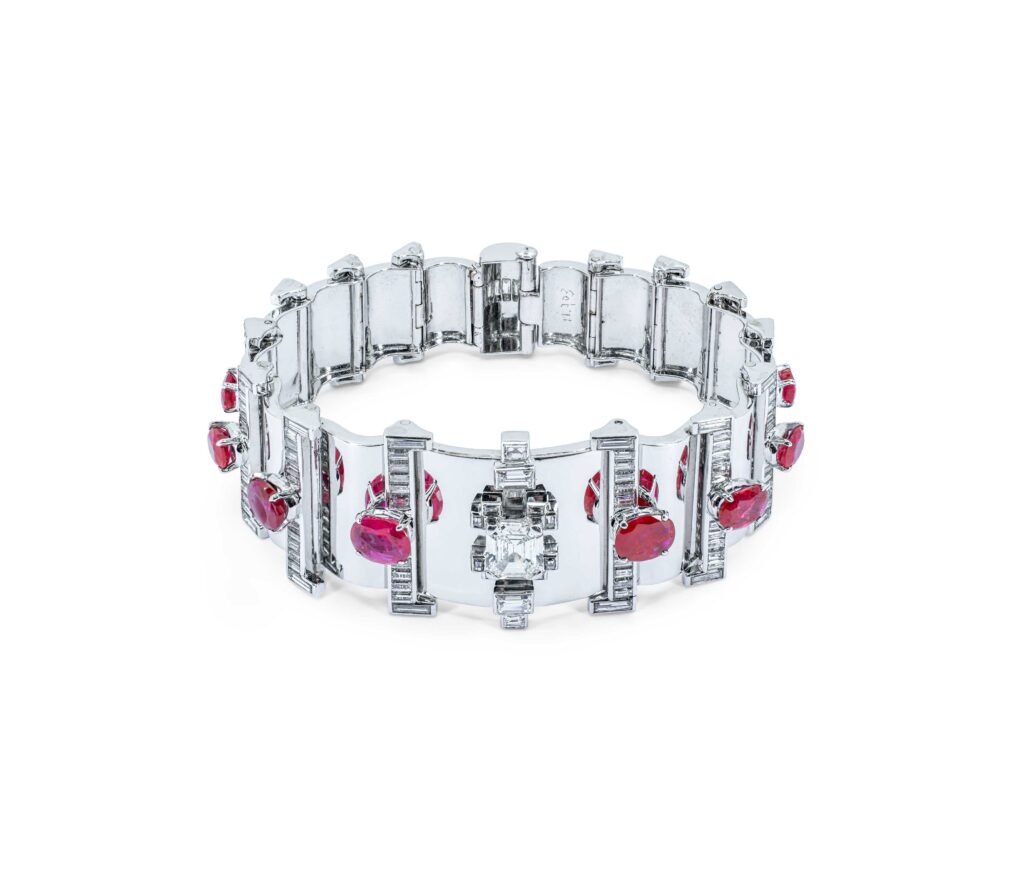
Behind the gallery’s youth stand more than fifteen years of its founder Eduard Grygorian’s experience in high jewelry. That experience has shaped a collection spanning six directions: vintage jewelry, vintage watches, signed jewelry, colored stones, rare diamonds, and the gallery’s own creations — contemporary pieces that carry forward the language of the great jewelry houses. In its showcases, an articulated Van Cleef & Arpels bracelet with rubies and diamonds keeps company with rings by Boucheron and de Grisogono, Egyptian Revival work of the 1920s, and watches by Patek Philippe and Vacheron Constantin — a selection governed by rarity, condition, and character.
What distinguishes the gallery from its older neighbors in the Principality is its format. Grygorian Gallery was conceived from the outset as a gallery without borders: its catalogue is presented in full online in seven languages, with worldwide delivery, and the gallery is a constant presence at the industry’s principal events — from GemGenève to the salons of Hong Kong and Miami — bringing the collection to wherever its clients live. The range of services, meanwhile, is entirely traditional for a serious house: authentication, appraisal, gemstone sourcing, consignment, and bespoke commissions.
One more matter of principle: education. The gallery’s Education Center — where you are reading these lines — was created out of the conviction that an informed collector is the best collector: the more deeply a buyer understands a piece, the more considered the choice, and the stronger the trust between client and gallery.
Best suited to: those who value the union of classical expertise and a contemporary format — the ability to study a collection from anywhere in the world, and to be advised in one’s own language.
How to Read a Jewel: Provenance, Hallmarks, Certificates
Five addresses make a map. But the hunt for vintage also has a method, the same in any gallery in the world, and it rests on three concepts.
Provenance is the documented history of a piece: who made it, who owned it, whose hands it passed through. Ideally, provenance is confirmed by the maison’s archives, old invoices, auction catalogues, or photographs of previous owners. Provenance does more than lend a piece its charm — it serves as the chief guarantee of authenticity and can multiply a jewel’s value: a piece from a famous collection is always worth more than its identical but anonymous twin.
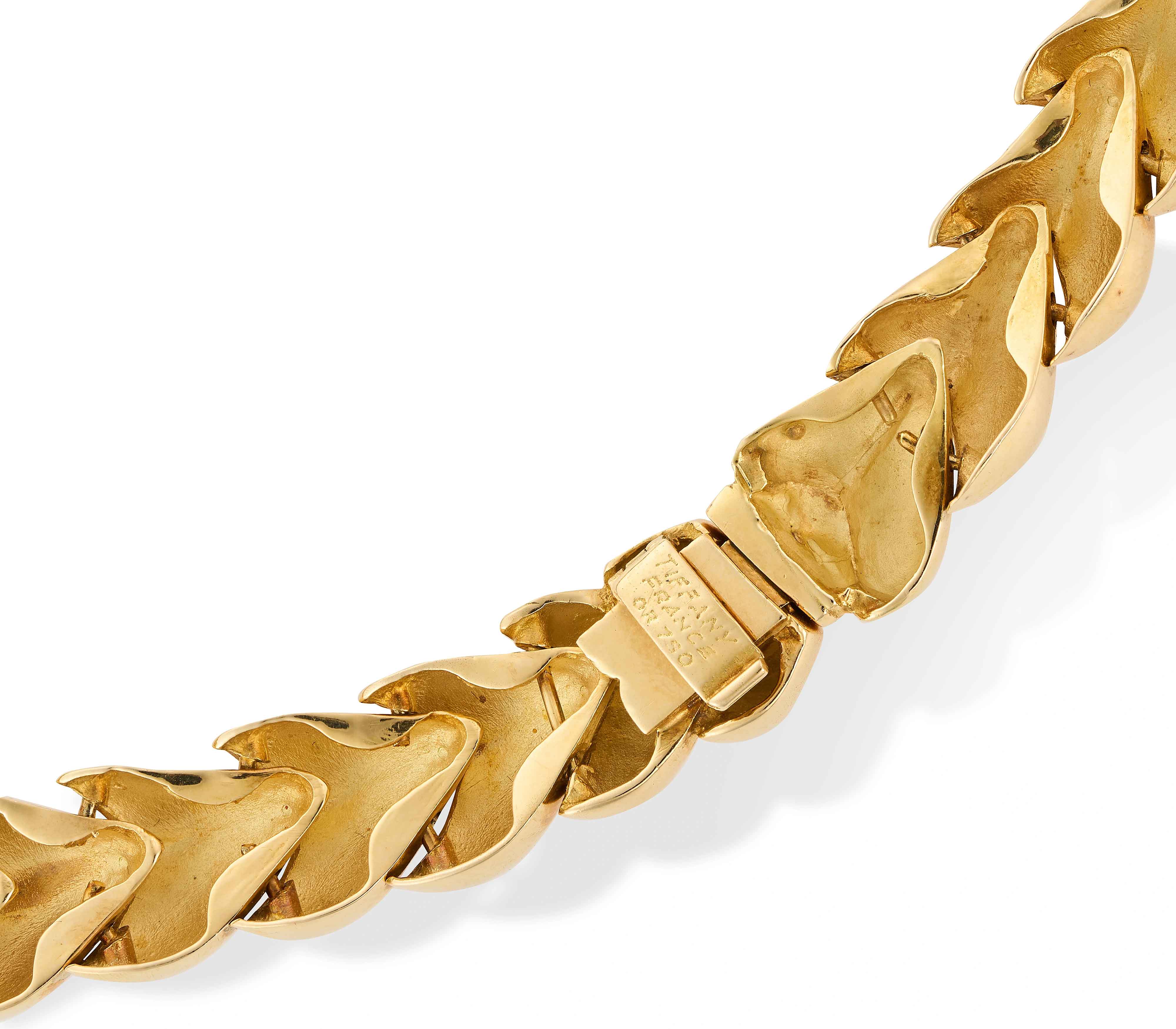
Hallmarks are the language in which a jewel speaks for itself. Assay marks indicate the metal and country of manufacture; makers’ marks point to a specific workshop; the house signature gives the name under which the piece was sold. Reading hallmarks is a science in its own right: the French eagle’s head on gold, Cartier’s numbered signatures, the marks of the ateliers that worked for the great houses. A serious gallery will always show and decipher the hallmarks of a piece under consideration — having verified, long before the piece reached the showcase, that they are consistent with its era and stated origin.
Certificates concern, above all, the stones. Reports from the independent laboratories — GIA, Gübelin, SSEF, GRS, HRD — establish a stone’s natural origin, the presence or absence of treatment and, for colored stones, geographic origin. In the segment of significant sapphires, rubies, and emeralds, a certificate from an authoritative laboratory is not a formality but the foundation of the price: the words “Burma, no indications of heating” on a Gübelin report can multiply a ruby’s value.
To these three pillars a fourth should be added, one too often forgotten: condition. A vintage piece has lived a life, and the question is not whether it bears the traces of time, but which ones. A noble patina is a virtue; a coarse repolish that erases hallmarks, replaced stones, or amateur repair is a loss that cannot be recovered. A good gallery will describe a piece’s condition, and the history of its restorations, honestly.
Practical Notes
A few observations that will make the hunt for vintage in the Principality considerably more rewarding.
Book ahead. The intimacy of Monégasque galleries is their virtue, but it presumes personal attention: the best pieces are often not in the window, and the most substantive conversations happen at an appointed hour. Here, a visit by appointment is standard practice, not a barrier.
Describe a direction, not a model. Unlike the boutiques of the great houses, there is no catalogue with reference numbers here. It is far more productive to name an era, a maison, a type of piece, or a budget — and let the gallerist search. The best acquisitions on this market go to the patient: ask to be kept informed of new arrivals, and one day the right piece will find you itself.
Ask questions. About hallmarks, about provenance, about restorations, about why the gallerist chose this particular piece. In a good gallery, questions do not irritate — they delight, because they tell the expert that a knowledgeable interlocutor stands before them. Evasiveness, by contrast, is the surest signal to turn around and leave.
See pieces in person whenever you can. Online catalogues are indispensable for a first acquaintance, but vintage is a tactile matter. The weight of a bracelet on the wrist, the smoothness of a clasp, the play of a stone in living light, the microscopic traces of time no photograph can convey — all of this argues for a visit in person when a significant acquisition is at stake. If geography does not permit it, request further materials: video in daylight, macro shots of the hallmarks, images of the reverse — the back of a piece will tell you as much about its quality and condition as the front.
Think of a piece in the long term. A worthy vintage jewel is not a seasonal purchase but an acquisition for decades, destined to outlive fashion and, quite possibly, its owner. This is precisely why authenticity, provenance, and condition matter more than the momentary allure of a price: on this market, cheap and good coincide vanishingly rarely.
Three Questions We Hear Most Often
Can vintage jewelry be worn every day?
In most cases, yes — and that is precisely its charm: vintage was made for life, not for the safe. The sensible caveats concern age and construction. Antique pieces with closed settings, stones on old foil backs, and fragile enamels demand gentle handling and suit an evening out better than the everyday. Mid-twentieth-century gold and platinum, by contrast, are remarkably robust: bracelets and rings from the fifties through the seventies serve their owners for decades with no allowance made for age. A good rule is to ask the gallerist how the piece was worn before, and what it should be spared: an honest answer to that question is itself the mark of a serious house.
What if a family jewel has no papers?
First of all — do not despair. The absence of documents is the ordinary fate of pieces passed down through generations: invoices were lost, cases discarded, family memory faded. Professional expertise can recover a great deal: hallmarks will point to a country, an era, and a workshop; stylistic analysis will narrow the circle of possible makers; a laboratory report will confirm the nature of the stones; and for signed pieces, an inquiry to the maison’s archive will often restore a jewel’s full biography — down to the date of sale and the name of its first owner. Several galleries in this guide, our own included, offer attribution and appraisal services — and have more than once returned great names to nameless family treasures.
How does buying from a gallery differ from buying at auction?
The auction is a market of adrenaline and open competition: fortunes are made there, but there, too, the buyer is left alone with a decision that must be taken in seconds; a buyer’s premium in excess of twenty percent is added to the price, and a purchased lot cannot be returned. The gallery offers the opposite experience: time to reflect, the chance to try on and examine a piece, an expertise for which the seller answers with their reputation, and a relationship that continues after the sale — from aftercare to first refusal on new arrivals. For the beginning collector, the gallery is almost always the wiser choice; the experienced, as a rule, use both channels — and not infrequently acquire from galleries the very pieces the gallerists themselves won at auction, then authenticated and restored.
By Way of Conclusion
Five addresses, five characters, more than seventy years of history between the oldest and the youngest. An antiquaire keeping alive the tradition of postwar Monaco; a family house in love with stones; a gallery of signed masterpieces whose finds are prized by the great houses themselves; connoisseurs of horological grails; and a young gallery that has opened its Monégasque collection to the world.
Each of these houses excels in its own way, and together they create what sets the Principality apart on the world’s jewelry map. Monaco’s market is small — yet nowhere else do expertise of this caliber and pieces of this level meet in so little space. Monaco is not the capital of the jewelry world, but it may well be its truest reflection: here, that world appears in its finest form. And to anyone in search of a jewel with a history, these two square kilometers will give more than many a capital.