Turquoise Across Jewelry Traditions
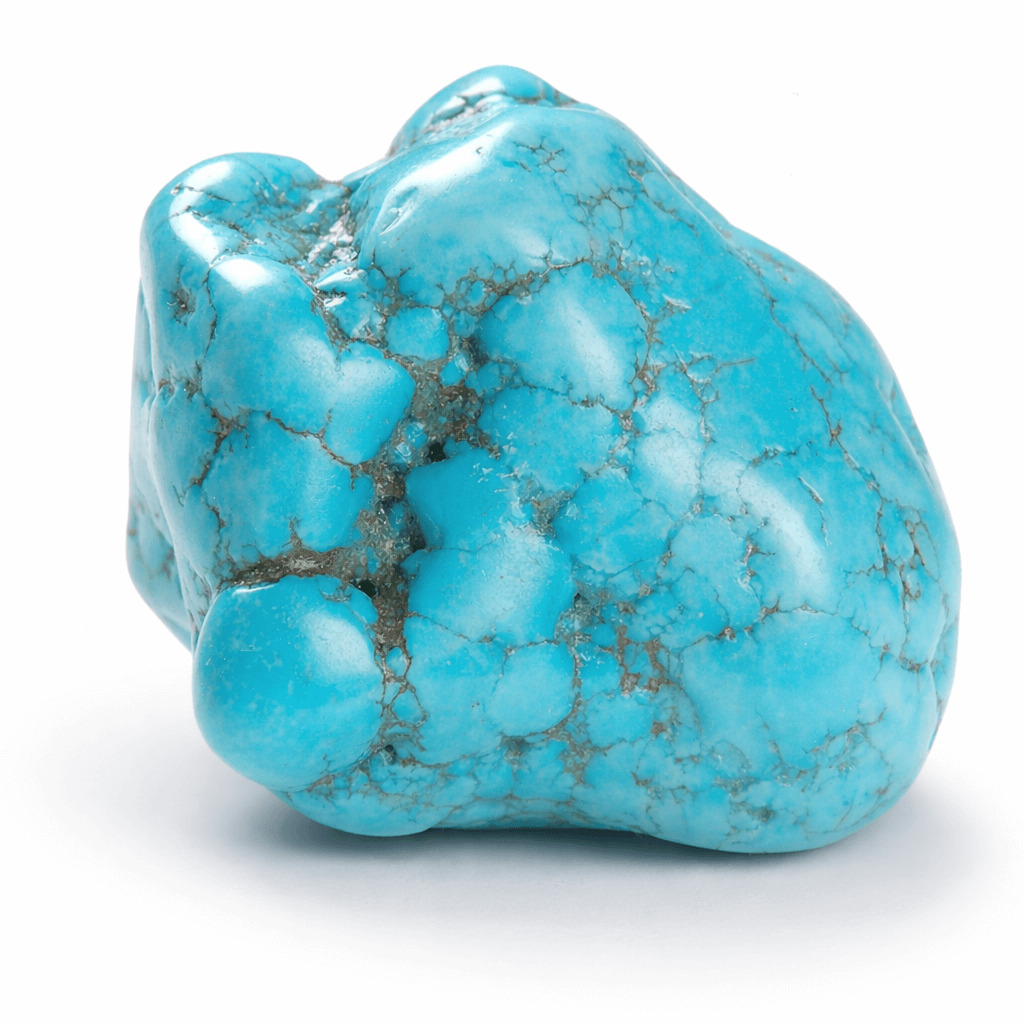
Few gemstone categories encompass as much geographic and cultural range as vintage jewelry featuring turquoise. Persian material from the Nishapur mines of northeastern Iran established the benchmark for color quality for millennia: sky-blue specimens with minimal matrix, known as “robin’s egg” or “Persian blue,” represent the most coveted antique examples in the estate jewelry market and command consistent premiums at specialist auctions. Victorian jewelers (1837–1901) prized turquoise for its symbolic associations with protection and good fortune, incorporating calibré-cut and cabochon specimens into parures, mourning pieces, and sentimental jewelry where the stone’s opaque warmth complemented yellow gold granulation details referencing Etruscan archaeological discoveries.
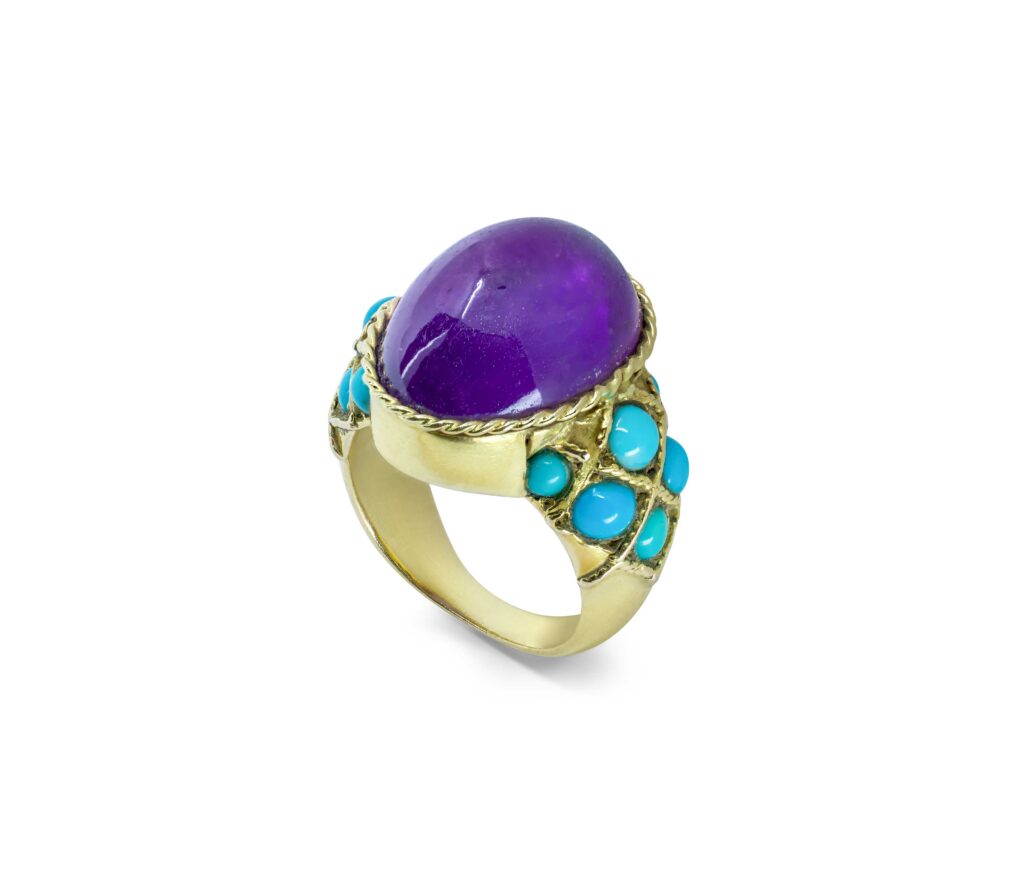
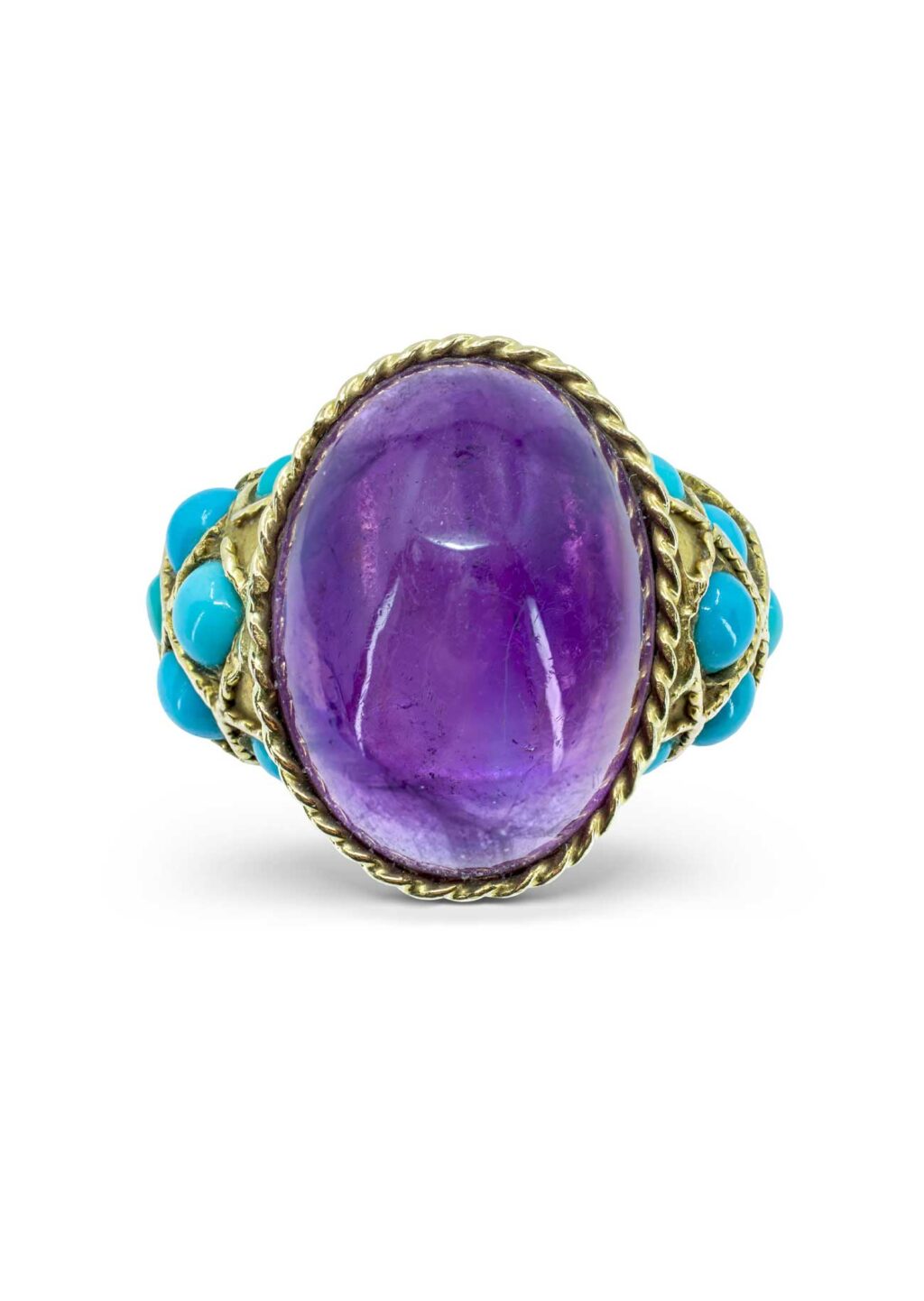
Art Deco designers of the 1920s deployed turquoise as a graphic element in geometric platinum compositions alongside coral and onyx — a chromatic vocabulary Cartier developed into its celebrated “Tutti Frutti” aesthetic. Mid-century Retro jewelry from the 1940s and 1950s returned turquoise to yellow gold settings with bold sculptural ambition, pairing large cabochon specimens with contrasting stones in cocktail constructions of considerable elegance.
Authentication of pre owned turquoise jewelry requires distinguishing natural untreated material from stabilized, reconstructed, or dyed substitutes through surface porosity analysis and spectroscopic examination, as treatment methods have varied significantly across production periods.
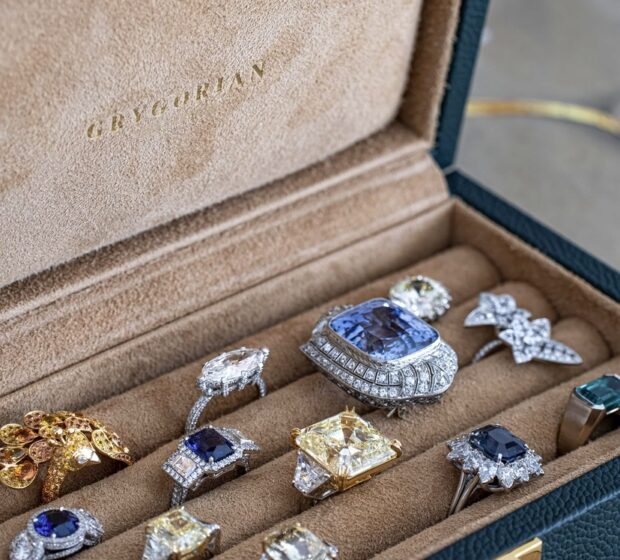
Grygorian Gallery’s Turquoise Collection
Natural, untreated turquoise of documented geographic origin represents one of the more technically demanding categories to authenticate correctly within the estate jewelry market. Among opaque gem materials, it is the one where treatment history most directly determines collector value — a distinction that informs every acquisition decision at Grygorian Gallery. Eduard Grygorian’s expertise, cultivated at maisons including Boucheron and Chaumet where turquoise appeared regularly in high jewelry commissions, informs the sourcing and authentication standards applied to pre owned jewelry featuring this material.
Each piece undergoes examination for material authenticity, including surface analysis identifying natural matrix patterns characteristic of specific mine sources, and spectroscopic assessment distinguishing untreated specimens from stabilized or composite material. Where signed examples from recognized maisons accompany verifiable provenance documentation, this heritage context is shared transparently with collectors.
Conservation of gently used turquoise pieces is handled in our South of France atelier with particular attention to the material’s vulnerabilities: turquoise ranks 5 to 6 on the Mohs scale and remains sensitive to heat, chemical exposure, and dehydration. Custom stabilization protocols and climate-appropriate storage preserve the natural surface character that distinguishes genuine old examples from later reproductions.
Investment Value and Collector Appeal
Natural untreated Persian turquoise with strong robin’s egg coloration occupies a scarcity tier that continues to appreciate as historic mine sources face exhaustion. High end estate jewelry featuring documented natural material from Persian or Sleeping Beauty (Arizona) sources demonstrates consistent auction performance, particularly where gemological certification confirms absence of treatment and provenance connects previously owned pieces to significant private collections.
Mid-century cocktail constructions pairing large turquoise cabochons with contrasting colored stones in yellow gold are among the most valuable assets in this category — unique finds where material rarity compounds the appeal of bold, irreproducible period design. Signed fine jewelry from documented designer houses featuring turquoise alongside diamonds or coral represents the most collectible tier, combining beautiful organic color with institutional heritage and the retro jewelry elegance that contemporary production cannot replicate. Our specialists offer personalized consultations to identify certified examples aligned with individual collecting objectives and aesthetic vision.