




Description
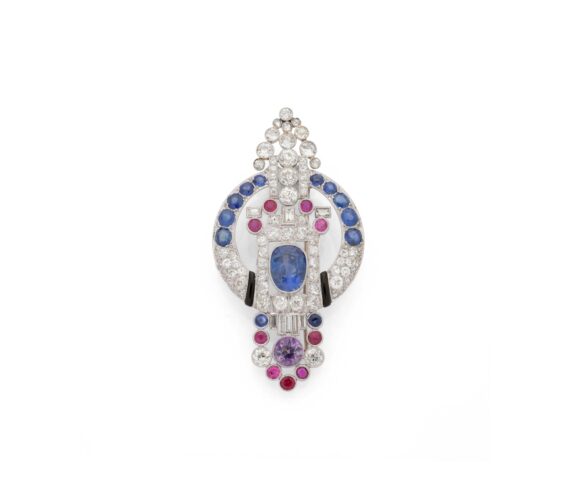
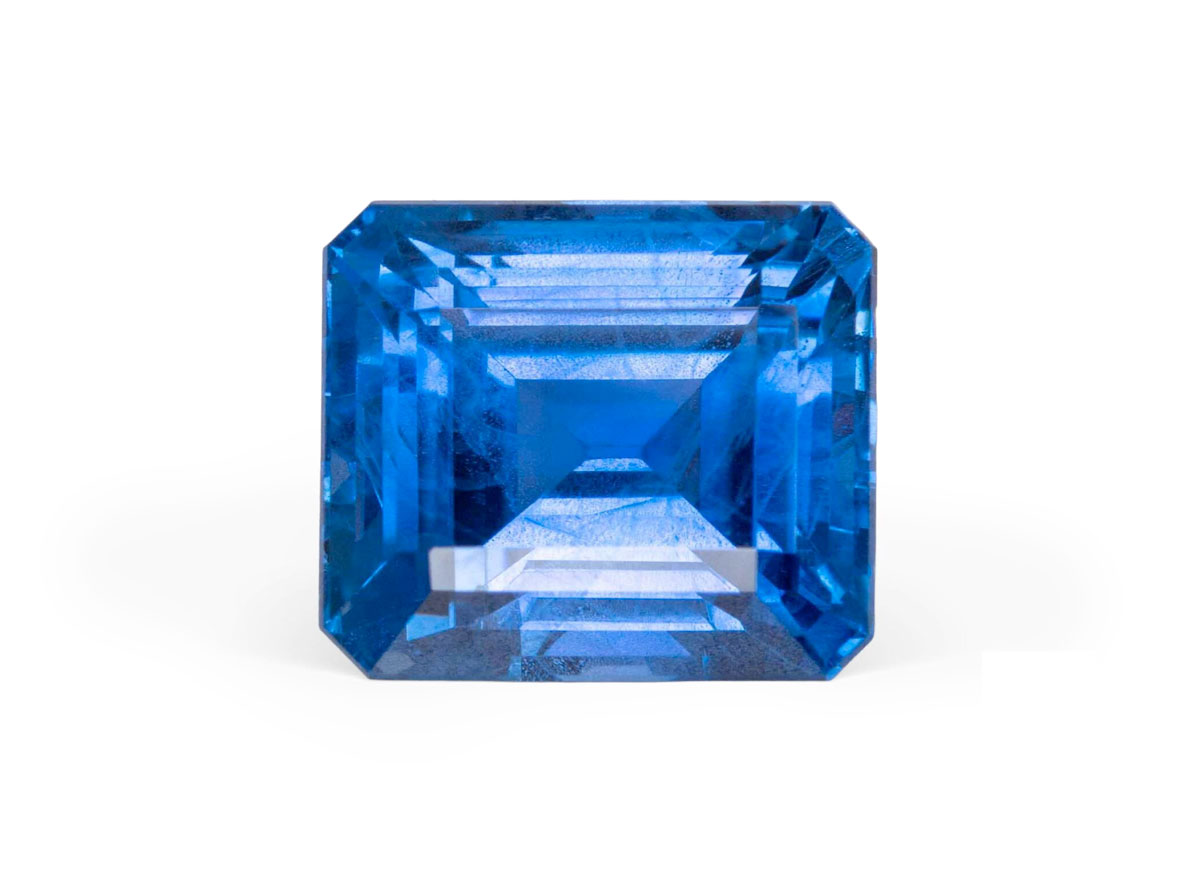
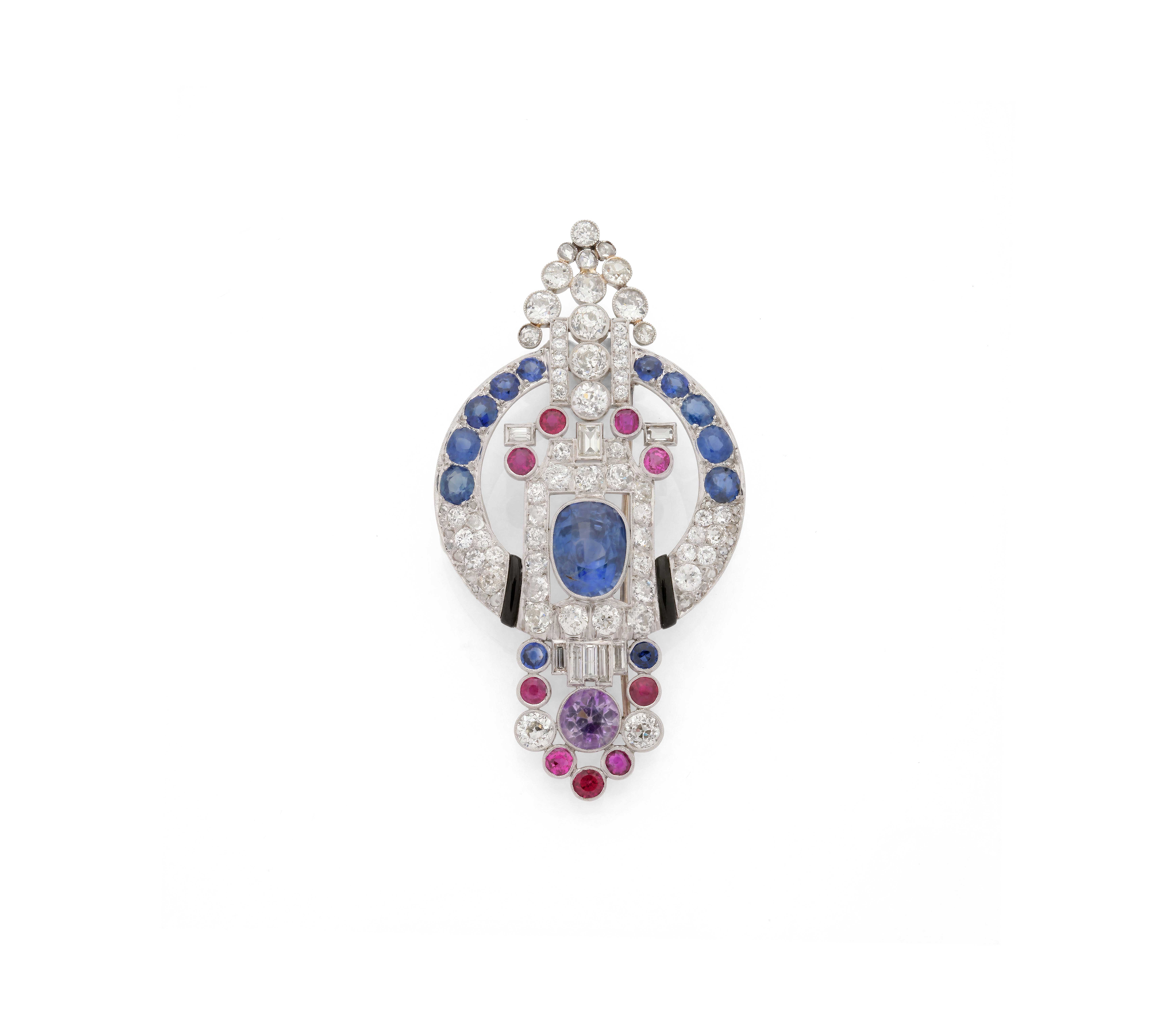
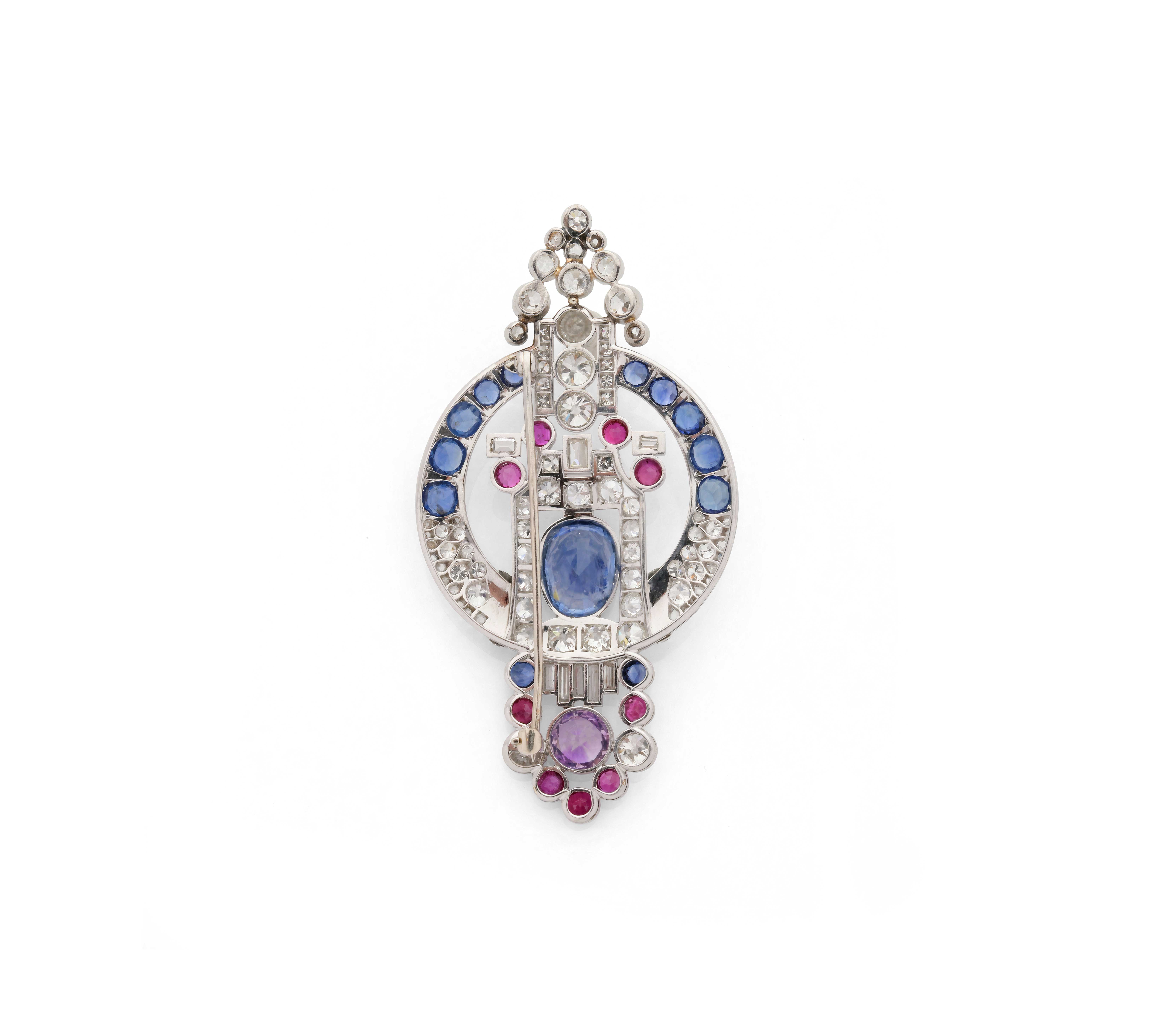
A cushion-shaped sapphire sits at the centre of this brooch, held between two short bars of black enamel that cut across it horizontally — the only solid darkness in a piece otherwise made of light. Around it runs a ring of blue sapphires, closed at the top and open at the base, and within that ring a strict vertical plaque of platinum rises to a small cluster of old-cut diamonds at the crown.
Black enamel is the signature of the period. Around 1930 Paris was working with onyx, black lacquer and enamel precisely because they gave a jeweller what diamonds could not: an absence. Here the two bars do the work of a drawn line, stopping the eye either side of the sapphire and holding the composition to its axis.
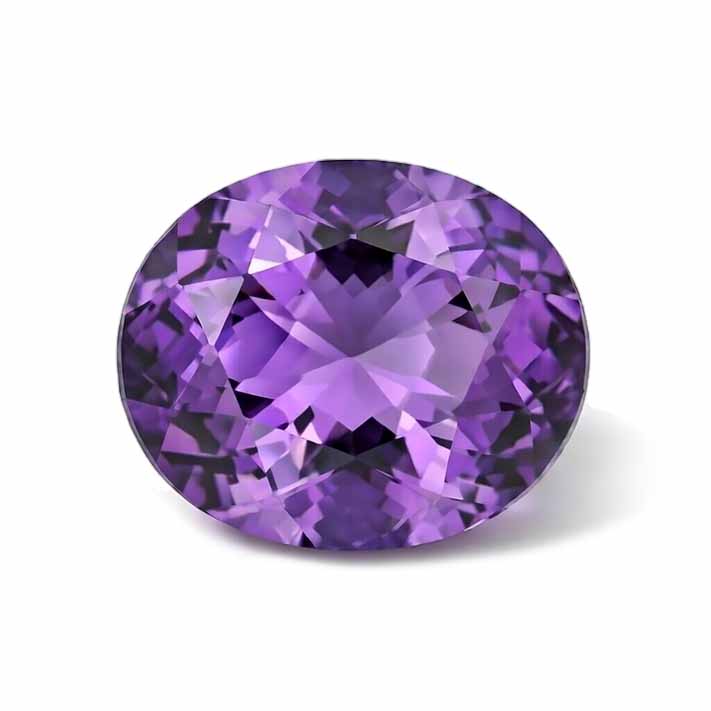
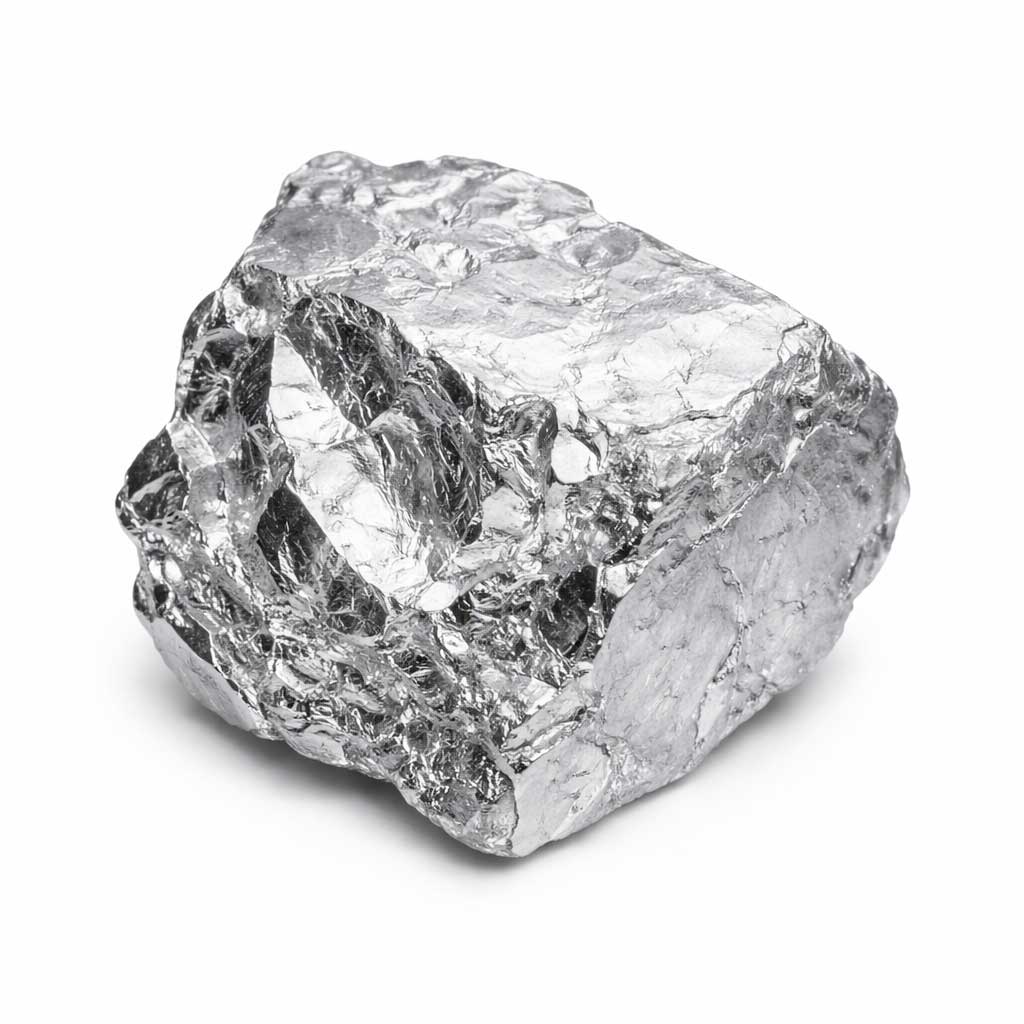
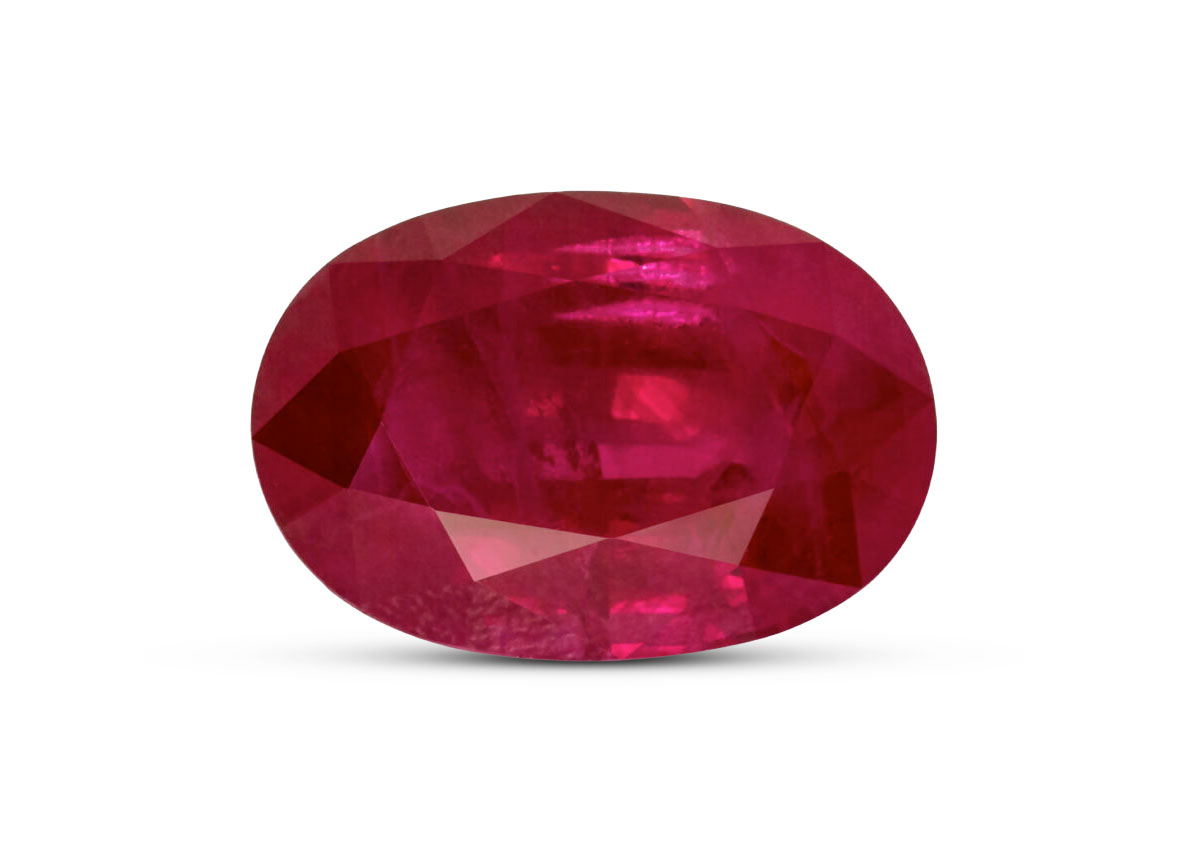
The rest is a study in cuts. Old-cut diamonds, round and square, fill the plaque; baguettes run in a short flight below the centre; rubies punctuate the design in small points of red; and a round amethyst sits low among them, a note of violet where nothing in the palette prepares you for it. Old cuts were shaped by hand before the modern brilliant was standardised — they return light in soft irregular flashes rather than the even fire of a machine-cut stone, and against platinum the effect is warmer than it first appears.
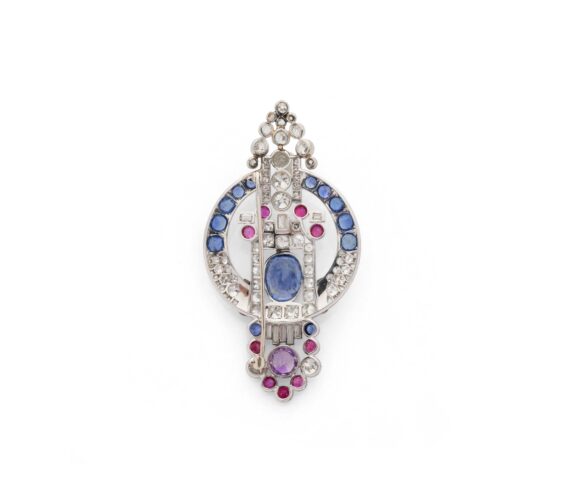
The whole plaque is pierced through. Every stone is set in an open-backed collet, so light passes behind the sapphires, the rubies and the amethyst as well as across their faces, and the brooch reads as a lattice rather than a plate — the reason a piece 70 millimetres tall weighs barely twenty grams.