The History and Character of Bloodstone in Signed Jewelry
Bloodstone, technically a form of dark green chalcedony with characteristic iron oxide inclusions producing spots or veins of deep red, occupies a singular position in the gemological history of luxury jewelry. Medieval lapidaries called it “heliotrope” and attributed protective properties to it; Renaissance seal-engravers valued its hardness for intaglio work; Victorian jewelers incorporated it into signet rings and mourning pieces for precisely the same symbolic weight. By the mid-20th century, Italian ateliers were among the last fine jewelry workshops to engage bloodstone with genuine technical ambition, combining it with precious metal settings that honoured the stone’s archaic gravitas.
Its Mohs hardness of 7 makes bloodstone suitable for cabochon cutting and high-polish finishing, while the unpredictable distribution of red jasper inclusions ensures no two stones are identical. This natural uniqueness aligns directly with the luxury principle of singular design identity.
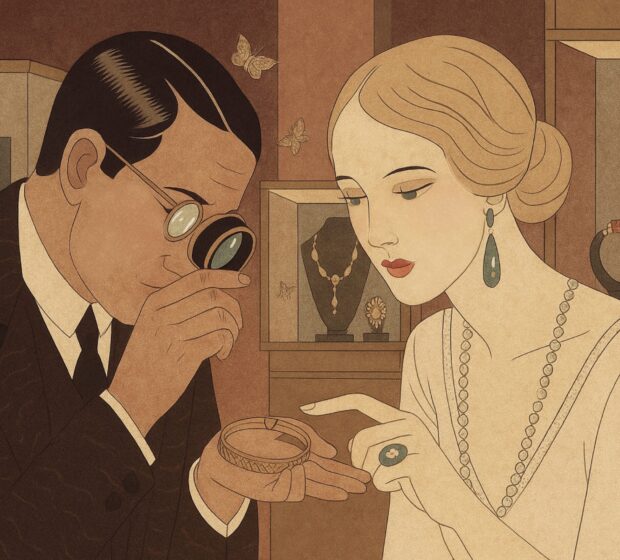
Authentication involves both gemological assessment of natural origin and hallmark verification of the metal setting. Italian pieces typically bear the national fineness mark alongside the maker’s mark, with construction details reflecting the workshop traditions of specific production centres.
The Grygorian Gallery Bloodstone Collection
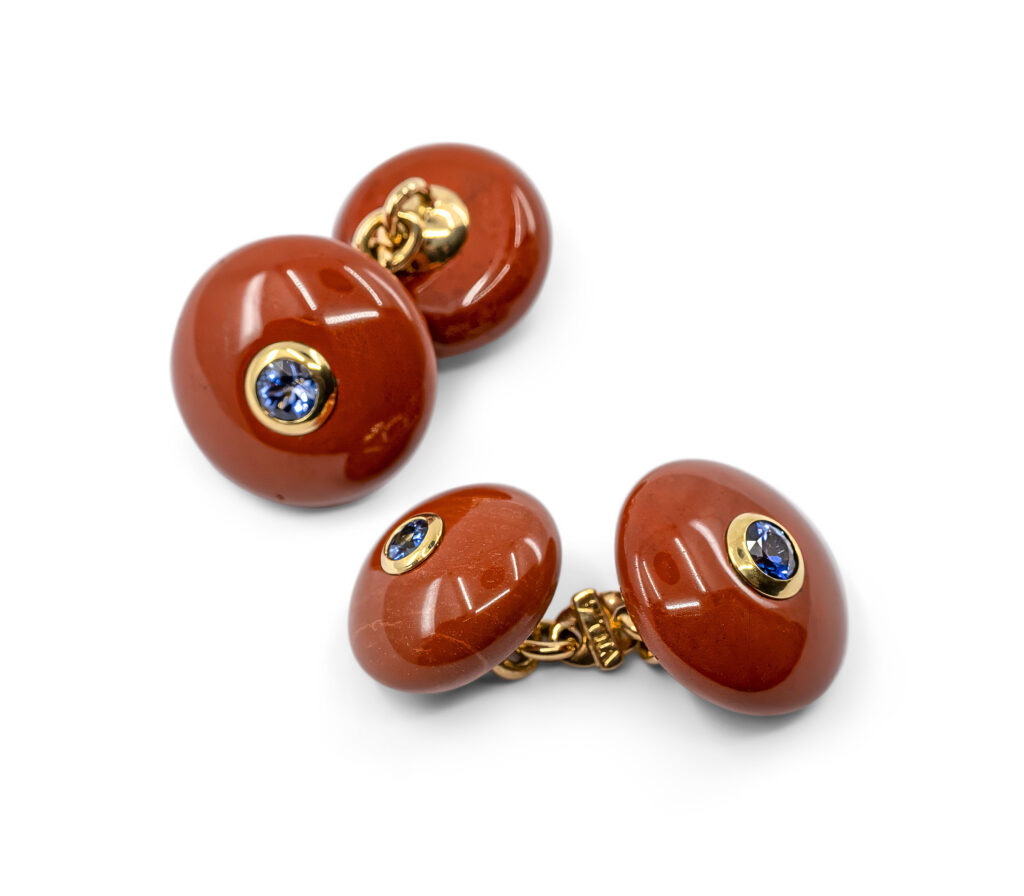
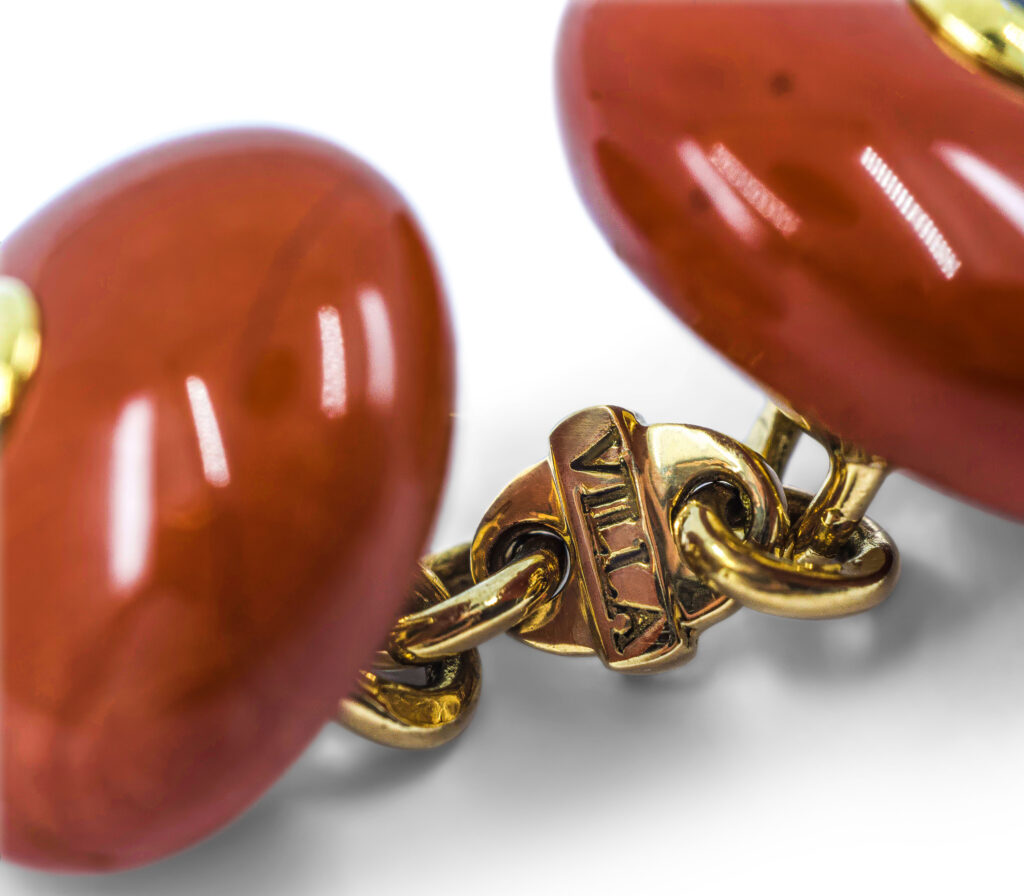
Italian jewelry ateliers of the mid-20th century developed a refined approach to opaque gemstone setting, integrating bloodstone cabochons into gold constructions with the same precision applied to precious stones. The combination of bloodstone’s archaic visual weight with yellow gold warmth reflects a distinctly Italian sensibility: richness achieved through material contrast rather than gemological rarity alone.
Professional knowledge of Italian luxury production standards, including the gemstone selection criteria applied at houses with significant Italian operational traditions, informs an acquisition approach attentive to the subtle quality markers distinguishing genuine atelier work from later commercial output. Each designer piece is assessed for stone quality, natural origin, and construction consistency before entering the collection.
Collecting Bloodstone Signed Jewelry
Bloodstone remains one of the genuinely undervalued categories in signed vintage jewelry. Collector attention has concentrated overwhelmingly on diamond, ruby, and emerald pieces, leaving authenticated bloodstone work from quality ateliers at price points that significantly undervalue both craft content and historical significance.
The material logic for reassessment is straightforward. Bloodstone’s ancient lineage, its technical demands as a setting material, and the irreplaceable tension between deep green ground and blood-red inclusion cannot be replicated by any synthetic alternative. Rare collectibles combining verified atelier provenance with this historically resonant stone represent bespoke jewelry at the intersection of gemological heritage and exceptional workmanship, with collector’s investment potential that reflects current undervaluation rather than intrinsic limitation.