Aquamarine and Maison Design Identity
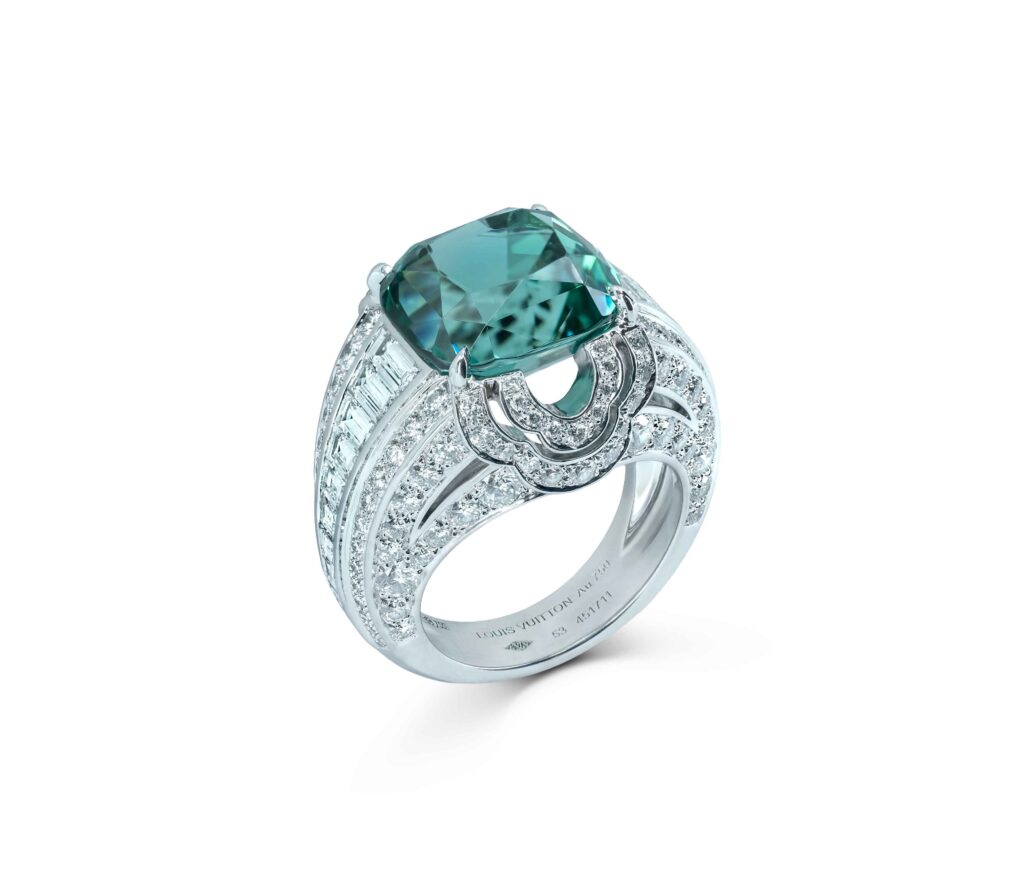
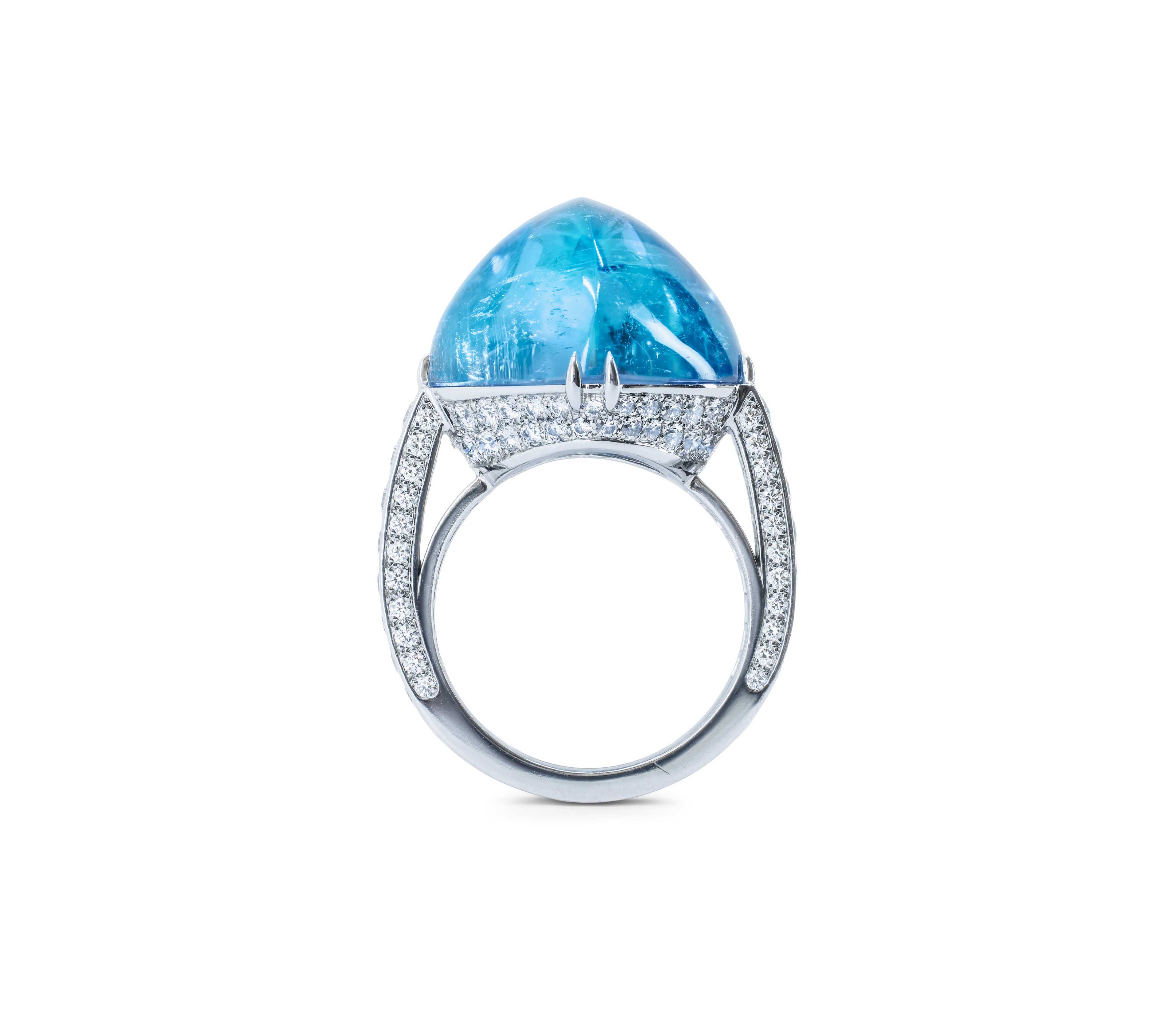
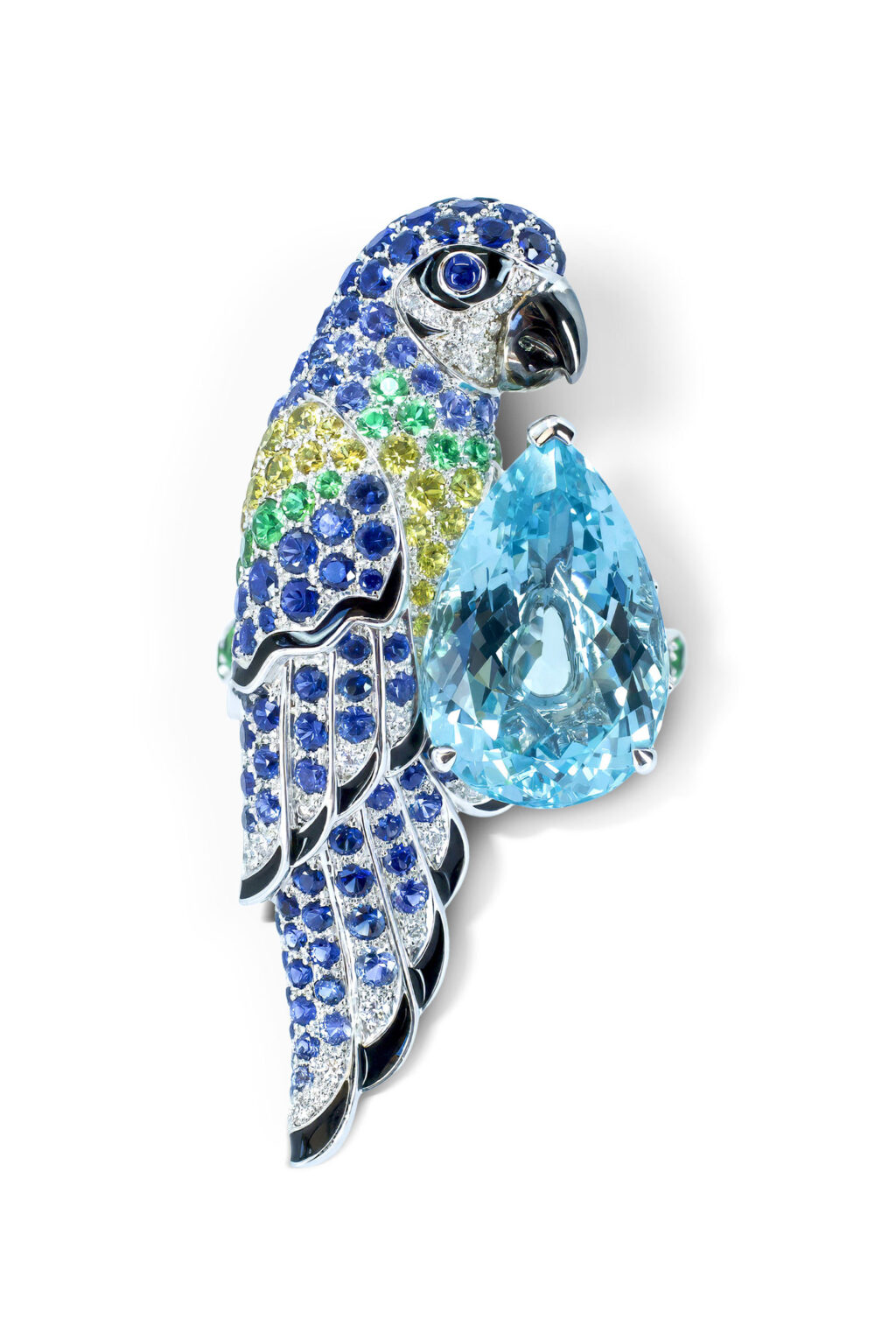
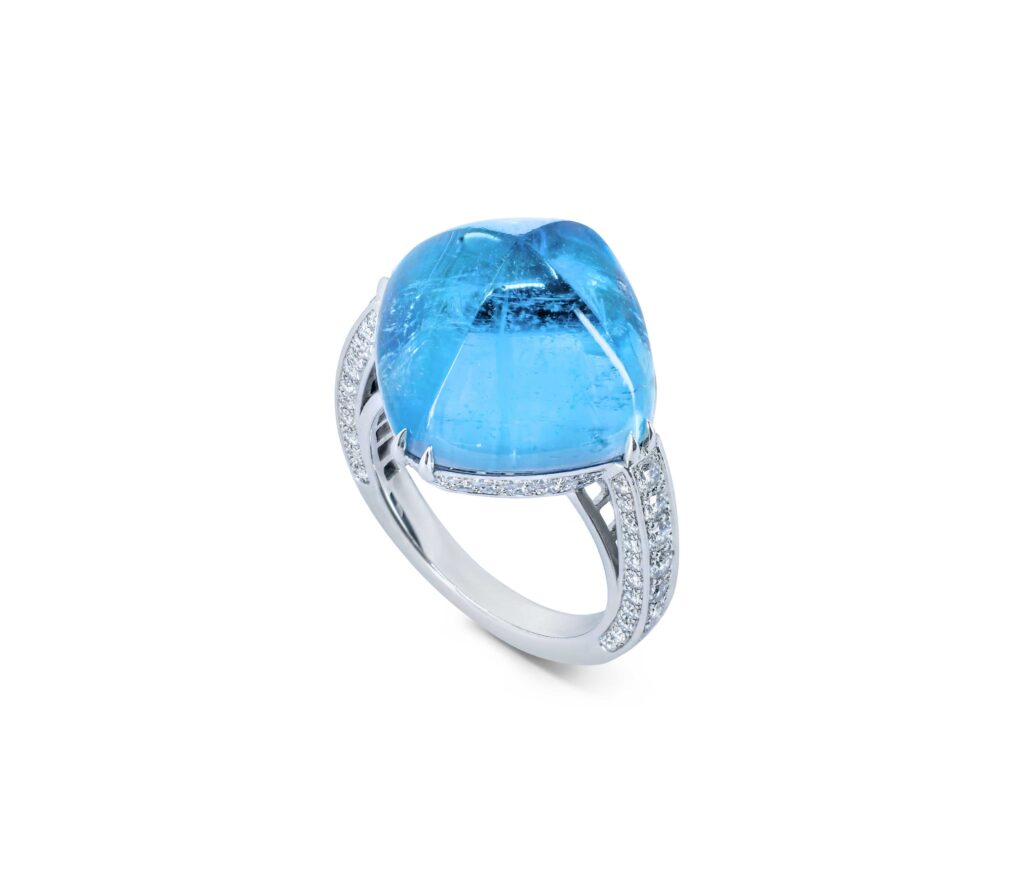
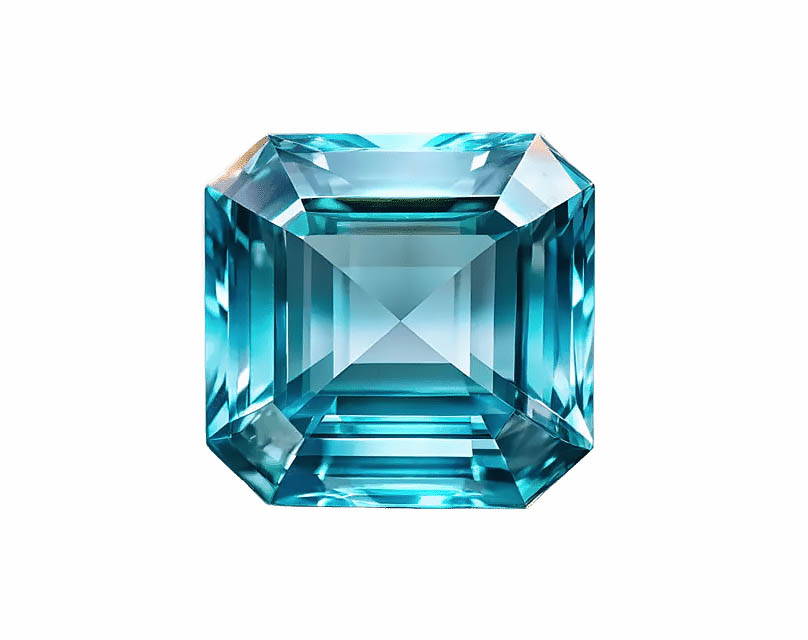
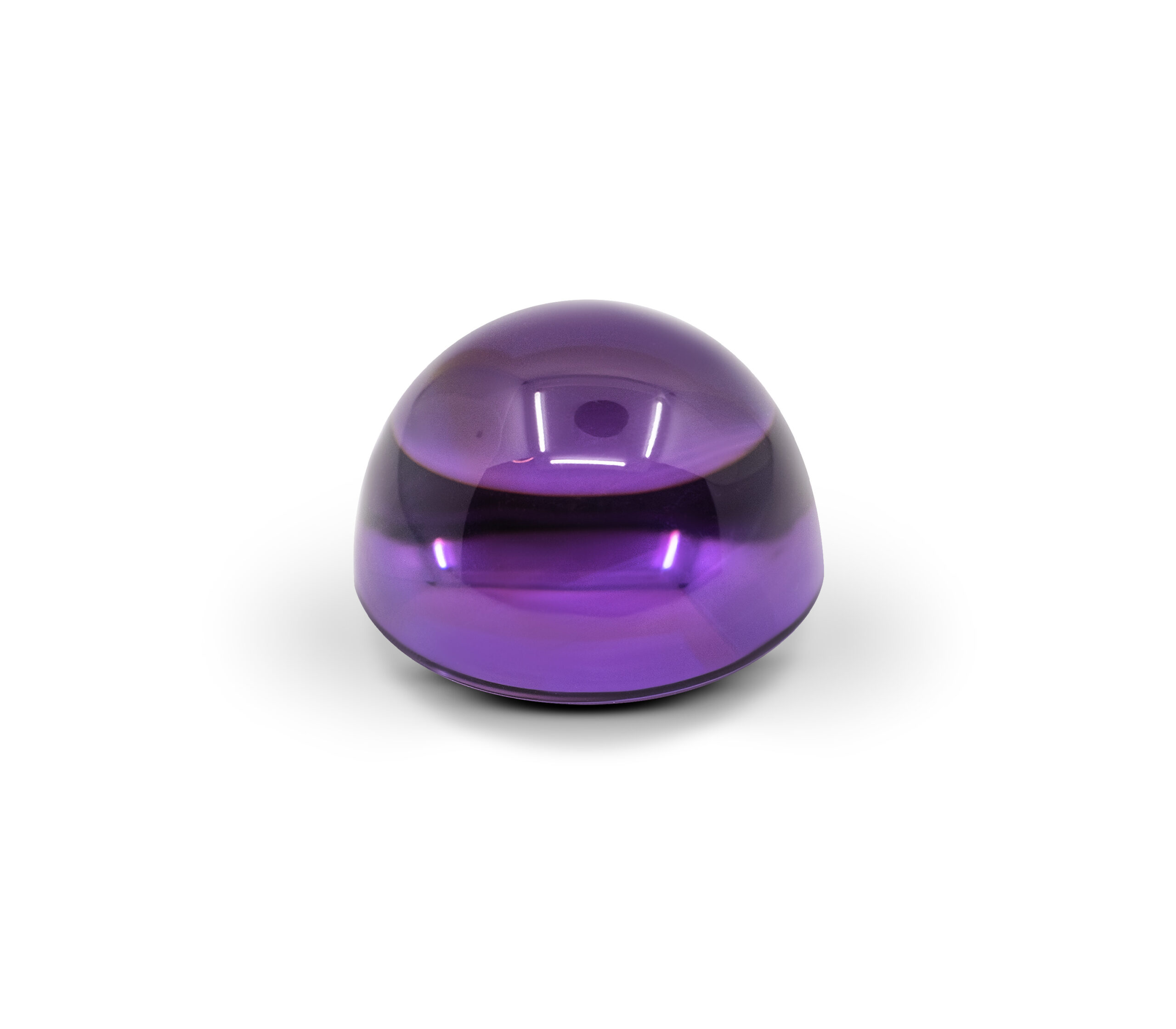
Among colored gemstones, aquamarine holds a distinctive position in haute joaillerie: its beryl family hardness of 7.5–8, exceptional clarity, and availability in large crystal sizes made it the favored stone for designers who thought in volume and light rather than color saturation. Where rubies and emeralds demanded compact, intensive settings, fine aquamarines invited bold dome cuts, dramatic cabochons, and architectural mountings showcasing the stone’s internal luminosity. Boucheron’s engagement with aquamarine exemplifies this approach, the house’s nature-inspired philosophy treating each stone as a self-contained landscape requiring a setting that elevates without constraining.
Brazilian aquamarines from Minas Gerais established the modern collector benchmark. Deep Santa Maria-type color, defined by strong blue saturation without greenish secondary tones, commands significant premiums over lighter stones at major auction houses, and GIA documentation confirming natural color without heat enhancement adds material authentication to the maker’s mark verification that signed pieces require.
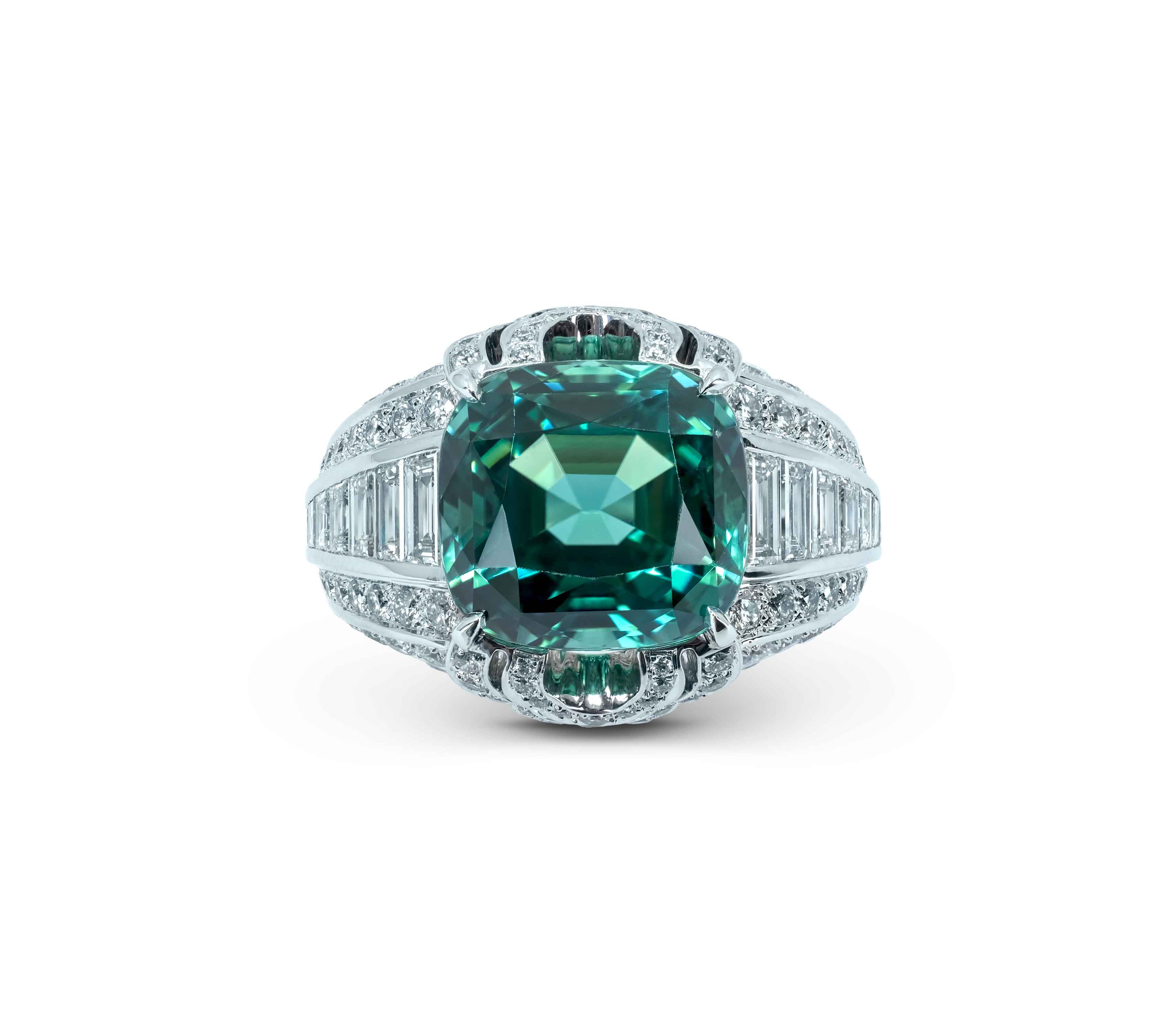
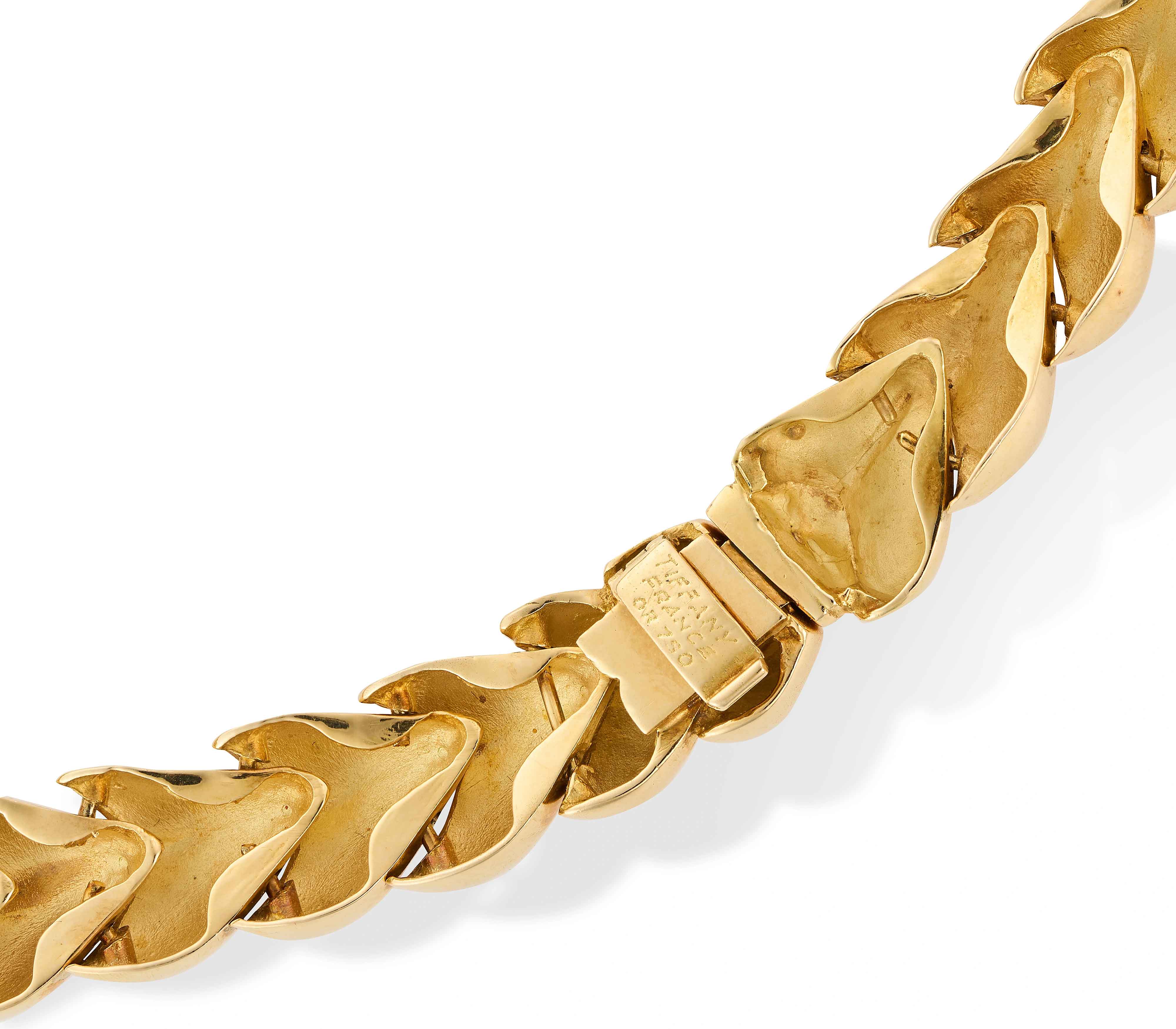
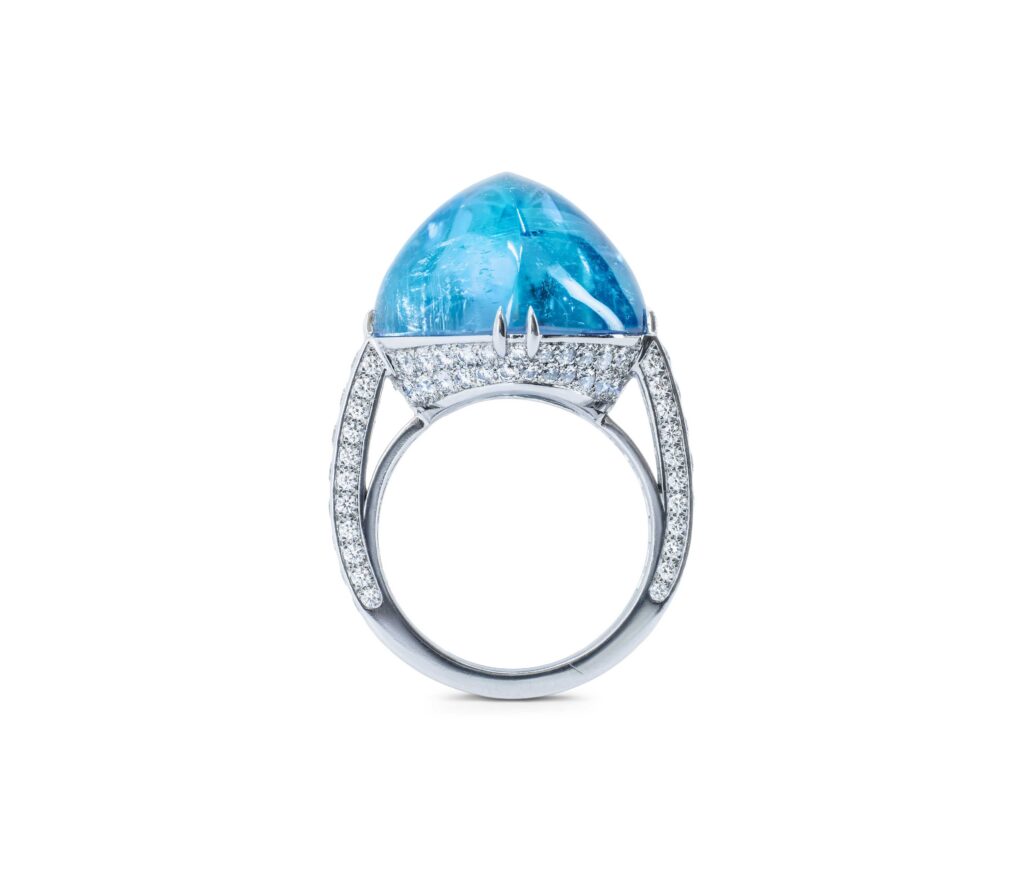
Cage-style and prong constructions allowing light transmission through the stone, pavé diamond surrounds amplifying aquamarine’s color by contrast, and white metal settings harmonizing with cool tonality are recurring solutions across the great houses. Each maison arrived at related answers through its own design identity, making the signature elements of construction as diagnostic as the hallmarks themselves.
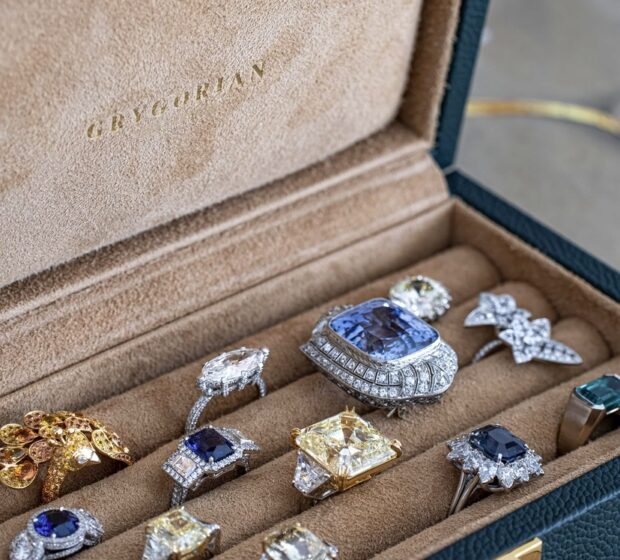
The Grygorian Gallery Aquamarine Collection
Significant aquamarine pieces from grand maisons appear on the collector market with meaningful rarity. The stone’s scale requirement limits production compared to diamond or small colored stone pieces, and collector retention of exceptional examples compounds scarcity over time.
Specific insight into Boucheron’s approach to large colored stone setting comes from Eduard Grygorian’s direct professional experience at the house: cage-like mounting structures, pavé diamond integration techniques, and the finishing standards applied to white gold constructions that distinguish authentic production from later manufacture. Each designer piece is examined for internal consistency between stone quality, setting construction, and hallmark evidence before entering the collection.
The Investment Case for Aquamarine Signed Jewelry
Fine aquamarine has attracted growing collector attention as an alternative to the more intensely contested ruby and emerald markets. Exceptional clarity, large size availability, and relative accessibility compared to equivalent ruby or sapphire quality create favorable conditions for long-term appreciation, particularly when combined with a verifiable maker’s mark from a house of institutional significance.
Signed aquamarine pieces occupy an accessible entry point into maison gemstone jewelry that ruby and emerald collecting rarely offers. The architectural scale typical of significant designer aquamarine jewelry communicates luxury heritage at a glance, and the relative availability of fine-quality stones means that collector’s investment potential here is driven by maison provenance and design legacy rather than gemological scarcity alone. At Grygorian Gallery, every piece is presented with complete verification and original documentation.