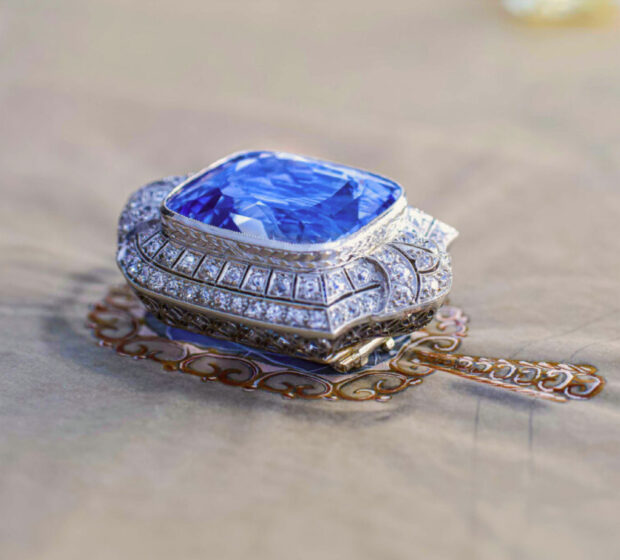




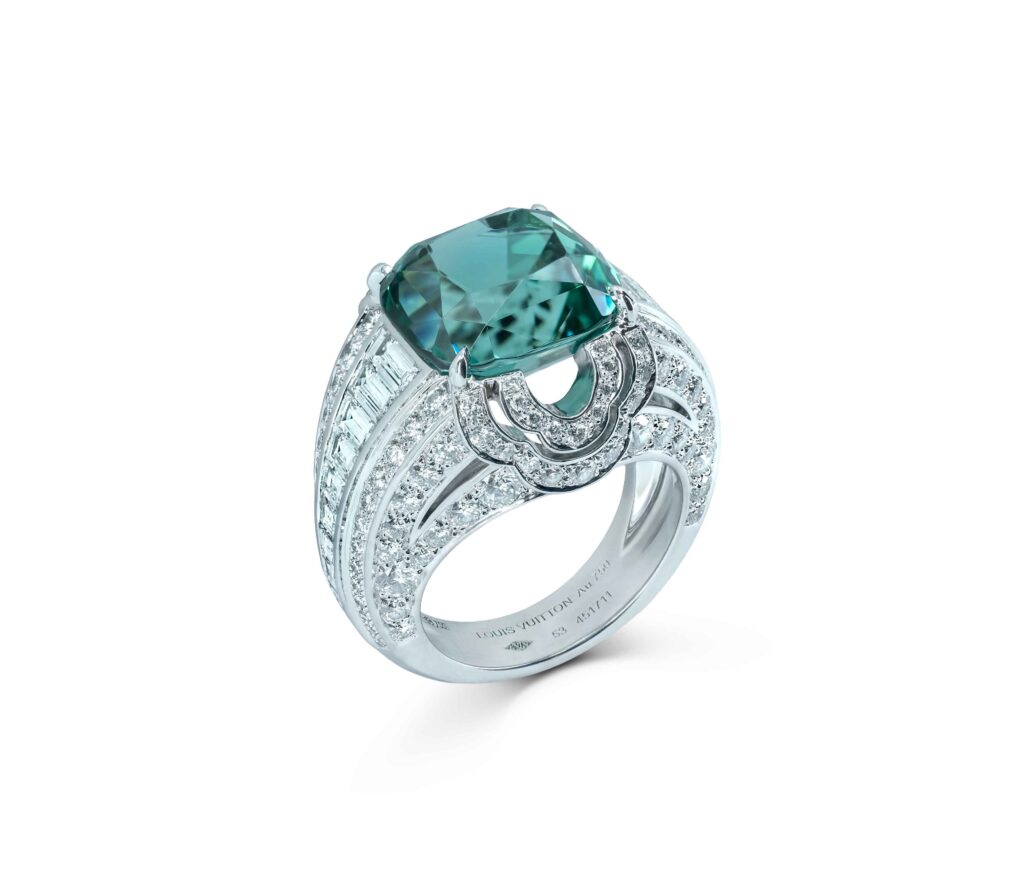

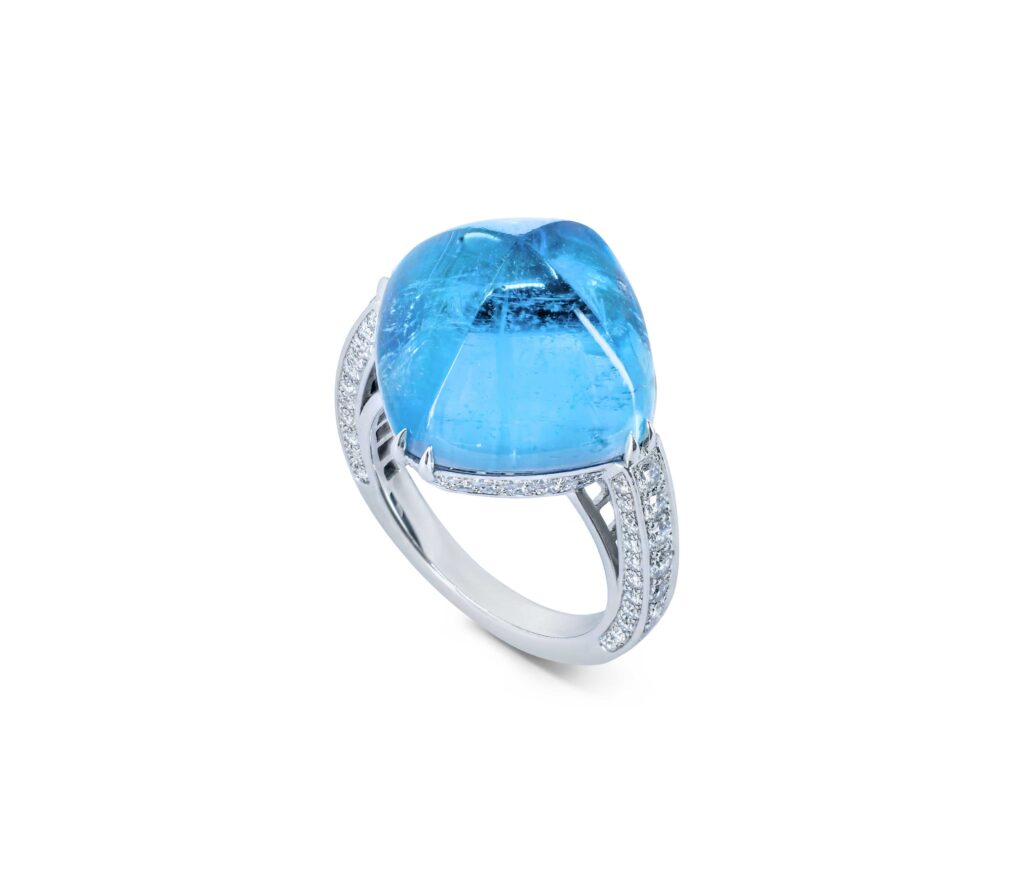
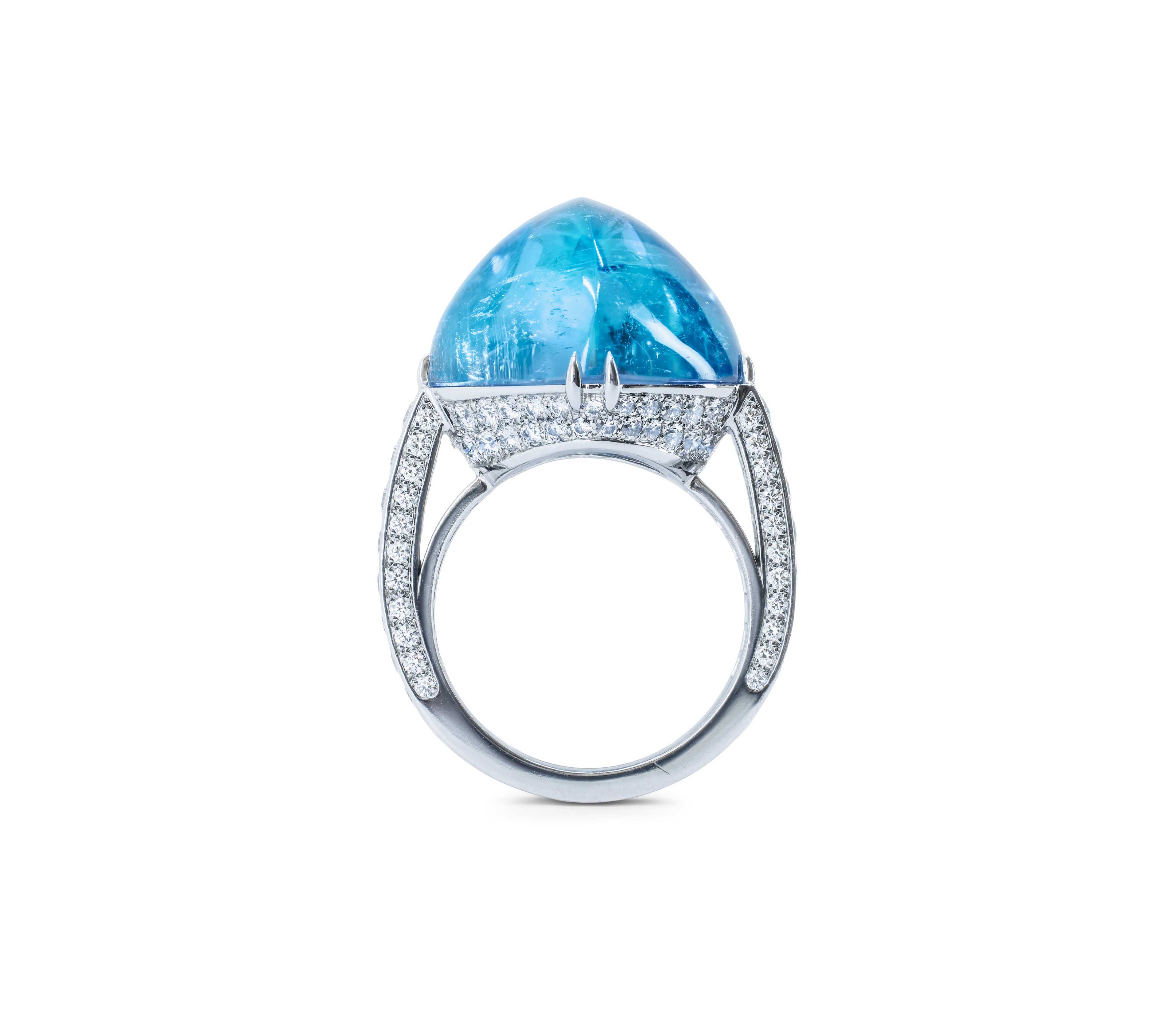



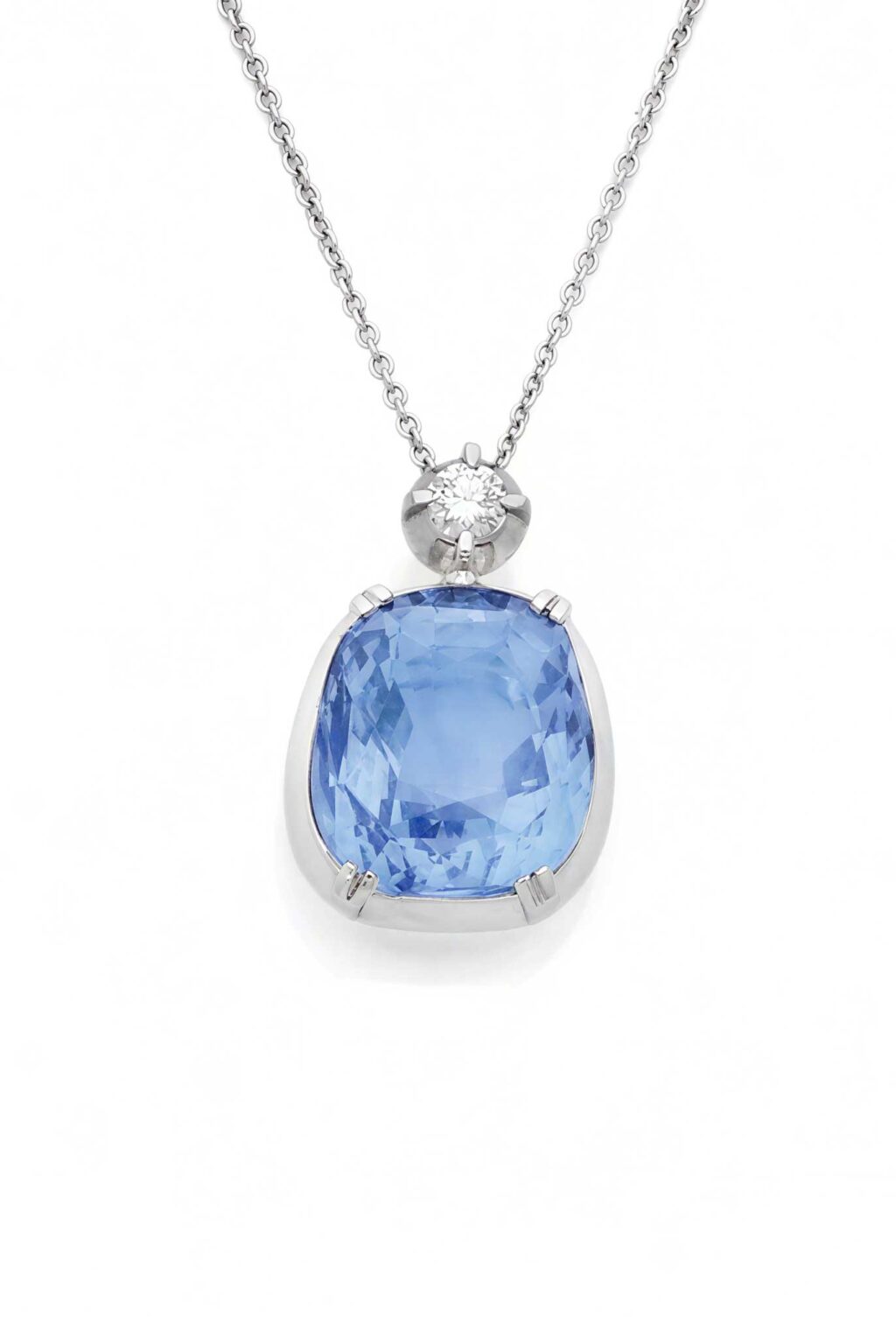
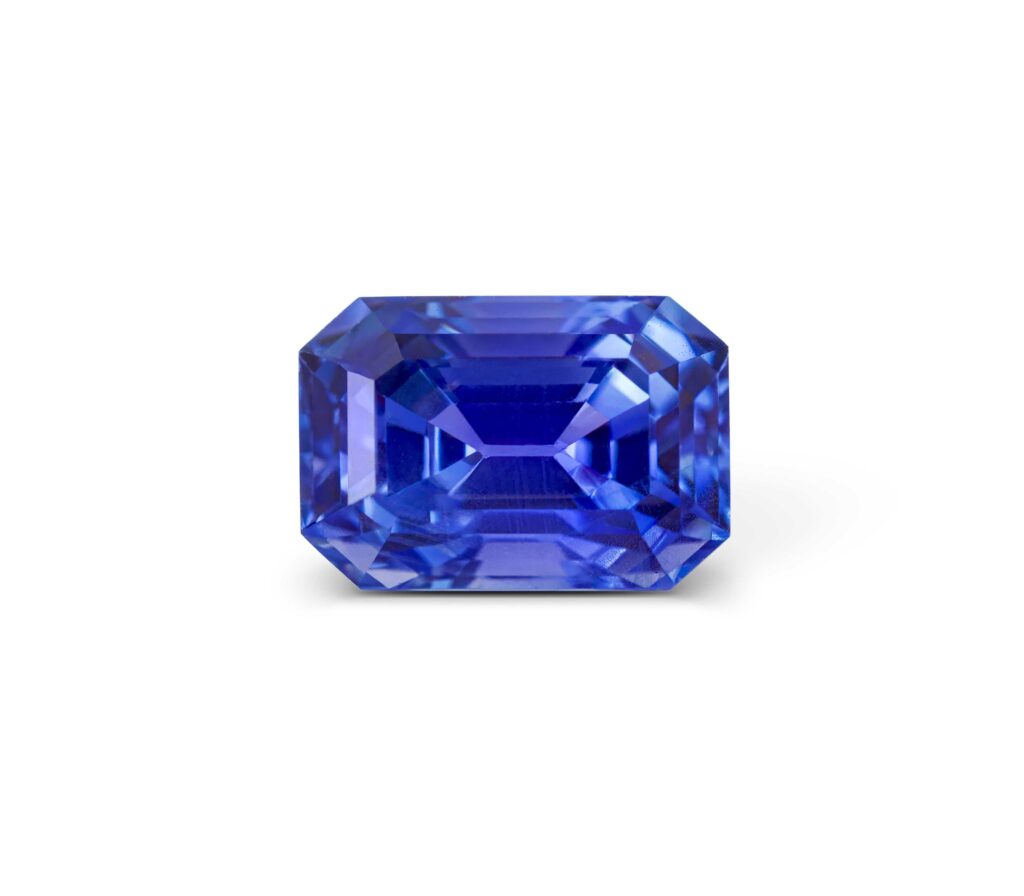
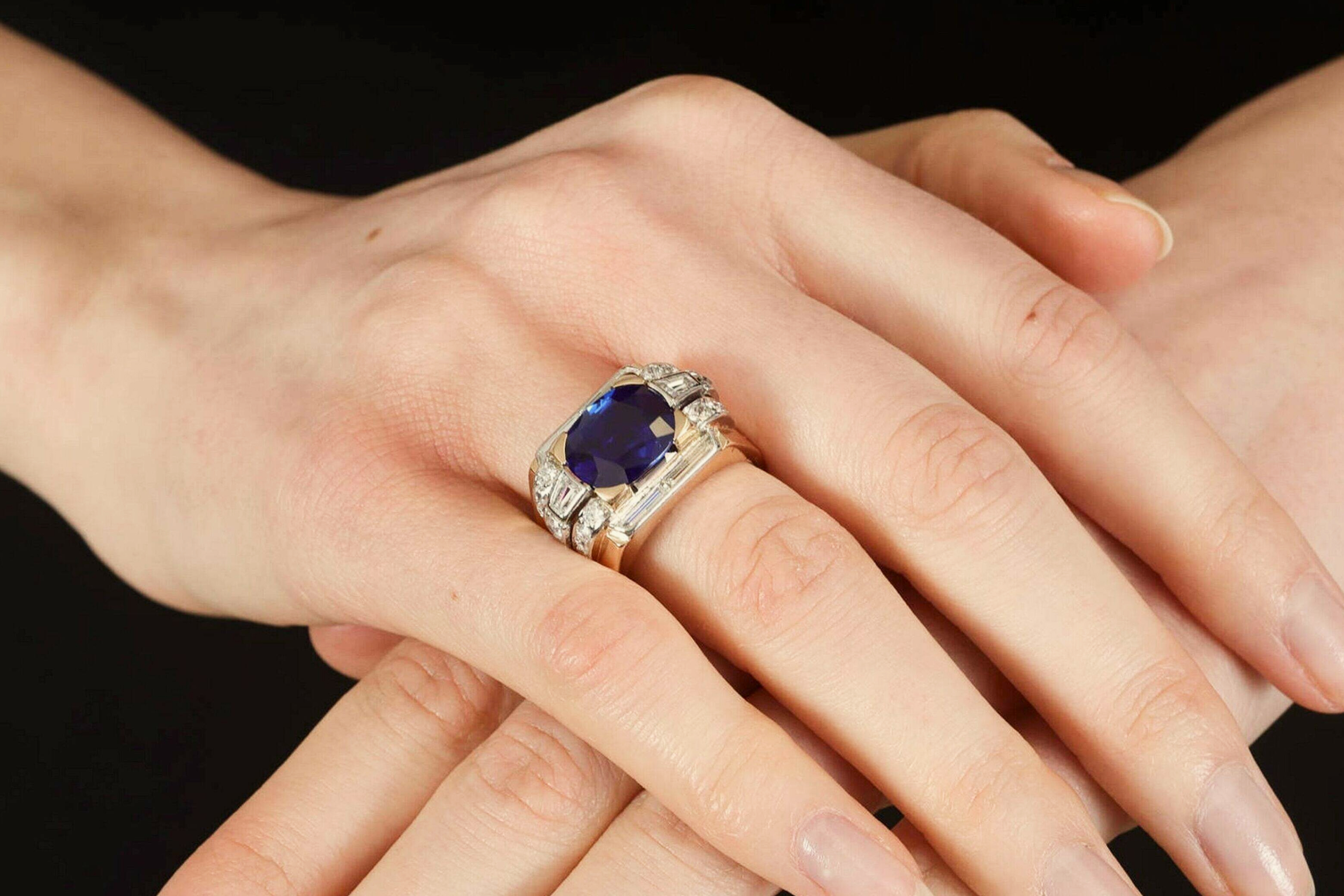
In May 2025, a sapphire and diamond ring that a French woman had inherited from her parents was consigned to Adam’s auction house in Dublin with an estimate of €8,000 to €12,000. Before the sale, the house’s jewelry specialist sent the stone for laboratory testing, which confirmed that the 6.22-carat sapphire came from Kashmir. The estimate was raised to €150,000 to €200,000, and on 13 May the ring sold for €550,000 at the hammer, or €660,000 with fees. Nothing about the ring itself changed between the first estimate and the final bid, which makes its story a useful starting point for anyone working out where to sell vintage jewelry.
The difference came from evidence. A specialist suspected the stone deserved a laboratory report and ordered one, and the auction then put that proof in front of bidders.
Most inherited pieces will never turn out to hold a Kashmir sapphire, yet the same mechanism decides what they sell for. “Where can I sell vintage jewelry?” sounds like a question about addresses. In practice it is a question about who will value the piece, and on what basis. A gold buyer prices your grandmother’s brooch by its weight, a dealer by what it can be resold for, and an auction house by what collectors may compete to pay. With gold reaching a record intraday high of about $5,589 an ounce in January 2026, a quick cash offer can look generous even for a piece that is worth far more intact.
The sections below compare the three main ways to sell vintage, antique and previously owned jewelry (outright, on consignment and at auction), then look at online platforms, inherited collections and signed pieces, and close with the mistakes that cost sellers the most.
Know What You’re Selling: Market Value, Insurance Value and Scrap Value
Before any buyer sees the piece, work out which category it belongs to, because each is valued by different people. Vintage usually means at least 20 years old (Etsy uses that threshold for its vintage category), antique jewelry is generally more than a century old, and estate jewelry simply means previously owned, whatever its age. Two further questions matter more than age: is the piece signed, and does it belong to a recognizable period such as Georgian, Victorian or Art Deco? A maker’s mark from Cartier or Tiffany, or construction that places a brooch firmly in the 1920s, can lift it out of used fine jewelry and into a market of collectors.
The same piece can then carry several values at once, and confusing them is where many sellers lose money. Three values come up again and again when jewelry is appraised or sold:
- Insurance, or retail replacement, value is what it would cost to buy a comparable piece new from a jeweler. It is usually the highest figure and is meant for insurance cover.
- Fair market value is the price a willing buyer and a willing seller would agree on when neither is under pressure and both know the relevant facts. Appraisers use it for estates, divisions of property and tax matters.
- Scrap or melt value is what the metal alone is worth, plus the value of any stones once removed.
Offers from real buyers usually land between fair market value and scrap value, and how close they come to the first depends on the route you choose. The American Gem Society makes the same point from the appraiser’s side: an appraised value is not necessarily what a buyer will pay, especially a buyer who intends to resell.
Scrap value normally works as a floor, yet for a piece without a collector premium it can become the best price on offer. In May 2026 a British dealer melted down a late-1970s Omega Constellation watch in 18K gold and in excellent condition, because the gold inside was worth £5,750 against an auction estimate of £4,000 to £4,500. A signed Art Deco bracelet sits at the opposite end of that scale, where melting would destroy most of the value. Knowing which end your piece belongs to is the first step toward the best place to sell antique and vintage jewelry, and an independent appraisal by a qualified gemologist is the most reliable way to find out.
Where to Sell Vintage Jewelry: Outright Sale, Consignment or Auction
The list of who buys vintage jewelry is shorter than it first appears. Wherever you can sell vintage jewelry, whether to a dealer, a jeweler, a gallery, a consignment shop, an online platform or an auction house, the arrangement falls into one of three routes: the buyer purchases the piece outright, someone sells it on your behalf for a commission, or bidders compete for it at auction. The route, more than the venue, decides what you are paid.
Here is how the three routes compare across the places to sell vintage jewelry you are most likely to use:
| Outright sale | Consignment | Auction | |
|---|---|---|---|
| Who you deal with | Specialist dealers, antique dealers, galleries, jewelers, gold buyers, pawn shops | Consignment boutiques, galleries, online consignment platforms | Regional salerooms and international houses such as Sotheby’s, Christie’s, Bonhams and Heritage Auctions |
| When you are paid | When you accept the offer | After the piece sells; boutiques often display items for 60 to 90 days | Around 30 to 45 days after the sale |
| Price certainty | Fixed once agreed | Depends on the asking price you approve | Unknown until the hammer falls; a reserve sets the minimum |
| Main cost | The buyer’s resale margin, built into the offer | A consignment fee, often 25% to 50% of the sale price at boutiques | Seller’s commission on the hammer price, plus possible fees |
| If it does not sell | Does not apply | Returned or repriced, depending on the contract | Returned or re-offered, sometimes with a charge |
| Best suited to | Pieces valued for their metal, urgent sales | Mid-range pieces with no deadline | Rare, signed or period pieces that several buyers will want |
Sources: Jewelers Mutual (2025) for consignment terms; Sotheby’s (2025) for auction settlement.
An outright sale buys speed and certainty, and the buyer takes on the risk of reselling. The offer reflects that: Jewelers Mutual considers a cash offer close to half of what comparable pieces sell for at retail to be fair. For a piece with little collector appeal, the trade can make sense. For a signed or period piece, the time saved rarely covers the difference.
With consignment, the risk moves back to you in exchange for a larger share of the final price. You approve the asking price, the piece waits in a shop or on a platform, and payment follows the sale. Commissions vary widely between boutiques, so read the contract for the display period, any price reductions and what happens to pieces that do not sell.
Two charges frame an auction result. The seller’s commission comes out of the hammer price and has traditionally been negotiable; Jewelers Mutual puts it at 15% to 20% at major houses, with extra charges at some for photography, marketing or repairs. The buyer’s premium is added on top of the hammer, and at Sotheby’s it rose to 28% on lots up to $2 million in February 2026. This is why the Kashmir sapphire ring from the introduction appears in the press at €660,000: that figure includes the buyer’s fees, while the seller’s proceeds start from the €550,000 hammer price and shrink by the agreed commission.
The size of the house matters as much as the format. Marquee sales at Sotheby’s, Christie’s and Bonhams are built around exceptional lots, and a piece worth a few thousand euros may get more attention in a dedicated jewelry sale at a regional or specialist saleroom.
Put together, the table and the fees mean that the best place to sell vintage jewelry has to be chosen piece by piece, even within a single jewelry box.
Do Jewelers Buy Vintage Jewelry?
Some do, although not all, and the American Gem Society advises calling ahead before a visit. A jeweler may buy a piece as it is, to resell among its estate pieces, or buy it for the melt value of its gold or platinum. The second approach tends to cost owners of vintage pieces the most. In 2011, New York City inspectors took three pieces of gold jewelry, independently appraised at $590, to gold buyers across the city, and the offers ranged from $175 to $450. Ask any jeweler whether an offer is based on weight or on the piece itself, and get the answer in writing.
Selling Vintage Jewelry Online: The Best Sites and Their Trade-Offs
If you are weighing where to sell vintage jewelry online, the choice splits in two. Open marketplaces let you list the piece yourself and keep more of the price, while curated and consignment platforms handle authentication, photography and buyers in exchange for a larger share. Jewelers Mutual suggests that pieces worth more than $500 generally belong with auction houses or online consignment, where professionals manage the sale, and that less valuable pieces can go to local jewelers, boutiques or marketplaces.
The platforms most often considered for vintage and antique jewelry work quite differently:
- eBay reaches the widest audience and suits pieces with plenty of comparable sales, such as gold sold by weight or signed costume jewelry. For most jewelry categories its final value fee is about 15% on sales up to $5,000.
- Etsy lists items as vintage only if they are at least 20 years old, and charges a $0.20 listing fee, a 6.5% transaction fee and, for US sellers, payment processing of 3% plus $0.25.
- Ruby Lane is a marketplace dedicated to antiques and vintage, where buyers expect period pieces and sellers pay shop fees plus a service fee on sales.
- 1stDibs admits only vetted professional sellers and does not allow consumer-to-consumer listings, so a private owner reaches its buyers through a dealer who sells there.
- The RealReal takes pieces on consignment, authenticates them and pays the consignor up to 75% of the selling price, depending on the category and its current commission chart.
- Vestiaire Collective is built around designer resale, which makes it a natural home for recognizable signed names and a weak one for unsigned antique jewelry.
Which is the best site to sell vintage jewelry depends on what you are selling. Costume jewelry and modestly priced gold travel well on eBay and Etsy. For fine and signed pieces, the best place to sell vintage jewelry online is usually a platform or dealer that authenticates before listing, because buyers pay more when proof comes with the piece.
Selling online also shifts practical risks onto you. Insure every parcel for its full value, photograph the piece and its marks before it leaves, and keep every message and payment on the platform. Jewelers Mutual warns of a common scam in which a buyer appears to pay too much by mistake and asks for the difference back, after which the original payment is reversed.
Estate and Inherited Jewelry: How to Sort a Collection Before You Sell
Deciding where to sell estate jewelry is harder than placing a single piece, because an inherited box rarely holds items of one kind. A single collection might contain a signed brooch, a piece of old diamond jewelry, gold chains of ordinary design and a tangle of costume pieces, and each belongs with a different buyer. Selling everything to the first person who names one figure lets the best items subsidize the rest.
Who buys estate jewelry shapes the plan as well. An antique jeweler will usually buy selectively, taking the pieces it can resell and leaving broken items and costume jewelry behind, while an auction house will often accept almost everything. Many families end up using both.
A sequence that keeps every option open looks like this:
- Keep the collection together until it has been examined, including boxes, pouches, receipts, old valuations and laboratory reports, and resist cleaning or repairing anything first.
- Check each piece under a loupe for maker’s marks, hallmarks and serial numbers.
- Sort the pieces into four groups: signed and period jewelry, stones that come with reports such as a GIA report, gold and silver of ordinary design, and costume jewelry.
- Book a professional appraisal by a gemologist for the first two groups and ask for a written report that records value, origin and technical characteristics, the format our jewelry, watch and gemstone appraisal follows. If the valuation is needed for the estate itself, ask for fair market value rather than insurance value.
- Match each group to a route: signed and period pieces to a specialist dealer or an auction, stones with reports to an auction or a specialist, ordinary gold to several competing metal buyers, and costume jewelry to online marketplaces.
- Collect written offers for the valuable pieces and compare what each would leave you after every cost.
The best place to sell estate jewelry, in other words, is usually several places at once. When a deceased estate has to be settled and there is pressure to clear everything quickly, the same sequence still applies to deciding where to sell inherited jewelry: sorting first takes a little time and protects the pieces that carry most of the value.
Signed Vintage Jewelry: Why Specialist Buyers Pay More
A signature changes who is interested in a piece. A Cartier, Van Cleef & Arpels or Tiffany jewel from the 1940s competes for the attention of collectors who follow those houses, and they pay for certainty that it is what it claims to be. That makes the choice of where to sell signed vintage jewelry a choice about verification and reach, and it is where sellers have the most money at stake.
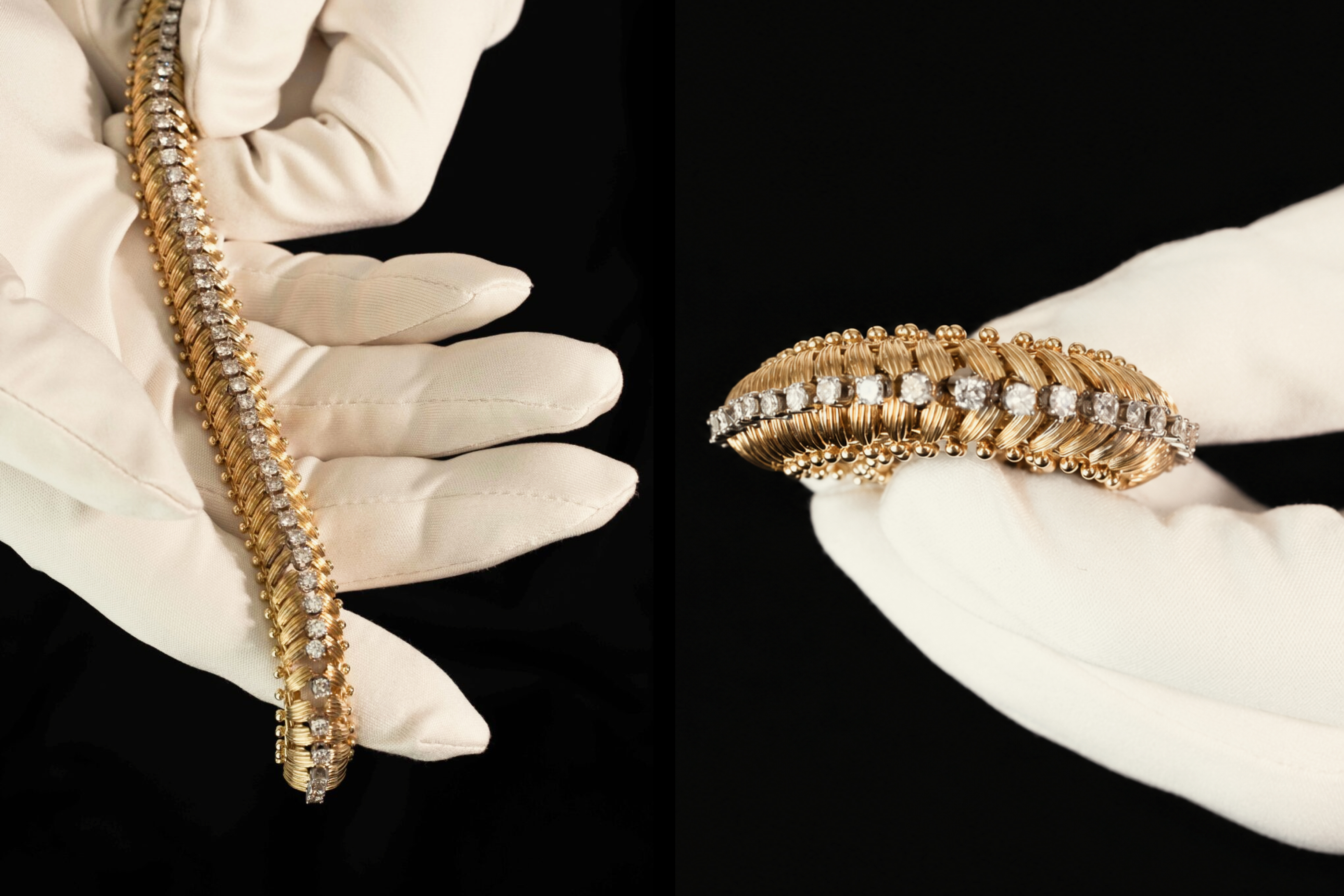
Buyers build that certainty from several sources. Maker’s marks and hallmarks, inventory and serial numbers, sales records, laboratory certificates and fitted boxes all contribute to a jewel’s provenance. Original box and papers matter because they tie the object to the house that made it, and a certificate of authenticity carries weight when its details match the piece in hand. Serial-numbered Cartier creations have a further check: they can be registered free of charge in Enquirus, the Richemont Group’s database of lost and stolen watches and jewelry, which buyers can search before they commit.
Evidence about a stone can move the price further still, as a British sale showed.
Before offering a Cartier sapphire and diamond flower brooch from around 1930, the British auctioneers Dawsons obtained an independent laboratory report confirming that its sapphire of about 7 carats was natural and of Kashmir origin, then marketed the brooch directly to international buyers. In 2023 it sold for a hammer price of £340,000.
Specialists are the people who know when a report like that is worth commissioning. Antique and vintage jewelry buyers who concentrate on signed pieces, whether dealers, galleries or the jewelry departments of auction houses, can often make a preliminary assessment remotely from photographs, videos and existing certificates, then confirm it in person. At Grygorian Gallery in Monaco, where we buy and sell vintage jewelry and watches, we assess signed pieces from houses such as Cartier, Van Cleef & Arpels, Bulgari and Boucheron in this way, and may then offer to buy a piece or propose a consignment.
How to Get the Most Money for Vintage Jewelry: Mistakes to Avoid
Much of the value lost on vintage jewelry disappears before the sale, through decisions that seem harmless at the time. Anyone working out where to sell vintage jewelry for the most money can check their plan against the mistakes below, which recur in guidance from insurers, appraisers and regulators:
- Cleaning, polishing or repairing a piece before a specialist has seen it. Patina, original finishes and old repairs are evidence, and a well-meant polish can remove what an expert needs to examine.
- Selling a signed or period piece by weight, which ignores the maker, the design and the era and turns a collectible into metal.
- Treating an insurance valuation as a selling price: retail replacement value is not the same as resale value, and anchoring on it can lead you to turn down fair offers.
- Comparing headline results instead of net proceeds: published auction prices usually include the buyer’s premium, while your proceeds come from the hammer price minus commission and fees.
- Separating the original box and papers from the jewel at any stage, including the appraisal.
- Letting a mail-in buyer melt items before you have agreed on a price. The Federal Trade Commission has recorded complaints from people who were paid only after their jewelry had been melted, when they had little recourse.
- Relying on a verbal estimate where a written report is needed, or on an appraiser who charges a percentage of the piece’s value, a fee basis the American Society of Appraisers regards as unethical.
- Selling to someone you cannot check. Before you ship, look at who is buying your jewelry, their reviews and trading history, and keep payment on the platform.
Once the terms are known, net proceeds take a minute to calculate. A British example shows the arithmetic:
In the UK a vendor’s commission of around 15% plus VAT is typical, so a lot that sells for £1,000 at the hammer returns about £820 to the seller. At a specialist saleroom that also charges a £10 marketing fee and a 1.5% loss and liability charge on each lot, both plus VAT, the same result would leave about £790.
Run the same calculation for every offer, outright ones included, and the comparison becomes straightforward: the strongest offer is the one that leaves you the most after all costs, within the time you have.
Matching Each Piece to the Right Buyer
Where is the best place to sell vintage jewelry? For any single piece, the answer follows from its likely value, the evidence behind that value and how soon you need the money. A gold chain with no maker’s mark and a deadline belongs with several competing metal buyers. A documented Art Deco brooch with time on its side belongs with a specialist or an auction house that can put it in front of collectors, and most inherited collections contain pieces of both kinds.
Secondhand fashion and luxury goods are growing about 10% a year, three times faster than the market for new goods, and jewelry and watches are gaining ground within that market because they hold their value. Remote evaluation has also made specialists easier to reach, since photographs, videos and certificates can be reviewed before anyone travels, with an in-person examination to confirm.
Whatever you decide about where to sell vintage jewelry, begin with evidence and finish with arithmetic, comparing what each written offer would leave in your hands. If you would like a specialist view on a signed or period piece, at Grygorian Gallery we offer private consultations online and in Monaco and can advise whether it suits an outright sale, consignment or auction. You can contact us or browse our vintage jewelry collection to see the kind of pieces we work with.