







Some things simply do not forgive neglect. A great watch is one of them.
From the outside, a fine timepiece can appear almost immortal: a flawless case, an untouched dial, hands moving with the kind of precision that takes thousands of hours of craftsmanship to achieve. But inside, a hundred delicate systems are quietly ageing. Lubricants degrade. Metal fatigues. Gaskets lose their elasticity. None of it announces itself — until, one day, the watch stops at exactly the wrong moment.
For a collector in Monaco, this is not an abstract concern. It is part of ownership itself. The climate of the Côte d’Azur, the pace of life, and the consequences of getting things wrong – measured not only in euros but in irreplaceable history — make proper care essential.
What Happens Inside: The Invisible Life of a Movement
Think of a Formula 1 engine. It may look immaculate from the outside and still destroy itself within a few laps without fresh oil and proper maintenance. A fine mechanical movement follows the same logic, only at a slower pace — which is precisely what makes deterioration so easy to overlook.
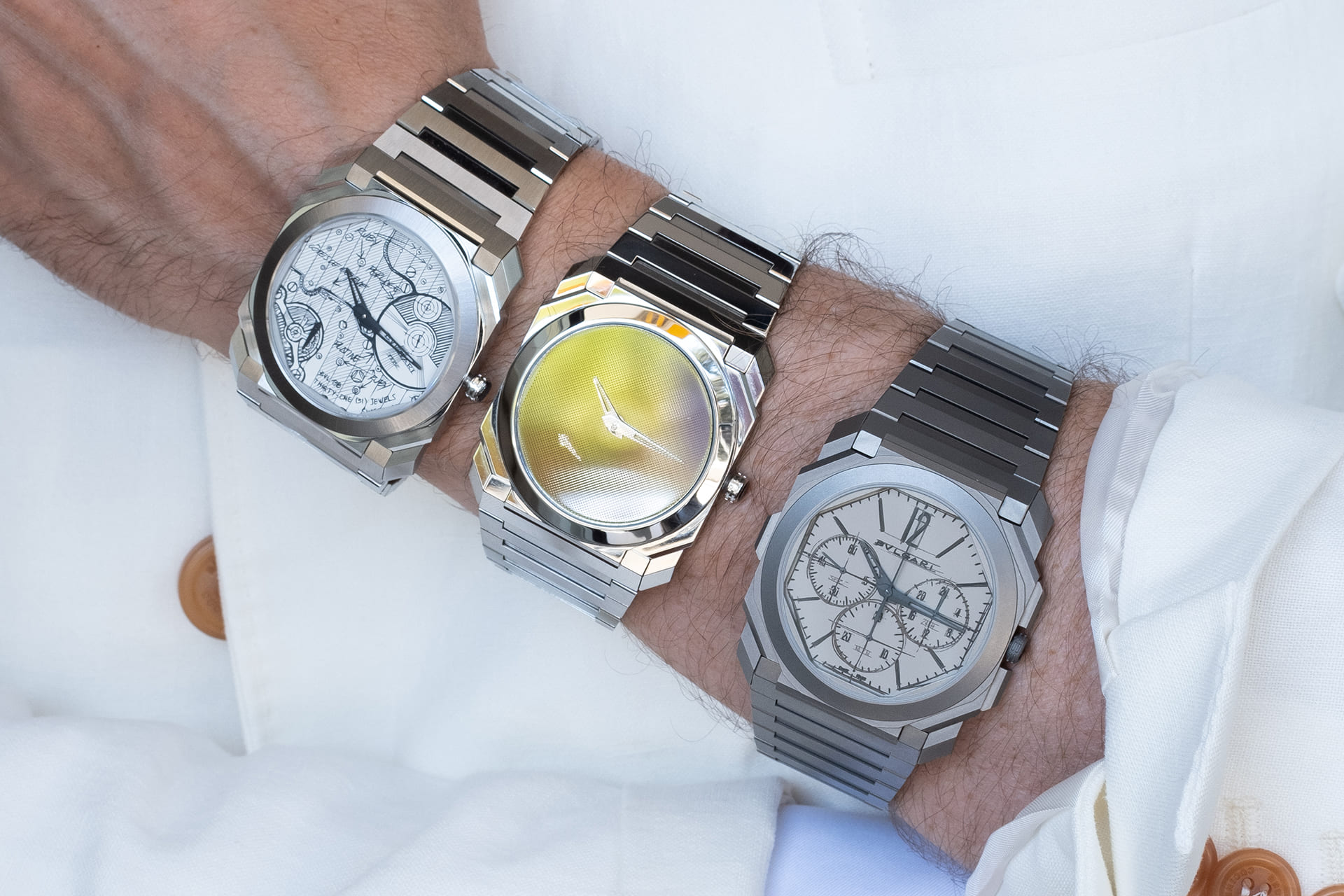
The lubricants applied during manufacture begin to degrade after three to five years. They thicken, lose viscosity, and eventually harden around the microscopic pivots and jewel bearings they were designed to protect. Where there should be smooth motion, there is friction. Where friction appears, wear follows. And once wear begins, accuracy inevitably suffers.
This is not theoretical. Watchmakers regularly open movements that have gone years without service and find hardened lubricant restricting the balance wheel, pallet fork, and escapement. A watch in this condition may continue running, but every additional day adds microscopic wear to components that, in some cases, no longer exist as original parts anywhere in the world.
Corrosion is subtler still. It does not require visible water intrusion. A trace of moisture entering through an ageing gasket is enough. Within months, oxidation can begin forming on the balance assembly and surrounding steel components. By the time the owner notices something is wrong, the watchmaker is often no longer performing a routine service, but a full restoration — sometimes involving the fabrication of components from scratch.
The most common question remains: if a watch keeps good time, why service it at all?
Because keeping good time and being in good mechanical condition are not the same thing. A watch gaining or losing fifteen seconds per day is not expressing “character.” It is displaying symptoms — symptoms a skilled watchmaker reads as clearly as a cardiologist reads an ECG. And as in medicine, preventive care is always less invasive than treating damage after it has progressed.
Most major manufacturers — Patek Philippe, Rolex, Jaeger-LeCoultre, and Vacheron Constantin among them — recommend a full service every three to five years. This is not a sales tactic. It is an engineering assessment based on the working lifespan of lubricants, seals, and moving components under real-world conditions.
Three Stories Worth Millions
Technical specifications explain how a watch works. Stories explain why it matters.
Henry Graves and the watch that should never have existed.
In 1925, American banker Henry Graves Jr. presented Patek Philippe with what seemed an impossible challenge: create the most complicated pocket watch ever made. Not merely a watch with many complications, but one containing every function that could realistically exist within a single case.
The commission took eight years to complete.
The result — now known simply as the Supercomplication — lived up to its name: 24 complications, including a celestial chart of the night sky above Graves’ Manhattan residence, a perpetual calendar, a minute repeater, and a chronograph. It could calculate the date of Easter decades in advance and display the position of Polaris at any moment.
Over the years, the watch passed through several collections and underwent multiple restorations. Yet each time it returned to Patek Philippe, the philosophy remained unchanged: preserve, never reinvent.
In 2014, the Supercomplication sold at Sotheby’s for $24 million. What collectors acquired was not simply a mechanical object, but a century of horological history preserved in gold, enamel, and steel.
Paul Newman and the price of originality.
The Rolex Daytona worn for years by actor and racing enthusiast Paul Newman sold in 2017 for $17.75 million, setting a world record for a wristwatch at the time.
What made that particular watch so valuable was not merely the reference or the rarity of the dial. It was originality.
The dial remained untouched. The hands were original. The case had never been aggressively polished. Every mark reflected genuine use accumulated over decades. The watch became a physical record of its owner’s life — what collectors refer to as provenance.
More than any academic argument, this sale permanently changed how the market views over-restoration and unnecessary polishing.
The “Don Pancho” repeater and the art of invisible restoration.
Occasionally, a watch arrives in such a state that restoring it becomes almost philosophical: how do you return the movement to life without erasing the passage of time that gives the piece its identity?
A repeater known among collectors as “Don Pancho” presented precisely that challenge.
The luminous compound on the hands had long since degraded and was carefully replaced with a period-correct material visually indistinguishable from the original. Damaged enamel on the dial was rebuilt using historically appropriate lacquers. The movement itself was completely disassembled, cleaned, lubricated, and reassembled until the repeater once again chimed with its characteristic tone.
And yet the goal was never to make the watch appear new.
It remained entirely itself.
All three stories point to the same conclusion: restoring a fine watch is never simply a repair. It is a dialogue with an object that carries its own history.
Monaco and Watches: A Particular Challenge
Few places in the world concentrate so many important watches within such a small area. Collections built over decades. Vintage Audemars Piguet pieces kept in private safes. Rolex sports models worn daily aboard yachts. And in Monaco, these watches are exposed to conditions far harsher than many owners realise.
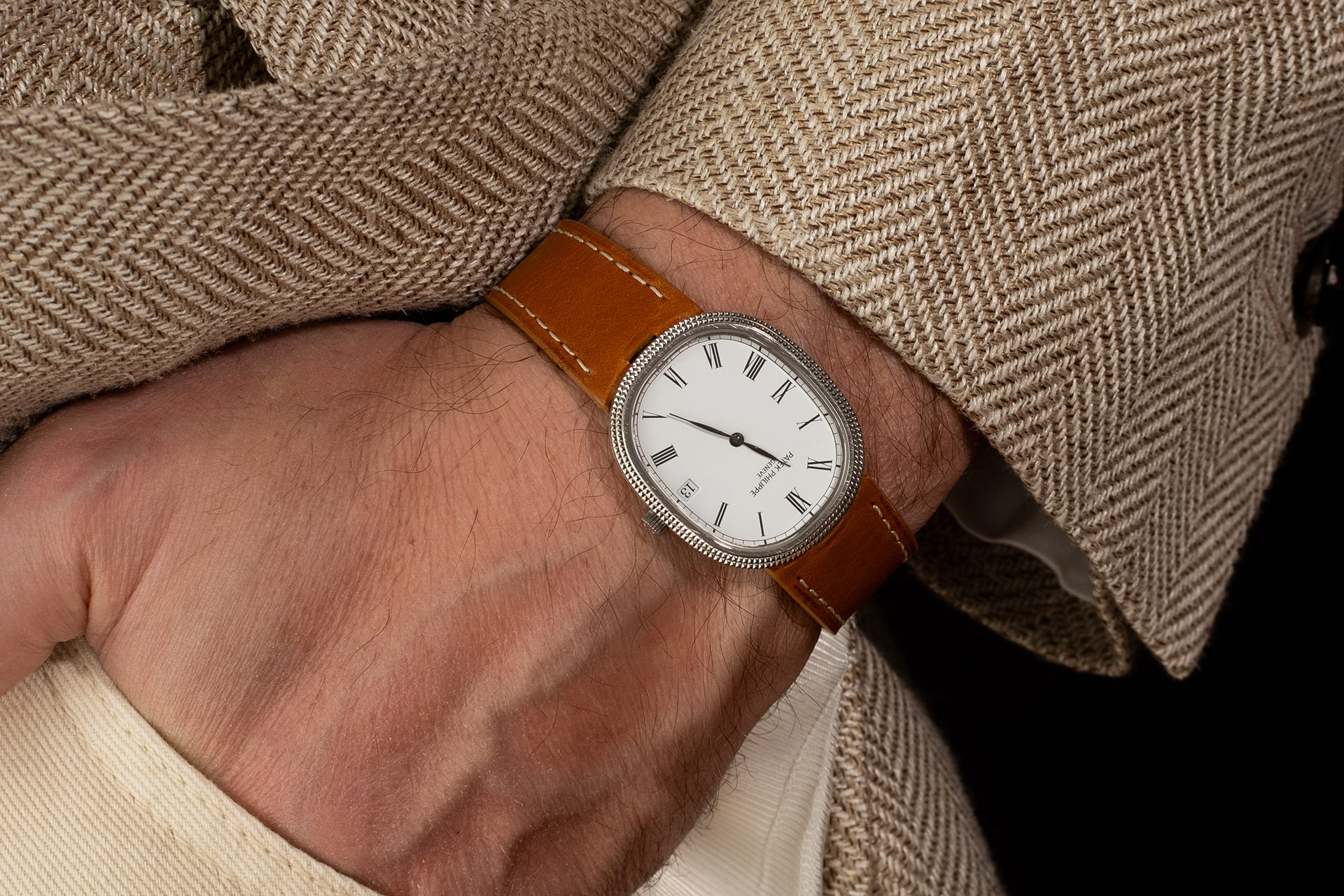
The Mediterranean climate is deceptive. Warm air and sunshine feel benign, but salt carried in sea air penetrates everything. During the summer months, humidity levels regularly reach the point at which even minor weaknesses in water resistance can become dangerous for a movement.
Marine chlorides accelerate oxidation on metal components at a significantly higher rate than in continental climates. This is not theoretical — it is what watchmakers routinely observe under magnification when opening cases belonging to owners who spend long periods on the water.
A typical Monaco lifestyle also subjects a movement to constant environmental stress: humid sea air aboard a yacht, dry climate-controlled interiors, abrupt temperature transitions between outdoors and casinos or hotels, frequent international travel with significant pressure fluctuations in aircraft cargo holds. Over time, every shift affects seals, lubrication, and metal tolerances inside the case.
Even water resistance itself is frequently misunderstood.
A Submariner may be rated to 300 metres, but that rating only applies when its seals remain fully functional. If the watch has not been serviced for several years and the gaskets have aged, actual water resistance may be dramatically reduced. The only reliable way to verify it is through professional pressure testing using specialised equipment.
Battery Changes: The Shortcut That Destroys Your Watch
Few procedures in watchmaking are underestimated more often than a battery replacement.
Owners of quartz and hybrid watches frequently assume it is a routine task that can safely be done anywhere — or worse, at home using inexpensive tools purchased online.
It is not.
And for any watch with real financial or collector value, understanding why matters.
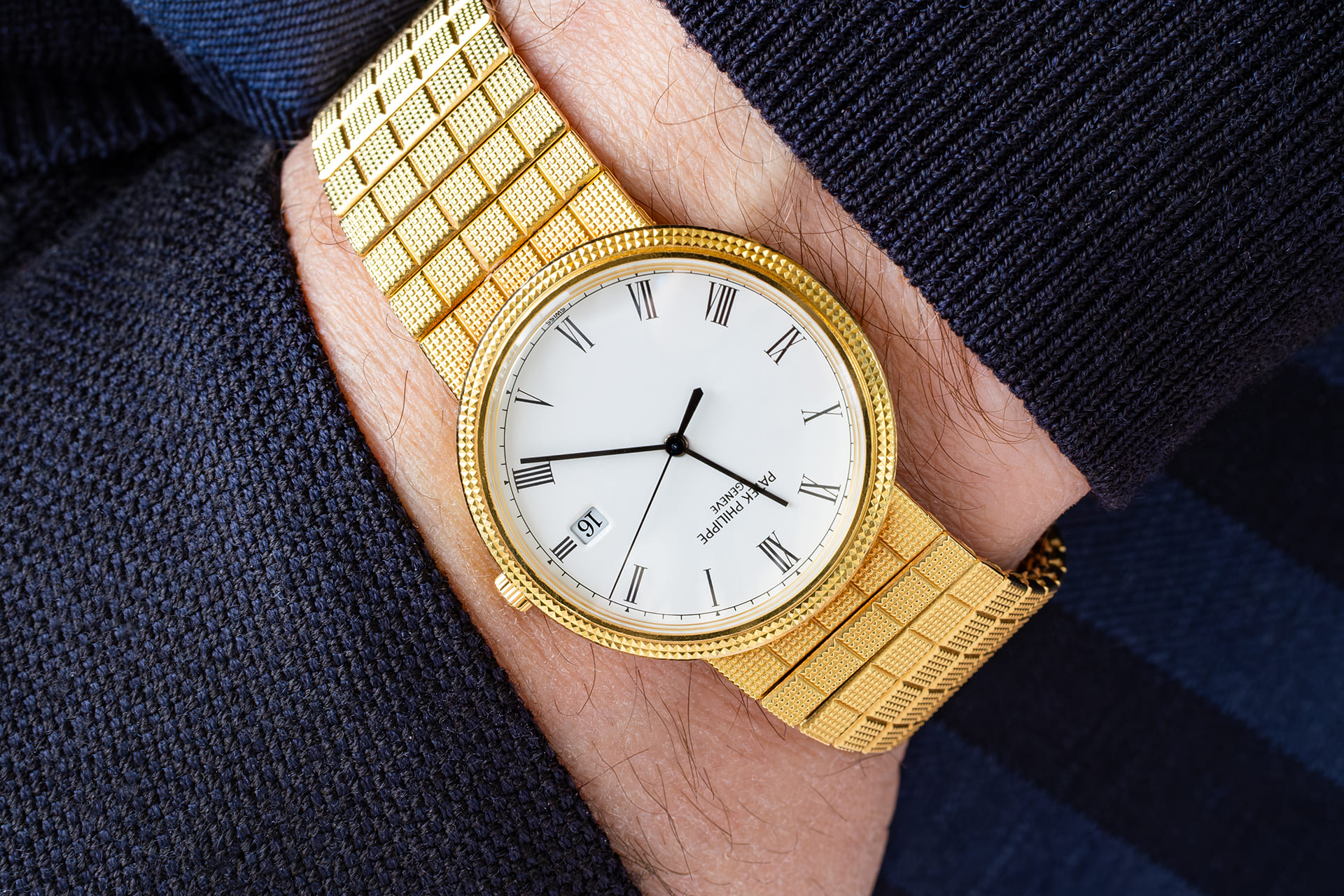
A dead battery is a quiet catastrophe.
Silver oxide and lithium batteries eventually begin leaking corrosive compounds once deeply discharged. Left inside the watch, these chemicals can damage contact points, quartz circuits, and, in severe cases, even the underside of the dial itself.
The rule is simple: batteries should be replaced preventively, before the watch stops — not after.
Opening the case is a procedure, not a formality.
Every manufacturer uses different case constructions and specialised tools. Cartier, Omega, IWC, Jaeger-LeCoultre — each requires precise handling. Incorrect tools leave visible marks on the caseback that immediately affect collector value. More importantly, improper opening often compromises the integrity of the seals and destroys water resistance.
After careless handling, a watch originally rated to 100 metres may no longer withstand ordinary rain.
Pressure testing after every opening is essential.
Whenever a case is opened, seals must be inspected and replaced where necessary. Once reassembled, the watch should undergo professional pressure testing to confirm water resistance.
This is why a “ten-minute battery replacement” is usually a warning sign for any serious collector: proper testing alone requires more time than that.
Non-original batteries carry hidden risks.
Low-quality alternatives may differ slightly in dimensions or chemical composition. Even microscopic inconsistencies can place uneven pressure on contacts, accelerate wear, and increase the risk of leakage or premature discharge.
For a watch worth thousands — or considerably more — saving a few euros on a battery is rarely a sensible calculation.
Patina vs. Polishing: The Collector’s Eternal Debate
Few subjects generate stronger opinions among serious collectors.
Patina is not damage. It is time made visible.
The warm brown tone of a tropical Rolex dial. Gentle fading on an early Vacheron Constantin. Soft ageing across a gold case worn for decades. These details are valued precisely because they cannot be authentically recreated.
This is why Paul Newman’s Daytona became so important: nothing about it had been artificially refreshed.
Polishing, by contrast, permanently removes material.
The sharp edges of an Audemars Piguet Royal Oak or the bevelled surfaces of an A. Lange & Söhne case exist for a reason. Once repeatedly polished, those lines soften permanently — and experienced collectors notice immediately.
Audemars Piguet itself recommends limiting full case polishing throughout the lifetime of a watch. Beyond a certain point, original geometry cannot truly be recovered.
That does not mean polishing is always inappropriate. Many owners simply want an everyday watch refreshed for personal enjoyment. The responsibility of a good watchmaker is not to refuse automatically, but to explain the long-term consequences clearly and proceed with restraint.
Before You Visit a Workshop: What to Know
Good watchmaking begins before the watch ever reaches the bench.
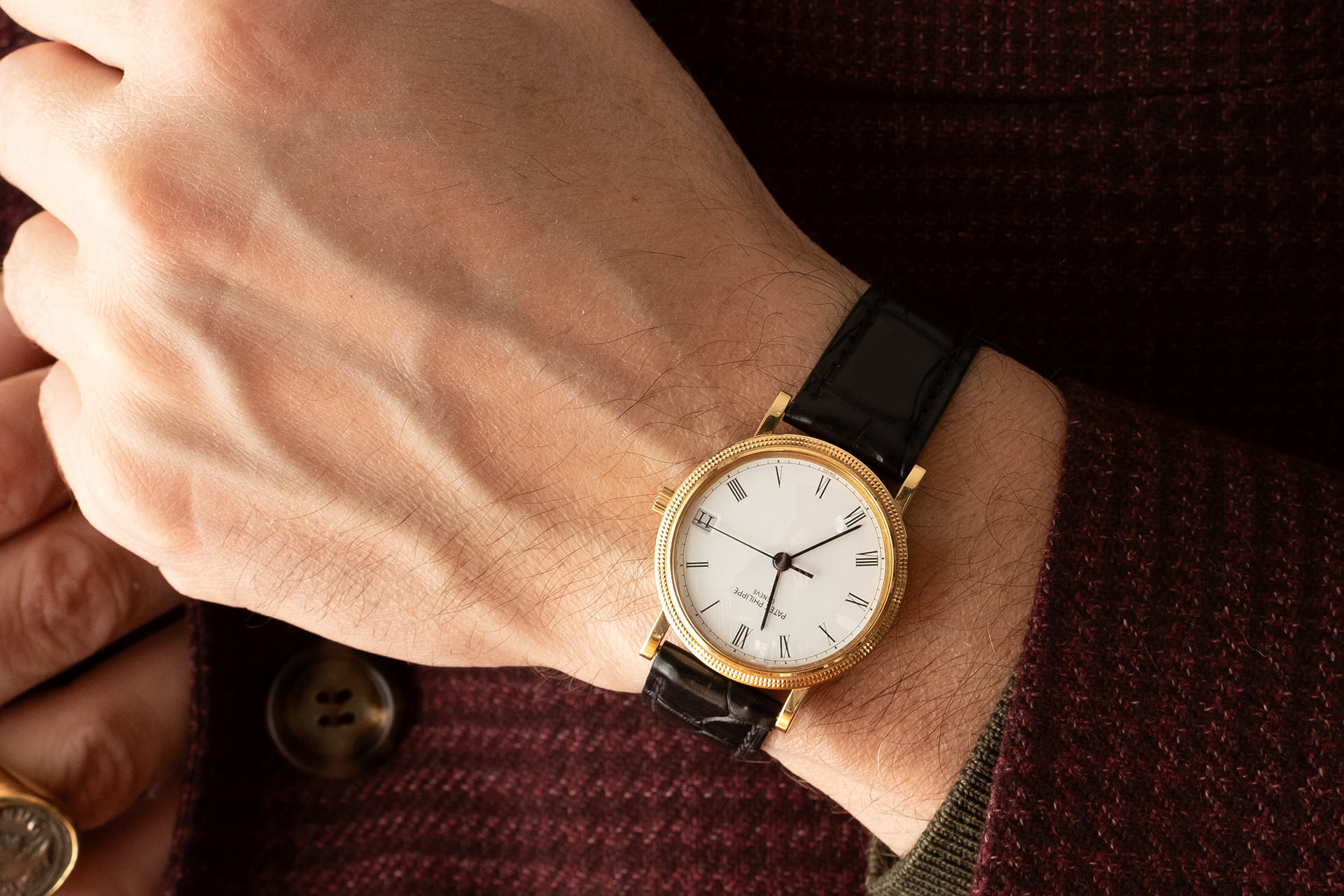
Bring everything you have: the original box, the warranty booklet, previous service receipts, spare bracelet links, and any documentation connected to this particular watch’s history. Each document is part of the provenance, and each one influences the watch’s value at any future assessment or sale. A manufacturer archive extract based on the serial number — if one does not yet exist — is a separate enquiry that a knowledgeable dealer can help facilitate.
Describe symptoms precisely. “Running a little fast” is not the same as “occasionally stopping.” “The crystal fogged up after rain” is critical information about the state of the water resistance. “The repeater sounds quieter than it used to” tells a watchmaker something specific about the mainspring. The more precise the description, the less diagnostic time is spent on things that were already known.
Ask questions: which components are planned for replacement, and which will be kept original? Will there be any polishing, or only mechanical work? Are manufacturer-specified lubricants being used, or approved equivalents? A serious workshop does not merely answer these questions — it raises them during the intake consultation.
And allow proper time. A standard service on a modern watch takes four to six weeks. The restoration of a complicated vintage piece takes three to six months — sometimes longer, when components need to be fabricated to match the original. Watches needed for a specific occasion should arrive well in advance. The Monaco Grand Prix, Christmas, the opening of the sailing season — these are peak periods. Winter is the ideal time for preventive servicing.
The watchmaker is not simply a technician. They are a long-term partner entrusted with an object that has both history and value. That relationship, like the relationship with a good doctor or a trusted lawyer, is built over years.
Watch Care Atelier Grygorian Gallery: Monaco, Where Your Watches Are in the Right Hands
We are not opening an atelier because the world lacks skilled watchmakers. Geneva, Paris, and London already have them.
We are opening it because Monaco should not require a compromise between expertise and proximity.
This is where significant collections actually live. Where watches are worn daily — aboard yachts, at private dinners, inside casinos, and throughout the rhythms of Mediterranean life. It is also a place where climate, travel, and lifestyle place unusual demands on mechanical objects that many owners underestimate.
Watch Care Atelier Grygorian Gallery works with mechanical, quartz, and hybrid watches from the world’s leading manufacturers, offering diagnostics, servicing, restoration, battery replacement with mandatory pressure testing, and support with archival documentation and vintage research.
Located just moments from Place du Casino, the atelier was created for collectors who value not only technical competence, but also transparency, discretion, and direct dialogue with the craftsman responsible for their watches.
Because time is never something to place in the wrong hands.