










There is a moment every serious dealer knows. The piece arrives — beautifully presented, impeccably described — and something is already wrong before a single mark has been examined. Not wrong in any way that can be immediately articulated. Simply wrong in the way a forged signature is wrong to someone who has spent years reading the real thing.
Authentication at this level is less a procedure than a literacy. And like any literacy, it begins not with the obvious but with what most people overlook entirely.
The stone is a distraction
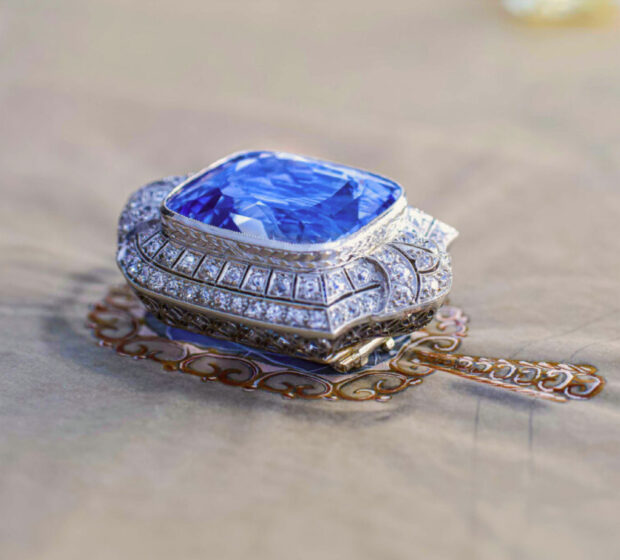
Buyers look at the stone first. Forgers know this, and they plan accordingly. The stone in a sophisticated fake is often the most convincing element — occasionally even genuine. It is the surrounding architecture that gives the game away: the setting, the construction, the finishing, and above all, the marks.

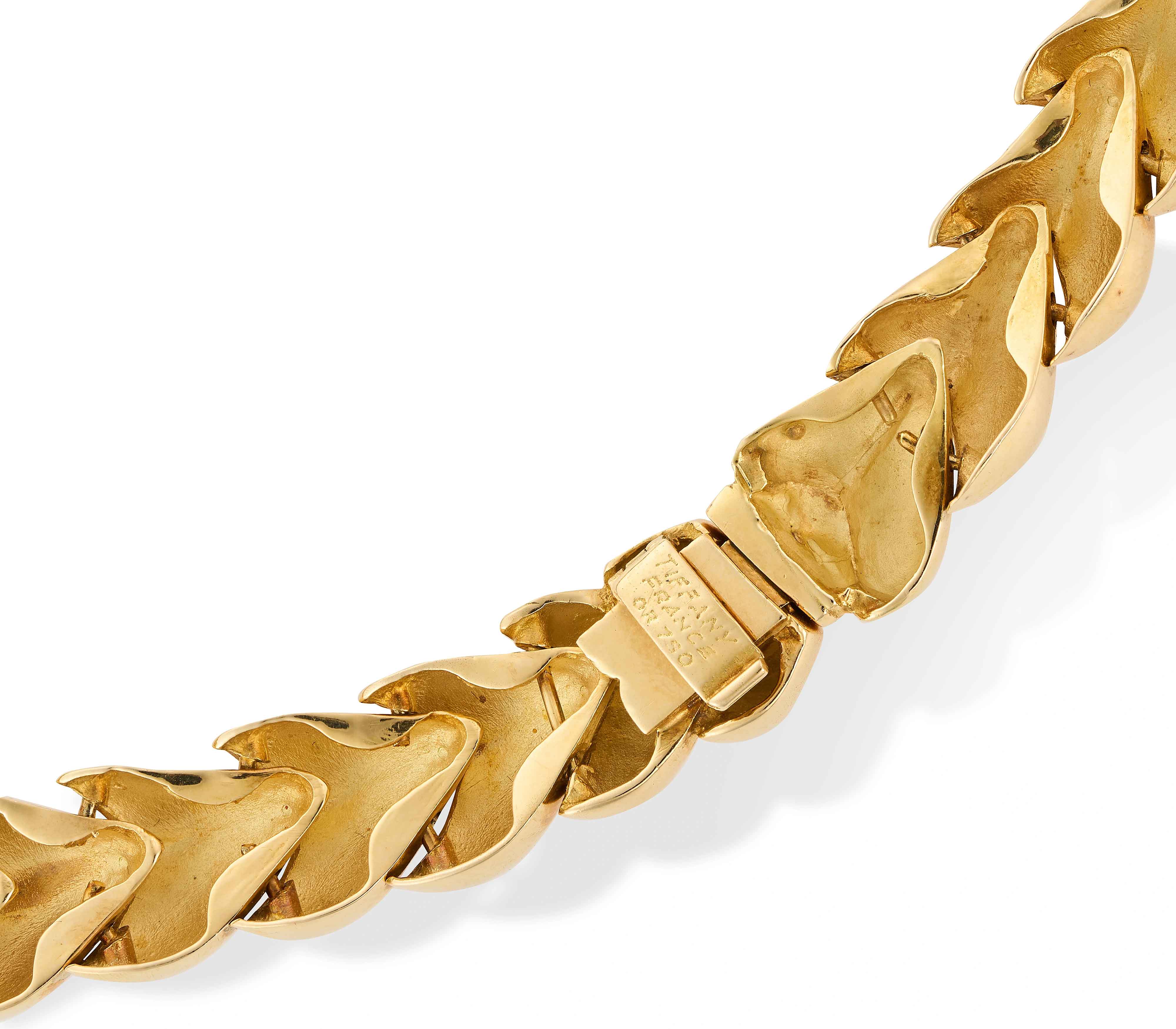
Experienced authenticators tend to work in the opposite direction to most buyers. The stone is almost the last consideration. What comes first is the metal — specifically, what has been struck, engraved, or pressed into it, and whether any of it is consistent with what the piece claims to be.
A Government Guarantee, struck in metal
European hallmarking is among the most rigorous systems of material verification ever devised. The British lion passant on sterling, the French eagle’s head on gold, the owl punched into imported pieces entering France — each of these is a state guarantee, not a decorative flourish. They were applied at specific assay offices, during specific periods, using punches whose precise dimensions and letterforms have been catalogued and cross-referenced for over a century.
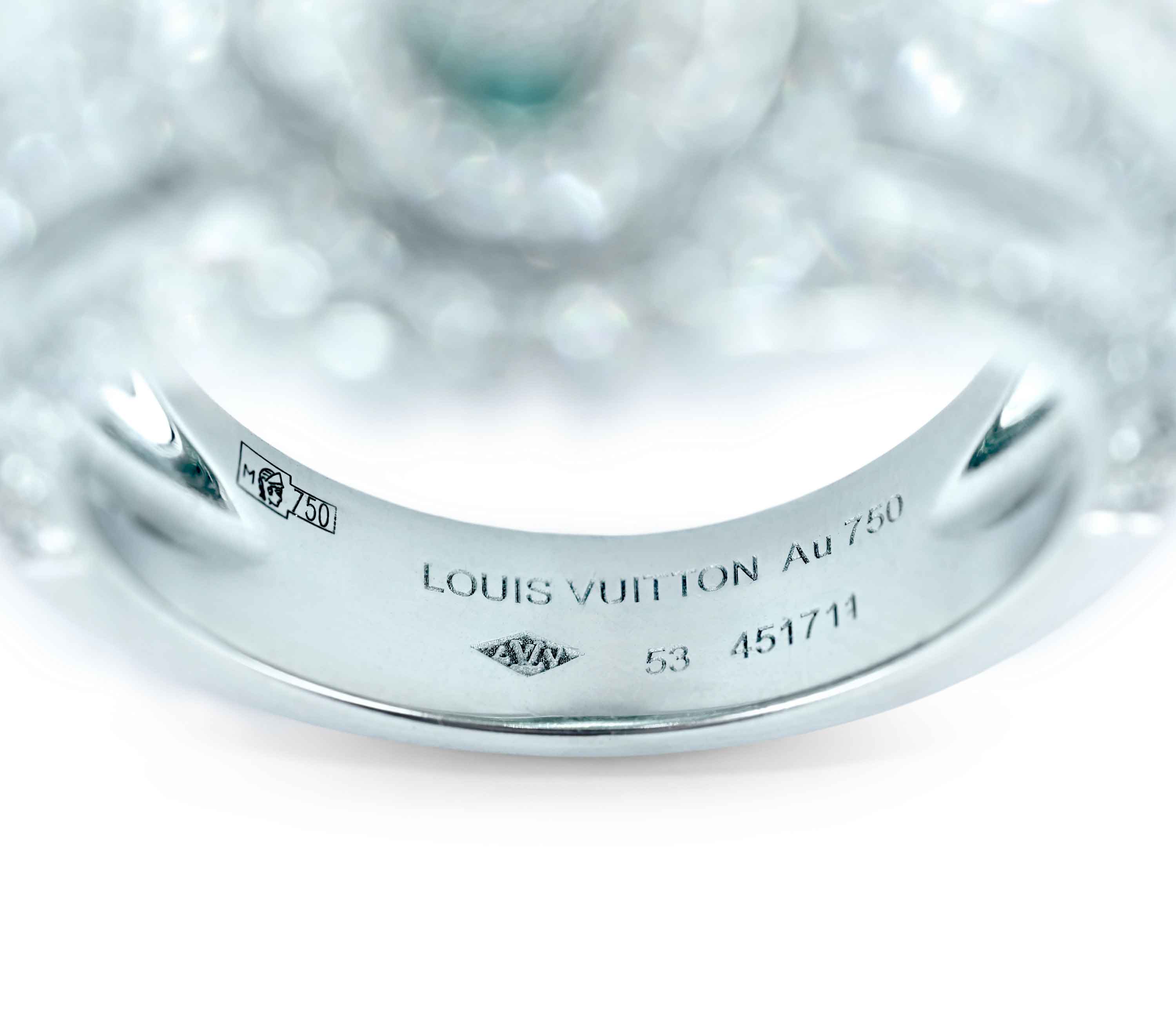
The Birmingham Assay Office and the Edinburgh Assay Office used different date letter sequences. The Paris Guarantee Office changed its punches at documented intervals. Every variation is on record. Which means that for a trained eye, any inconsistency — a typeface that postdates the supposed period, a strike depth that doesn’t match the punch, a combination of marks that never coexisted — is not a suspicion. It is a finding.
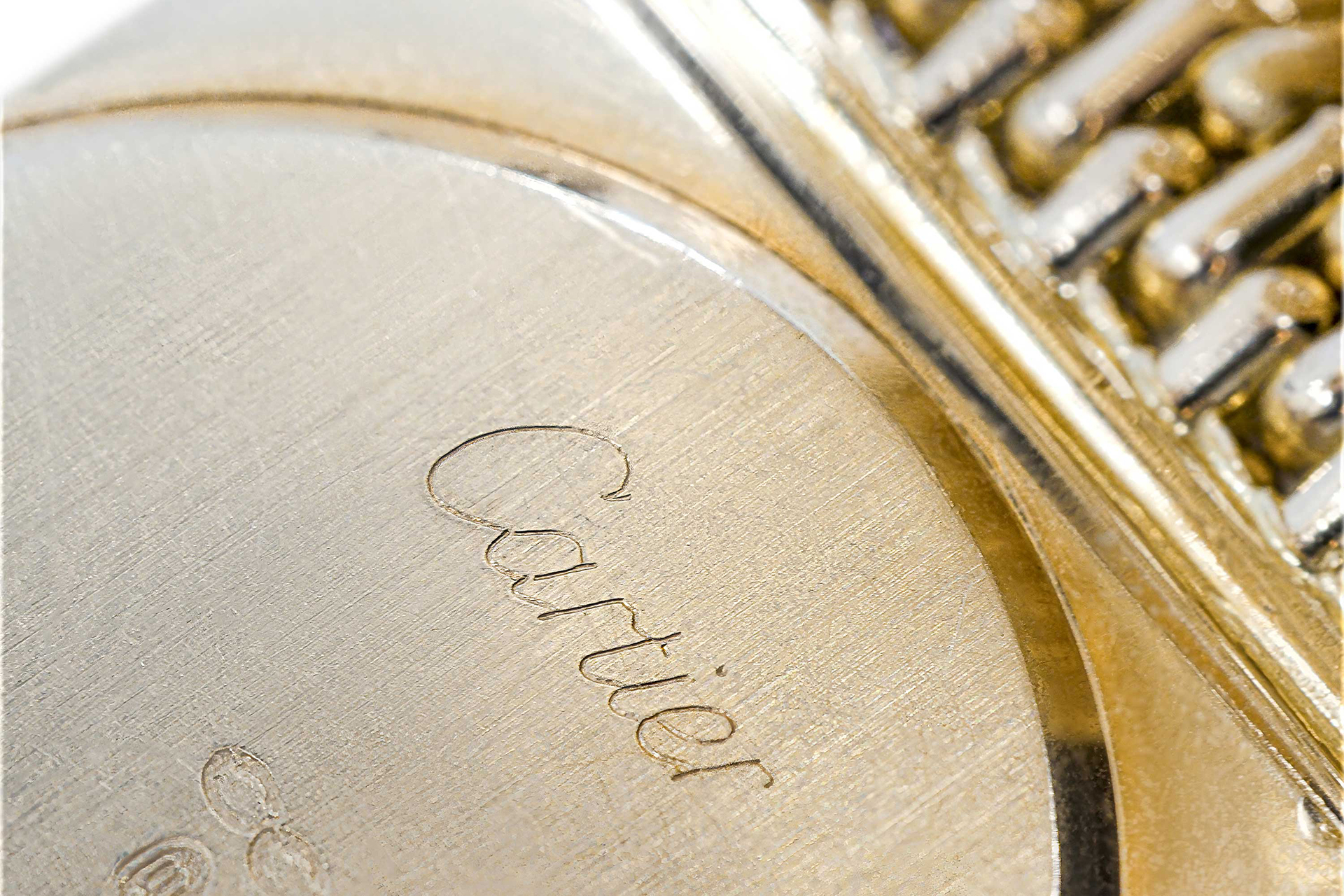
The great houses added their own layer to this system. Cartier’s signature alone evolved through multiple iterations across the twentieth century: the letterforms, the lozenge format, the distinction between *Cartier Paris* and *Cartier London*, the serial number structure, the depth and angle of the engraving. A piece from the interwar period bearing the workshop lozenge of Hamard-Vitau — one of the specialist ateliers that supplied Cartier during that era — is entirely coherent. The same piece with a mark that couldn’t have existed yet is incoherent in a way no amount of provenance paperwork can resolve.
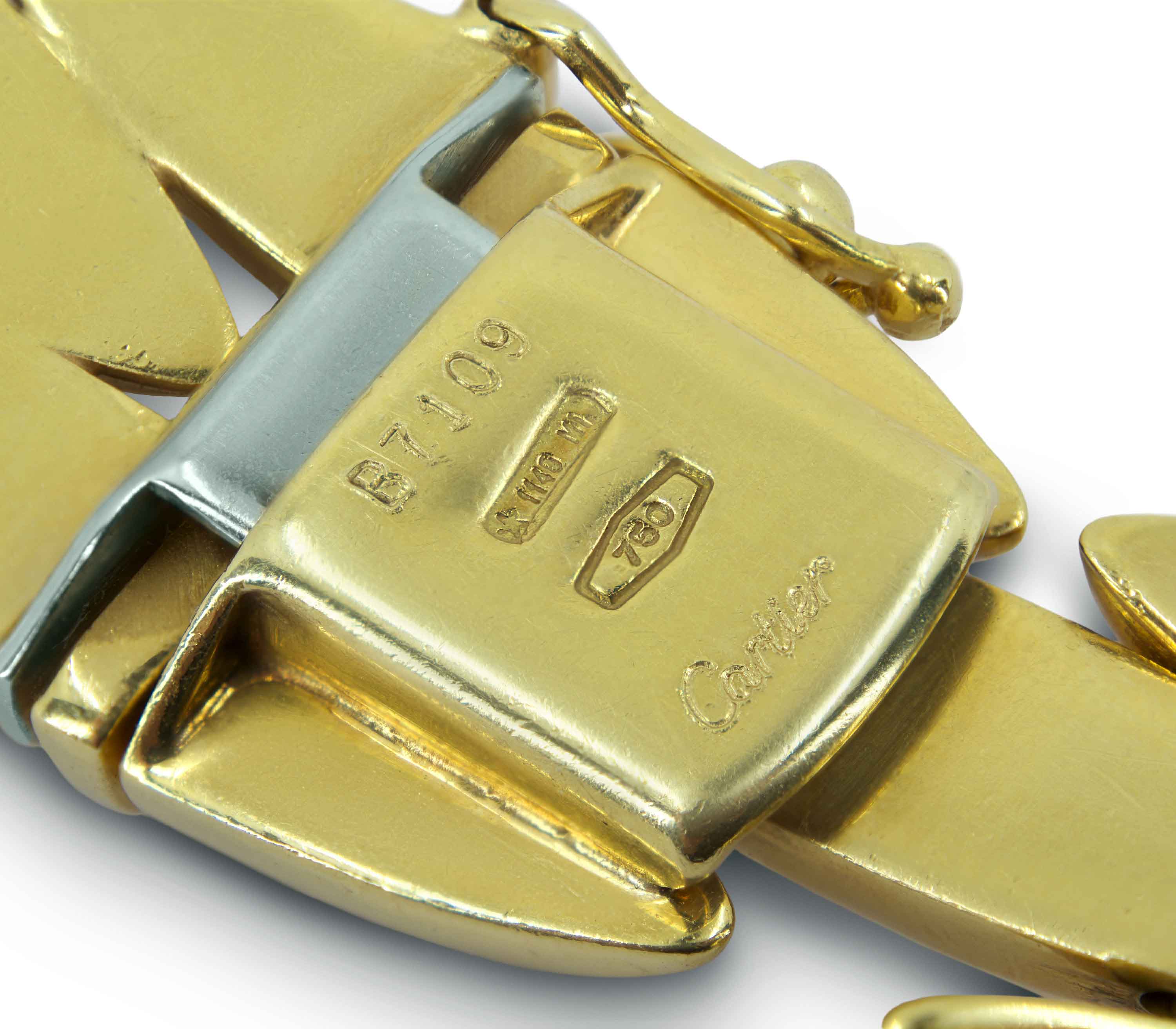
Van Cleef & Arpels, Bulgari, Boucheron — each house left its own parallel system of markers, each of which has been studied, catalogued, and cross-referenced against verified examples. The forger’s fundamental problem is not replicating any single mark. It is replicating the entire system simultaneously, consistently, without a single anachronism. That is what has never been done convincingly.
What the workshop left behind
Beyond the marks lies the work itself — and this is where authentication becomes genuinely difficult to teach.
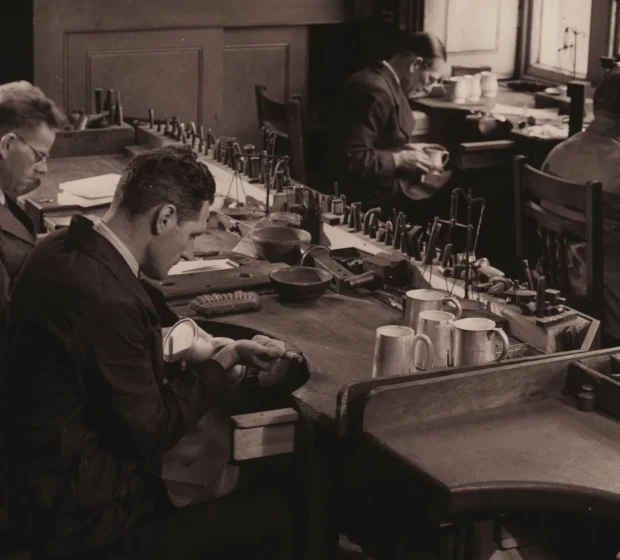
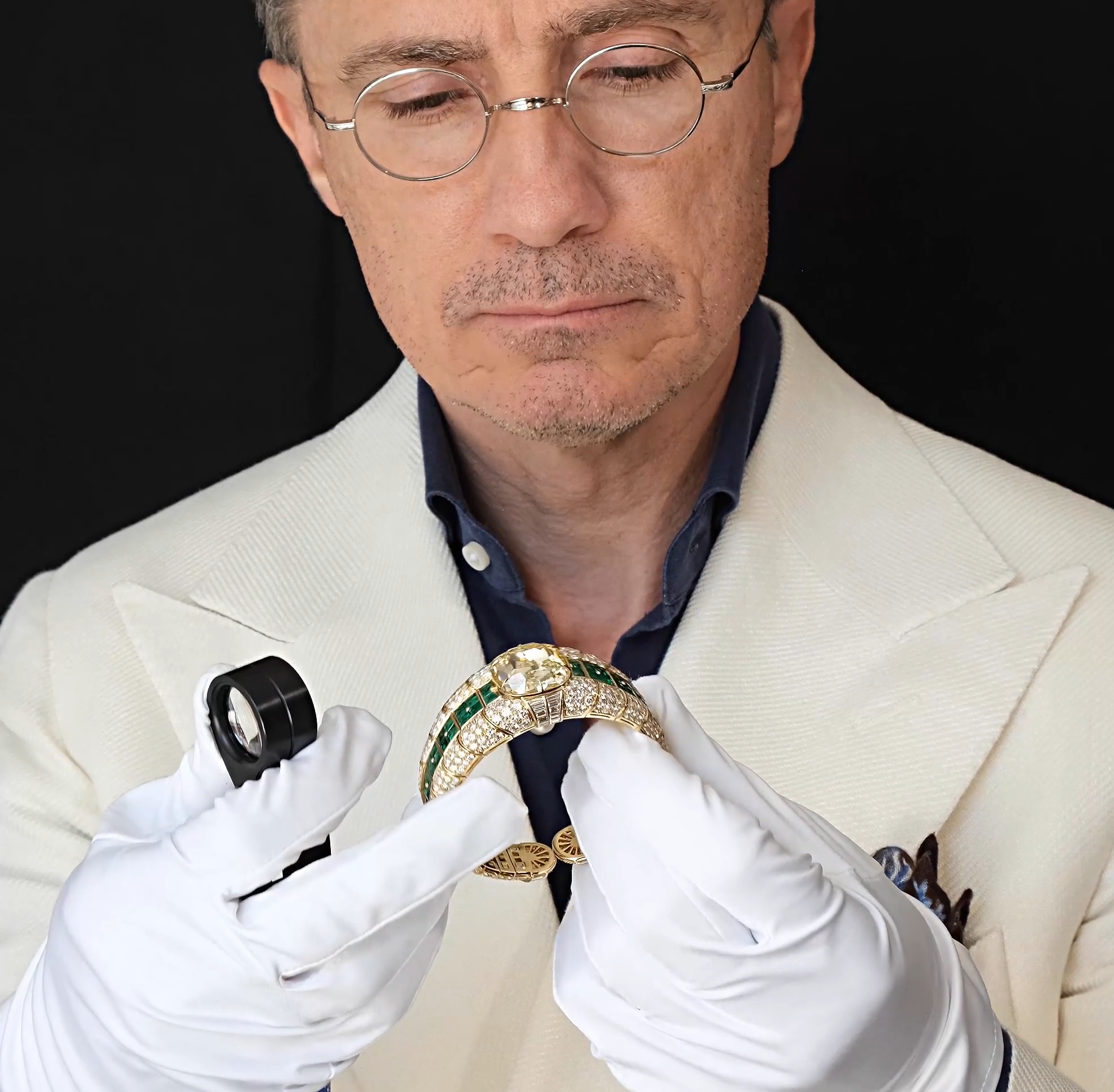
Cartier in its Belle Époque and Art Deco periods did not manufacture everything under one roof. It worked with a constellation of specialist ateliers, each responsible for particular elements: stone setting, metalwork, enamel, engraving. Each atelier had its own habits — a characteristic way of finishing a collet, a preferred approach to millegrain edging, a particular rhythm in the piercing of gallery work. Under magnification, these details read almost like handwriting. Distinctive, consistent, and in the hands of someone who has spent years studying verified examples, recognisable.
The same is true of solder lines, which tell their own story. Period platinum work was assembled using specific soldering techniques with characteristic flow patterns that differ markedly from modern repairs. A joint re-soldered in the 1980s looks different from one that has been undisturbed since 1925 — different colour, different surface texture at the seam, a different relationship to the surrounding metal. These are not subtle distinctions to someone who has handled enough original pieces. They are immediate, and they are reliable.
Hand engraving, examined at ten or twenty times magnification, is never perfectly uniform. The line fluctuates in depth. There is a lateral pressure in the turns. The tool lifts slightly at the end of a stroke. These are not flaws — they are the physical evidence of a human hand, and they are entirely different from the mechanical consistency of laser engraving, which leaves edges that are too clean, too even, too indifferent to the irregularities that characterise any work done by hand.
Once that distinction is clear — and it becomes clear very quickly to anyone who examines enough genuine pieces — it cannot be unfamiliar again.
The uncomfortable truth about perfect condition
A piece made a century ago and passed through multiple owners over that time will bear the evidence of that journey. It will have been worn, cleaned, stored, occasionally repaired. The inner shank of a ring will show wear where it contacts the finger. The tips of prongs will be slightly abraded. The clasp mechanism will have the particular smoothness that comes from repeated use over decades.
A piece that shows none of this — that presents with a freshness inconsistent with its claimed age — is not necessarily a fake. But it requires explanation. And in the absence of a compelling one, condition that is too good becomes its own form of evidence.
Artificial ageing is skilled work, and the best practitioners are genuinely difficult to deceive at a glance. What they cannot replicate is the distribution of natural wear. Genuine ageing concentrates precisely where a piece meets the world — the points of contact, the moving parts, the edges. Artificial ageing tends toward a kind of generalised impression of oldness, applied with a logic that is ultimately aesthetic rather than mechanical. Under magnification, the difference is usually clear.
The patina inside the joints and recesses of an old piece is similarly telling. It is not dust. It is a dense accumulation of skin oils, textile fibres, and environmental particulate, compacted over decades into spaces that were never designed to be cleaned. It sits there the way sediment sits at the bottom of a very old bottle — undisturbed, particular, impossible to introduce convincingly from the outside.
What the analyser confirms
Visual examination, however expert, has limits. When the composition of the metal itself is in question, the conversation moves to the laboratory.
X-ray fluorescence — XRF — has become indispensable in high-end authentication. A handheld analyser reads the elemental composition of a metal surface in seconds, accurate to fractions of a percent, without touching or damaging the piece. It is particularly effective at detecting plating, alloy substitution, and discrepancies between a stated fineness and the actual one.
Its limitation is that it reads only the surface. A piece with sufficiently heavy gold plating over a base-metal core can return readings that approach those of solid gold. This is why suspicious pieces are tested at multiple points — the examiner is not looking for a single reading but for inconsistencies between readings, which is where the real information lives. A bracelet marked 14K that returns 18K at one location and over 22K at another is not displaying a solid alloy. It is displaying uneven plating, and the follow-up examination will usually confirm it.
Ultraviolet light adds a further dimension. Synthetic stones, period-inappropriate adhesives, and restored enamel all respond to UV differently than their natural or historical counterparts. Restorations that are invisible under daylight become immediately legible under UV — a tool of particular value when assessing pieces that may have been partially rebuilt, restrung, or repaired at some point in a long ownership history.
The stone belongs to its era
Diamonds and coloured stones are not exempt from the chronological logic that governs everything else in authentication.
The old European cut and the old mine cut — the dominant forms from roughly the mid-nineteenth century through the 1920s — are the product of hand craftsmanship and the optical priorities of their time. They have higher crowns, smaller tables, irregular girdles, and a large open culet visible face-up as a distinct circle. The light return is warm and soft, without the mathematical precision of a modern brilliant. No two are identical, because each was shaped by a craftsman responding to the particular rough crystal in front of him, not by a machine optimising for a predetermined set of angles.
The modern round brilliant, standardised in the mid-twentieth century, is the inverse: geometrically precise, symmetrical, optimised for maximum light return. Both are beautiful. But a modern brilliant set in an Edwardian mounting is a chronological impossibility — which almost always means a later replacement, and a later replacement changes what the piece is, regardless of whether it changes how the piece looks.
The same applies to synthetics. Synthetic corundum has been commercially available since the early twentieth century; synthetic emeralds since the 1930s; laboratory-grown diamonds are a much more recent development. A piece with the construction and hallmarks of the 1910s set with a contemporary lab-grown stone contains a contradiction that no amount of confident attribution can resolve.
The archive as witness
Some houses kept records thorough enough that the archive itself becomes an authentication tool.
Cartier’s Paris records survived in unusual detail. Many pieces can be traced to specific commission dates, specific clients, specific workshops. The lozenge marks used by individual ateliers during defined periods function almost as timestamps: a piece bearing the Hamard-Vitau mark in the correct format for the early 1930s is internally consistent. A piece bearing a mark that belongs to a later period, or to a workshop not yet in operation, is not — and no external document changes that.
Van Cleef & Arpels now routinely provides archive extracts for pieces it can verify. The Alhambra collection, launched in 1968, is counterfeited so extensively that authentication has become a matter of examining the finest details: the geometry of the quatrefoil, the finish on the mother-of-pearl, the precise form of the bezel, the marks on the reverse. The system, taken as a whole, cannot be replicated without access to the original manufacturing records — which forgers, by definition, do not have.
Bulgari’s serial number conventions allow precise dating. What these houses share is the capacity to leave a trail detailed enough that the manufacturing history becomes part of the object’s identity. A piece that fits the trail confirms itself. A piece that contradicts it cannot be explained away.
The education of an eye
Authentication proceeds in sequence. Visual examination first — unhurried, in good light, without the loupe. Then magnification, beginning at ten times and increasing as details require. Hallmarks examined and compared against verified references. Construction assessed against documented period practice. Metal composition tested. Stones evaluated for period-appropriate cut, and for any evidence of replacement or later intervention.
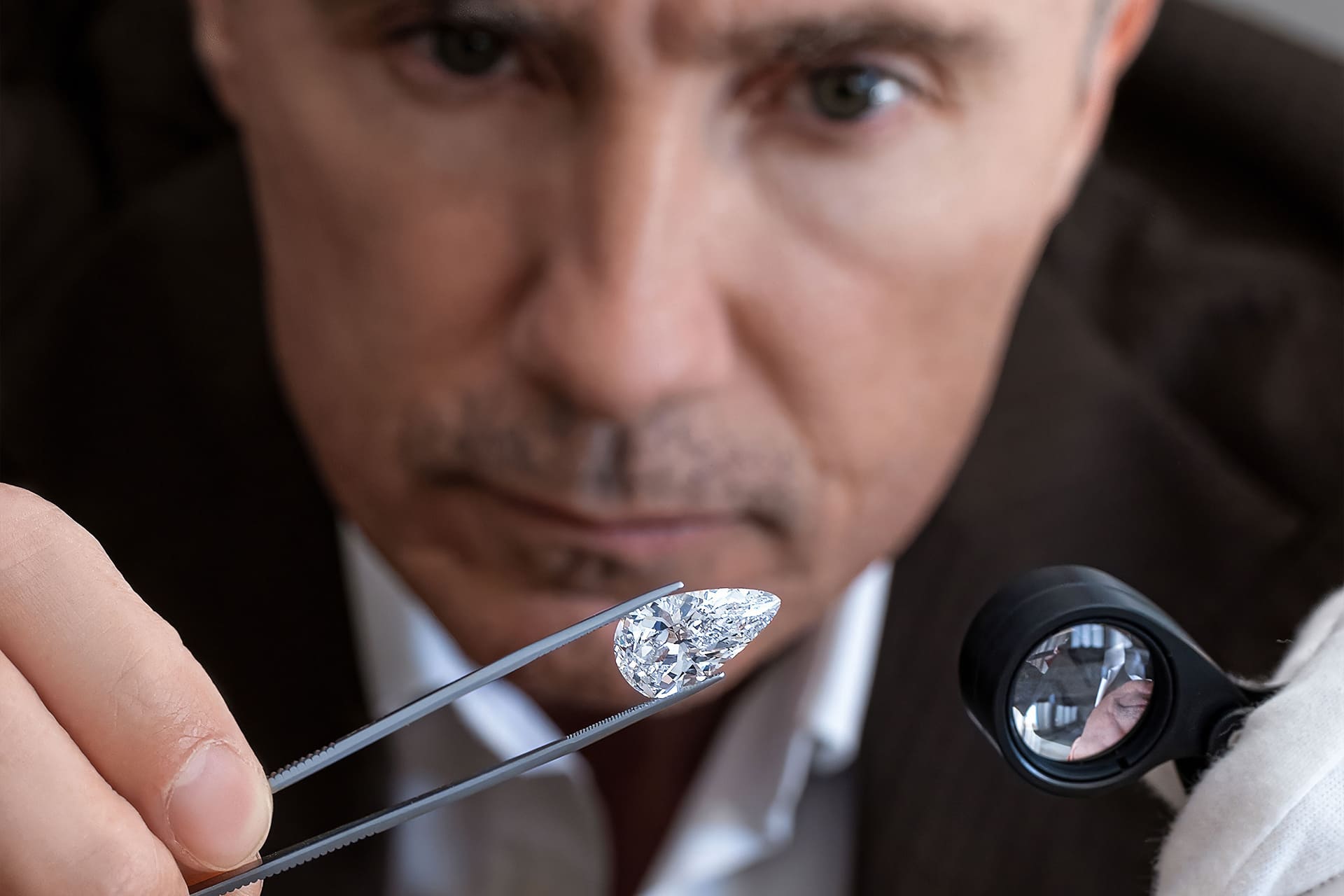
The conclusion that follows is not a verdict — authentication almost always involves degrees of probability rather than certainty — but a professional assessment of the cumulative evidence, considered as a whole.
For a collector willing to understand this process, the practical benefit is considerable. The ability to read a piece directly — to assess its marks, its construction, its condition, and its stones against a framework of period knowledge — reduces dependence on provenance documents that cannot always be verified, and on the assurances of vendors whose interests are not always identical to one’s own. It also changes the experience of collecting itself. A piece understood from the inside — its history legible in its metal, its wear, its marks — is a fundamentally different object from one simply taken on trust.
The market for signed jewellery at this level is not forgiving of a single significant error. The difference between a piece that is what it claims to be and one that merely resembles it is, routinely, a very large sum of money. The marks, the metal, the cut of the stones, the distribution of wear across a century of use — all of it is legible, to those who have learned the language.
The piece itself is always talking. The question is simply whether you can hear it.