Persian Origins and Mid-Century Revival
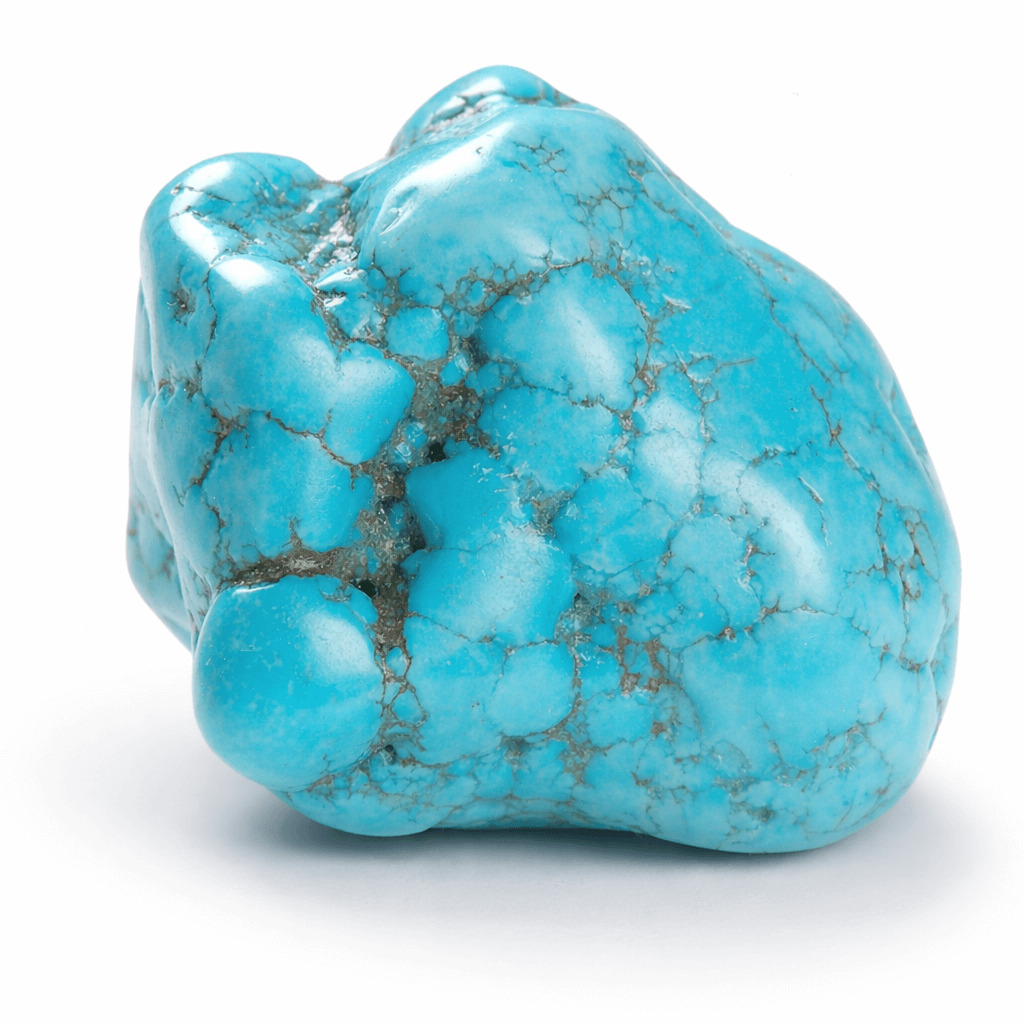
Turquoise occupies a singular position among collectible gemstones. A copper aluminum phosphate (Mohs hardness 5–6) coloured by copper traces, the finest material historically came from Nishapur in northeastern Iran, mined for over two thousand years and prized for its even robin’s-egg saturation without matrix. Persian turquoise dominated European luxury jewelry through the 19th century before American deposits at Sleeping Beauty, Bisbee, and Lone Mountain entered global markets, each source distinguishable through characteristic matrix patterns and saturation under microscopic examination.
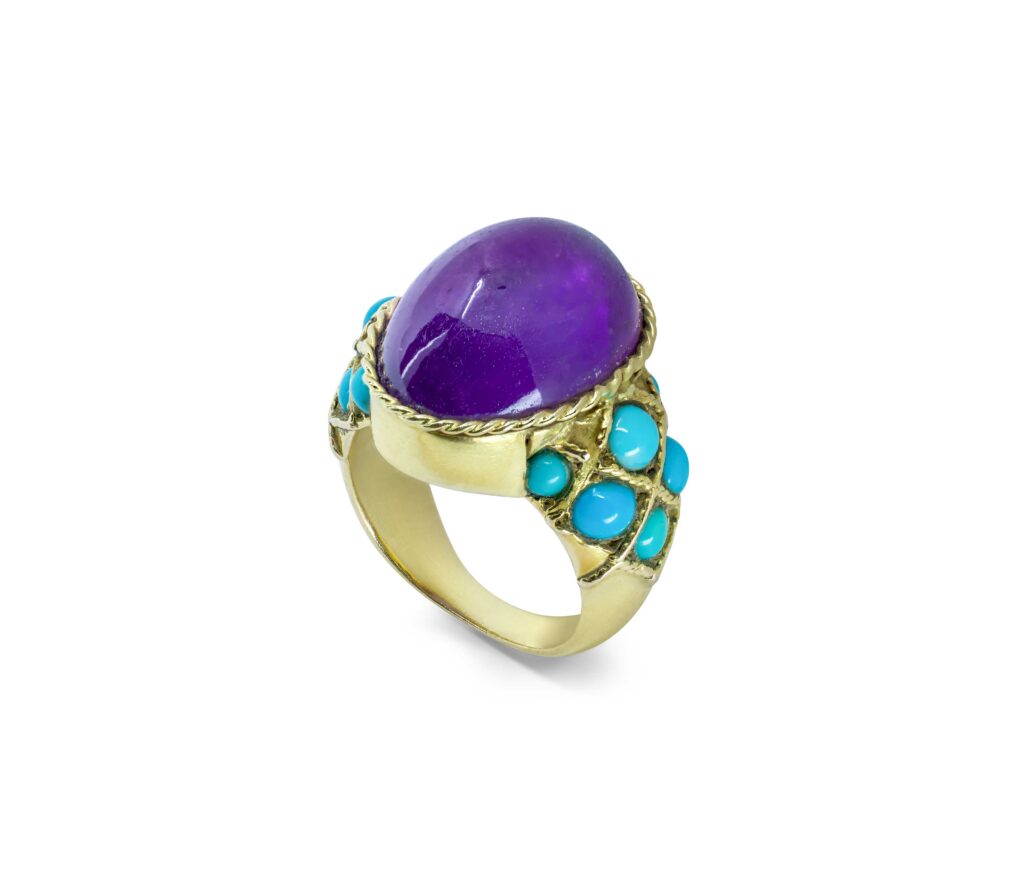
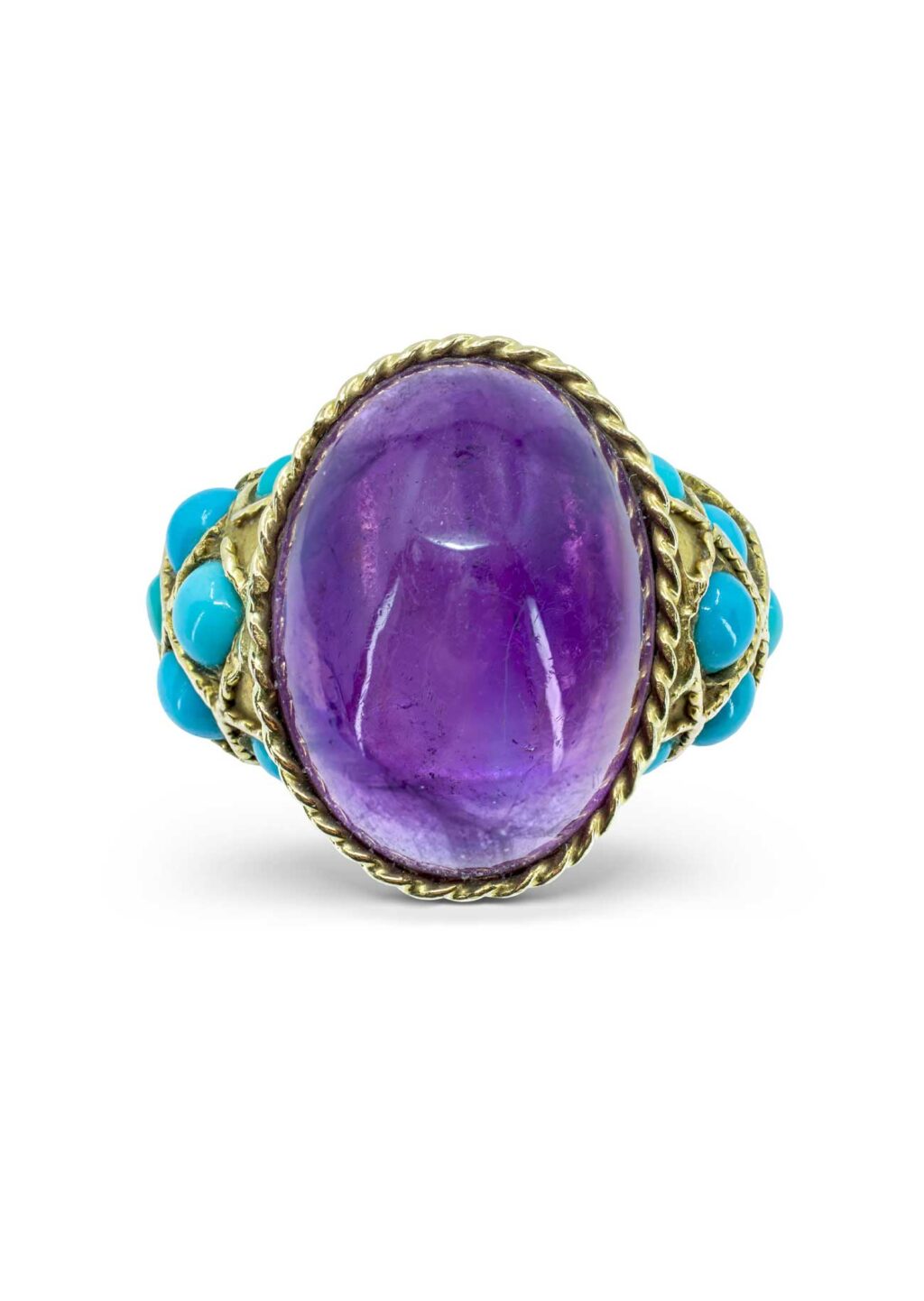
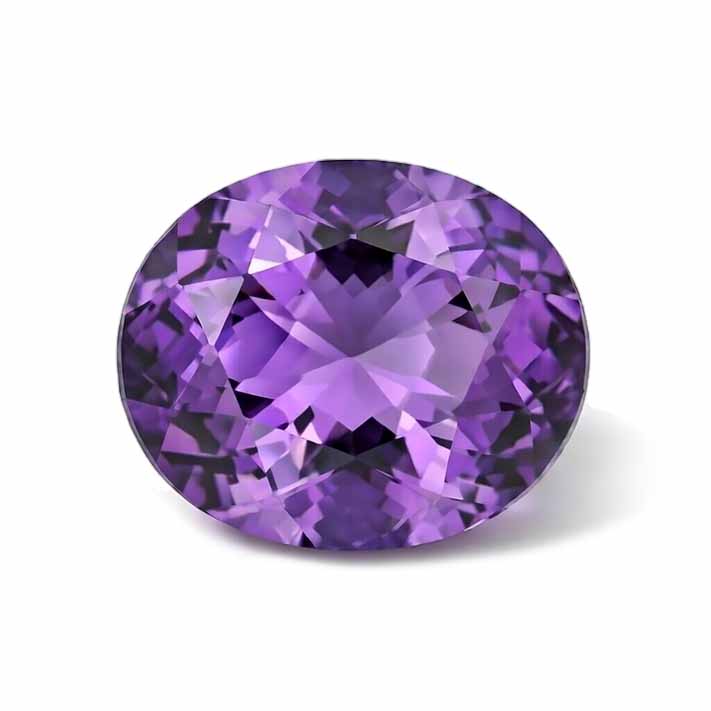
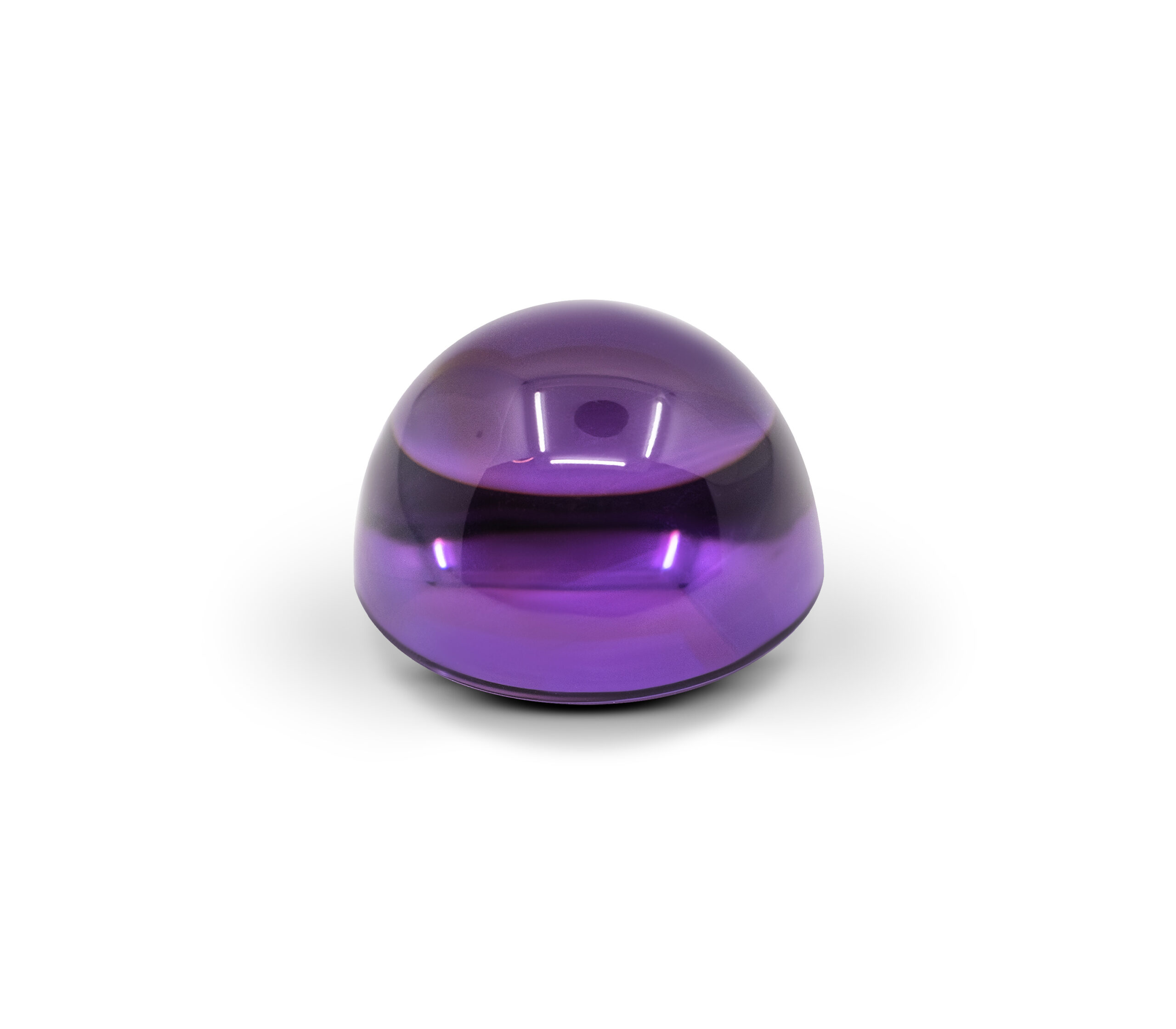
Vintage turquoise jewelry reflects shifting period aesthetics. Victorian designers favoured pavé compositions and forget-me-not motifs symbolising remembrance, while Art Deco production paired calibré-cut turquoise with onyx and diamonds in geometric platinum frameworks. The mid-century cocktail era embraced substantial cabochons in 18k yellow gold settings, often combined with amethyst, coral, or cultured pearls in bold chromatic compositions from houses including Van Cleef & Arpels, Bulgari, and Cartier. Authentication requires distinguishing natural material from stabilised, reconstituted, and dyed howlite alternatives common in lower-market production.
Authentication and Conservation at Grygorian Gallery
Eduard Grygorian’s expertise with high-quality colored stones, refined across sixteen years at maisons including Boucheron and Chaumet, where the Monaco boutique reached the brand’s #1 worldwide position for high jewelry sales in 2021, informs curatorial standards applied to estate turquoise jewelry.
Gemological evaluation in our Monte Carlo atelier follows protocols specific to porous gem material. Spectroscopic analysis identifies copper signatures and detects polymer impregnation, microscopic examination documents matrix patterns authenticating Persian, Sleeping Beauty, or Tibetan origin, and refractive index testing confirms species. Where laboratory certificates accompany a piece, this documentation is preserved transparently. Conservation in our Côte d’Azur atelier addresses turquoise’s particular sensitivity: the gem reacts adversely to oils, perfumes, and ultrasonic cleaning, so selected pieces undergo dry surface treatment, protective storage, and setting stabilisation that respects the original metalwork and maker’s marks.
Collector Value and Investment Perspective
Auction data shows steady appreciation for fine vintage turquoise jewelry. Christie’s and Sotheby’s results document particular strength for signed Art Deco and mid-century cocktail pieces, while the closure of the Sleeping Beauty mine in 2012 has progressively reduced supply of the unmatrixed American material that defined retro era jewelry, positioning superior examples as valuable assets within diversified collections.
Beautiful vintage turquoise pieces offer remarkable stylistic versatility. A retro cocktail ring with substantial cabochon brings chromatic vitality to evening attire, Art Deco brooches combining turquoise with diamonds add architectural sophistication, and Victorian forget-me-not pendants carry romantic historical resonance. Pre owned turquoise jewelry in superior condition remains genuinely scarce on the secondary market, with unstabilised Persian material constituting particular rarity.
Our consultants offer personalized sessions, available remotely or in person at our Monaco gallery, to help identify unique finds and gently used heritage examples aligned with specific collecting objectives. Each treasure carries documented provenance and designer-quality artisanal mastery, offering connection to jewelry’s golden age through certified authenticity and antique-inspired character that distinguishes high end estate jewelry within serious collections.