Mogok Heritage and Pigeon’s Blood Rarity
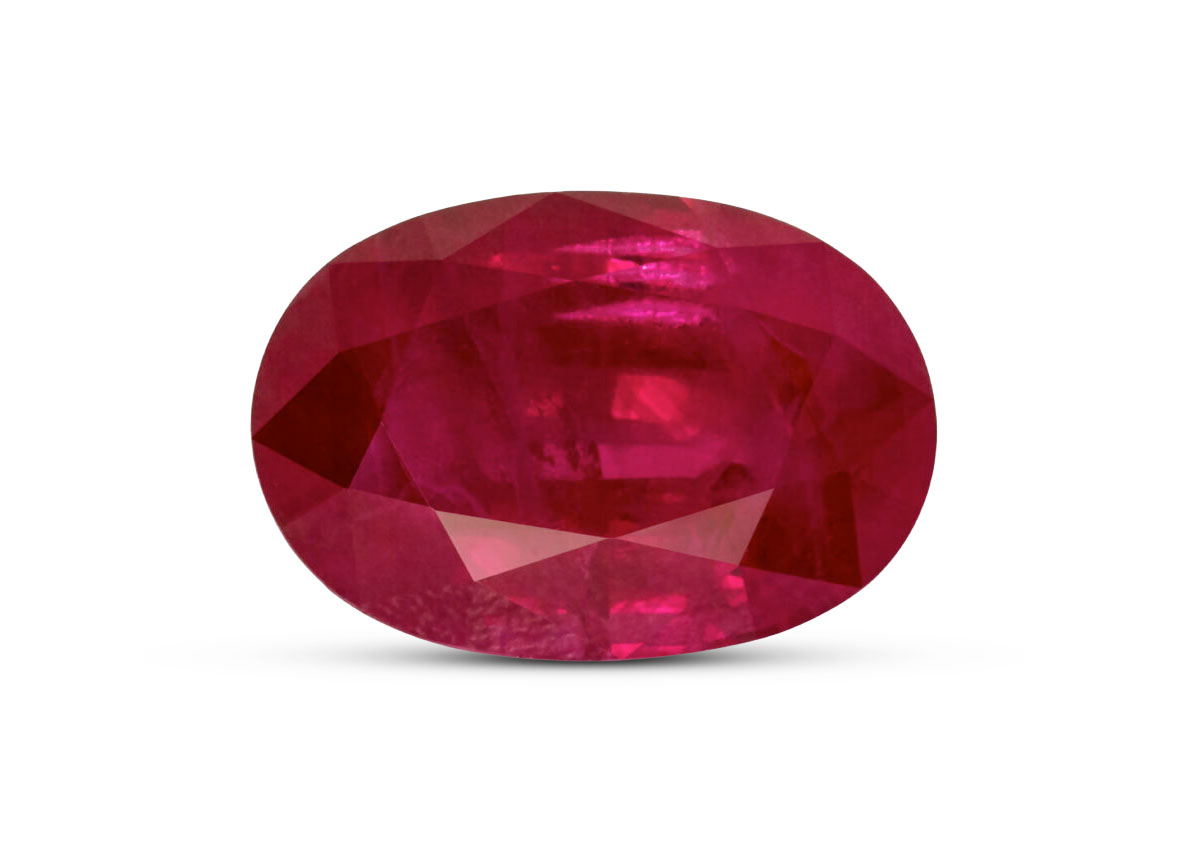
Among collectible colored stones, ruby occupies a distinctly aristocratic position — the variety of corundum (aluminum oxide, Mohs hardness 9) whose chromium chromophore produces saturations from delicate pink-red to the legendary “pigeon’s blood” hue. Burmese specimens from Myanmar’s Mogok Stone Tract have defined the apex of vintage ruby red jewelry for centuries, distinguished by strong UV fluorescence, silk inclusions of fine rutile needles, and the slightly purplish red saturation that auction houses including Christie’s and Sotheby’s consistently document at premium positioning. Thai rubies from Chanthaburi-Trat deposits dominated mid-20th century production with darker tones, while the Black Prince’s Ruby in the British Imperial State Crown — actually a red spinel — reminds collectors that period pieces require contemporary spectroscopic verification.
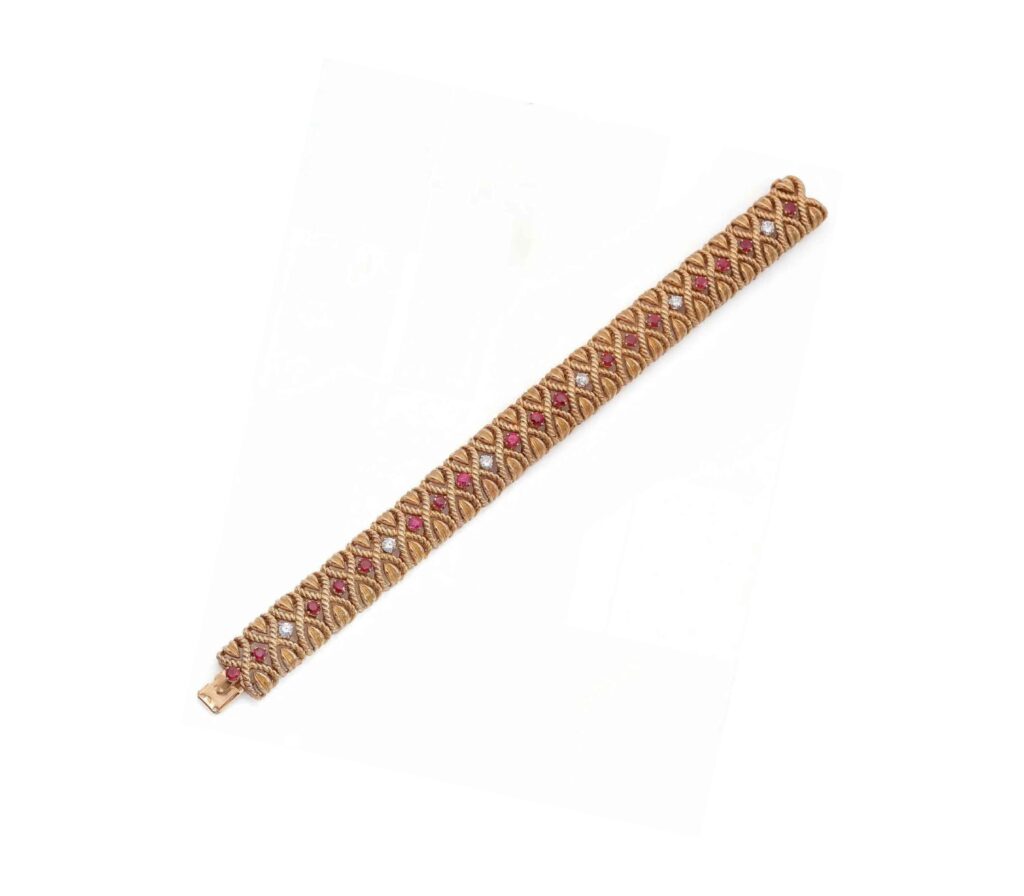
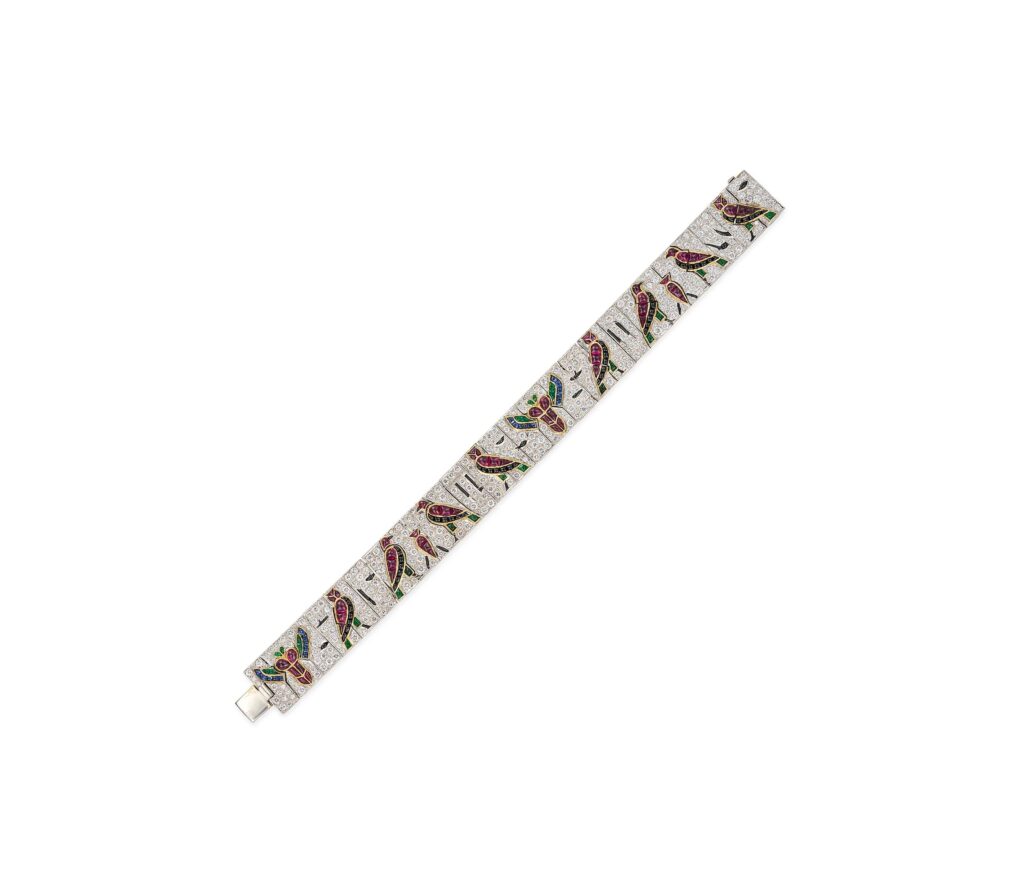
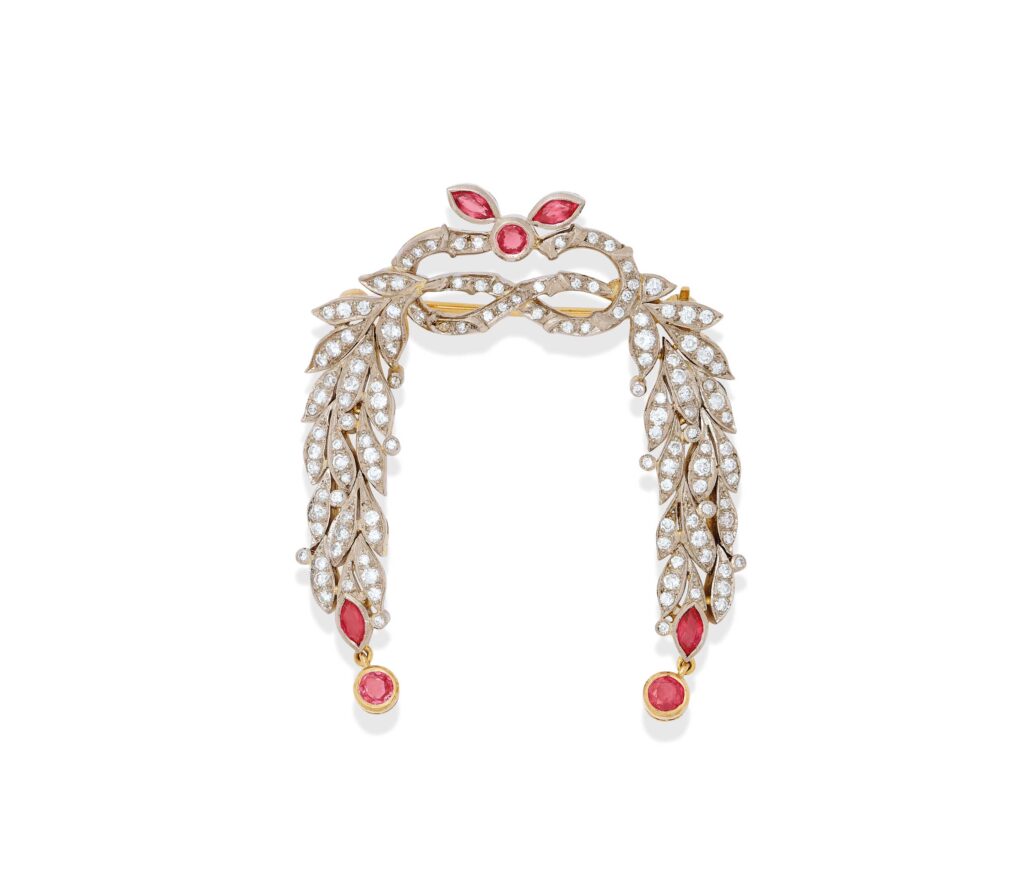
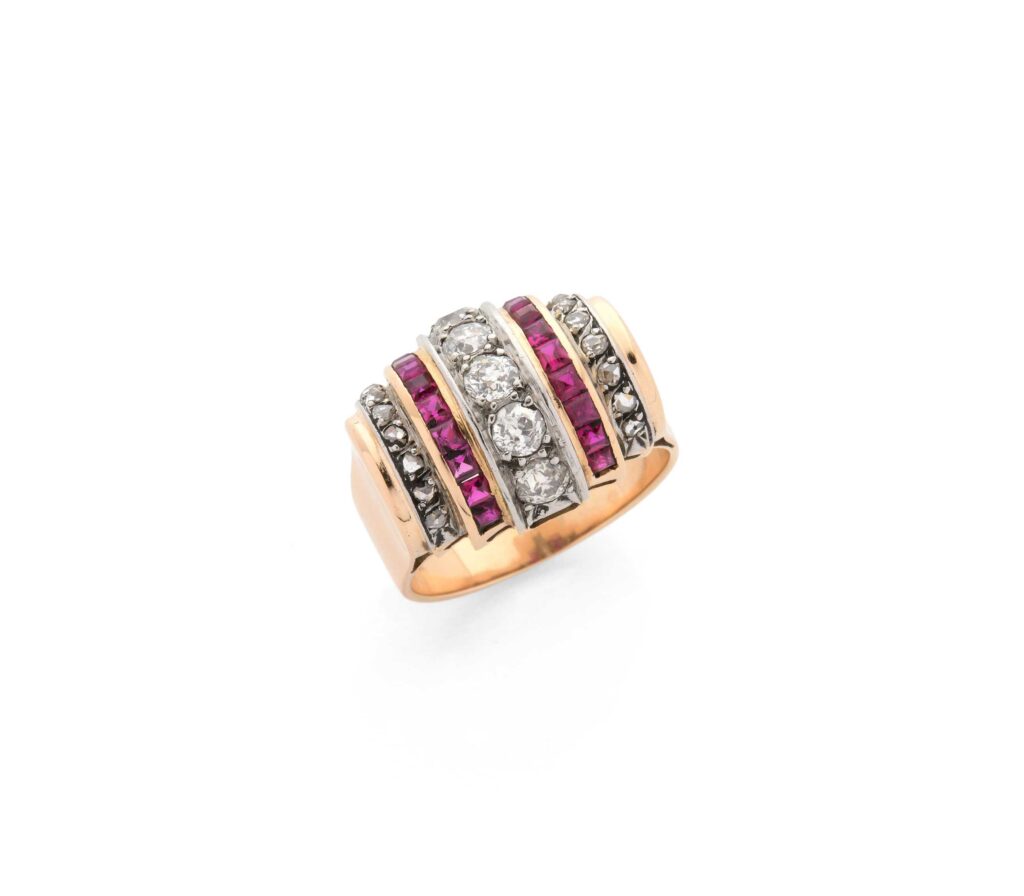
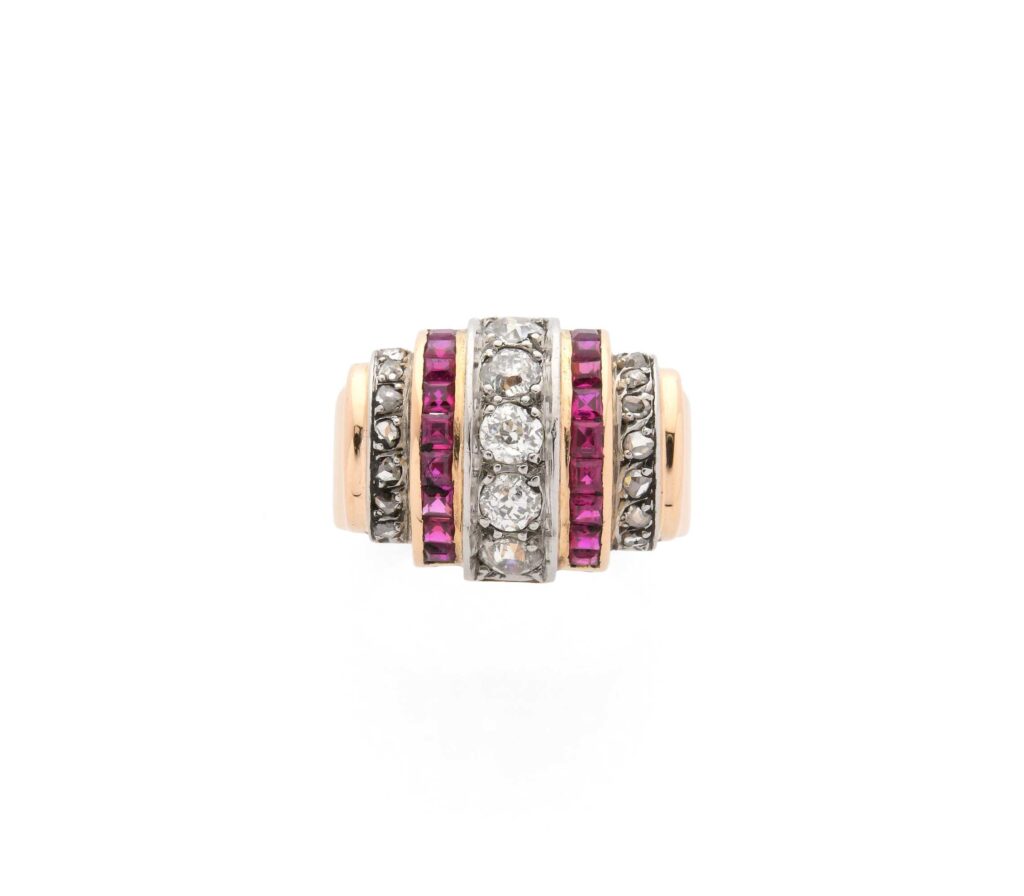
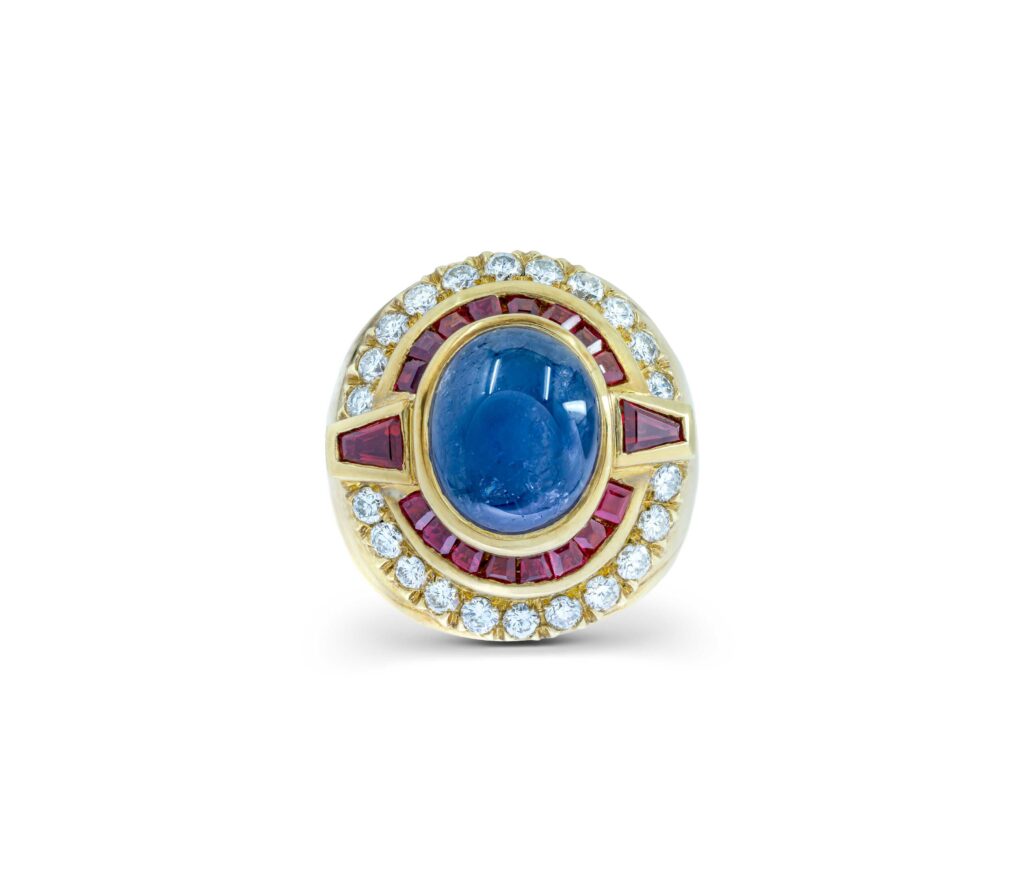
Vintage ruby red jewelry showcases distinctive period aesthetics: Victorian craftsmen (1837–1901) employed closed-back gold mountings with foil backing intensifying perceived saturation, Edwardian designers (1901–1915) celebrated platinum’s superior strength through delicate garland motifs and millegrain detailing — beaded edges produced with specialized wheel tools — while Art Deco pieces (1920s–1930s) introduced calibré-cut rubies (precisely matched stones cut to exact specifications) creating continuous geometric lines, and Retro era jewelry (1940s–1950s) embraced bold yellow and rose gold settings with substantial cabochons.
Authentication and Conservation at Grygorian Gallery
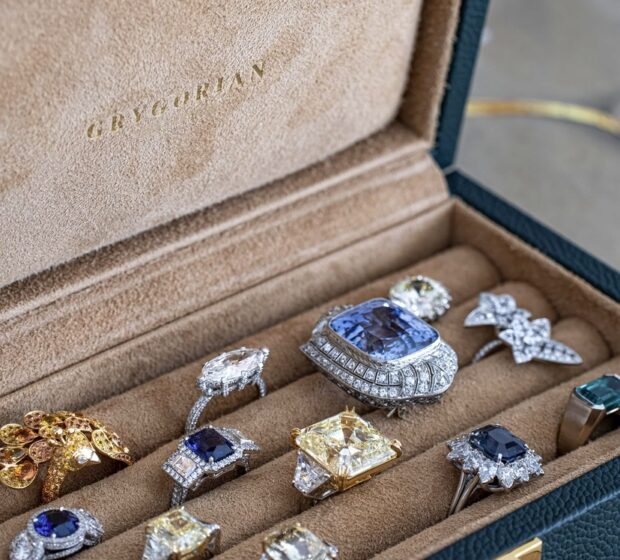
Eduard Grygorian’s expertise with high-quality colored stones, developed across his sixteen-year tenure at maisons including Boucheron, where he managed Côte d’Azur clientele, and Chaumet, where the Monte Carlo boutique reached the brand’s #1 worldwide position for high jewelry sales in 2021, informs the curatorial standards applied to estate ruby red jewelry. Selection prioritizes provenance documentation and signed examples from established houses such as Van Cleef & Arpels, Cartier, Bulgari, Boucheron, and Chaumet.
Gemological evaluation in our Monaco-based atelier follows recognized industry protocols. Spectroscopic analysis identifies chromium signatures and detects flux residue indicating glass-filling treatments, while microscopic inclusion mapping documents formation characteristics — silk patterns, calcite crystals, healed fissures — that authenticate Mogok, Mong Hsu, or Thai geographic origins. UV fluorescence testing differentiates Burmese specimens (typically strong red) from Thai material (weak to inert). Where original certificates from GIA, SSEF, or Gübelin accompany a piece, this documentation is preserved transparently. Conservation in our French Riviera atelier respects period integrity: hand-engraved galleries, original hallmarks, and maker’s marks remain intact wherever structural condition permits, with selected pieces undergoing ultrasonic cleaning appropriate to ruby’s hardness.
Collector Value and Investment Perspective
Market data demonstrates remarkable strength for fine red corundum: the Sunrise Ruby, a 25.59-carat Mogok specimen, established a reference benchmark at Sotheby’s Geneva in 2015, and signed Art Deco and Retro period jewelry consistently attracts premiums where designer attribution is verified. These factors position pre owned ruby red jewelry as a category of valuable assets within diversified collections.
Acquiring beautiful vintage ruby red pieces offers stylistic versatility alongside investment perspective. A vintage ruby cocktail ring brings dramatic warmth to evening attire, an Edwardian brooch with crimson highlights complements both ivory and navy palettes, and Retro bracelets with cabochon rubies create powerful focal points against contemporary minimalism. The chromatic intensity of red corundum partners exceptionally well with both warm gold settings characteristic of Victorian and Retro production and the cool platinum frameworks of Edwardian and Art Deco design. Spinel — historically conflated with ruby and now recognized in its own right by connoisseurs — offers an alternative with comparable saturation, while garnet varieties including pyrope and almandine appear in Georgian and early Victorian antique pieces, providing access to earlier period craftsmanship.
High end estate jewelry in this color category remains genuinely scarce on the secondary market, with natural untreated stones above commercial sizes constituting a small fraction of available material. Our consultants offer personalized sessions — remotely for international clients or in person at our Monte Carlo gallery — to help identify unique finds and gently used heritage examples aligned with specific collecting objectives. Each treasure carries documented provenance and the designer-quality artisanal mastery of jewelry’s most accomplished eras, offering sophisticated collectors tangible connection to the chromatic tradition that has crowned monarchs and defined haute joaillerie across centuries of antique-inspired excellence.