


Certain women refuse to stay in their era. Grace Patricia Kelly was one of them – a Hollywood star who became a princess, and a princess who became something rarer still: a permanent reference point for what elegance actually looks like. The jewels she wore were never just jewels. They were arguments – about beauty, about power, about what it means for a tiny nation to present itself to the world.
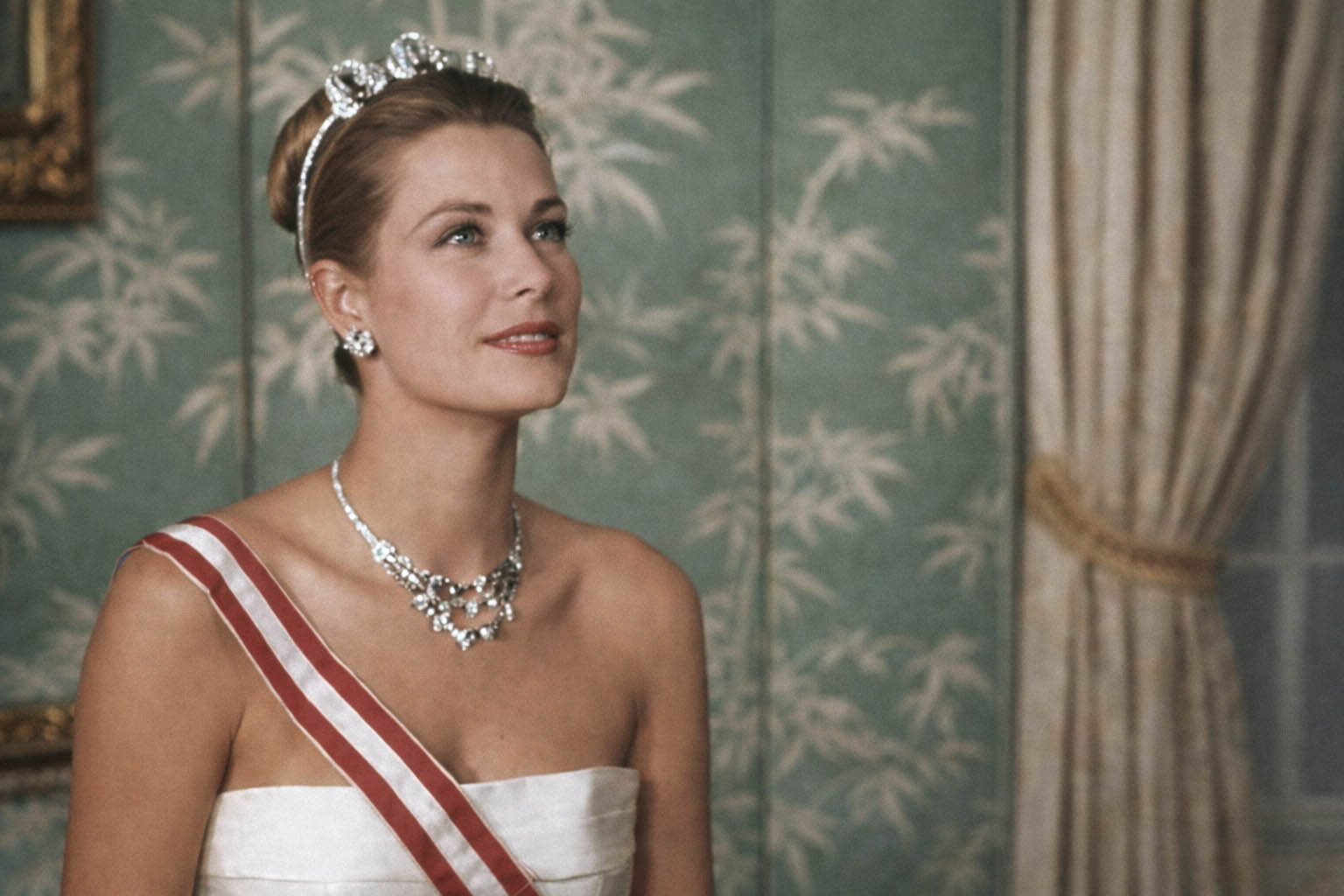
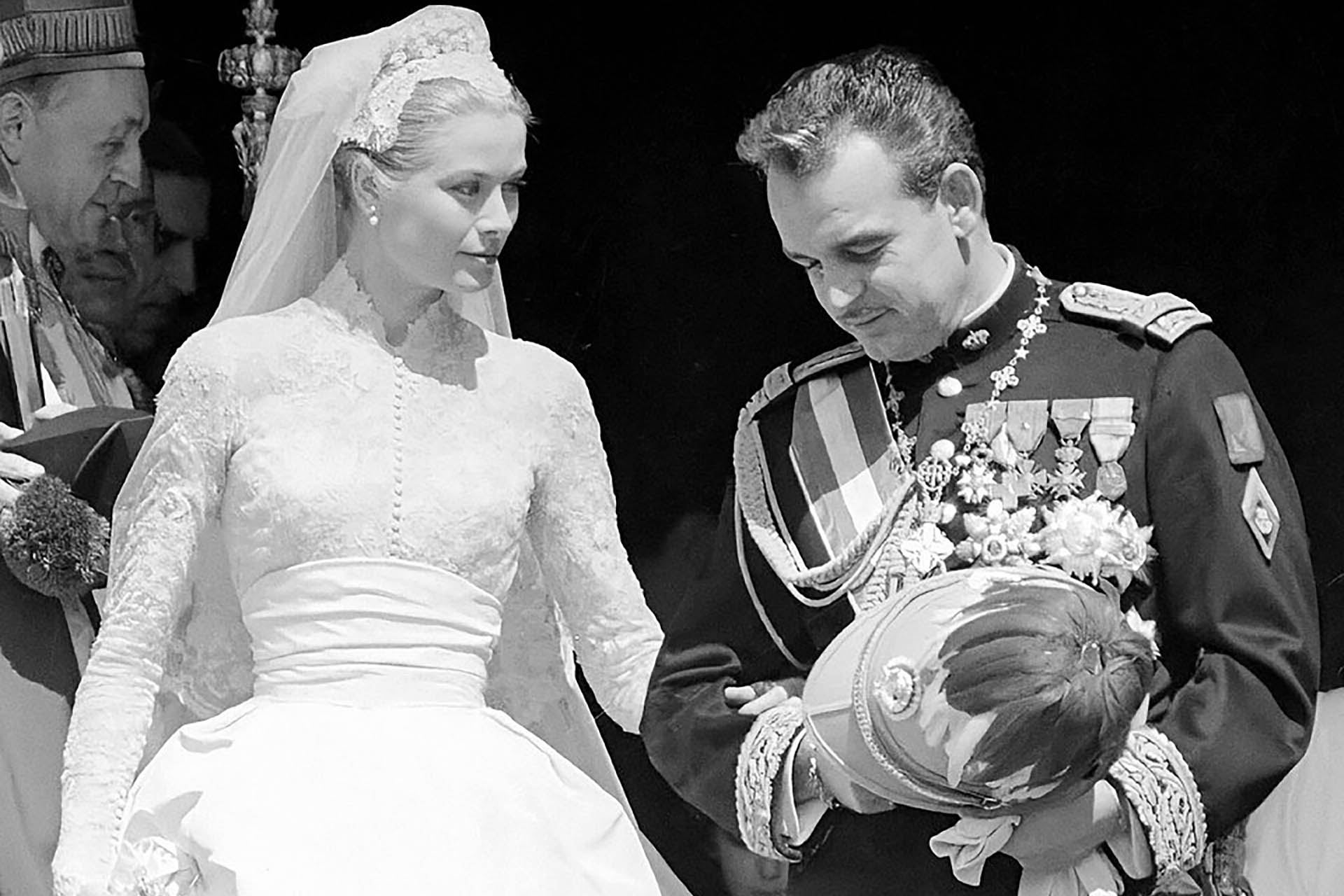
In May 1955, on the steps of the Palais des Festivals in Cannes, a young actress met Prince Rainier III. Within a year, Monaco had acquired not merely a consort but an identity. Fashion historians have noted that Kelly’s wedding brought the principality a kind of fame money couldn’t buy – and in its wake, investment followed. Her appearance in a Cartier tiara and three-row diamond necklace accomplished more for Monaco’s image than any campaign a PR firm could have devised.
Platinum, Rubies, and the Monégasque Flag
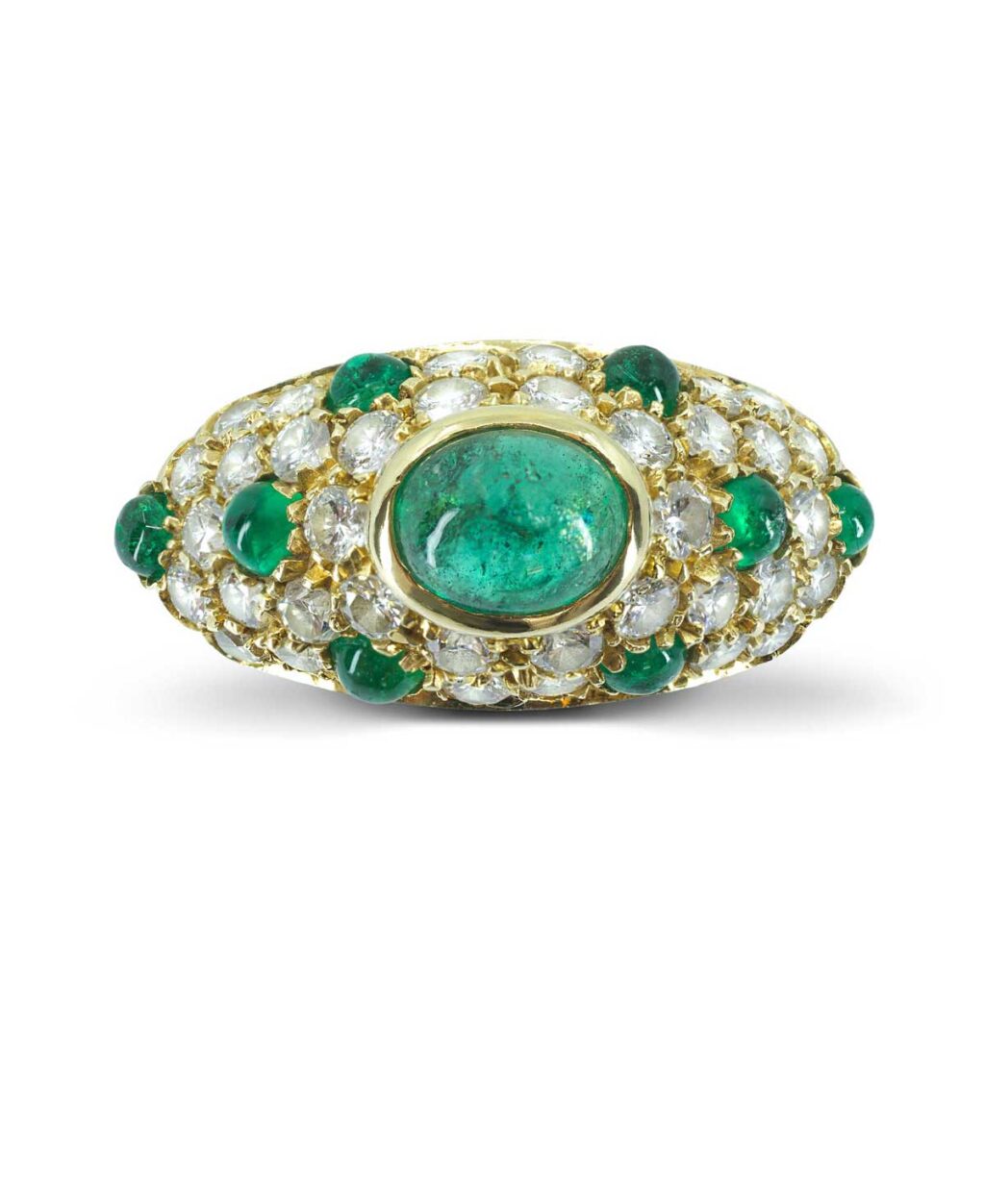
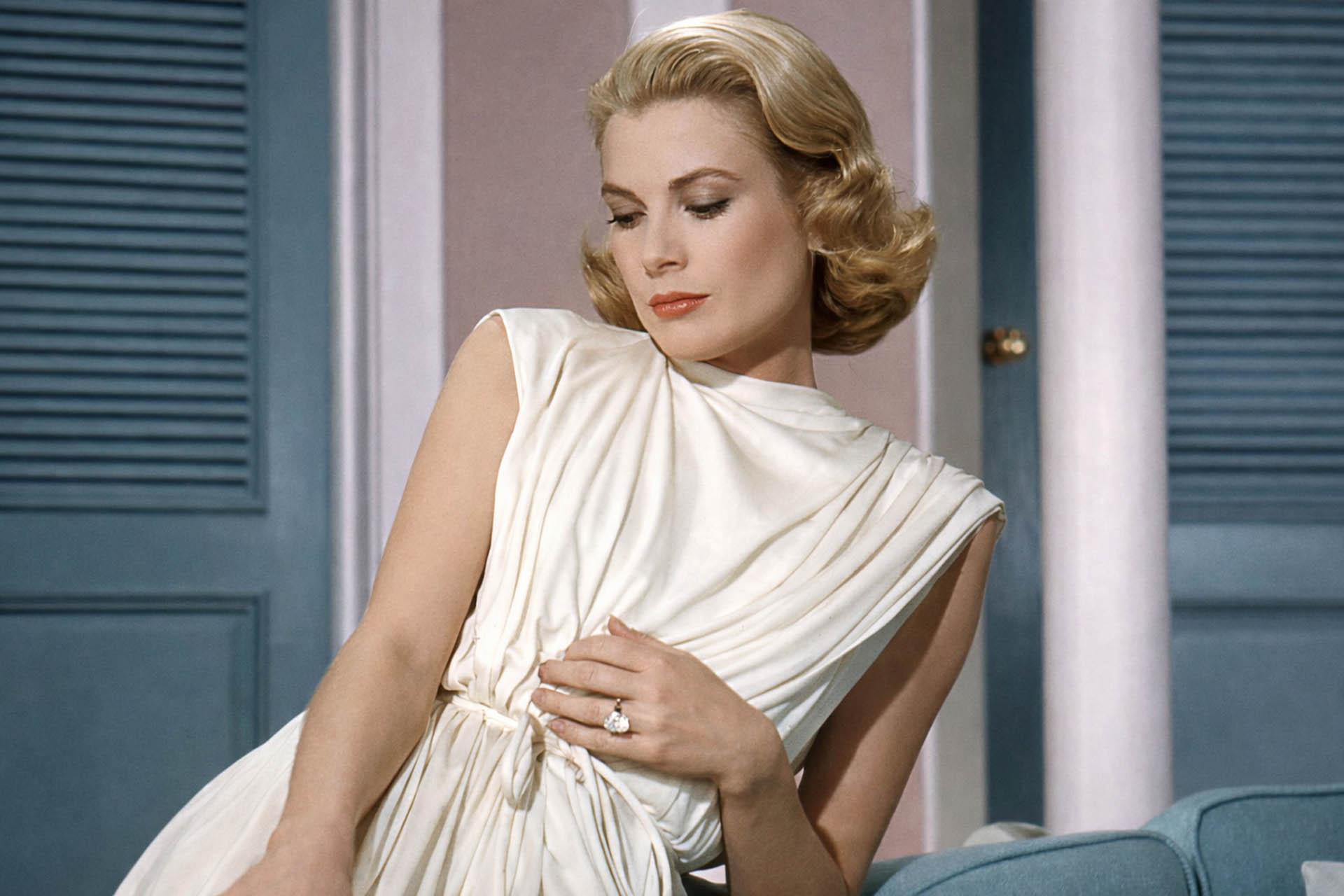
Rainier gave Grace two engagement rings – from Cartier, naturally – a gesture of uncommon extravagance even by royal standards. The first was a band of alternating rubies and diamonds, its colors a quiet quotation of Monaco’s red-and-white flag. The second was a platinum ring centered on a 10.47-carat emerald-cut diamond flanked by two baguettes. Grace wore it in High Society in 1956, and the world took note: for decades afterward, that ring quietly set the standard for what an engagement ring could aspire to be.
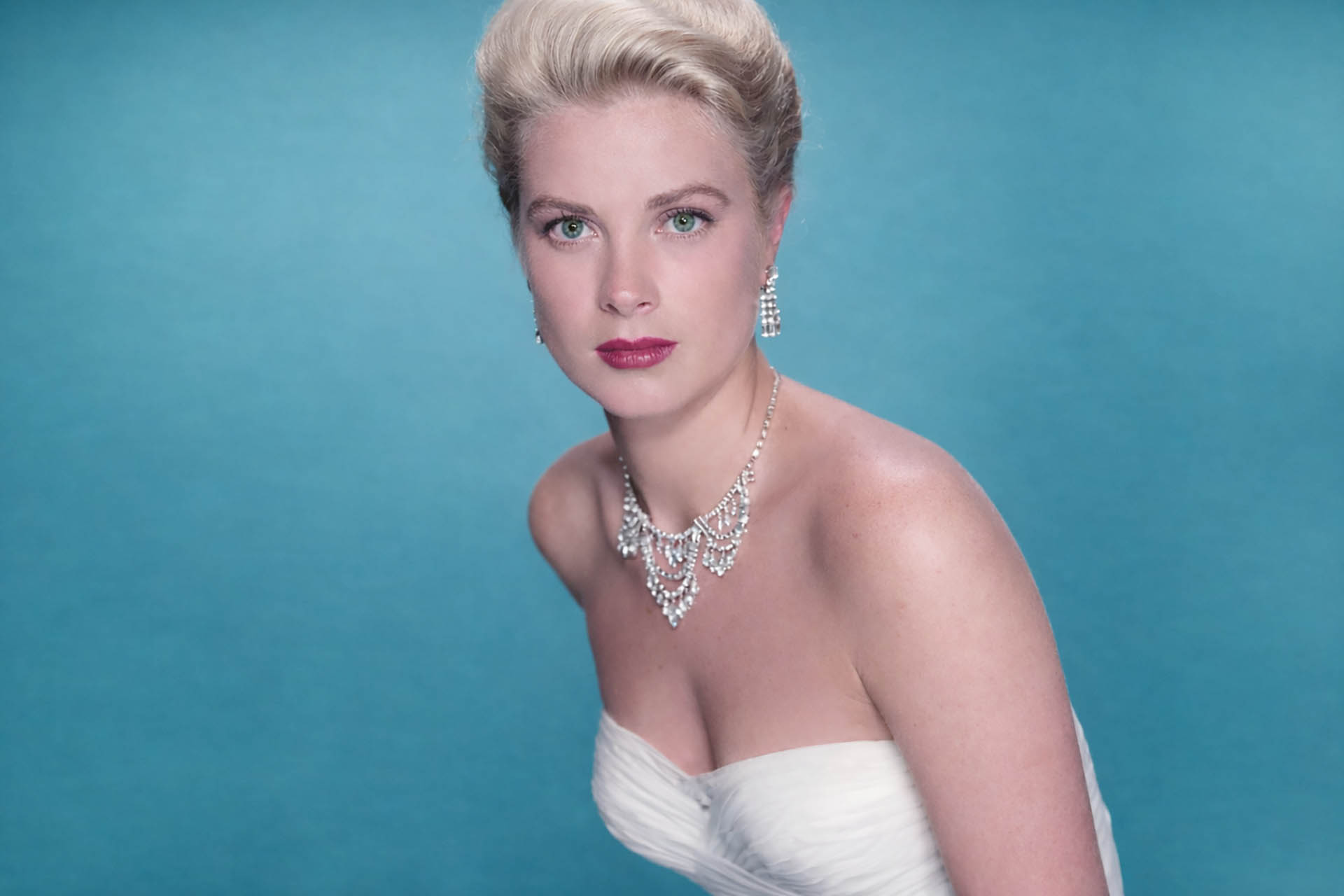
For the wedding, Cartier produced something altogether grander: a three-row platinum necklace – round and emerald-cut stones totaling roughly 64 carats – that appeared in Grace’s official 1956 portrait and became shorthand, almost instantly, for the idea of a cascade of diamonds. That same day, Van Cleef & Arpels presented her with a full parure in platinum, pearls, and diamonds. Both houses, from that point on, were effectively Monaco’s court jewelers – though neither needed it spelled out.
Grace Kelly’s style was not fashion. It was the language of identity. She was not dressing herself – she was representing a nation.
Grace Kelly’s Legacy
When people picture Monaco, certain images come immediately to mind: the red-and-white flag, the shimmer of the casino, the black-and-white chessboard of the Formula 1 circuit – and jewelry. All of these images converge on a single person. Grace Kelly did not merely wear jewels in the colors of the Monégasque flag; she made that color code part of the world’s idea of the principality.
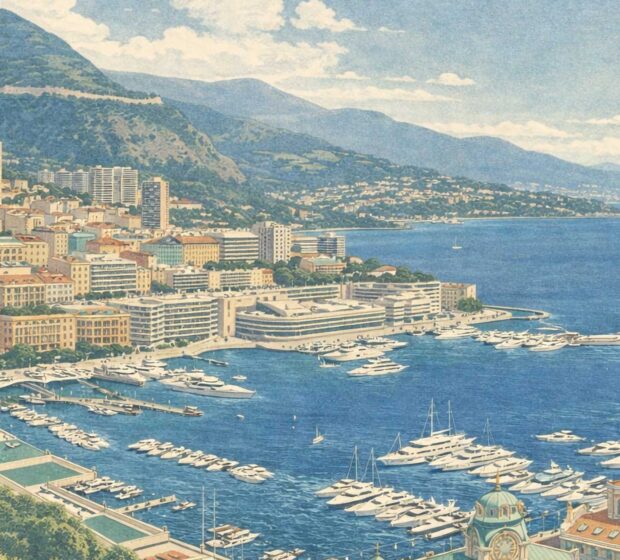
Her personal jewelry palette – pearl and cream-toned metals, the cold gleam of platinum, precise flashes of ruby – became the visual language of Monaco itself. It was the aesthetic of a coastal city: mother-of-pearl, sea foam, white yachts and red pennants. Grace seemed to transpose the landscape of the Côte d’Azur directly onto her wrists and throat.
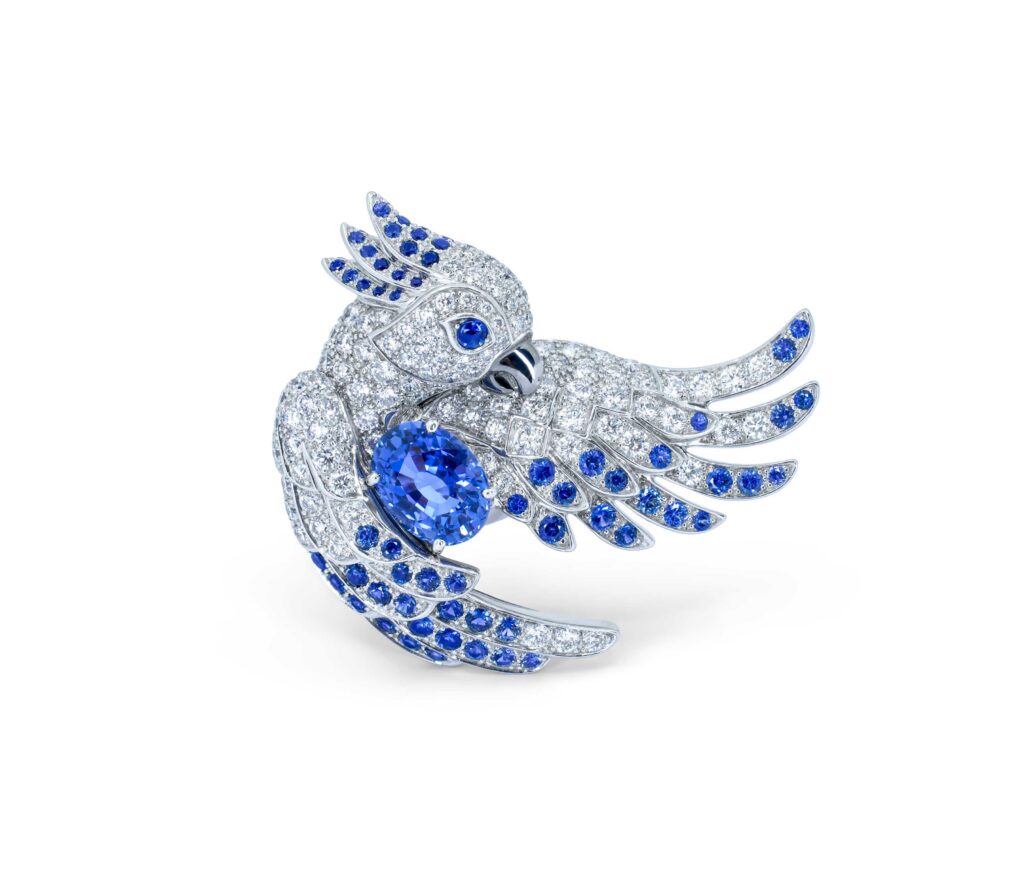
She was also drawn to naturalistic motifs: flowers and charming animals – her beloved poodles, birds, and roosters. Monaco sits between mountains and sea, and the natural world has always been part of its identity. The creatures and blossoms on Grace’s brooches served as miniature ambassadors of that landscape.
Consider Chanel’s 2023 Cruise collection, built almost entirely from Monégasque references: the flag’s red and white, the circuit’s grid, pendants shaped like Monte-Carlo casino chips. Chanel didn’t invent that visual language – it borrowed it. The original author was Grace. She was the first to turn Monaco’s everyday symbols – the casino, the sea, the flag, the gardens – into something that read as poetry. Designers are still paraphrasing her, seven decades on.
Animals, Flowers, and a Personal Aesthetic That Became Tradition
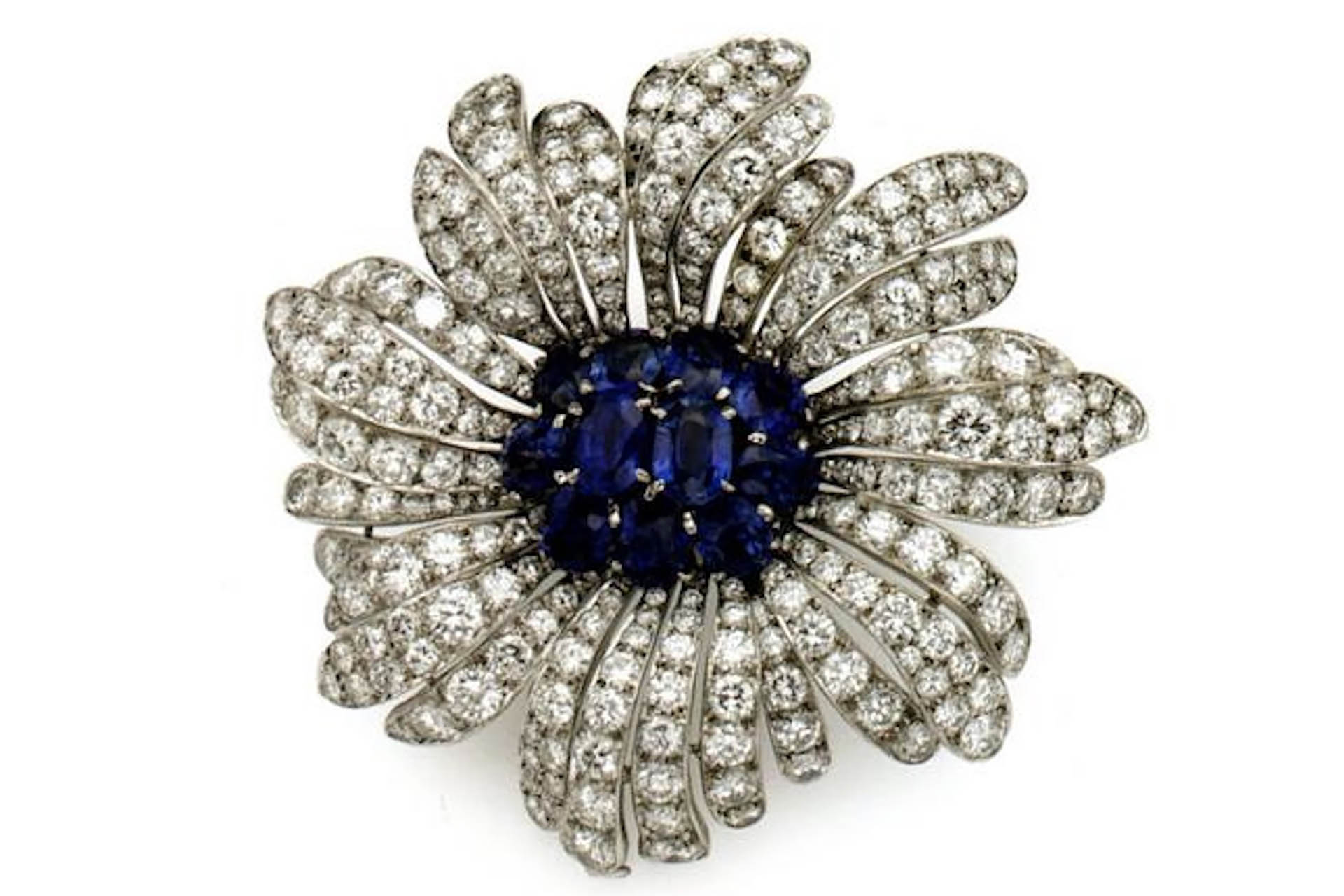
Grace Kelly never thought of herself as setting trends. Her passion for animal brooches was genuine and almost childlike – she collected poodles, ducks, exotic birds, and roosters with the same unselfconscious delight that other people collect stamps. A 1955 platinum duck set with sapphires, an emerald, and diamonds. A daisy in pavé diamonds and blue sapphires. Each piece felt less like jewelry than like a small creature she’d decided to bring along.
Cartier had been working with animalist motifs since the early twentieth century, but in Grace it found the perfect ambassador – someone the entire world was watching, and would go on watching. Today the Panthère de Cartier is one of the most recognized and commercially successful series in the house’s history. Meanwhile Van Cleef & Arpels, responding to her love of the natural world, developed the Alhambra collection – its four-leaf clover a symbol of luck and lightness and something close to joy.
Grace bought her first Alhambra necklaces in 1975 and wore them exactly as she wore her state diamonds: not as insignia but as part of herself. Today Alhambra is Van Cleef & Arpels’ most reproduced collection. Behind its success is a woman who simply liked clover.
Influence on Monaco’s Contemporary Jewelers: A Living Legacy
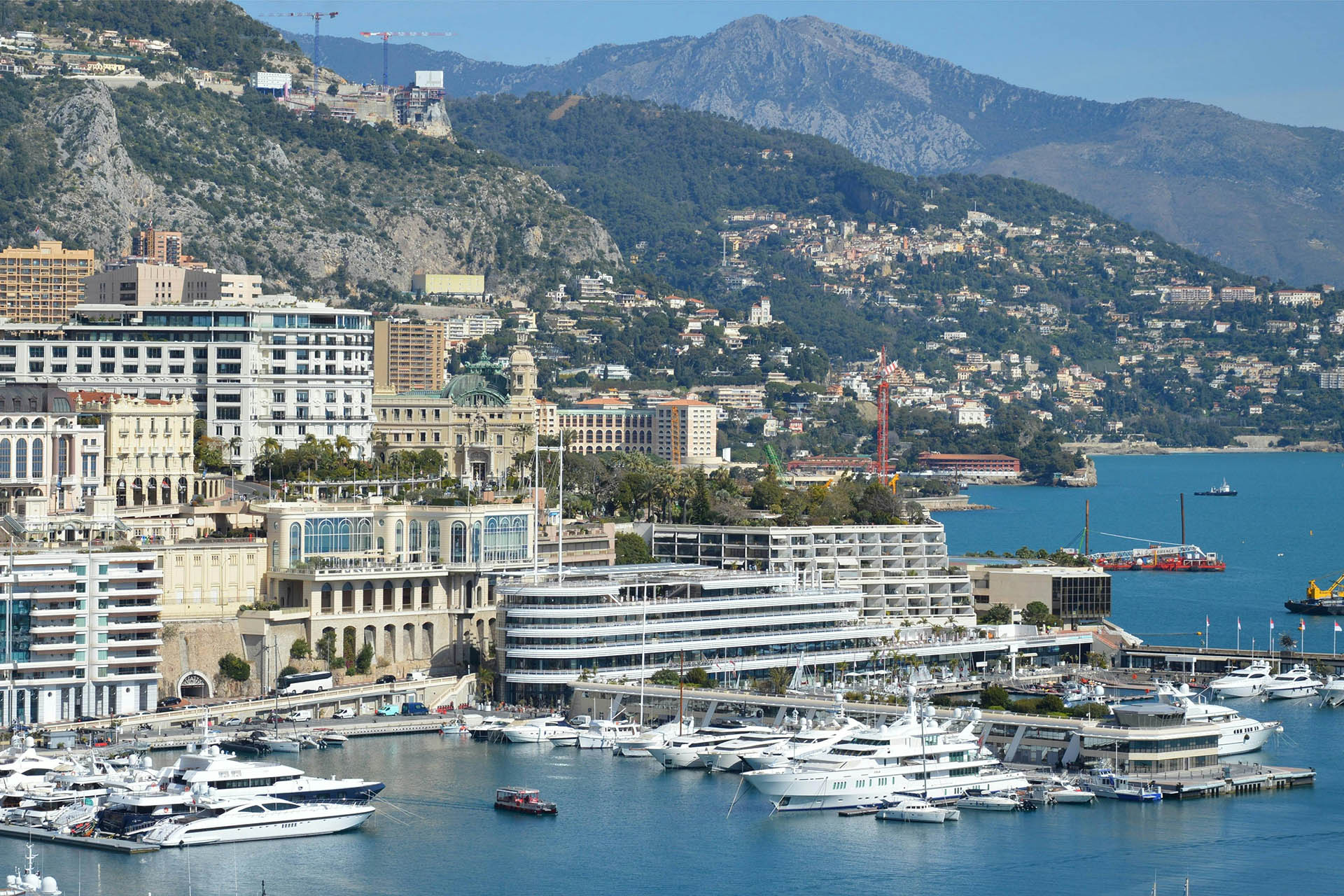
Monaco covers barely two square kilometers, yet its influence on the global jewelry industry is out of all proportion to its size – and a significant part of that influence draws from a single source: the image of Grace Kelly. Today’s Monégasque designers grew up in the shadow of this legend and engage with it in different ways: some quote it directly, some push back against it, others search for their own voice – but none pretend she didn’t exist.
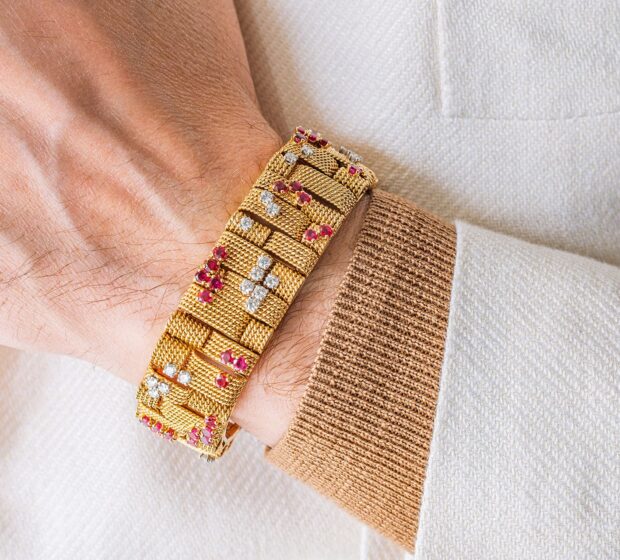
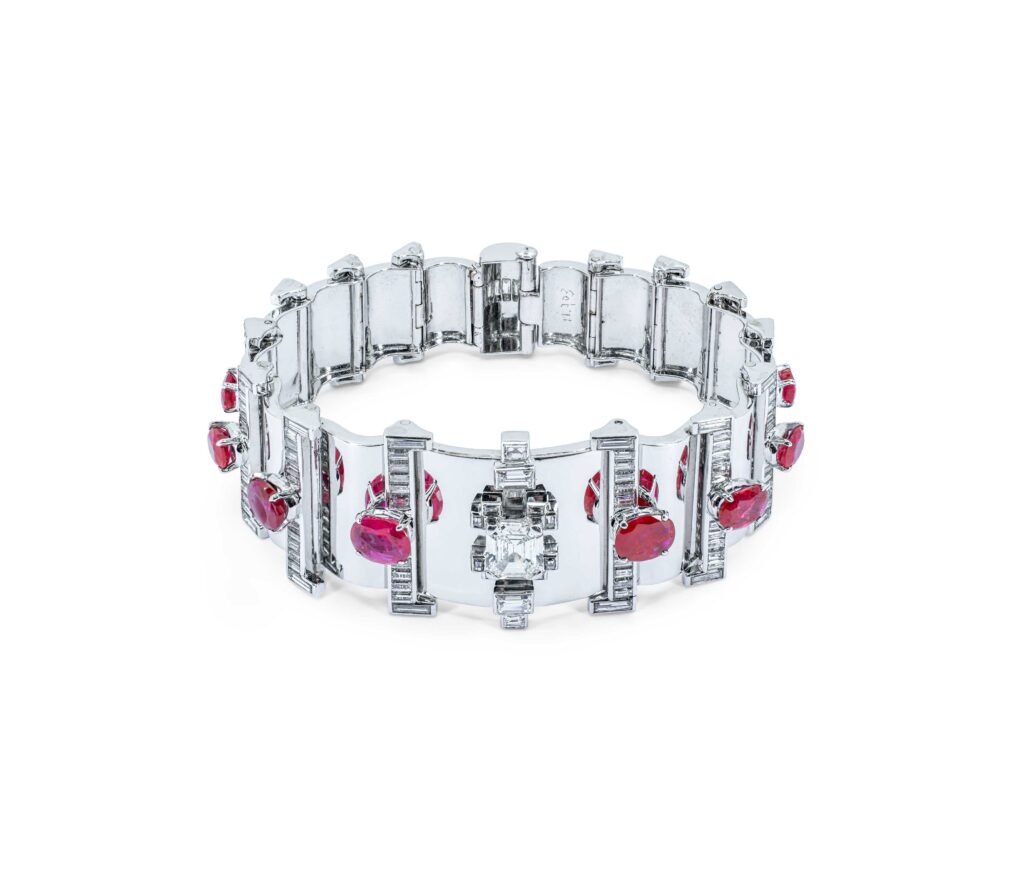
Cartier, Grace’s primary jeweler, continues to use her image as both a commercial and cultural reference point. In 2016, its New York boutique opened the Princess Grace Salon – a space dedicated entirely to her style and jewels. In 2014, for the release of the biographical film Grace of Monaco, the house recreated an exact replica of her ruby-and-diamond wedding bracelet-tiara. This is not nostalgia – it is an acknowledgment that one woman did more for a jewelry house’s reputation than any advertising campaign.
The Role of the Royal Family: Legacy as State Policy
In Monaco, the memory of Grace is not a family matter – it is a state project, managed with careful consistency across decades. The foundations were laid during the princess’s own lifetime: in 1956, Prince Rainier III officially appointed Cartier as Monaco’s court jeweler. The jewels given to Grace at her engagement and wedding were positioned from the outset not as personal gifts but as state relics, and they remain in the Palace collection as part of the official holdings.
The current dynasty continues this tradition with visible continuity. In 2019, Grace’s granddaughter Charlotte Casiraghi wore a Cartier diamond necklace from her grandmother’s collection at her own wedding. The gesture was personal and political in equal measure: a succession of beauty, a succession of values, a succession of Monaco’s self-image as a place where elegance passes down through families like a title.
The JOYA Monaco initiative, launched in 2024 under the patronage of Prince Albert II, is more than a trade showcase – it is a manifesto: Monaco remains the world’s capital of jewelry arts, and that status has its roots in 1956, in the moment a Hollywood actress placed a 10.47-carat diamond on her finger and smiled for the cameras. In July 2025, the Monaco Palace opened Grace #1 – the first exhibition to present the princess’s personal belongings to the public: her glasses, hats, notebooks, her Kelly bag, and, of course, her jewelry. The queue stretched for several city blocks. Forty-three years after her death, Monaco still keeps its rendezvous with her.
The Economic and Cultural Effect: When Style Becomes Capital
Fashion historians have long noted that Grace Kelly’s wedding in April 1956 was the largest media event of its time. More than thirty million television viewers watched the ceremony – a staggering number in an era when owning a television set was itself a rarity. Monaco was transformed overnight: no longer merely a tax haven for wealthy Europeans, it became a place people dreamed of. Tourist numbers multiplied. Investment poured into real estate, hotels, and casinos. Economists trace this leap directly to a single event – the arrival of Grace.
The true measure of the cultural effect, however, is not tourist figures but the depth to which Grace’s image has penetrated global visual culture. The Hermès Kelly bag is one of the most recognizable luxury objects in the history of fashion, named after the princess. Monaco’s postage stamps reproduce her Cartier Grain de Café necklace. Replicas of her jewels are sold on every continent – from mass-market costume pieces to costly collector’s copies. The name Grace Kelly, in the context of jewelry, signifies more than beauty: it signifies a guarantee of authenticity, a connection to a golden age of elegance that cannot be counterfeited or bought.
Grace Kelly’s true legacy is not the diamonds in a palace vault. It lives in every moment someone reaches for a floral-motif piece, or clasps a pearl necklace – somewhere in that choice, her taste is still alive.