


There’s a feeling known only to those who have held a rough diamond in their palm: a dull, ordinary, almost unremarkable stone suddenly catches a ray of light – and for a split second, fire flashes within it. This fire has captivated humanity for millennia. Yet it took centuries of ingenuity, craftsmanship, and mathematical precision to learn how to unleash it. The history of diamond cutting is the history of human desire embodied in stone.
To trace the evolution of cutting is to journey through Western civilization itself: through medieval Venetian trade routes and Flemish workshops, through the glittering halls of Versailles, through the age of steam and electric light – and finally into our era of lasers and algorithmic perfection. Each century left its mark on the facets of the stones it created.
Before cutting: the Era of the untouched crystal
For most of history, diamonds were revered exactly as nature created them. Until the late 13th century, European courts kept diamonds uncut – octahedral crystals set in gold, valued for their symbolism and rarity, but certainly not for their play of light.
Only around 1300 did lapidaries discover what would become the fundamental secret of their craft: diamond could be worked with diamond dust. This discovery gave birth to the Point Cut – the first cut in history, in which only the apex of the crystal was gently smoothed. A modest beginning – but it was then that the human hand first dared to touch the stone.
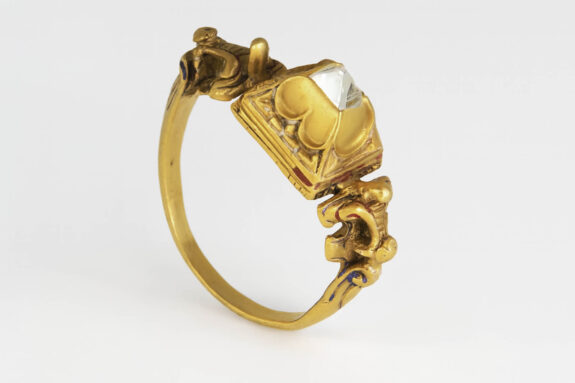
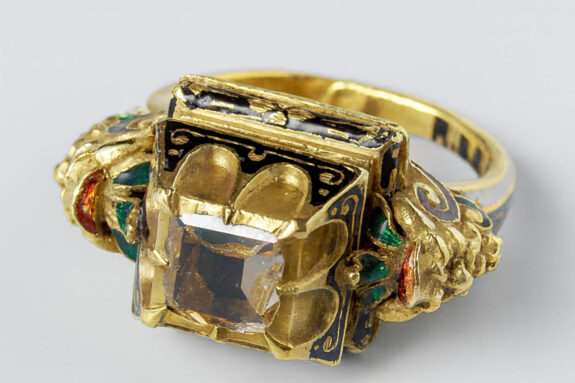
The 14th century brought the Table Cut: the apex of the crystal was ground down into a flat horizontal surface, creating a window through which light could penetrate inside. For the first time, one could look not at a diamond, but into a diamond. Within this simple idea – a flat, stepped surface revealing the stone’s depth – lay the seed of the entire future tradition of step cutting. Around the same time, after 1330, Venetian merchants reestablished direct links with India, and Venice became the first European center for stone cutting.
The Flemish revolution: birth of the facet
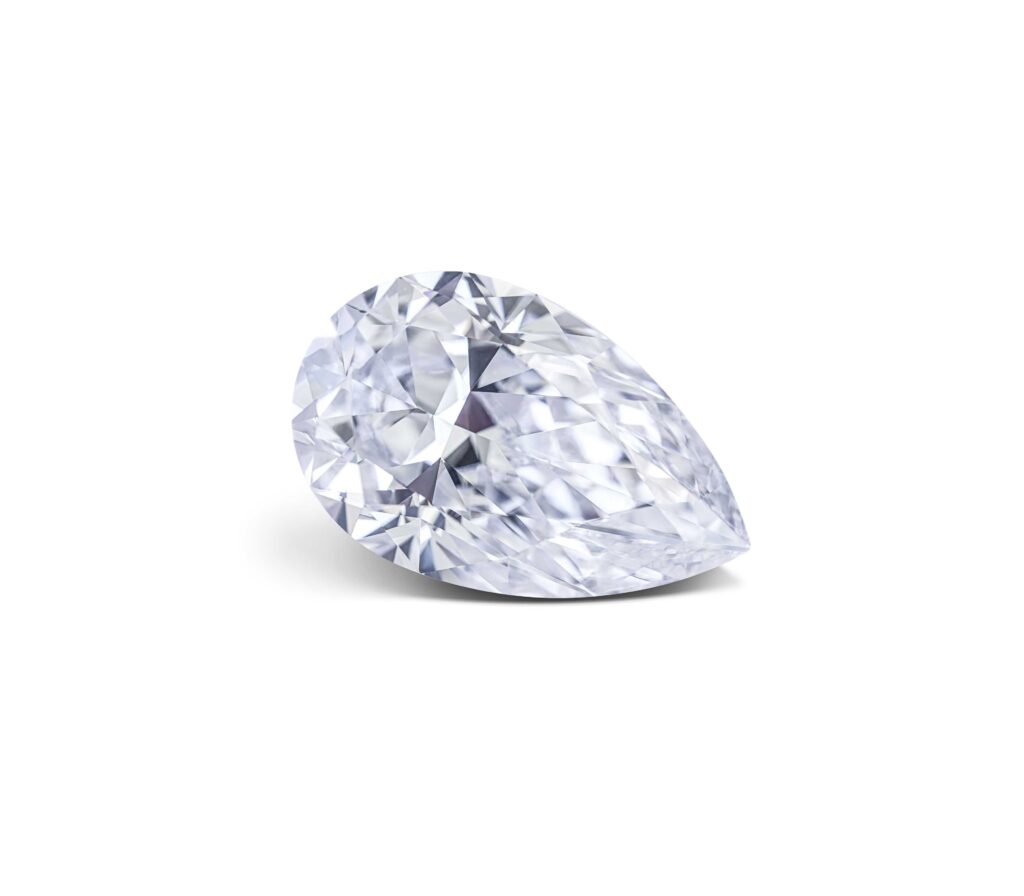
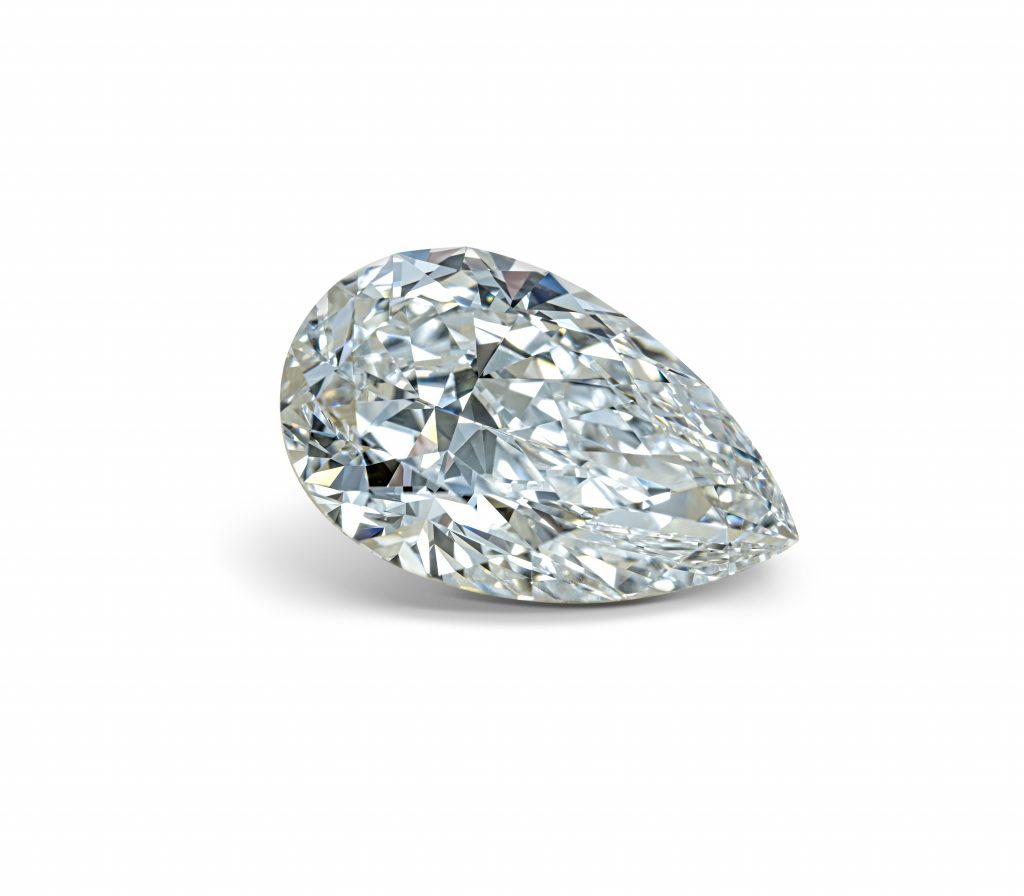
The transformation that turned cutting from a craft into an art occurred in 15th-century Flanders. According to legend, it was the Bruges jeweler Lodewijk van Berken who, around 1475, perfected the polishing wheel – the scaif, impregnated with a mixture of oil and diamond dust. This tool allowed facets to be applied with true symmetry for the first time, controlling the angle and position of each facet. His workshop produced the first briolette: a teardrop-shaped stone covered with triangular facets across its entire surface.
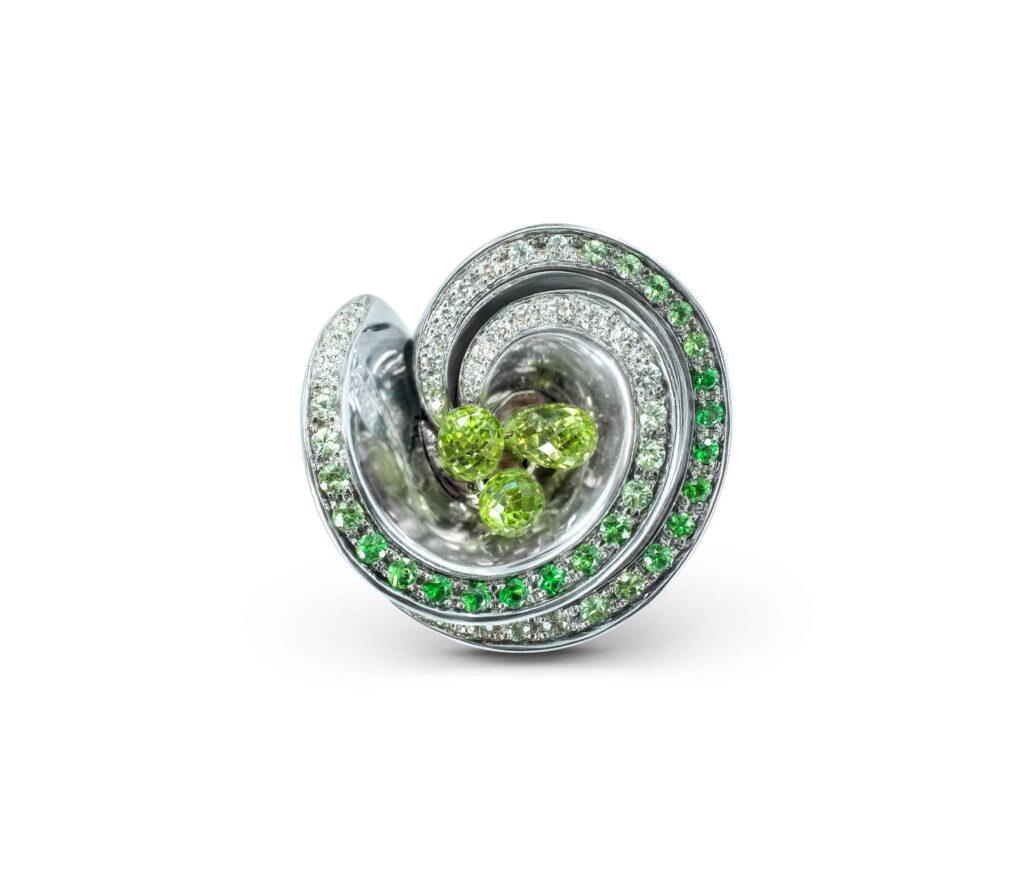
Shimmering in all directions, dispersing light unlike any other stone – the briolette would adorn aristocratic pendants for centuries to come. In 1811, Napoleon would gift his second wife, Empress Marie-Louise, a necklace with ten briolettes weighing 4 carats each – and this shape would become fashionable at European courts for decades.
The 16th century became an era of experimentation. Craftsmen tried different combinations of facets, exploring how geometry refracts light. The most enduring fruit of this period was the rose cut – a domed crown of triangular facets with a flat base, possessing a diffused, soft glow. During these same years, an elongated rectangular cut entered the cutter’s arsenal – the direct ancestor of the future baguette.
The Golden age: cardinals, courts, and the first true brilliant cuts
The central aspiration of the 17th century became brilliance in the most literal sense: maximizing reflected light. French Cardinal Mazarin, a passionate collector of precious stones, commissioned a new cutting style that entered history under his name: seventeen facets distributed between the crown and pavilion. The Mazarin cut became the first stone to fully deserve the name “brilliant.” Around 1700, the Venetian master Peruzzi increased the number of facets to thirty-three – the so-called triple brilliant.
These refinements gave rise to a cushion-shaped cut with rounded corners and the characteristically high crown of the period. It was in this form, known as the Old Mine Cut, that the brilliant dominated the 18th century: warm, romantic, created for the soft light of wax candles.
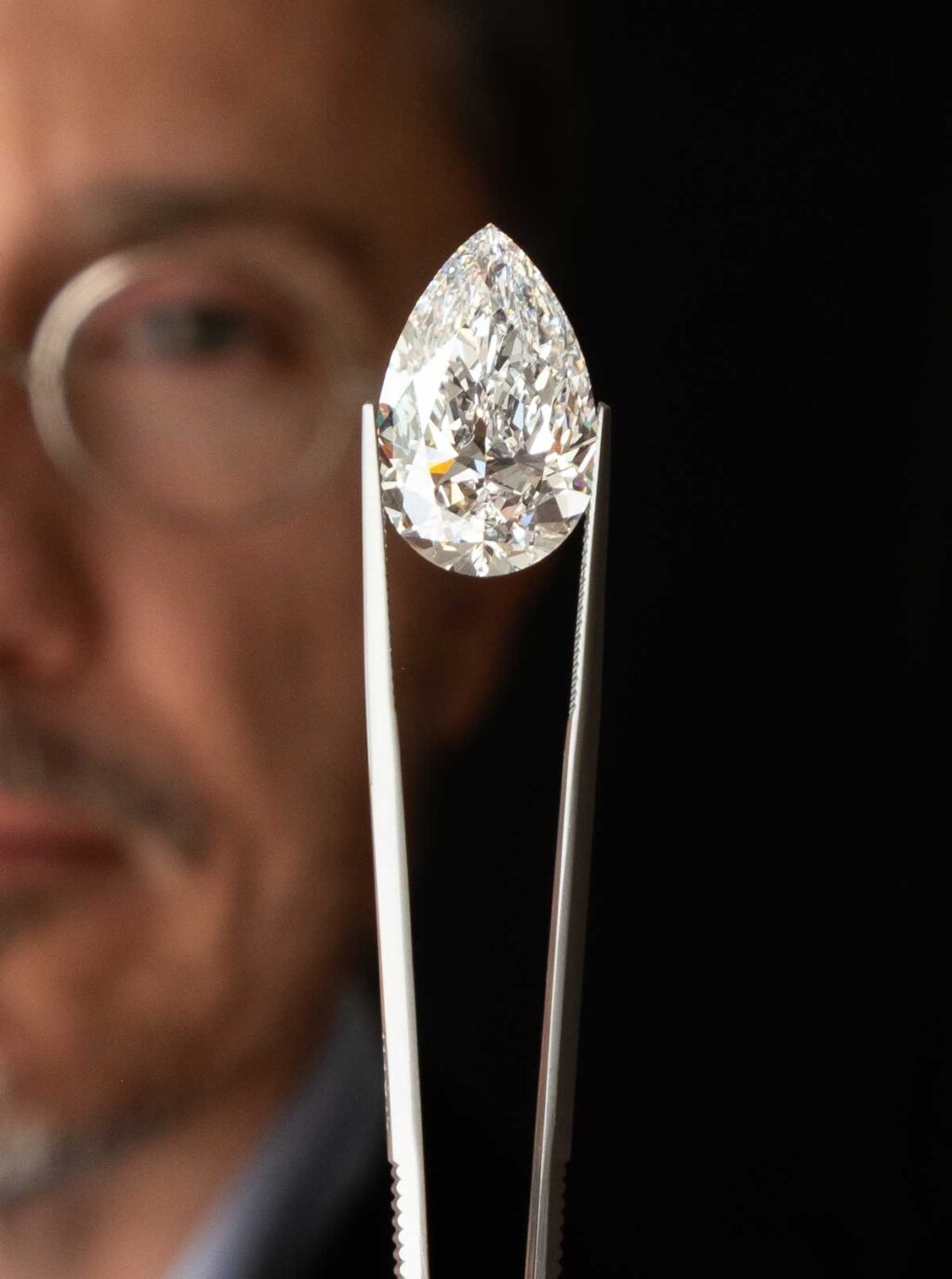
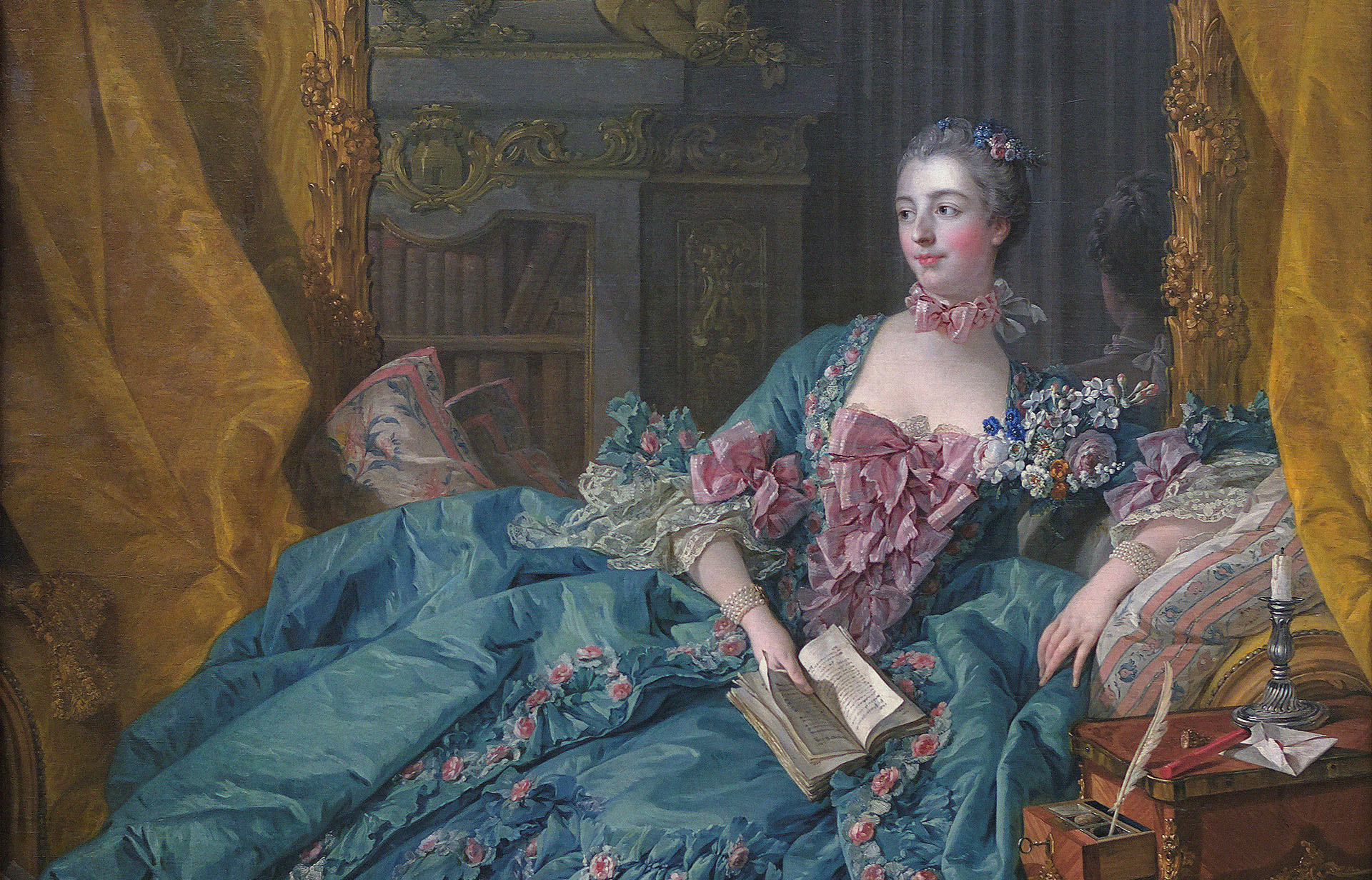
From that same era comes one of the most beautiful legends in the jewelry world. It’s said that in the mid-18th century, Louis XV commissioned an entirely new stone shape for his mistress, the Marquise de Pompadour – an elongated oval with pointed ends, echoing the curve of her lips. The truth of this story is difficult to verify, but it has been passed down through generations as living testimony that diamonds have always been not merely stones, but reflections of the desires of their time. The marquise cut – elegant and sensual – exists to this day, instantly recognizable by its sharp silhouette.
The 19th century: steam, electric light, and the birth of the round brilliant
In 1874, American craftsmen Henry Morse and Charles Field patented the first steam-powered cutting machine, allowing two diamonds to be shaped into a perfectly round outline simultaneously. On this foundation rose the Old European Cut – a round stone with fifty-eight facets, a high crown, and a warm character, the direct ancestor of every modern round brilliant.
The year 1879 brought Edison’s incandescent bulb. Stones that shimmered magnificently by firelight looked different under electric light – and craftsmen began revising proportions in search of angles capable of dazzling in the light of the new world.
The early 20th century: two paths, two visions of beauty
The first decades of the 20th century represent one of the most captivating periods in the history of cutting, because it was then that the jewelry world consciously split into two parallel directions for the first time. Different masters, in different cities, pursued fundamentally different goals – and each proved right in his own way.
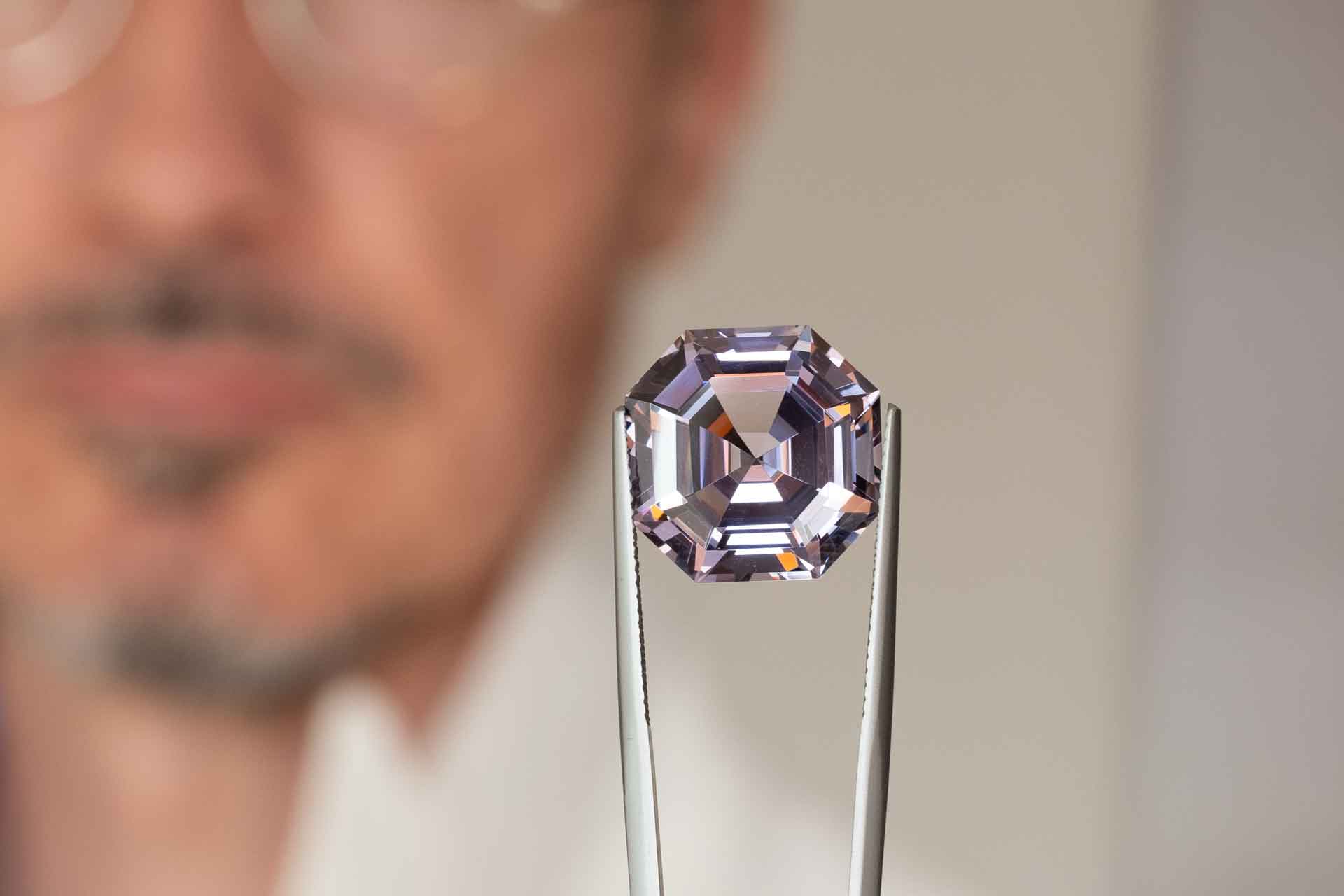
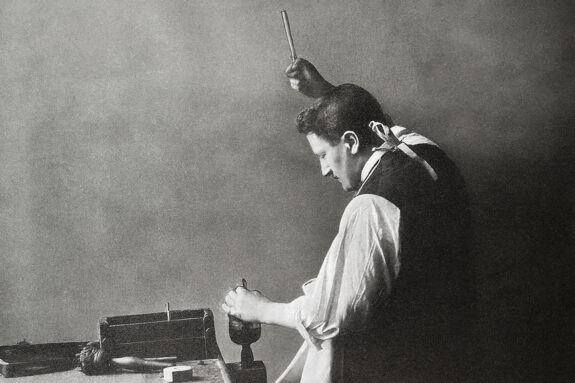
In Amsterdam, Joseph Asscher looked at a diamond as an architectural object. In 1902, he created and patented the first signature diamond cut in history – the Asscher Cut. This was the world’s first patented brilliant cut: a square with cropped corners and deep step-cut facets, revealing when viewed from above a mesmerizing “hall of mirrors” effect that recedes into infinity. Asscher wasn’t chasing flashes of brilliance – he sought depth and the meditative calm of the stone’s interior space. The reputation of his house was impeccable: it was to Joseph Asscher that King Edward VII entrusted the cleaving of the Cullinan in 1908 – the largest diamond ever found, weighing 3,106 carats. The first attempt broke the blade. The second – four days later, with a larger tool, in the presence of only one notary – succeeded. From the Cullinan, nine major stones were cut, which entered the British Crown Jewels.
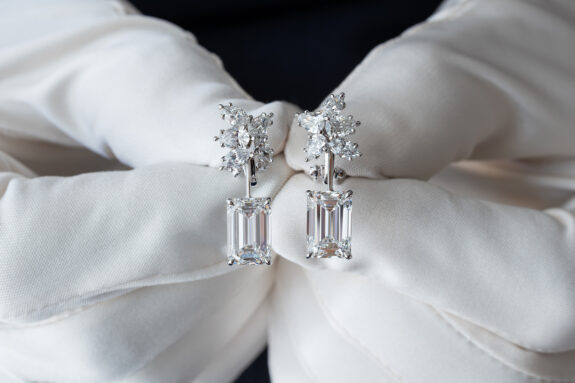
Around the same time, in the first decades of the new century, the emerald cut took its final form. The Emerald Cut traces back to the 16th-century Table Cut: step-cut parallel facets were originally applied specifically to emeralds – they reduced pressure on the fragile stone. When craftsmen began applying this principle to diamonds, they discovered that this geometry created an entirely unique effect: not flashes and fire, but a sustained, contemplative light that revealed the stone’s interior space. By the 1940s, the cut had been standardized in the form we know today.
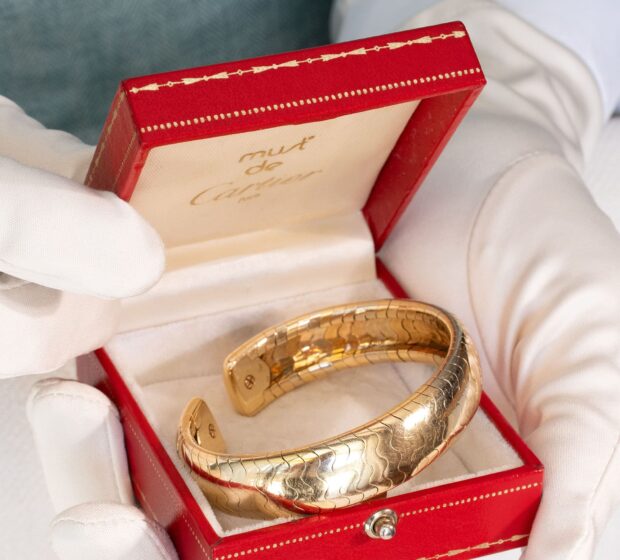
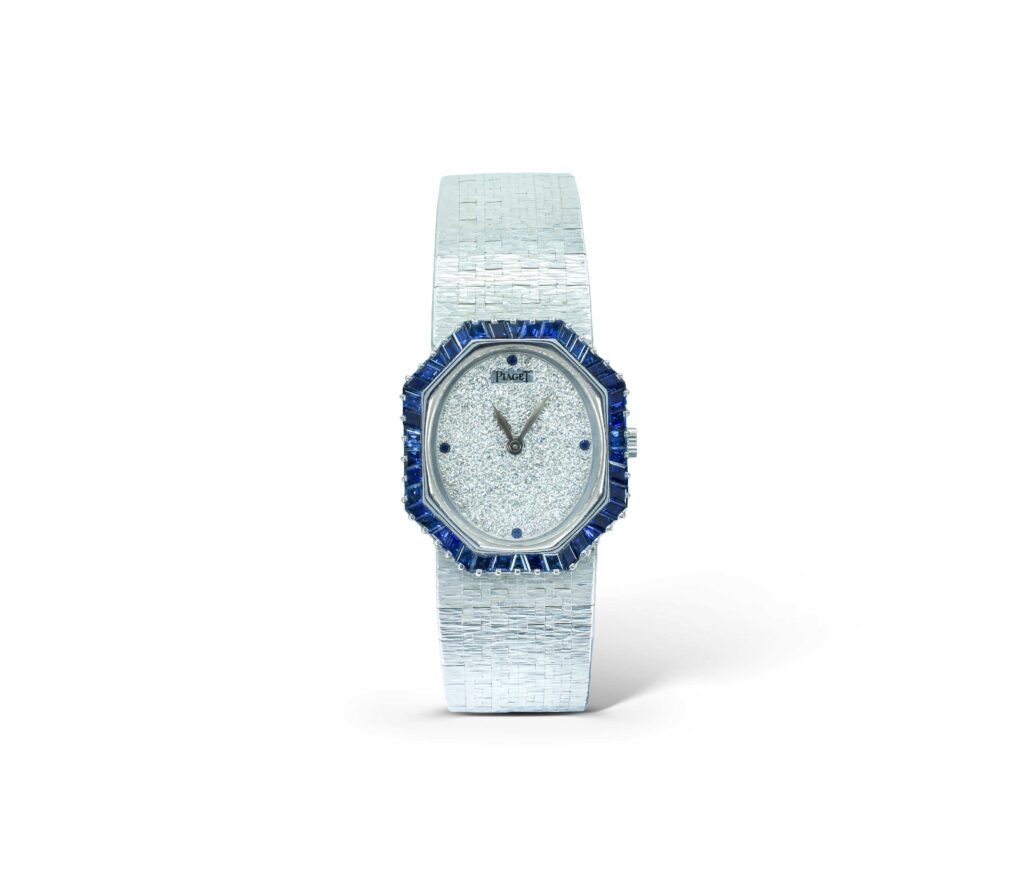
The aesthetic of Art Deco – with its cult of clean lines, geometry, and architectural severity – found its ideal embodiment in step cuts. It was during these years that Cartier brought the Baguette сut back to the center of the jewelry world – a rectangular step cut with just fourteen facets, known since the 16th century. Laconic and precise, it became an indispensable accent stone in the geometric patterns of the great houses. The baguette is the language of restrained elegance, which has not lost its power to this day.
While Amsterdam and Paris masters were perfecting step-cut forms, in 1919 in London, a young engineer named Marcel Tolkowsky chose an entirely different path. His dissertation “Diamond Design” subjected cutting to mathematics: he calculated the precise proportions at which a round diamond simultaneously achieves maximum brilliance – the return of white reflected light – and fire, the spectral dispersion into colors. Fifty-eight facets, a crown angle of 34.5 degrees, a pavilion angle of 40.75 degrees. Where Asscher sought quietness and depth, Tolkowsky sought dazzling sparkle. Both achieved their aims. The Modern Round Brilliant Cut became the standard by which more than 90% of all diamonds in the world are evaluated today.
Mid to late twentieth century: new masters, new forms
In 1957, it was Lazare Kaplan who created the modern Oval Cut. A stone with fifty-eight facets, following the logic of the round brilliant but elongated into an elegant oval – visually enlarging the stone and lengthening the hand. Preserving the brilliance of a round diamond in an asymmetrical outline was a challenge that had previously found no solution.
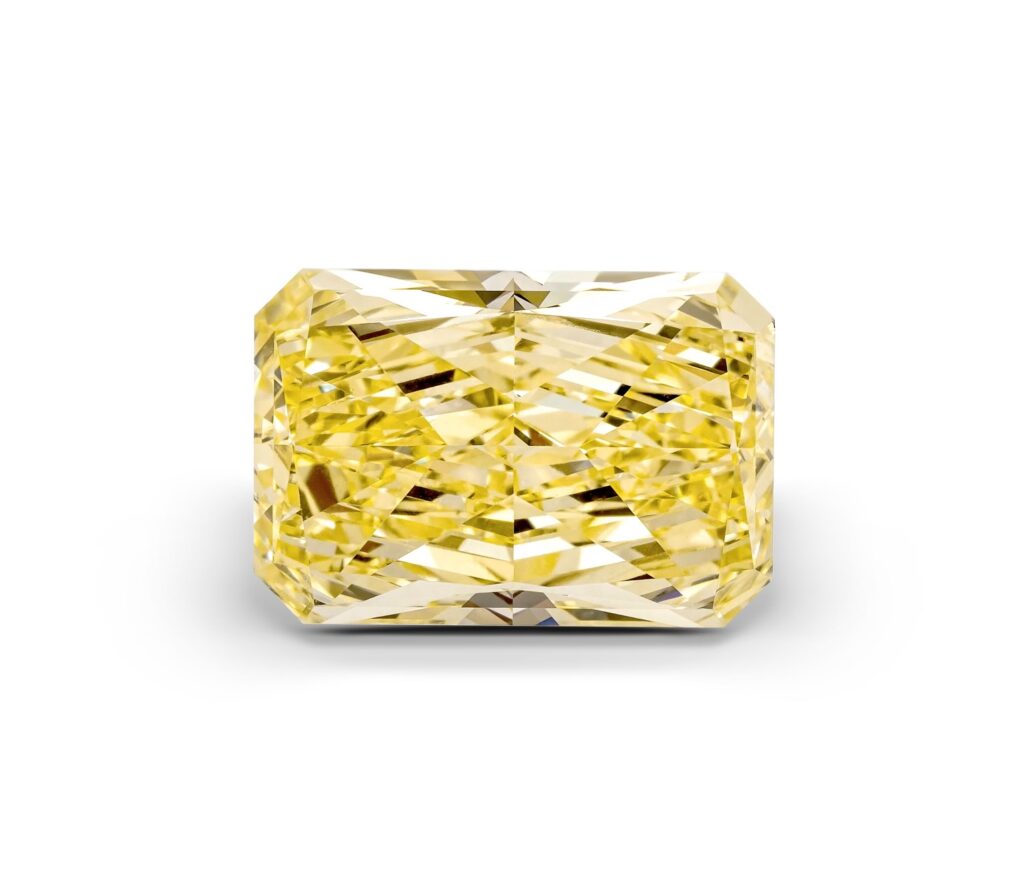
In 1977, New York cutter Henry Grossbard created the Radiant Cut – a hybrid that could previously only be dreamed of: a rectangular silhouette characteristic of step cuts, combined with a brilliant facet pattern delivering maximum sparkle. Grossbard saw that the emerald cut had lost popularity precisely due to its lack of light play – and decided to correct this.
Three years later, in 1980, the Princess Cut appeared – a square stone with sharp corners and a brilliant pavilion in the shape of an inverted pyramid. The second most popular cut in the world today, the Princess combines geometric modernity with maximum light play.
The Trillion Cut deserves special mention – a triangular cut with a history tracing back to the first Dutch experiments with asymmetrical forms. The modern version took shape in the 1960s–70s: an equilateral triangle with brilliant facets ranging from 43 to 50 facets. The trillion is more often used as an accent stone, but in the hands of a bold designer becomes a statement in its own right.
Cutting today: where science meets soul
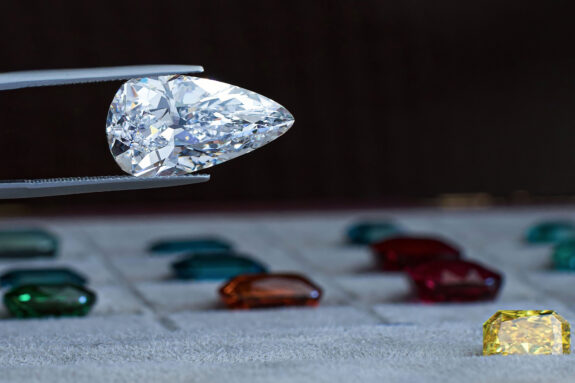
We live in the most technically perfect era in the history of cutting – and yet the greatest admiration is often evoked by stones with the deepest roots in the past. Old Mine Cuts and Old European Cuts, with their handmade asymmetries and warm glow, are sought after by collectors who find in these imperfections a humanity inaccessible to any machine. The rose cut of the sixteenth century is worn by those who prefer its quiet luminescence to the electric fire of a modern brilliant. The briolette, created five centuries ago in a Flemish workshop, is experiencing a renaissance today in the work of contemporary designers.
Each generation of cutters works by the light it knows, for the taste it has managed to form – in dialogue with the centuries that preceded it. The medieval lapidary who first smoothed the apex of a crystal. Van Bercken, who set his scaif spinning. Asscher, striking the Cullinan with a hammer. Tolkowsky, reducing the ideal brilliant to a set of angles. Grossbard, restoring fire to the rectangular form. Each answered the same question that faces every jeweler today: how to release the fire from the stone? The answer is never final. It is a conversation – between light and geometry, between hand and machine, between the desires of one era and the legacy of another. And the diamond, patient and indifferent, waits to be asked again.